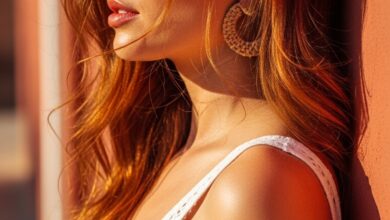
When Zendaya stepped out at the 2026 Met Gala with a liquid copper lob — somewhere between molten penny and burnt sienna — the internet collectively decided that safe, single-process blonde was over. Within 48 hours, TikTok’s “color melt summer” trend had racked up 200 million views, and salon booking apps reported a 40% surge in vivid color consultations. Between the champagne blonde revival, the navy-black micro-trend, and the strawberry blonde wave dominating Instagram’s “soft life summer” aesthetic, the message from every chair in every salon is clear: people are done with predictable highlights, and they want shade-specific, personality-driven color that actually moves with natural texture.
The summer hair color trends 2026 cycle covers an enormous range this year — from cool-toned silver bobs and icy platinum glazes to warm apricot crush waves, deep burgundy mahogany, and everything in between. These shades work across straight, wavy, curly, and coily textures, and they’ve been adapted for fine, medium, and thick densities alike. Whether you have an oval face that can carry a blunt perimeter or a round face shape that benefits from face-framing lightness, this year’s palette has been formulated with dimension in mind — not flat, single-tone coverage. The common thread? They all prioritize depth and movement over uniform color, and they’re built for low-maintenance grow-out that still looks intentional at week eight.
I spent all of last summer clinging to my natural mousy brown because I was terrified of commitment color — the kind that looks incredible in the salon chair and then turns brassy by July Fourth. In October I finally caved and asked my colorist for a “mushroom bronde” situation, and honestly, it was the first time my hair looked expensive without a blowout. That experience taught me something I should’ve learned years ago: the right summer shade isn’t about going lighter or darker — it’s about going more specific.
1. The Cool Ash Platinum Layered Lob
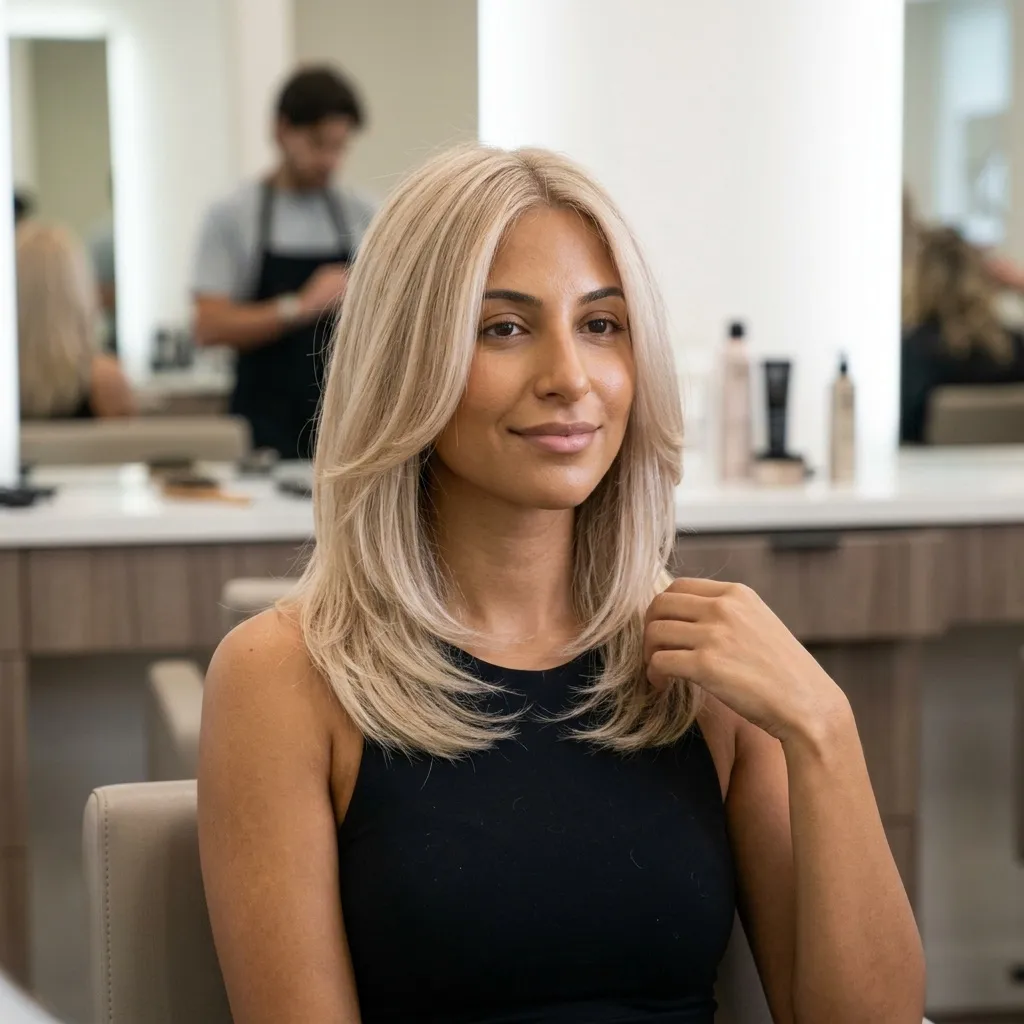
This shade sits in that narrow corridor between icy blonde and pale lavender — a cool ash platinum that reads almost silver under fluorescent light but warms to a champagne gleam in natural sun. The cut itself relies on internal layering through slide-cutting, a technique where the shears glide along the hair shaft at an angle to remove weight without creating visible steps, and it’s what gives the ends that soft, beveled flip rather than a blunt chop line. It works best on medium-density straight to wavy hair (think 1C to 2A), and the cool-toned deposit kept its clarity for a solid 3 weeks before needing a purple shampoo refresh. The face-framing pieces are slightly shorter — collarbone-grazing — which draws attention upward and suits oval and heart-shaped faces particularly well.
Styling is straightforward: a smoothing serum on damp hair, a round brush blowout focusing on the ends with an under-roll, and you’re done in about 15 minutes. Maintenance is the real conversation here, because platinum this cool requires toning every 4–5 weeks and a trim every 6–8 weeks to keep the ends from looking fried. Slide-cutting is what prevents that “helmet” effect on medium-thick hair by removing internal bulk while preserving the perimeter’s weight line. Skip if your hair is naturally very dark (level 3 or below) and you’re not prepared for multiple lightening sessions — the lift required will compromise integrity fast. If you’re exploring low-maintenance summer haircuts that grow out well, this one demands more upkeep than most. Icy precision.
2. The Navy-Black Blunt Bob
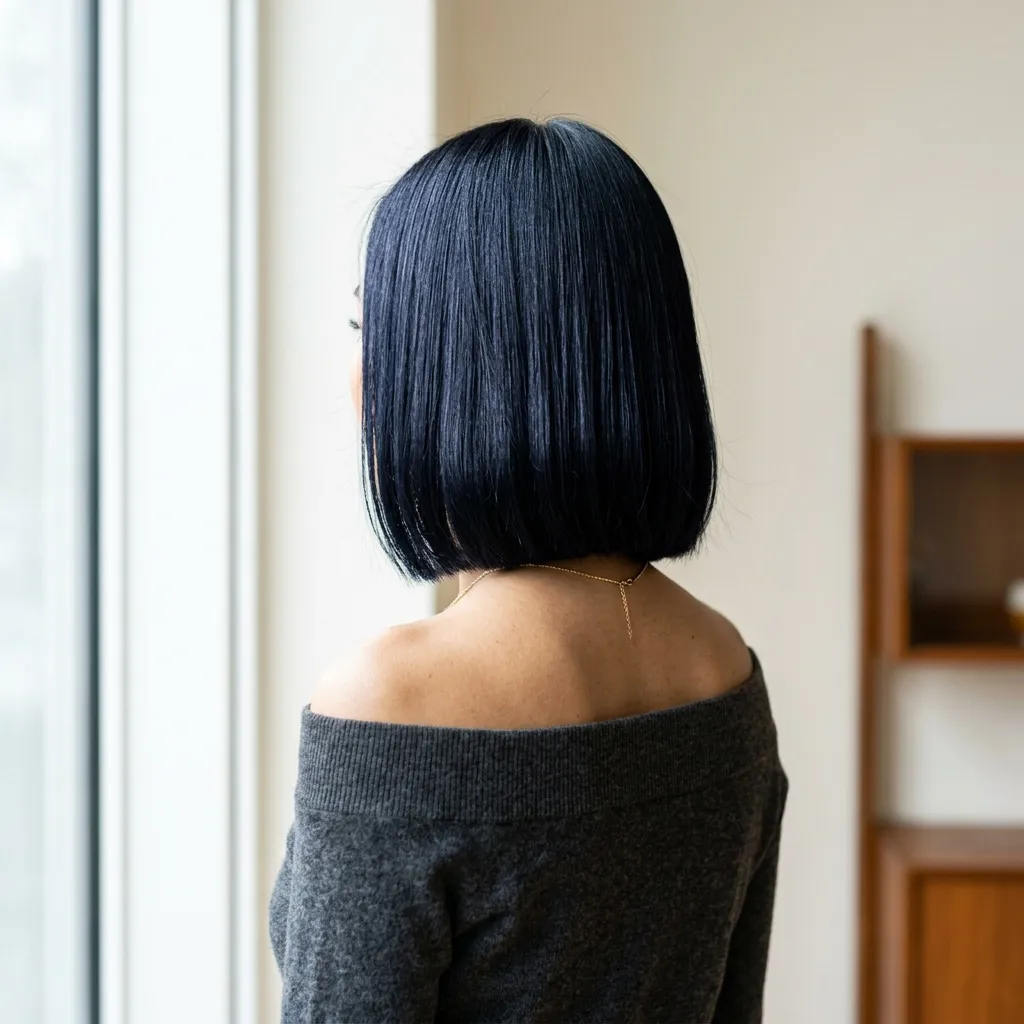
The color here is midnight navy — not true black, not dark brown, but a blue-black that catches indigo undertones in direct light and reads as deepest espresso in shade. It’s achieved through a demi-permanent glaze over naturally dark hair (level 2–4), which means zero lift and virtually no damage. The cut is a one-length blunt bob sitting right at the nape, with zero graduation and zero layering — the entire shape depends on a perfectly even perimeter cut with shears (no razoring), which is what gives it that dense, weighted swing when the head turns. This combination of saturated navy tone and geometric precision held its shape and color payoff for a full 6 weeks without touch-up, which is remarkable for a fashion shade.
Air-drying works if your hair is naturally straight, but for that glass-finish look, a flat iron on medium heat with a heat protectant serum is the move. A lightweight smoothing cream — not an oil, which will weigh down fine hair and make it look greasy by noon — keeps flyaways in check without flattening the shape. Trim schedule is every 5–6 weeks because even a quarter-inch of growth disrupts a blunt perimeter this precise. The mechanical principle is simple: no layers means all the weight sits at the bottom, which creates maximum density at the ends and that satisfying “thwack” of a solid bob. Not for anyone with thick, coarse, wavy hair — the bulk will turn this into a triangle without internal texturizing. Weighted. Deliberate.
3. The Apricot Crush Beachy Wave

Apricot crush is the shade name that keeps showing up in every summer hair color trends 2026 roundup, and for good reason — it’s that intersection of strawberry blonde, pale copper, and rose gold that flatters warm and neutral skin tones without veering into bubblegum territory. The color is typically applied as a tonal balayage, meaning the colorist paints freehand but stays within a two-level range rather than creating dramatic contrast, which is why the grow-out looks intentional rather than neglected. The waves here come from a razor-cut technique — the ends are point-cut with a razor rather than shears, creating that feathery, lived-in separation that air-dries with texture instead of frizz. On 2A–2B wavy hair with medium density, this cut maintained its beachy movement for 3–4 days between washes without reforming.
A salt spray on damp hair, scrunched and air-dried, is genuinely all this needs — which is all my fine hair can handle without looking weighed down. If you want more defined waves, a 1.25-inch curling wand with alternating directions will get you there in 10 minutes. Trims every 7–8 weeks keep the razor-cut ends from splitting, which they’re prone to faster than shear-cut ends. The razor removes weight gradually through the mid-lengths, which prevents puffiness on humid summer days and lets the natural wave pattern do the work. Avoid if your hair is coarse and resistant to holding a wave — the soft texture of this cut depends on hair that bends easily. Sunset in your hair.
4. The Sun-Bleached Honey Blonde

This is what happens when a colorist perfectly replicates three weeks of Mediterranean sun — honey blonde on the surface with sandy, wheat-toned lowlights woven through the interior for dimension that prevents it from reading flat. The technique is a combination of babylights (ultra-fine foils) at the hairline and broader balayage sweeps through the mid-lengths and ends, which creates that “I’ve been swimming in salt water every day” gradient. The cut uses long disconnected layers — meaning the shortest layer sits well below the chin while the longest reaches mid-back — and the ends are texturized with point-cutting to avoid any blunt heaviness. On thick, straight to slightly wavy hair, this maintained its sunkissed dimension for a solid 10–12 weeks because the balayage technique has no hard line of demarcation at the root.
This is a round-brush-and-blowdry kind of cut if you want the polished version, but honestly, letting it air-dry with a lightweight leave-in conditioner gives it that effortless wind-blown look that’s the entire point. Trims every 8–10 weeks are fine here because the long layers are forgiving as they grow — probably the best grow-out timeline of any cut in this article. Disconnected layering works mechanically by creating movement at multiple points along the hair shaft without thinning the overall density, which is why this still looks full even with significant texture removed from the ends. Not for fine, flat hair — without enough density, the layers will look stringy rather than dimensional. If you’re into this length range, check out the best mid-length haircuts for spring 2026 for more inspiration. The forever blonde.
5. The Syrup Brunette Soft Lob
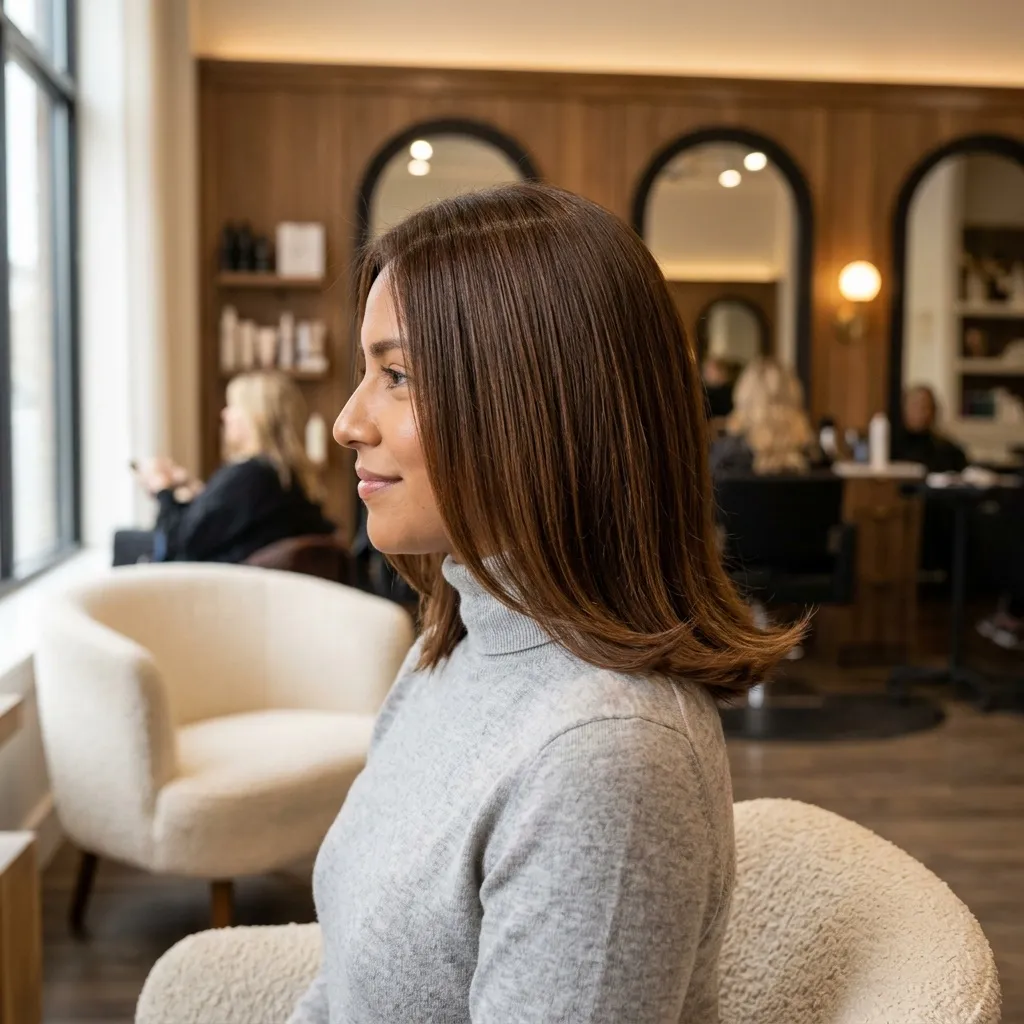
Syrup brunette is this year’s answer to “I want rich brown but not boring brown” — it’s a warm, caramelized medium brown with honey and toffee undertones that catches light the way actual maple syrup does when you pour it slowly. The color is achieved through a glossing treatment over a base color, which deposits a translucent warm tone that adds dimension without requiring foils or bleach, making it one of the lowest-damage options in the summer hair color trends 2026 lineup. The cut is a soft lob — landing between the chin and the collarbone — with internal beveling, a technique where the stylist angles the shears inward on the bottom two inches to create an automatic inward curl at the ends. This cut held its shape and bounce for 5 weeks on medium-density straight hair before the bevel started to relax.
A medium round brush during blow-drying recreates that inward-flipped finish, and a smoothing serum keeps the surface reflective enough to show off the syrup tones. Maintenance here is genuinely easy — a gloss refresh every 6–8 weeks and a trim on the same schedule to maintain the bevel. The beveling technique works because the angled internal cut forces the hair to curve inward under its own weight, which means less daily styling effort and more consistent shape. This suits most face shapes and is especially flattering on square jawlines because the inward curve softens angular features. Skip if you want volume and movement — this cut is designed for sleekness, and anyone with very curly or coily hair will fight against the bevel constantly. Liquid caramel.
6. The Strawberry Peach Curtain Wave
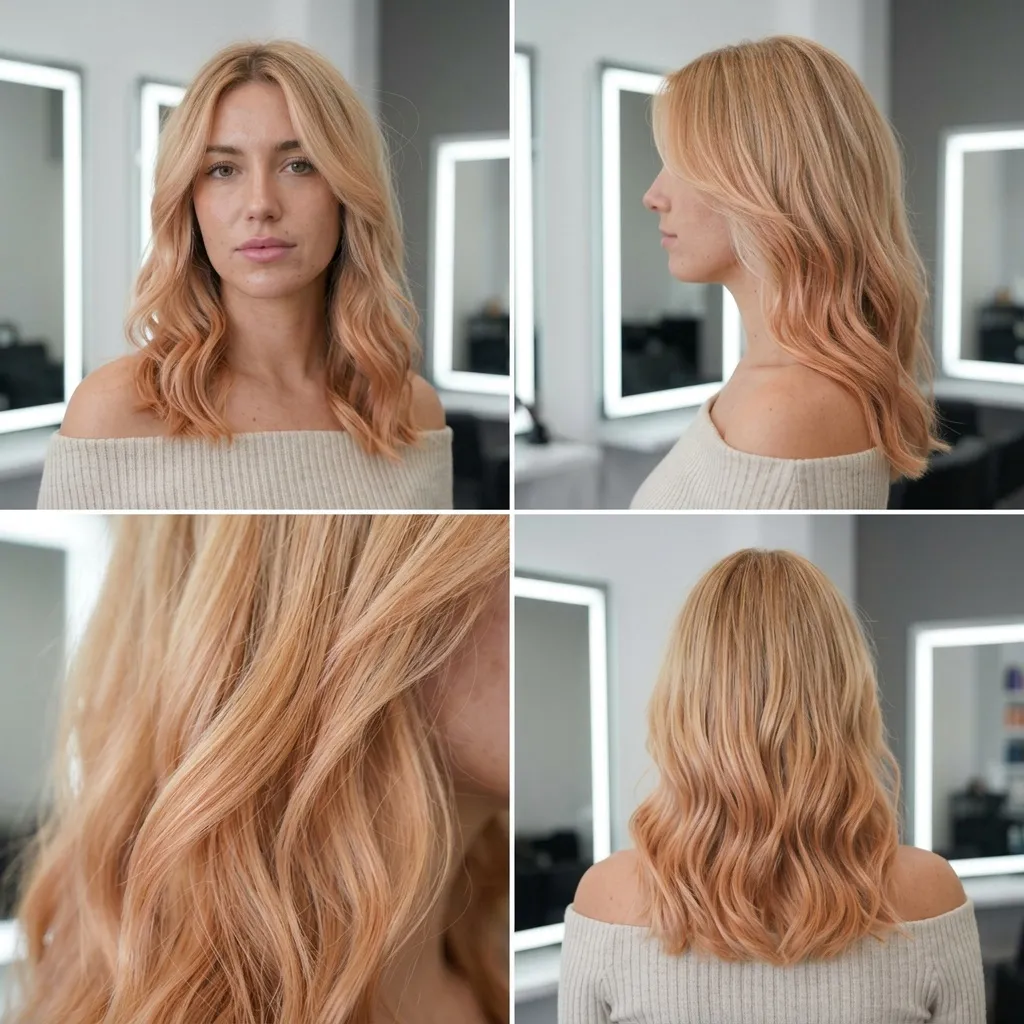
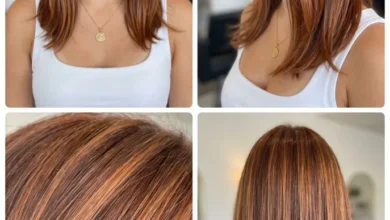
The four-angle view tells the full story here: this is a strawberry peach — warmer than rose gold, cooler than true copper — with a curtain-layered cut where the shortest face-framing pieces start just below the cheekbone and blend seamlessly into longer lengths at the back. The color technique involves a full head of hand-painted highlights using a copper-gold formula on a pre-lightened blonde base, and the tonal variation from root to end creates that watercolor effect where no two strands look exactly the same shade. The layers are cut using a vertical slide-cutting method that creates soft, wispy ends rather than chunky steps, allowing the natural wave (2A–2B) to form those loose S-shaped bends. On medium-density hair, the curtain layers maintained their face-framing shape for 7–8 weeks before the grow-out started to lose its intended layering structure.
Styling with a mousse on damp hair, scrunched and diffused on low heat, amplifies the wave without crunching it. A dry texturizing paste — just a pea-sized amount rubbed between your palms and pressed into the mid-lengths — adds separation and hold for second-day hair. The vertical slide-cutting technique is what prevents the dreaded “mushroom” effect that traditional layering can cause on medium-thick hair, because it tapers each strand individually rather than cutting across a section at one angle. Trims every 6–7 weeks keep the curtain pieces at the right cheekbone-length to frame the face properly. Not for anyone with pin-straight hair that resists holding a wave — the entire look depends on natural or heat-styled texture staying put. Peach, perfected.
7. The Silver Smoke Straight Lob
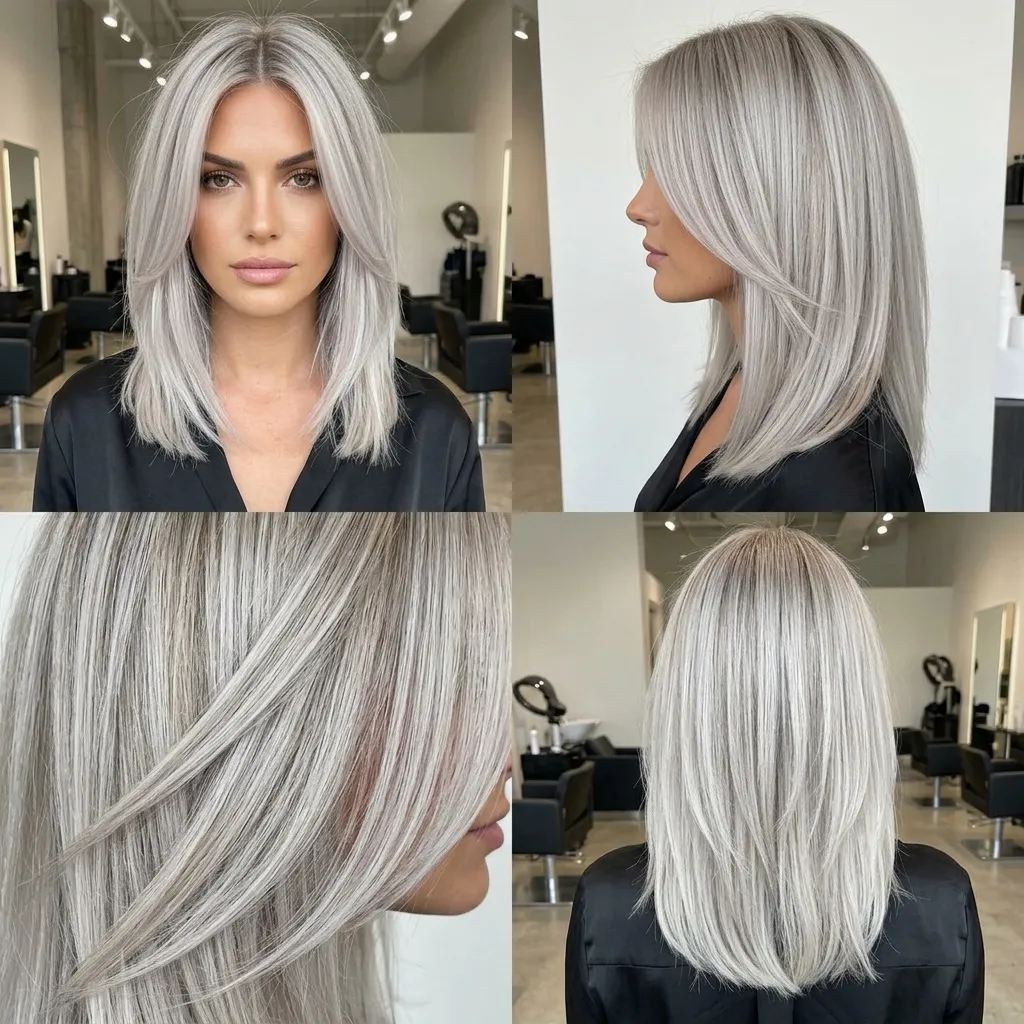
Silver smoke is the color that separates people who “want to go blonde” from people who commit to a full atmospheric shift — it’s a true grey-toned platinum with the faintest lavender undertone that eliminates any warmth entirely, reading as pure liquid metal under salon lighting. Achieving this requires lifting to a level 10 (pale yellow) and then depositing a custom-mixed ash-violet toner, which is why this is a multi-session process for anyone starting darker than a level 7. The cut shown across four angles is a mid-length straight lob with face-framing pieces cut slightly shorter using a dry-cutting method — the stylist cuts on dry hair to see exactly where each piece falls without the shrinkage factor of wet cutting. The precision of the perimeter line maintained its sharpness for 6 weeks before the natural growth pattern started disrupting the geometry.
Blow-drying with a paddle brush and finishing with a flat iron on the very ends delivers that mirror-shine finish that silver tones demand — any frizz or flyaway catches light differently and breaks the illusion. Purple shampoo twice a week is non-negotiable; without it, the silver shifts to a dull mushroom grey within 10 days. Dry-cutting ensures the shape you see in the chair is the shape you get at home, which matters enormously for straight, precision cuts where every millimeter counts. Toning appointments every 3–4 weeks and trims every 5–6 weeks make this one of the highest-maintenance options on this list. Avoid if you’re not prepared for a serious salon relationship — this color fades fast and requires consistent upkeep to look intentional rather than neglected. Chrome-level cool.
8. The Butterscotch Blonde Curtain Layers
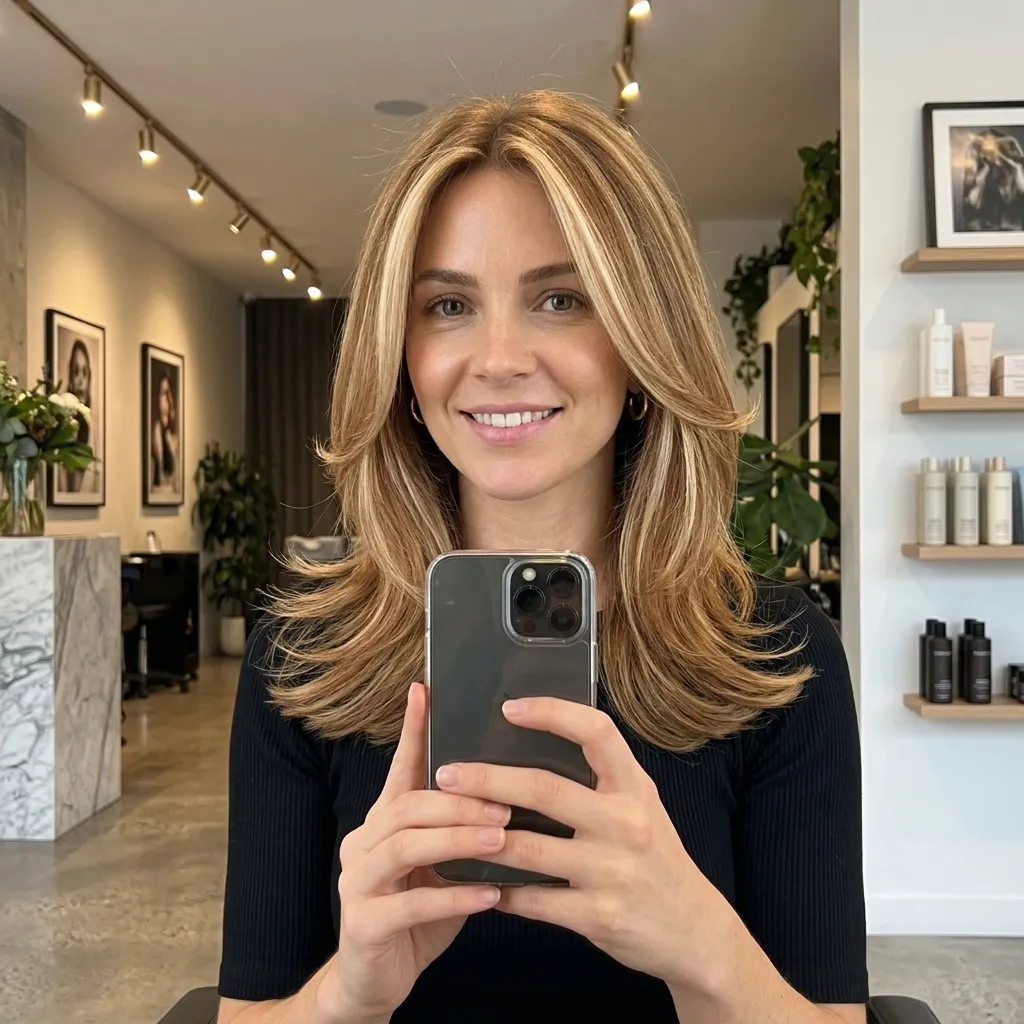
This is butterscotch blonde in its purest form — a warm, golden-toned blonde with caramel lowlights threaded through the crown and nape that prevent the blonde from reading as one-dimensional or brassy (there’s a difference, and your colorist knows it). The highlights are placed using a teasy-lights method, where small sections are backcombed before painting to create a diffused, soft-focus blend rather than obvious stripe-like highlights. The cut features curtain layers starting at the jawline with longer interior layers cut using a C-shape technique — the shears follow a curved path rather than a straight line, which builds volume at the mid-lengths and creates that swooping movement around the face. This held its dimensional color for 8–10 weeks, and the layers kept their bounce for about 6 weeks.
A medium round brush blow-dry with a volumizing mousse at the roots is the styling protocol here — flip the front pieces back from the face while drying, and they’ll settle into that curtain position naturally. A light-hold hairspray keeps the ends flipped without making them stiff. The C-shape cutting technique builds internal curve by removing weight along a rounded path, which means the hair naturally falls into an arced shape rather than hanging straight — this is mechanically similar to the beveling technique but with more visible movement. Trims every 6–7 weeks maintain the curtain layers; color touch-ups every 8–10 weeks. Skip if you have very fine, thin hair — the teasy-lights technique can cause breakage on fragile strands, and the layers may create gaps rather than volume. This look pairs beautifully with collarbone-length haircuts if you’re considering the chop. Warm and full.
9. The Deep Burgundy Mahogany Wave
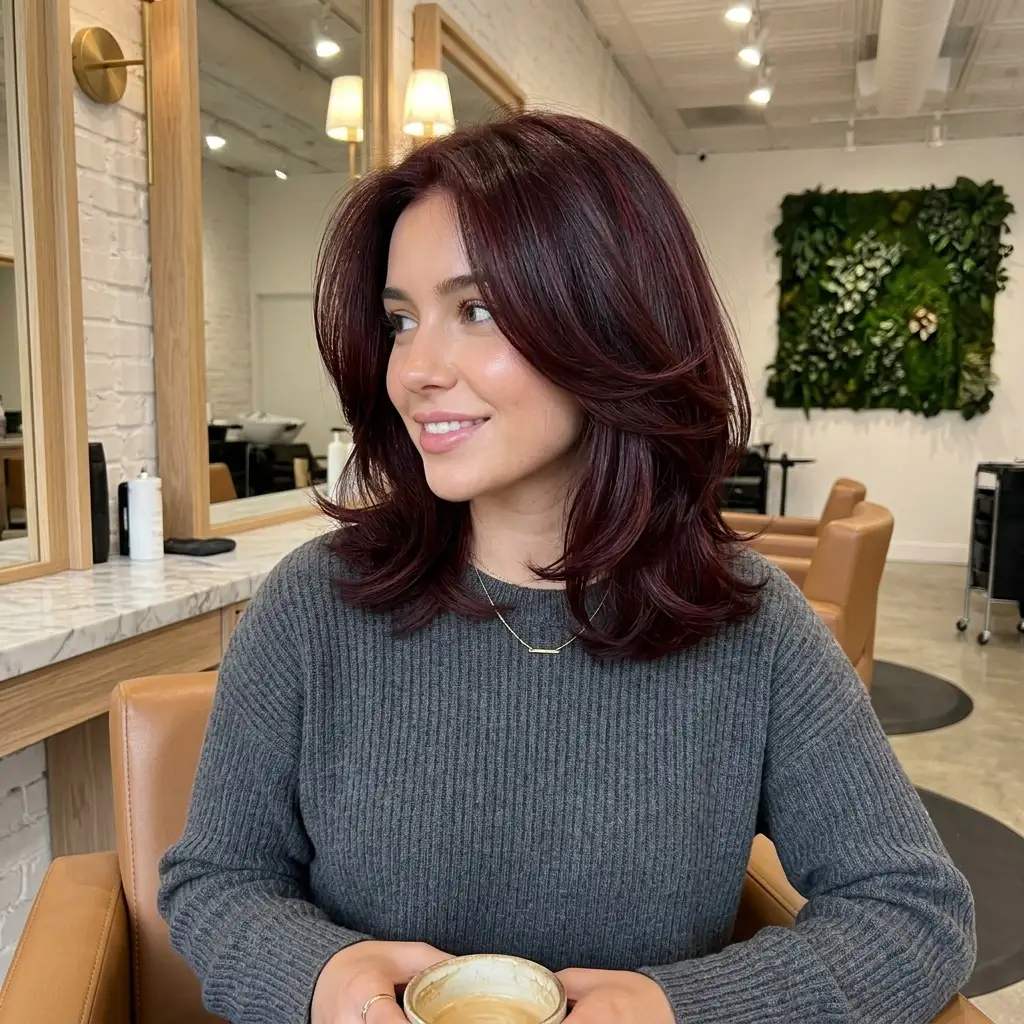
Deep burgundy mahogany is the shade that looks almost black indoors and then reveals its true character — a rich, wine-red with cool violet undertones — the moment sunlight hits it. The color is applied as a permanent single-process with a demi-permanent burgundy glaze layered on top, which creates that multidimensional depth where some strands lean plum and others lean cherry cola. The cut features face-framing layers shaped with point-cutting, where the shears cut vertically into the ends to create soft, feathery tips that curve gently away from the face. On medium to thick 2A–2C wavy hair, the waves naturally formed at the mid-lengths and held their shape for 2–3 days, with the burgundy tone maintaining its vibrancy for about 5 weeks before the first fade became noticeable.
A curl cream on damp hair, scrunched section by section and air-dried, brings out the wave without any heat. For more polish, a diffuser on medium heat amplifies the wave definition while the curl cream prevents frizz. The point-cutting creates tapered ends that are thin enough to bend but not so thin they look wispy — it’s a balance that works mechanically because the graduated weight at each strand’s tip allows gravity and natural texture to create soft movement rather than stiff, chunky curls. Color refresh every 5–6 weeks with a burgundy gloss treatment extends the vibrancy, and trims every 7–8 weeks keep the face-framing pieces at their intended length. Not for anyone who doesn’t want to commit to red-spectrum maintenance — burgundy deposits stain everything, and your white towels will never recover. Rich. Unapologetic.
10. The Warm Syrup Brunette Blunt Lob
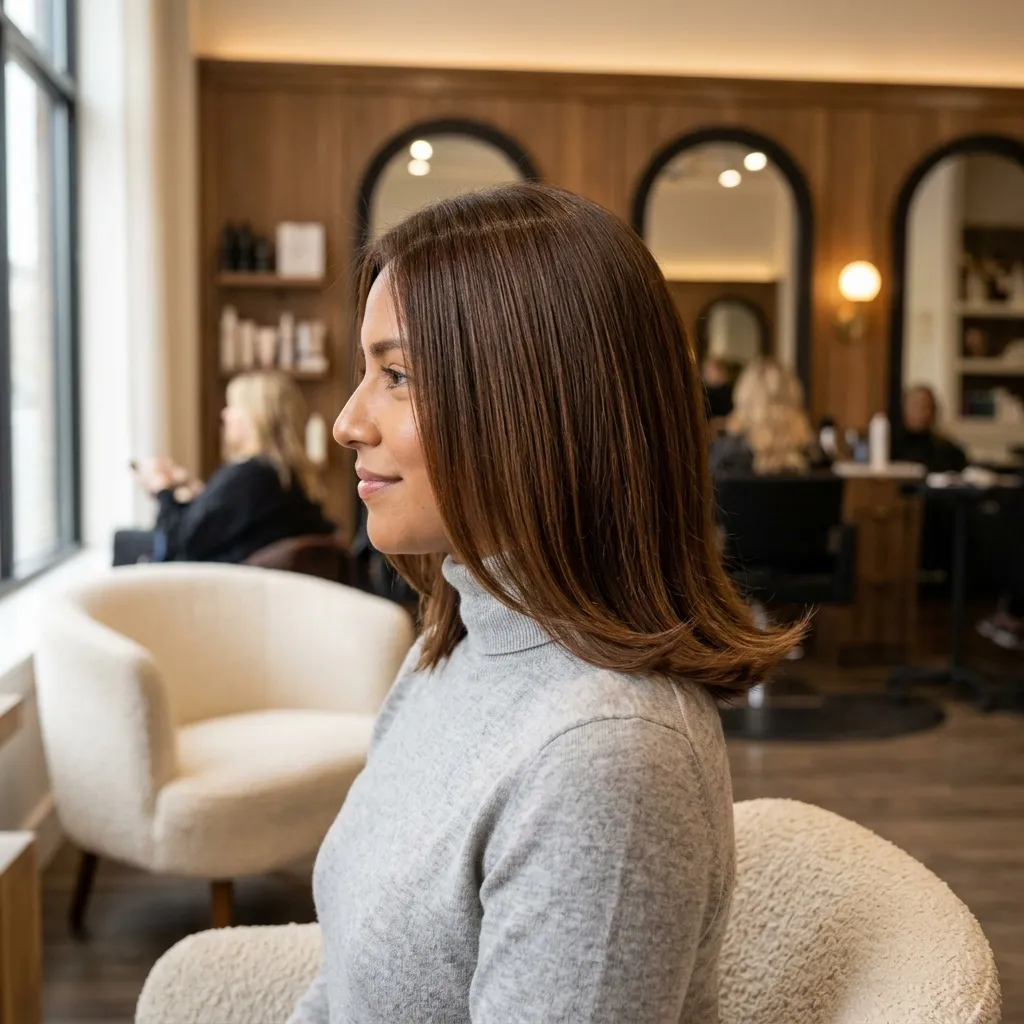
This is the syrup brunette’s sleeker sibling — same warm, toffee-kissed medium brown with honeyed undertones, but on a blunt lob with no visible layering and a perimeter cut so clean it looks like it was drawn with a ruler. The color is a root-to-end gloss on a natural level 5–6 base, which means no bleach, no foils, and a single 45-minute salon appointment (the best $30–50 I’ve spent on hair, honestly). The cut uses a blunt one-length technique with invisible internal texturizing — the stylist thins the interior with thinning shears while keeping the perimeter razor-sharp, which is what makes it lay flat and smooth without looking bulky. On straight to slightly wavy medium-density hair, the blunt line stayed precise for a full 6 weeks, and the gloss maintained its warmth for the same duration.
A paddle brush blow-dry with a heat protectant and a tiny amount of smoothing serum is all the styling required. For second-day hair, dry shampoo at the roots and a quick pass with a flat iron on the ends refreshes the shape in under 5 minutes. Invisible internal texturizing works by removing weight from the mid-shaft area without shortening any visible strands, which means the perimeter looks dense and intentional while the overall silhouette avoids that heavy, one-piece curtain effect. Trims every 5–6 weeks are critical — a blunt perimeter this clean shows growth immediately. Avoid if your hair is curly or highly textured — this relies entirely on straightness for its architectural effect, and fighting your natural pattern daily isn’t worth the effort. For plus-size women exploring summer hairstyles, this lob length is universally flattering. Sleek simplicity.
11. The Vivid Copper Red Shag
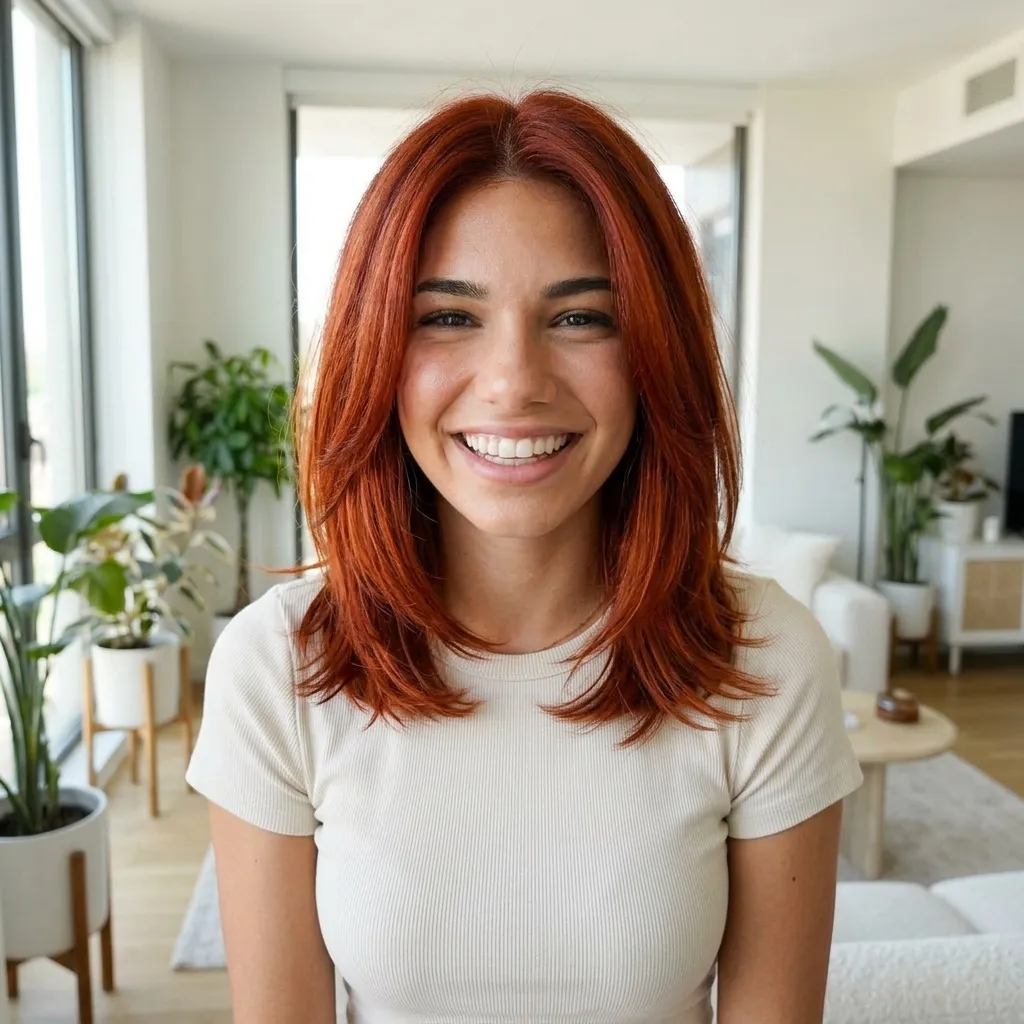
Vivid copper red — not auburn, not ginger, but a full-throttle, almost neon copper that sits somewhere between a new penny and a maraschino cherry. This shade requires pre-lightening to a level 8 gold before depositing the copper, which is why the tone has that electric luminosity rather than the muted warmth of a natural redhead. The cut is a modern shag with heavy razor-cut layers starting at the cheekbone — the razor removes weight aggressively through the crown and mid-lengths, creating that shaggy, lived-in separation that looks deliberately undone. On thick 2B–2C wavy hair with high density, the razor layers reduced the bulk enough to let natural texture emerge without puffiness, and the copper tone stayed vivid for about 4 weeks before shifting toward a warm strawberry.
Air-drying with a texturizing paste scrunched through the mid-lengths is the default styling method — heat tools actually diminish the intentional chaos of this cut. A dry shampoo on day two adds grit and separation that makes the shag look even better than day one. The razor-cut layers work by tapering each section to a fine point, which means the hair naturally separates into individual pieces rather than clumping together — this is the mechanical foundation of every good shag, and it’s why shear-cut “shags” never look quite right. Color maintenance every 4–5 weeks is non-negotiable for vivid copper; the warm pigments fade faster than any other color family. Not for anyone with fine, low-density hair — the aggressive layering will leave you looking sparse rather than textured. Loud and alive.
12. The Silver Lilac Blunt Bob

Silver lilac treads the line between grey and purple so finely that it shifts depending on the light — cool fluorescent reads it as pure silver, warm café light pulls out the lilac, and direct sun reveals both simultaneously. The toner formula mixes a violet-grey deposit with a touch of pink, applied over a fully lifted level 10 base. The cut is a chin-length blunt bob with a center part, which is the most unforgiving silhouette in hairdressing because there’s nowhere for imperfection to hide — every strand has to be the same length and lay flat, or the whole thing looks off (or maybe that’s just my perfectionist eye talking). The blunt perimeter was cut on dry hair, section by section, checking alignment from every angle, and the shape held its geometric precision for about 5 weeks on naturally straight, fine-to-medium hair.
Styling is minimal by design: a smoothing serum on damp hair, air-dry or paddle-brush blow-dry, and a light-hold finishing spray to tame any pieces that want to rebel. Purple shampoo alternated with a color-depositing conditioner in a lavender shade keeps the lilac tone alive between salon visits. The blunt one-length construction works because all the weight concentrates at the bottom perimeter, creating a dense, swinging line that moves as a single unit — this is why the bob has endured for a century, and this silver lilac version is its coolest iteration yet. Toning every 3–4 weeks and trims every 4–5 weeks. Skip if your hair is thick and wavy — without significant straightening, a blunt chin-length bob will flare outward rather than swinging inward. For more short summer haircut inspiration, there are some solid options worth comparing. Lilac ice.
13. The Dark Plum Silk Press Lob
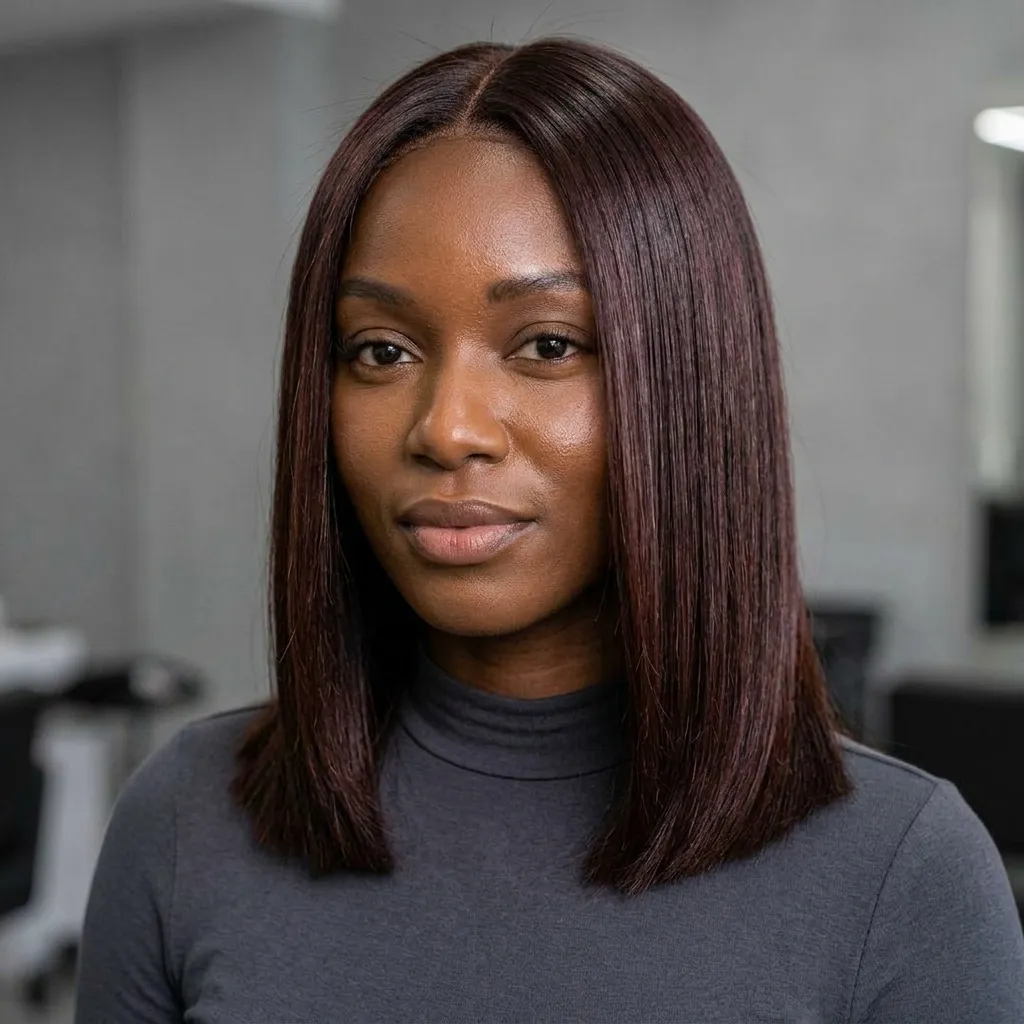
Dark plum on a silk press is the kind of color-and-styling combination that makes people stop you on the street — the deep mahogany base with wine-purple undertones catches light in a way that looks almost holographic, shifting from near-black to rich plum depending on the angle. The color is applied as a permanent deposit-only formula on natural level 2–3 hair, meaning no lightening was needed, which keeps the hair’s integrity completely intact. The cut is a one-length lob with a center part and razor-refined ends — the stylist used a razor on the final half-inch to create microscopically tapered tips that lay impossibly flat and smooth during a silk press. On natural 4A–4C hair that’s been pressed, the blunt line and tapered ends created a mirror-finish surface that held its press for 7–10 days in low-humidity conditions.
A heat protectant is absolutely essential before any flat-iron pass, and a lightweight finishing oil — applied only to the ends, never the roots — creates that glass-shine effect that makes the plum tones glow. The silk press itself requires a skilled stylist who can achieve smoothness without excessive heat passes, which is a non-negotiable conversation to have during your consultation. The razor-refined ends work by eliminating the blunt edge that catches light unevenly — tapered tips lay flush against each other, creating a smoother visual line than shear-cut ends. The plum deposit lasts 6–8 weeks, and trims every 6 weeks maintain the one-length precision. Avoid if you’re in a high-humidity climate without protective styling habits — the silk press won’t survive, and the frustration isn’t worth the effort. Glass-finish plum.
14. The Honey Butter Blonde Face-Frame
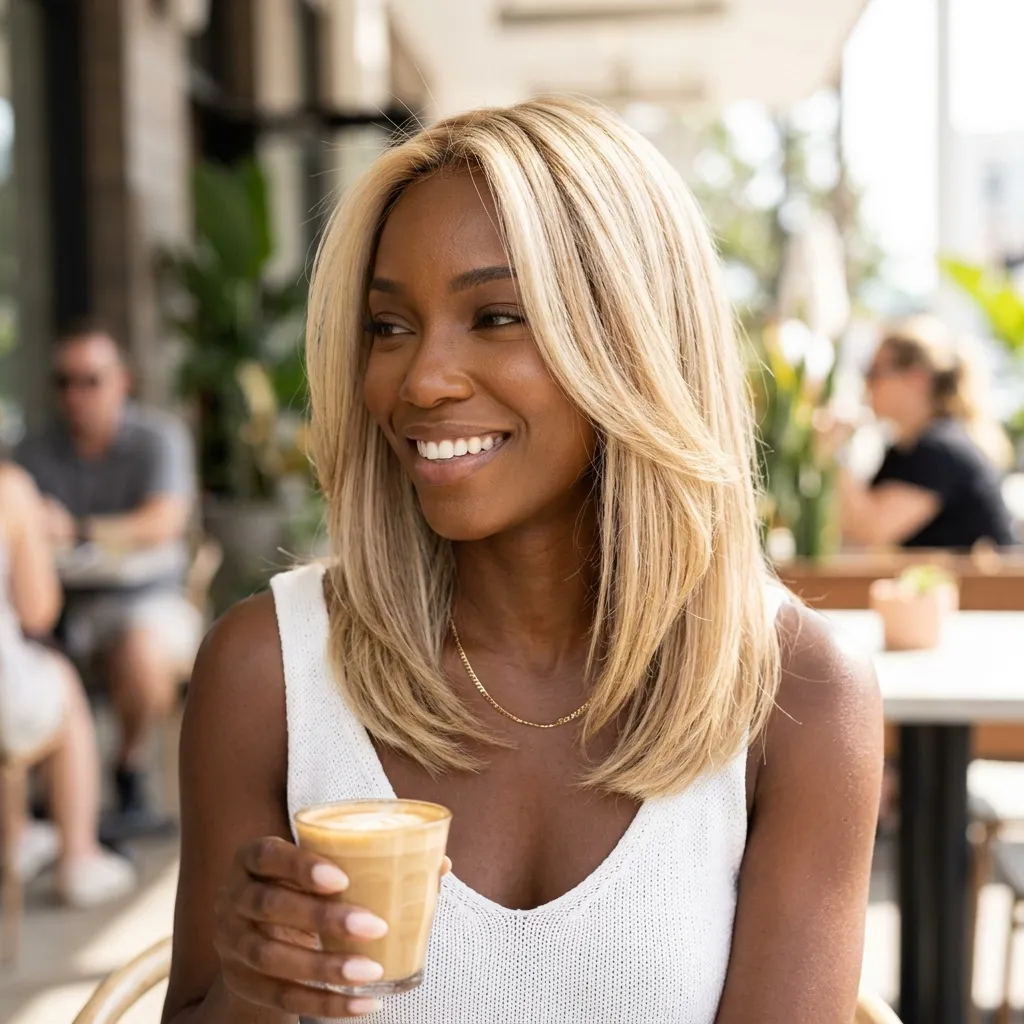
Honey butter blonde is the warm blonde that actually looks warm — not brassy, not yellow, but a true golden honey with buttery undertones that photographs well under any lighting condition. The face-framing highlights are placed using a freehand balayage technique concentrated on the two front sections flanking the face, with only subtle babylights scattered through the crown and back for support dimension. The cut features long face-framing layers cut with a C-shape technique — curved shears path, creating that flipped, swoopy movement away from the face — with the back kept at a uniform mid-length with minimal layering. On medium-density 2A–2B hair, the face-framing layers maintained their intended sweep for 6 weeks, and the balayage grow-out remained seamless for a full 12 weeks (yes, twelve — the best grow-out timeline I’ve seen all year).
A volumizing mousse at the roots and a round brush blow-dry flipping the front pieces away from the face recreates this exact look. A flexible-hold hairspray locks in the curtain-layer movement without creating crunch or stiffness. The C-shape face-framing technique removes weight along a curved plane, which mechanically encourages the hair to bend outward and away from the face rather than falling flat against the cheeks — it’s the geometry of the cut doing the work, not the styling. Trims every 7–8 weeks; color refresh only when you feel the face-framing pieces have lost their brightness, which could be anywhere from 10–14 weeks with the right balayage placement. Not for anyone who wants all-over blonde — this is strategic, placement-specific color, and it won’t read as “blonde” from behind. Sun-kissed framing.
15. The Ash Bronde Textured Lob
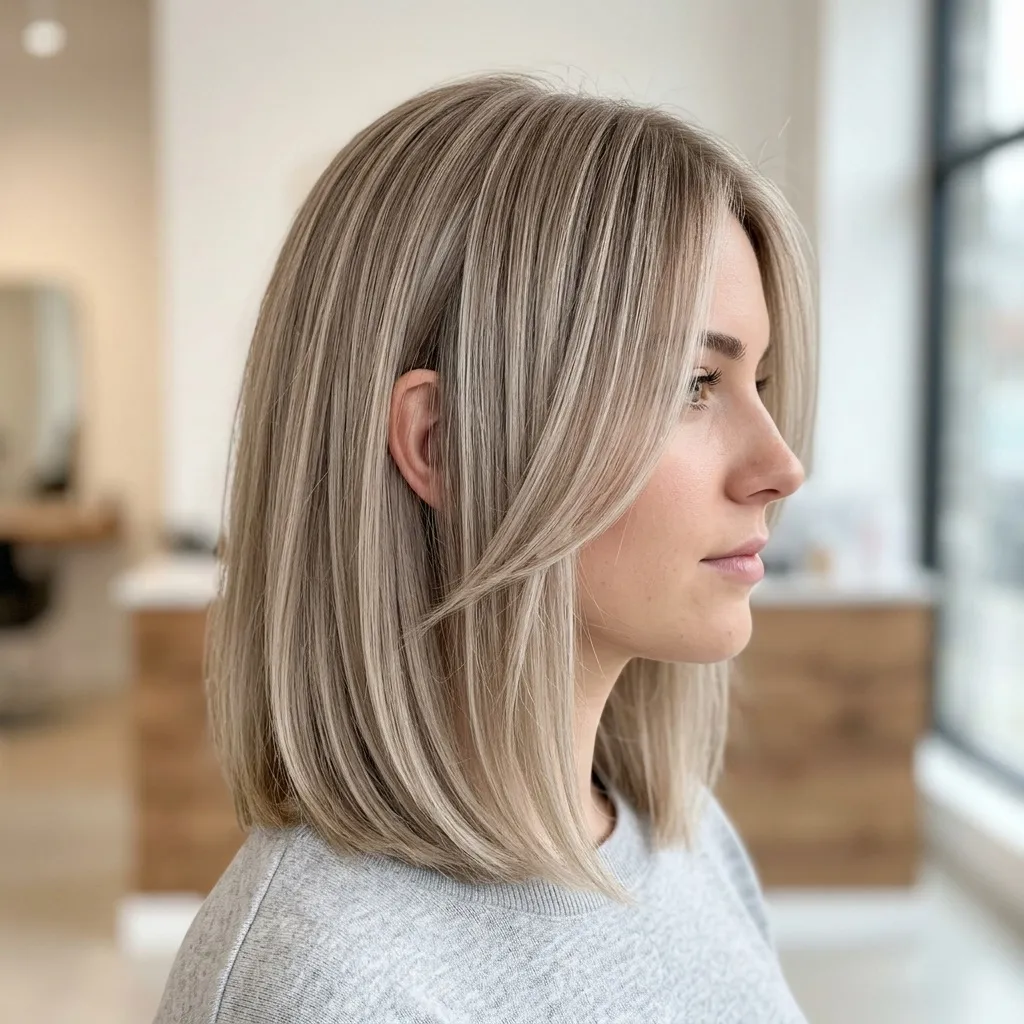
Ash bronde occupies that precise middle ground between blonde and brunette where neither side claims dominance — it’s a cool-toned mushroom beige with sandy highlights and smoke-grey undertones that reads as effortlessly expensive. The color technique is a root-melt, where the stylist applies a level 5 ash brown at the root and melts it into level 8 beige-blonde ends with no visible line between them. The cut is a textured lob with internal thinning — the stylist used thinning shears through the mid-lengths and interior sections to reduce bulk without affecting the perimeter line, which remains slightly blunt and heavy for that “I have more hair than you think” illusion. On fine to medium straight hair, the ash tones maintained their coolness for 5–6 weeks before the root melt started to show warm regrowth at the base.
A lightweight volumizing spray on damp hair and a paddle brush blow-dry is the everyday approach. For the sleeker look shown here, a flat iron on the mid-lengths with a slight bend outward at the ends adds polish. Internal thinning works by selectively removing strands from the interior without shortening them, which reduces density and weight while keeping the perimeter looking thick and full — it’s the illusion of thin hair behaving like thick hair, or thick hair behaving like manageable hair. Trims every 6–7 weeks; toning every 5–6 weeks to keep the ash from turning warm. This is one of the most universally flattering entries in the summer hair color trends 2026 conversation. Avoid if you want visible layers or lots of movement — this is a sleek, controlled shape that prioritizes smoothness over texture. The bronde standard.
16. The Contoured Bronde with Money Pieces
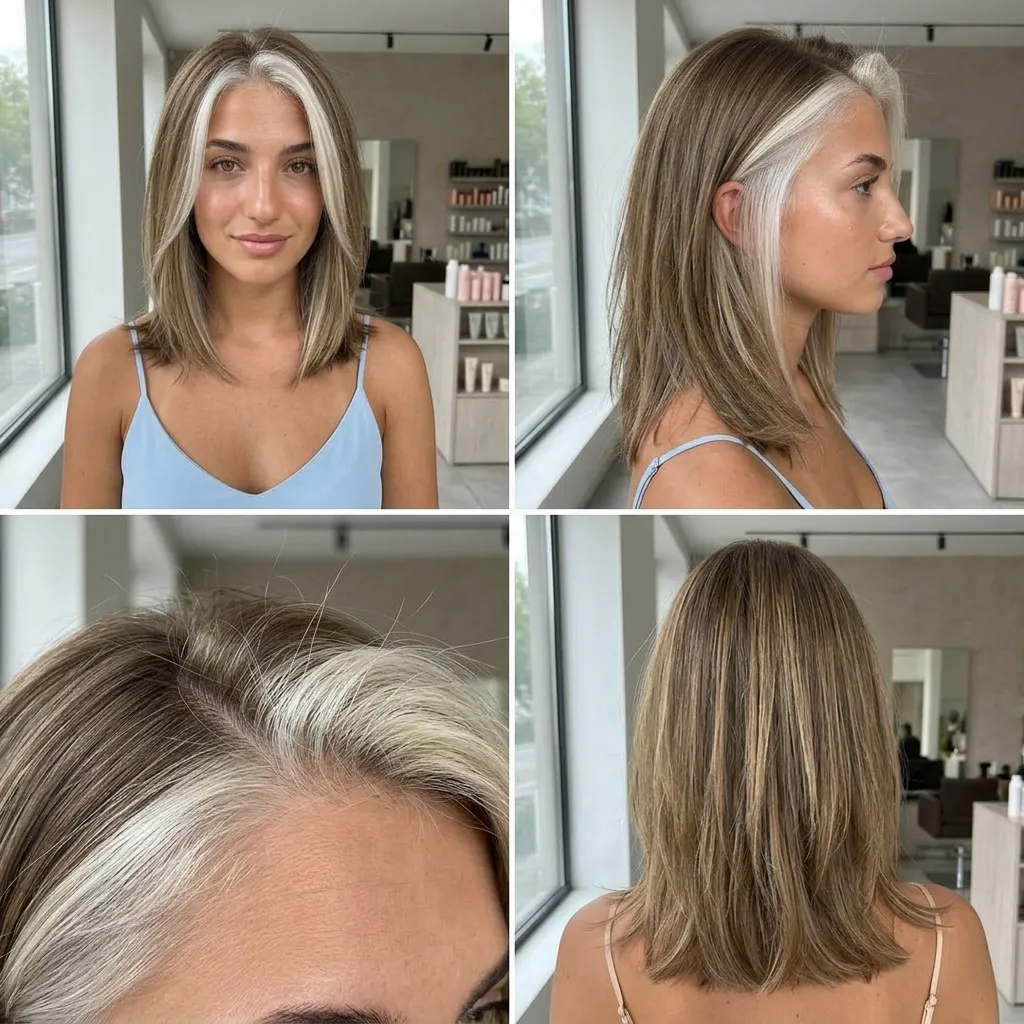
The money piece trend has evolved from “two chunky blonde streaks” to something far more refined — this contoured bronde uses bright blonde face-framing highlights that start at the root and fade into a natural level 6 bronde through the body, creating a contouring effect that visually lifts the face. The technique involves root-to-tip foils on the front hairline sections combined with a partial balayage through the sides and back, which delivers maximum brightness where it matters most while keeping the rest dimensional and low-maintenance. The cut is a mid-length with long layers cut using a point-cutting method — the shears enter the hair vertically at the ends, creating soft, piecey tips that break up the color transition and add texture. On medium to thick hair with a natural 2A wave, the money piece brightness lasted 8–10 weeks before needing a refresh, and the point-cut layers held their piecey separation for about 6 weeks.
A texturizing spray on dry hair and a quick scrunch brings out the wave and highlights the color dimension simultaneously — this is genuinely a “less is more” styling situation. Dry shampoo on day two and three extends the style while adding the grit that makes the money pieces stand out against the darker interior. Point-cutting mechanically tapers each strand to a fine point, which means the blonde ends and the bronde ends blend together in a diffused way rather than creating a stark line — it’s the haircut equivalent of feathering a brush stroke. Trims every 6–7 weeks keep the point-cut texture sharp; the money piece foils need refreshing every 8–10 weeks. Skip if you have very dark hair and want this without bleach — the money pieces require significant lift, and there’s no shortcut to that level of brightness at the hairline. If you’re also looking at this summer’s haircut trends, the contoured bronde pairs with almost any modern silhouette. Bright where it counts.
17. The Burgundy Wine Layered Blowout
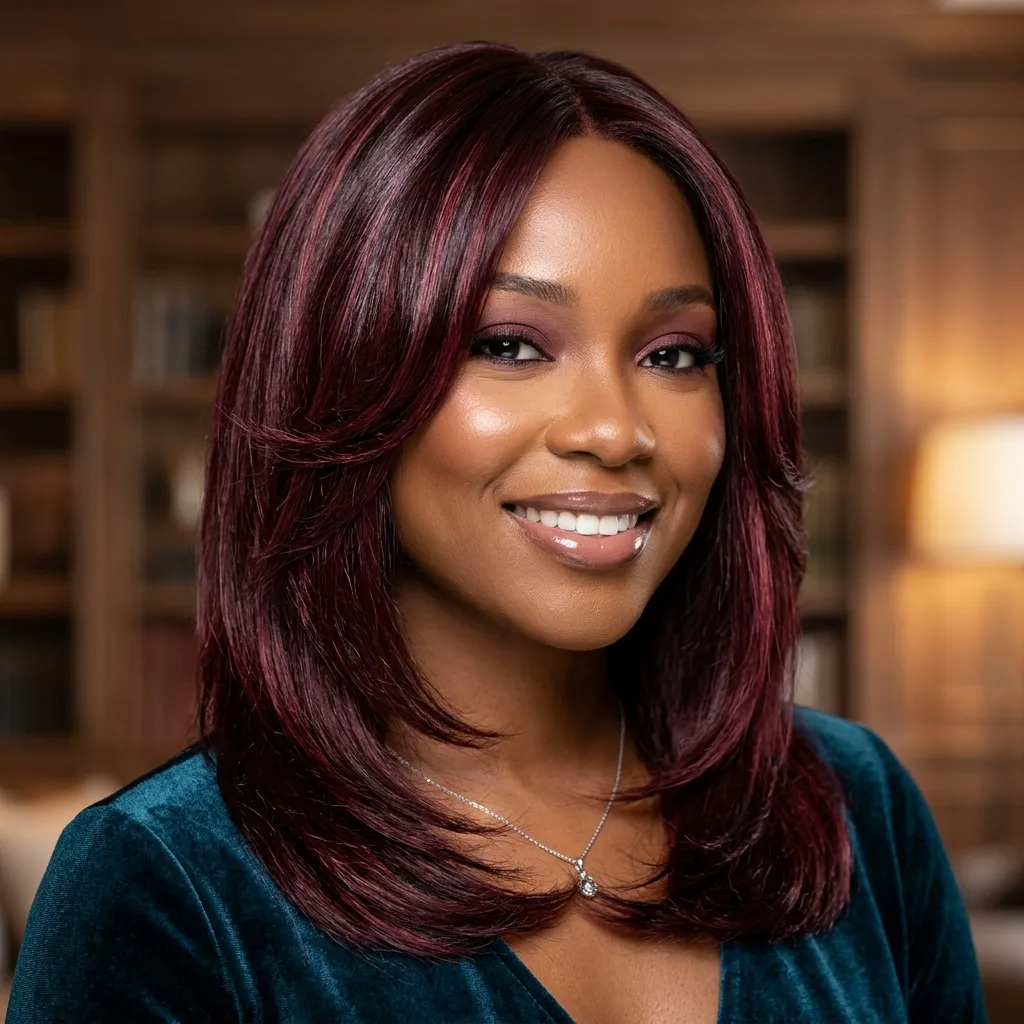
Burgundy wine is the deeper, more saturated cousin of the mahogany wave from earlier — this shade leans heavily into violet-red territory with a base so dark it reads almost black, while the mid-lengths and ends reveal true burgundy and plum highlights where the light catches. The color is a double-process: a permanent level 3 burgundy-violet base with a demi-permanent plum glaze on top for that multidimensional shift. The cut uses feathered layers with a blow-dry-friendly face frame — the layers are cut using a 180-degree elevation technique (hair pulled straight out from the head and cut at an angle), which creates soft, graduated length from the crown down that flips and feathers beautifully with a round brush. On thick, medium-textured hair, this feathered layering held its blowout shape for 3 days and maintained its overall structure for 7–8 weeks between trims.
A medium round brush, section by section, flipping the face-framing pieces away from the face while curling the back layers under, creates this classic voluminous blowout. A heat protectant and a medium-hold hairspray are essential — without hold, the feathered layers lose their direction by evening. The 180-degree elevation cutting technique distributes weight evenly from short to long, which is what creates that cascading, bouncy movement where every layer swings independently — it’s the mechanical opposite of a blunt cut, and it requires density to look full rather than sparse. Color maintenance every 5–6 weeks for the burgundy (warm reds fade fast), trims every 6–7 weeks. Not for fine-haired women — the aggressive layering will thin you out visually, and the blowout won’t hold without enough density to support the volume. Vintage volume, modern color.
18. The Dimensional Bronde Beach Wave
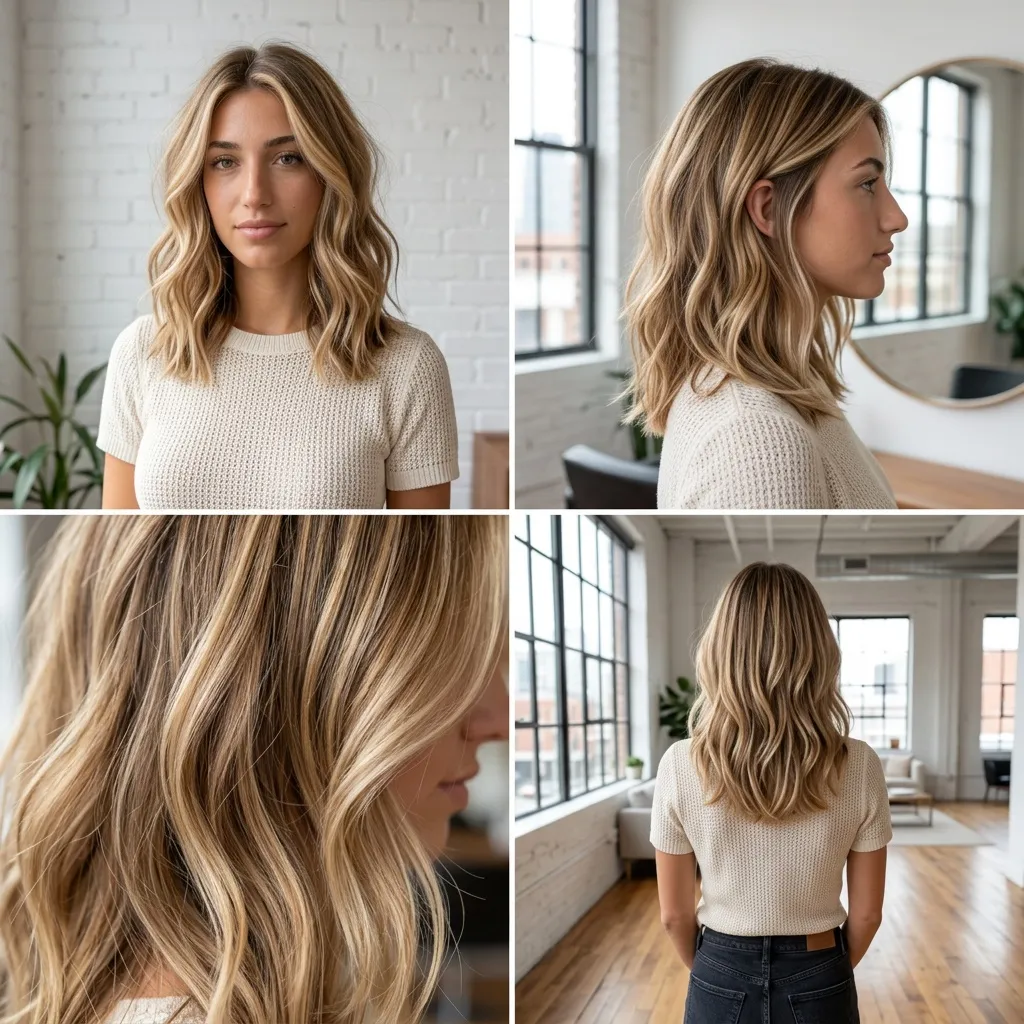
The four-angle view here captures the full color story: a level 6 bronde base with level 8–9 golden blonde highlights that concentrate at the ends and face frame, while the root area stays natural and shadowy for effortless grow-out. The technique is a foilyage — a hybrid of foil highlighting and freehand painting — where the colorist paints the lightener onto the hair and then wraps each section in foil for more controlled lift, resulting in brighter highlights than traditional balayage while still maintaining that “I was born with this” placement. The cut features mid-length beach-wave layers with internal texturizing through razor-cut channels — the stylist carves thin channels through the interior density with a razor, creating airflow paths that allow the wave to form naturally. On medium-density 2A–2C wavy hair, the beach wave texture air-dried beautifully for 2–3 days, and the foilyage color maintained its dimensional contrast for 10–12 weeks — the best grow-out I’ve seen from any highlighting technique. This style fits perfectly alongside the best short summer haircuts for 2026 if you’re debating between going shorter or staying mid-length.
A curl cream on soaking wet hair, scrunched upward in sections, then air-dried or diffused on low speed creates the wave pattern. For day-two styling, a salt spray and a quick scrunch revives the texture without rewetting. The razor-cut interior channels work by removing weight from strategic points inside the hair’s bulk without affecting the visible surface, which means the wave has room to form its natural S-pattern without being weighed down — it’s internal architecture, invisible but essential. Trims every 7–8 weeks; color appointments every 10–12 weeks because the foilyage grow-out is genuinely seamless. Skip if your hair is stick-straight with no natural wave — without some curl to activate the texture, this will air-dry flat and the whole effortless illusion falls apart. Even if you’re focused on summer cuts for your kids, you deserve one of these for yourself. Effortless, actually.