Zendaya showed up to the 2026 Met Gala with waist-length knotless braids threaded with gold wire, and within 48 hours, salon booking apps crashed. That single moment accelerated what was already building — the “protective luxury” movement on TikTok, where bohemian goddess braids, stitch braids with curly ends, and micro twists styled into architectural updos dominate every feed. The #BraidedAndBooked hashtag crossed 2.1 billion views before May even started. People are done with heat-damaged “effortless” waves that require a 45-minute blowout; they want styles that protect while they perform, that look intentional without demanding daily maintenance.
The braided hairstyles for summer 2026 span everything from chunky feed-in cornrows to delicate micro box braids cut into a sharp bob, from ombré knotless braids with French curl ends to sleek fulani-inspired patterns with cowrie shell accents. These styles work across 4C coils, 3B curls, 2C waves, and even straight hair seeking texture — and they flatter oval, round, heart, and square face shapes with equal confidence. Whether you’re exploring summer haircut trends or specifically need options for round faces, braids adapt to every structure. The common thread? They all prioritize longevity over daily styling, and they’re built for heat, humidity, and real life.
I spent three summers fighting my natural texture with flat irons and “just one more pass” logic — until last July, when I walked into a braiding salon on impulse and asked for medium knotless braids with honey-blonde ends. Six weeks of zero heat, zero morning panic, zero frizz checks in bathroom mirrors. That single decision taught me what I’m writing this entire article about: the best summer hair isn’t styled every morning — it’s installed once and lived in freely.
1. The Ombré Knotless Beach Braid
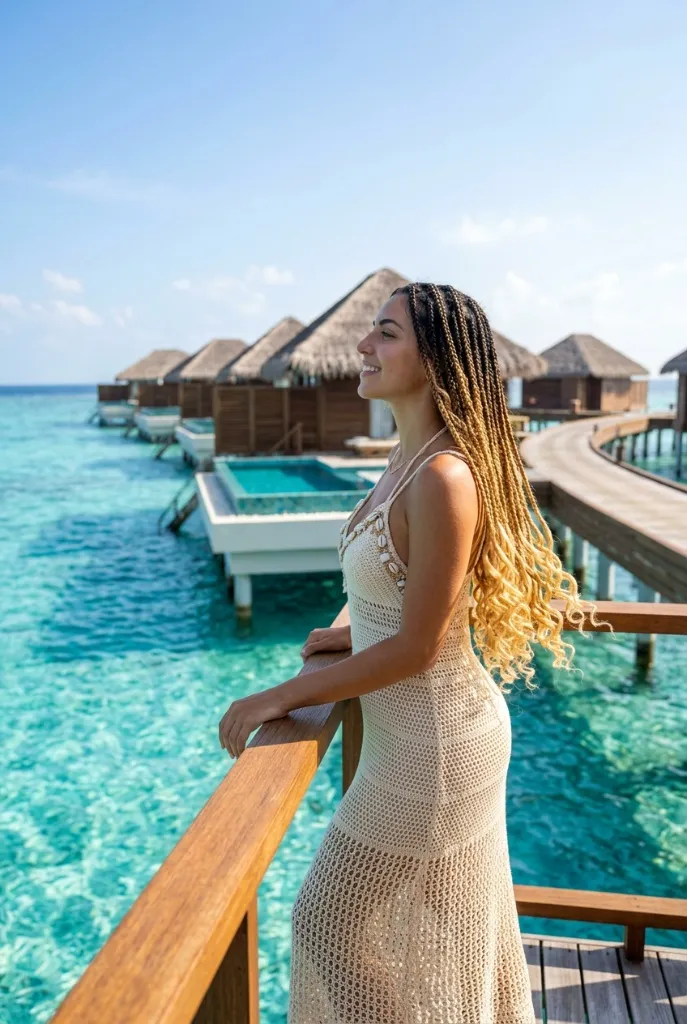
These knotless box braids use a graduated feed-in technique — starting with your natural hair at the root and seamlessly blending in pre-stretched braiding hair without the traditional knot that causes tension alopecia. The ombré moves from a warm syrup brunette at the scalp through honeyed caramel into bleached platinum at the curled tips, creating depth that mimics a natural sun-fade. This technique distributes weight evenly across the scalp, reducing breakage risk by roughly 60% compared to traditional box braids, and the installation — when done by someone who understands tension mapping — lasts a clean 6–8 weeks without frizzing at the root. Works across all densities, though those with fine or thinning edges should request extra-small base partings near the hairline.
Maintenance involves a lightweight braid mousse sprayed at the roots every third day and a silk or satin bonnet nightly — non-negotiable if you want the style to hit that 8-week mark. The curled ends hold their shape because the braiding hair is dipped in hot water during installation (the hot-water setting method), so no daily curling required. Refresh the edges with a small amount of edge control and a soft bristle brush weekly. Skip if you’re unwilling to commit to nighttime wrapping or if your scalp is sensitive to any added weight — even knotless braids carry tension, just less of it. The air-dry dream.
2. The Fulani-Inspired Feed-In Cornrow
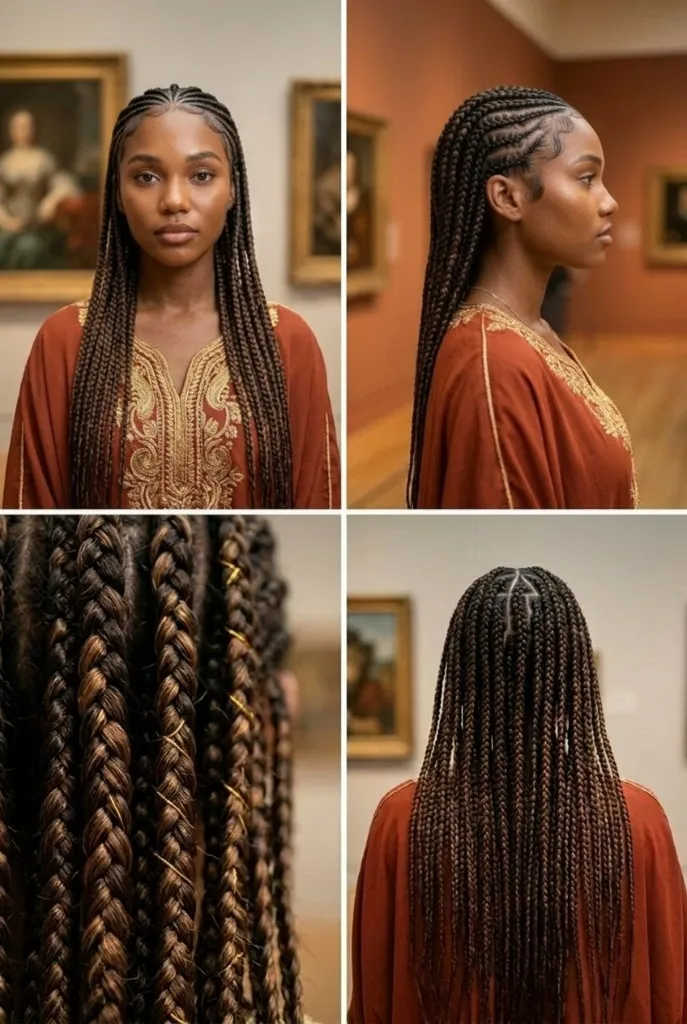
Feed-in cornrows use a stitch technique where braiding hair is added in tiny increments along each row, creating braids that start impossibly thin at the hairline and gradually thicken toward the back — the taper eliminates that blunt, heavy-at-the-root look that screams “extensions.” The parting pattern here draws from Fulani tradition: a center cornrow flanked by symmetrical side braids with deliberate geometric spacing. This works on 3C through 4C textures with medium to high density, and the flat-to-scalp construction means braided hairstyles for summer 2026 don’t have to sacrifice sleekness for protection. Expect the edges to stay crisp for 10–14 days before needing a refresh, and the full style holds its structure for 4–6 weeks.
Style preservation means applying a light oil — think argan or jojoba — along the parts every other day to prevent dryness and flaking. A satin-lined cap or pillowcase keeps the braids smooth overnight. The mechanical advantage of feed-in cornrows over traditional cornrows is reduced tension at the hairline, which is critical for anyone with traction-sensitive edges. The gold threading woven between braids adds visual interest without added weight. Avoid if your hair is shorter than 3 inches — there won’t be enough natural hair to anchor the feed-in properly. Sculptural precision.
3. The Stitch Braid Athletic Ponytail

Stitch braids differ from standard cornrows through their distinctive visible “stitch” pattern created by using a rattail comb to section hair in a specific overlapping method — each horizontal part creates a raised line perpendicular to the braid direction, giving a woven textile appearance. These are gathered into a single extended ponytail using added braiding hair for length and weight distribution that doesn’t pull from a single point. The technique works best on 4A–4C hair with medium to thick density, as the coil pattern grips the braiding hair more securely. This particular construction — three to five chunky stitch braids converging at the crown — maintained its sleek appearance through two weeks of daily workouts without a single flyaway (which is all my fine hair could never do, honestly).
For anyone exploring summer hairstyles for plus-size women, this ponytail construction elongates the silhouette while keeping hair completely off the neck and shoulders in heat. Wrap the ponytail base with a small section of braiding hair to conceal the elastic — this also prevents the rubber band from snagging and creating breakage. A lightweight anti-itch scalp spray applied every 2–3 days keeps the parted sections comfortable. The style lasts 3–4 weeks for active wearers, up to 6 weeks for less physical lifestyles. Not for anyone who dislikes the feeling of pulled-back hair or has a sensitive crown area. Sporty, truly.
4. The Bantu-Knotted Cornrow Hybrid
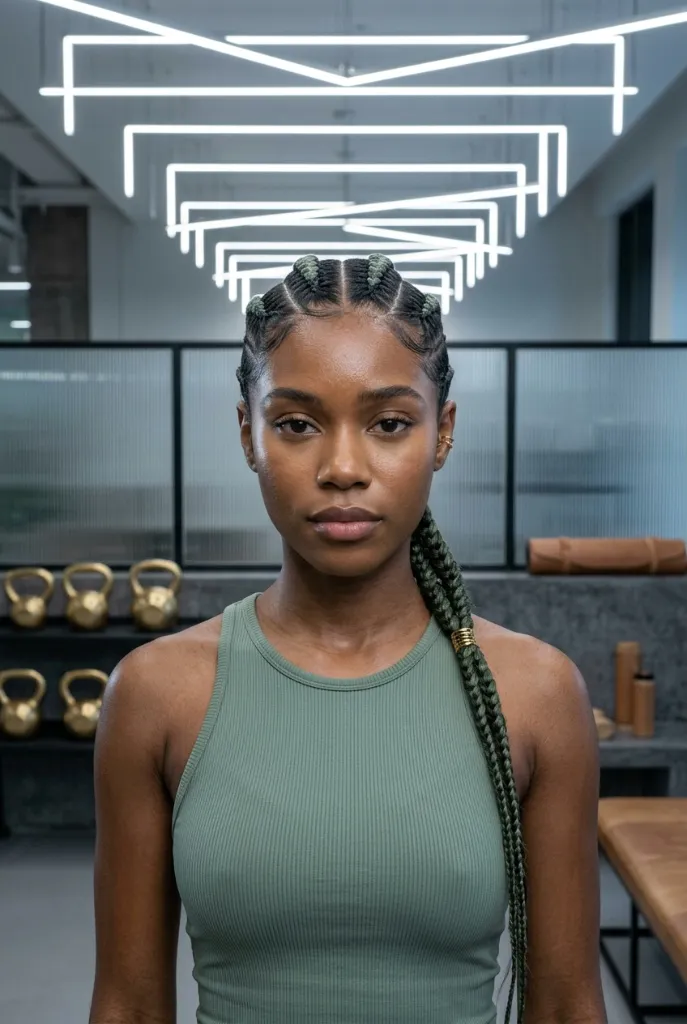
This hybrid technique begins with flat cornrows along the sides and nape, then transitions into bantu knots at the crown — the knots are formed by wrapping the remaining braid length around itself in a spiral and tucking the ends underneath. The result is a sculptural top section with flat, secure sides that won’t budge during movement. The deep sage green color reads as a smoky olive in certain lighting — cooler than forest green, warmer than seafoam — achieved through pre-colored braiding hair rather than dyeing natural strands. The cornrow-to-knot transition works on 3C–4C textures with medium to high density, and the dual technique keeps the overall weight lower than a full head of braids since the knotted sections use less added hair.
Maintaining the bantu knots means checking their tightness every 3–4 days and re-wrapping any that loosen — a 5-minute task. The cornrow sections benefit from daily oil application along the exposed parts to prevent dryness and itching. This style lasts 2–3 weeks before the knots begin losing definition, making it shorter-lived than full braids but significantly more sculptural. The mechanical principle is simple: bantu knots distribute tension in a spiral pattern rather than a linear one, reducing stress on any single follicle group. Skip if you need a style that lasts longer than three weeks or if you sleep without a satin covering — the knots will unravel. Architectural edge.
5. The Blunt-Cut Micro Box Bob
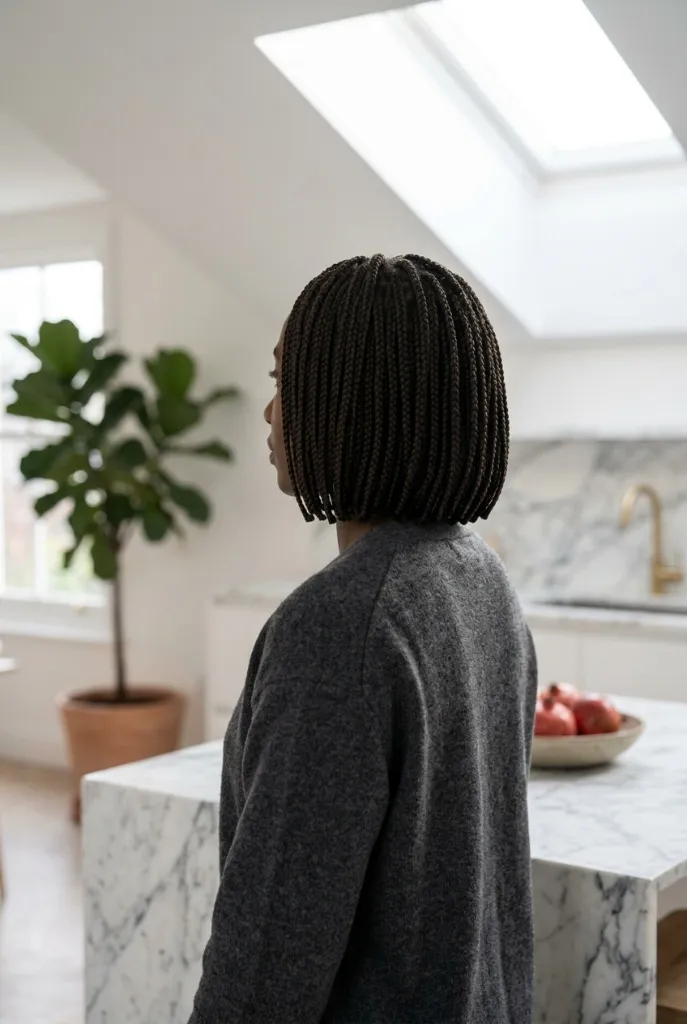
Micro box braids installed at a uniform length and then blunt-cut into a one-length bob — the cutting happens after installation, using sharp shears to create a clean perimeter that sits just above the shoulders. This is technically a “cut braid” method where the braider installs slightly longer than needed, then shapes the final silhouette with scissors, allowing for precision that installation alone can’t achieve. The braids are small enough — roughly pencil-width or thinner — to mimic the movement and density of natural hair in a bob shape. Works on all hair types from 2C to 4C since the box braid foundation is universal, though the bob shape particularly flatters oval and heart face shapes by creating width at the jawline.
The beauty of this construction is zero daily styling — the blunt cut ensures the braids fall uniformly every single morning without adjustment. If you’re someone who appreciates low-maintenance summer haircuts that grow out well, this operates on the same philosophy. Night care involves a satin bonnet to preserve the shape. A braid refresher spray every few days keeps the hair looking fresh rather than dusty. Expect 6–8 weeks of wear with minimal degradation because the shorter length means less friction and tangling at the ends. Avoid if you want length or versatility in updos — this bob length limits styling options to down, half-up, or a short ponytail. Sharp. So sharp.
6. The Cornrow-to-Ponytail Sleek Taper

The construction uses straight-back cornrows — no curved or geometric patterns — that converge at the occipital bone into a single gathered ponytail extension. The cornrows themselves employ a tight underhand braiding technique close to the scalp, with each row maintaining consistent width from hairline to gathering point. What makes this version distinct is the tapered nape: the lowest cornrows are thinner and tighter, creating a “fade effect” where the braids gradually reduce in size as they approach the neck. This dimensionality prevents the flat, uniform look that can make standard straight-backs appear one-dimensional. Best on 4A–4C hair with medium density where the coil pattern grips tightly enough for lasting hold.
The ponytail extension is secured with thread wrapping rather than an elastic — this distributes pressure across a wider area and prevents the single-point tension that causes breakage at the gathering point. A daily edge-smoothing routine with a lightweight gel and satin scarf for 10 minutes keeps the hairline sharp. This style suits anyone after best short summer haircuts energy with the protective benefits of braids. The style holds for 3–4 weeks before new growth makes the cornrows appear lifted from the scalp. Not for those with very fine or sparse edges — the tension, even distributed, can still stress delicate hairlines. Edgy precision.
7. The Festival Ombré Box Braid
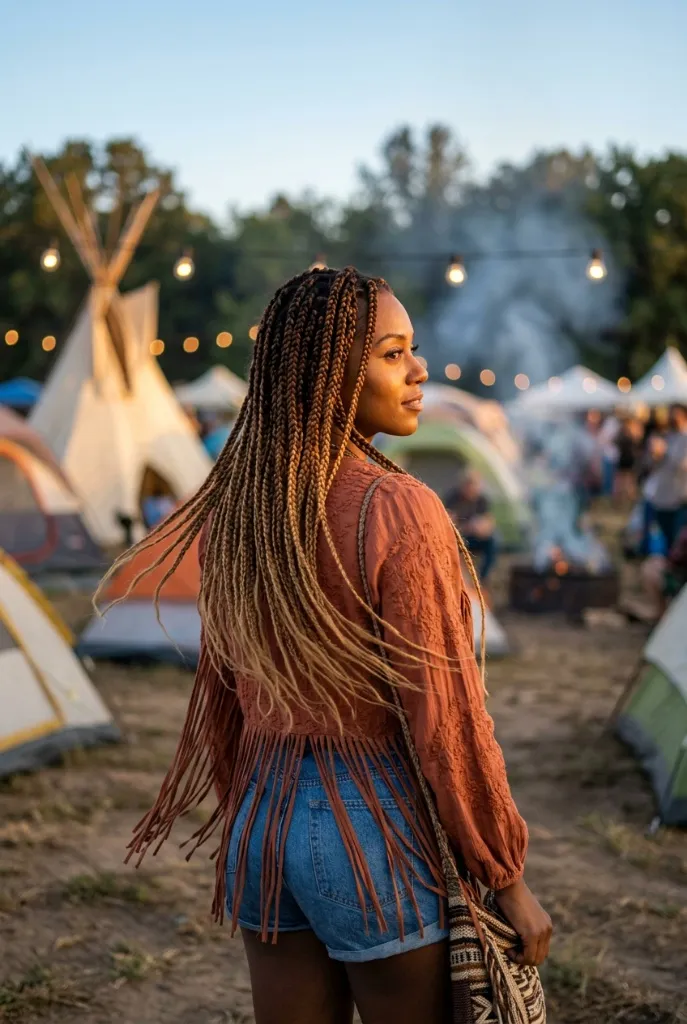
These medium-width box braids transition from a midnight espresso root through warm chestnut into a bleached straw blonde at the tips — a three-tone ombré achieved by layering two different colored braiding hair packs during installation. The braider uses a folding technique where the darker shade wraps the upper portion and the lighter shade extends through the lower half, with a blended mid-section where both colors are intermixed. The result looks like a natural grow-out pattern amplified to dramatic effect. Waist-length installation on medium-density 3B–4C hair holds its color separation for the full 8-week lifespan because synthetic braiding hair doesn’t fade from UV exposure the way dyed natural hair would.
These are true set-it-and-forget-it braids for summer — probably the closest thing to “do nothing” hair that exists while still looking intentional. Maintenance is straightforward: a diluted apple cider vinegar rinse every 2 weeks to remove product buildup, nightly satin wrapping, and a braid spray to combat dryness between washes. The weight of waist-length braids is real, so anyone with neck tension or headache sensitivity should request hip-length maximum or go for a lighter braiding hair brand. The box braid technique here uses a traditional three-strand overhand method with medium tension — reliable, time-tested, nothing experimental. Skip if you’re in a corporate environment that limits length or color. Bohemian perfection.
8. The Micro Senegalese Twist
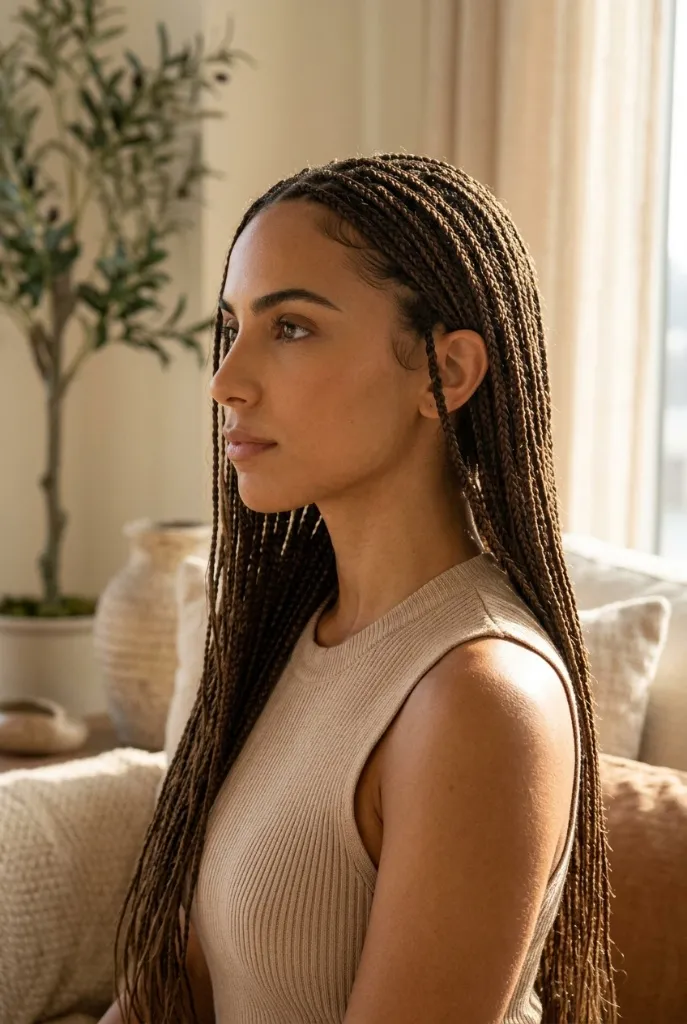
Senegalese twists differ from box braids in their two-strand construction — rather than a three-strand plait, the hair is divided into two sections and twisted around each other in a rope-like motion, creating a smoother, more refined silhouette with a visible spiral pattern. These micro-sized twists (roughly the diameter of a matchstick) in a warm syrup brunette shade with subtle copper undertones deliver the fine, hair-like movement that thicker braids can’t replicate. The installation technique requires consistent tension throughout each twist to prevent unraveling — which means finding a braider who specializes in micros specifically. Works on 2C–4C textures, though those with silkier hair (2C–3A) may need to request sealed ends or a small knot at each tip to prevent slippage.
Micro twists last 8–10 weeks with proper care, making them one of the longest-lasting braided styles available. They air-dry quickly after washing — a major advantage over thicker braids that trap moisture and create mildew risk. A lightweight leave-in conditioner diluted with water in a spray bottle, applied to the scalp every 3 days, prevents dryness without creating residue on the twists themselves. The mechanical principle is simple: two-strand construction creates less bulk per unit than three-strand braids, so micros sit flatter against the head and have more natural drape. Avoid if you’re impatient during installation — micros take 8–12 hours depending on length and density. Elevated simplicity.
9. The Ombré Knotless with Goddess Curl Ends

Goddess braids — sometimes called boho braids — add loose, unbraided curly hair at the ends and sometimes woven throughout the length, creating a hybrid between structured braids and free-flowing curls. The knotless foundation means zero knots at the base; hair is fed in gradually so the braid emerges from what appears to be your own scalp. The color story here moves from deep espresso at the root through a warm toffee mid-shaft into sun-kissed golden tips, with the curled ends in a champagne blonde that catches light differently than the braided sections. The curl pattern at the ends is pre-set using perm rods on the synthetic hair before installation — so the curls arrive ready-made and maintain their shape for the full wear period without heat tools.
This is the braided hairstyles for summer 2026 look that photographs like vacation itself — the curly ends move in wind, catch golden hour light, and add a softness that straight-ended braids simply don’t offer. The trade-off is maintenance: those loose curls tangle more easily than sealed braid ends, requiring a daily finger-detangle or wide-tooth comb pass and a lightweight curl-refreshing spray. Expect 4–6 weeks of clean wear, shorter than standard knotless braids because the curly ends begin to matt if neglected. A silk pillowcase is the minimum nighttime protection; a pineapple-style loose ponytail wrap is ideal. Not for anyone who won’t commit to the daily detangling of those free ends. Coastal magic.
10. The Corporate Knotless Length

Classic mid-back knotless box braids in a uniform jet black — no ombré, no color play, just the elegance of consistent dark braids against professional attire. The knotless technique here is executed with medium-width partings (roughly the size of a fingertip) and consistent tension throughout, creating a uniform grid pattern visible at the scalp that reads as intentional and polished rather than bohemian. The feed-in method starts with the natural hair alone for the first inch, then seamlessly introduces braiding hair — this graduated start means the braids lay completely flat against the scalp at the root, eliminating any bumps or raised knots that would show under sleek hairstyles.
For those navigating professional environments, this construction proves that braided hairstyles for summer 2026 translate flawlessly into boardrooms and client meetings. Styling versatility includes low buns, half-up configurations, and over-one-shoulder draping — all achieved in under 30 seconds each morning. Maintenance involves re-doing edges weekly with a small amount of gel and a soft brush, plus a scalp oil applied with a nozzle-tip bottle every 2–3 days along the parts. The style holds for 6–8 weeks, with weeks 1–4 being the sharpest before new growth begins lifting the base. Avoid if you have very fine natural hair under 2 inches — the braids need enough length to grip during the initial feed-in section. Polished authority.
11. The Short Twist Bob
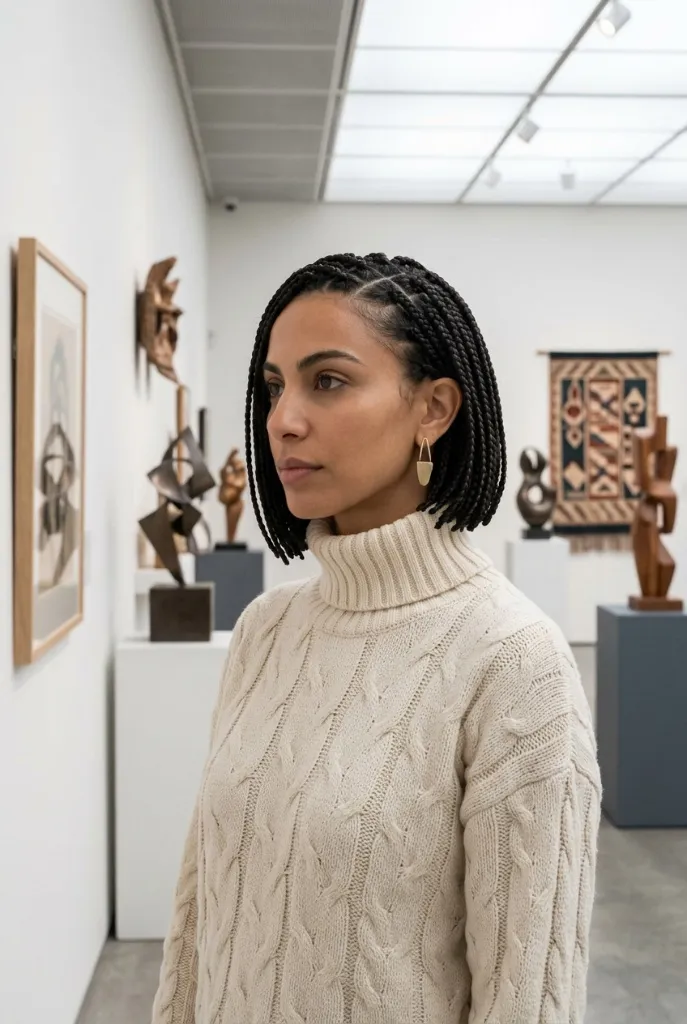
Two-strand twists installed to chin length and shaped into a graduated bob — shorter at the nape, slightly longer at the face — using the same cut-after-installation technique as the blunt micro box bob but with a forward-angle instead of a uniform line. The twist technique here uses a smaller parting (about pinky-width) for density, creating enough individual twists that the bob has fullness without bulk. The graduated shape — sometimes called an A-line bob in straight-hair contexts — frames the jawline and creates the illusion of a longer neck. This specific construction works exceptionally well on 4A–4C hair where the coil pattern holds each twist securely without slippage, and the shorter length means less weight pulling on the scalp.
This is one of those styles that looks like it requires daily effort but genuinely doesn’t — the bob shape falls into place after removing your satin bonnet each morning, no mirror adjustment needed. If you’ve been exploring collarbone-length cuts but want protective styling benefits, this twist bob delivers similar framing with zero heat damage. A twist mist spray keeps the twists moisturized and prevents the dry, frizzy appearance that develops around week 3–4. Expect 4–5 weeks of wear before the twists begin to loosen and lose their defined spiral. The shorter length also means faster installation — typically 4–6 hours versus 8–12 for longer styles. Not suited for those wanting length or ponytail versatility. Intellectual cool.
12. The Beachside Knotless with Sun-Fade Color
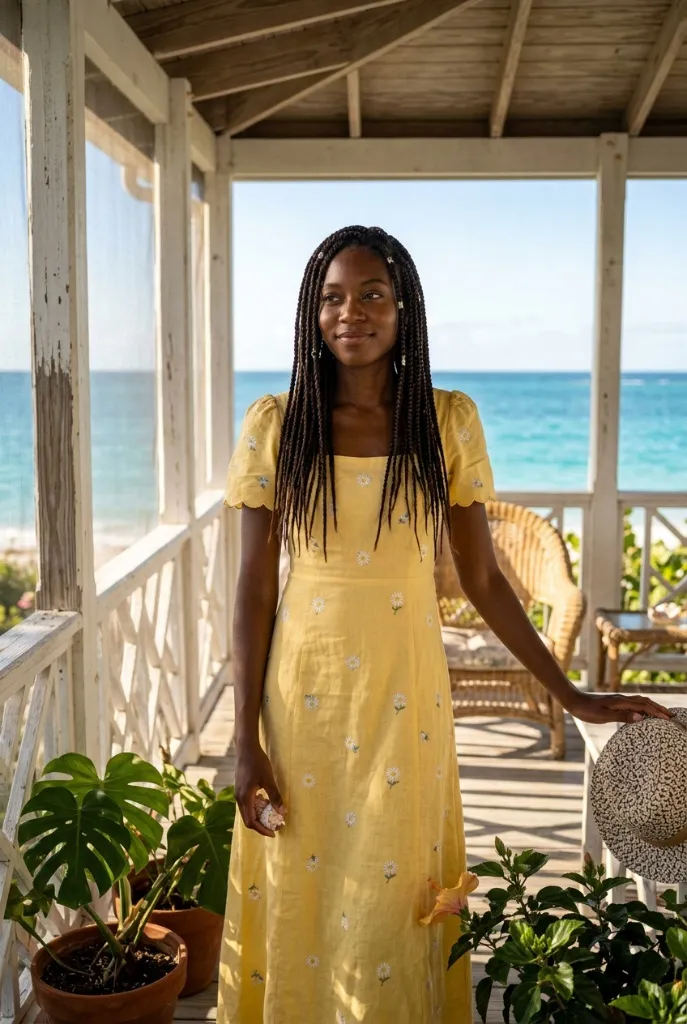
Medium-width knotless braids with a buttercream blonde dress and decorative braid cuffs — the construction here uses a slightly thicker parting than corporate braids (about thumb-width) which means faster installation and a more relaxed, less “gridded” appearance at the scalp. The braids themselves are medium length, hitting just below the shoulder blades, which is the sweet spot for those who want length without the weight of waist-length installations. The waist-level length here balances movement with manageability — heavy enough to drape nicely but light enough to not cause tension headaches during the first few days of wear.
The island context matters because these braids perform exceptionally in salt water and humidity — synthetic braiding hair doesn’t absorb moisture the way natural hair does, so ocean swims won’t expand or frizz the style. Rinse with fresh water after salt exposure, apply a light oil to the scalp, and let them air-dry completely before nighttime wrapping. This approach embodies the low-maintenance summer haircuts that grow out well philosophy because your natural hair underneath is growing freely without heat interference. The medium width holds for 5–7 weeks, threading the needle between micro longevity and jumbo ease-of-removal. Avoid if your natural hair is extremely short (under 2.5 inches) — medium-width knotless need adequate grip length. Island ease.
13. The Braided Chignon Updo
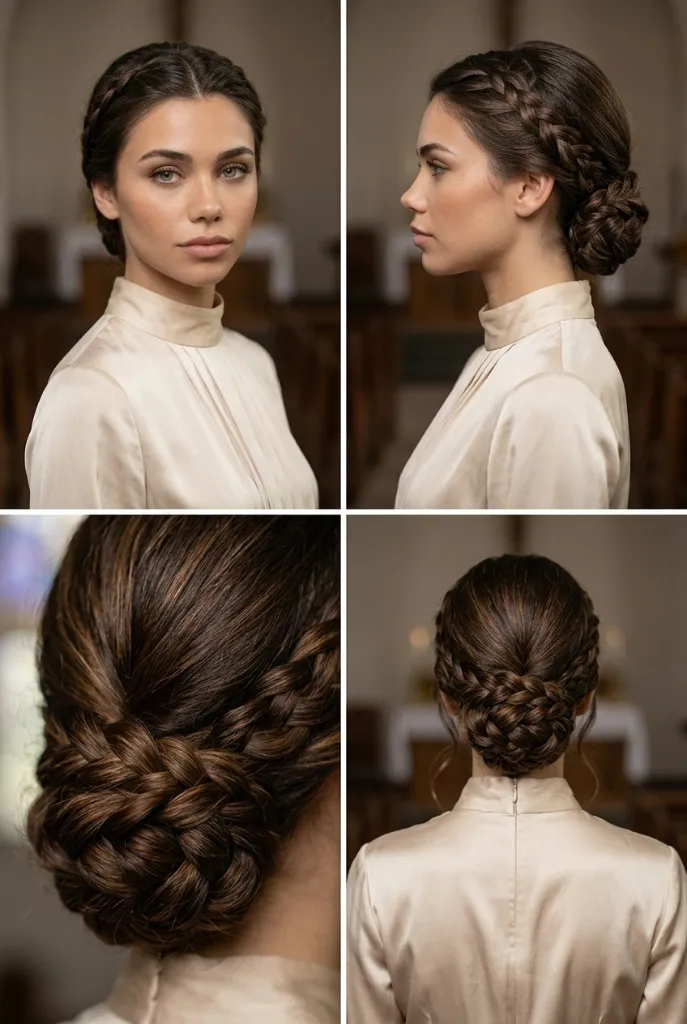
This updo uses a combination of French braiding and fishtail technique — the sides are French-braided (incorporating hair with each stitch) while the bulk is gathered into a low fishtail that wraps into a chignon at the nape. The mechanical advantage of combining these two braiding methods is structural: French braids lock the hair flat against the head while the fishtail creates a wider, flatter braid that wraps into a more natural-looking bun than a standard three-strand would. This works on medium to thick straight or wavy hair (1B–2B) with at least shoulder-length to reach the chignon. The pearl pins inserted at intervals serve both decorative and functional purposes — they help anchor the chignon wrap in place.
This is an event style, not an everyday style — the construction relies on second-day hair or texturizing powder at the roots for grip, and it holds for approximately 12–16 hours with proper pinning before requiring a reset. A medium-hold hairspray applied in light layers during construction (not drenched at the end) gives the best hold without crunchiness. The trim schedule doesn’t apply here since this is a styling technique rather than a cut, but maintaining layers at mid-length proportions gives the braids more texture to grip. Skip if your hair is freshly washed and slippery — the braids will slide out within hours. Bridal elegance.
14. The Silver-Ombré Goddess Braid

The braiding technique combines knotless box braids with goddess-style curly extensions woven into the lower third — but the color here is what elevates: a deep charcoal root melting through ash brown into sterling silver tips with loose barrel-curl ends. The silver braiding hair uses a pre-colored synthetic fiber that reads as platinum in sunlight and smoky pewter in shade. The knotless construction at the root keeps the base flat and pain-free, while the wavy ends are achieved through a cold-water setting method on the synthetic hair (braiding hair wrapped around flexi-rods, then dipped in cold water rather than hot for a softer, less uniform wave). Works on all natural textures since it’s a fully installed protective style.
The silver color requires no maintenance — no purple shampoo, no toning, no brass-fighting because the synthetic fiber holds its manufactured shade indefinitely. This is braided hairstyles for summer 2026 at their most fantasy-forward, suitable for festivals, weddings, editorial shoots, or anyone who simply refuses to be subtle. The curled ends require the same finger-detangling routine as any goddess braid (daily, gentle, with a spray leave-in) and the overall style lasts 4–6 weeks. Nighttime care involves a loose satin bonnet large enough to contain the volume without crushing the waves. Avoid if you work in conservative environments where platinum-silver hair would be out of context — this is a statement, not a whisper. Ethereal power.
15. The Pink Braid Top Knot
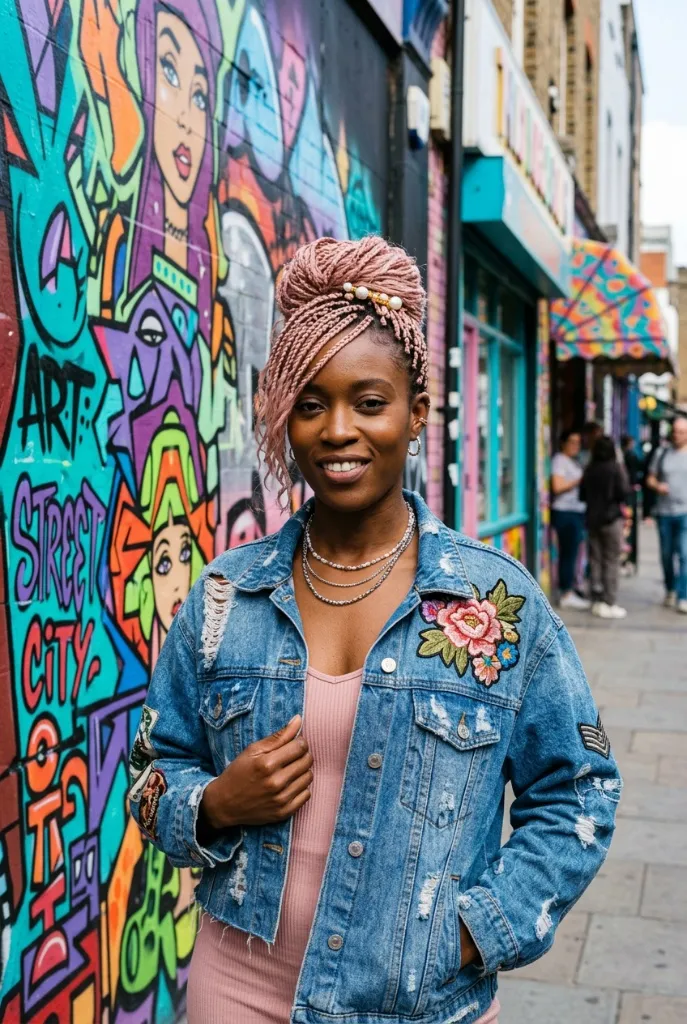
Micro braids in a dusty rose pink — not bubblegum, not magenta, but that muted rose-gold-adjacent pink that sits somewhere between smoky mauve and ballet slipper — gathered into a high top knot with a few strands left loose for framing. The braids themselves are traditional three-strand micro braids (roughly the width of a mechanical pencil lead) with sealed ends, and the top-knot styling is achieved simply by gathering and wrapping — no pins needed when the braids have enough length to coil around themselves. Installation on 4A–4C hair at this micro size takes a full day (10–14 hours), but the payoff is 10–12 weeks of wear and endless styling versatility.
The top knot is just one of dozens of configurations these micros can achieve — buns, ponytails, half-ups, space buns, braided braids (braiding the braids into larger plaits), French-rolled sides. That’s the mechanical advantage of micro braids: their hair-like fineness allows them to be styled exactly like loose natural hair would be. A silk scrunchie for the top knot prevents indentation marks on the braids when you take it down. The pink color adds personality without the commitment of bleaching your natural hair — the braiding hair arrives pre-colored. This works particularly well for anyone exploring short summer haircuts in spirit but not ready to lose length. Not for the impatient — that installation time is real. Urban playful.
16. The Platinum Braided Crown Bun
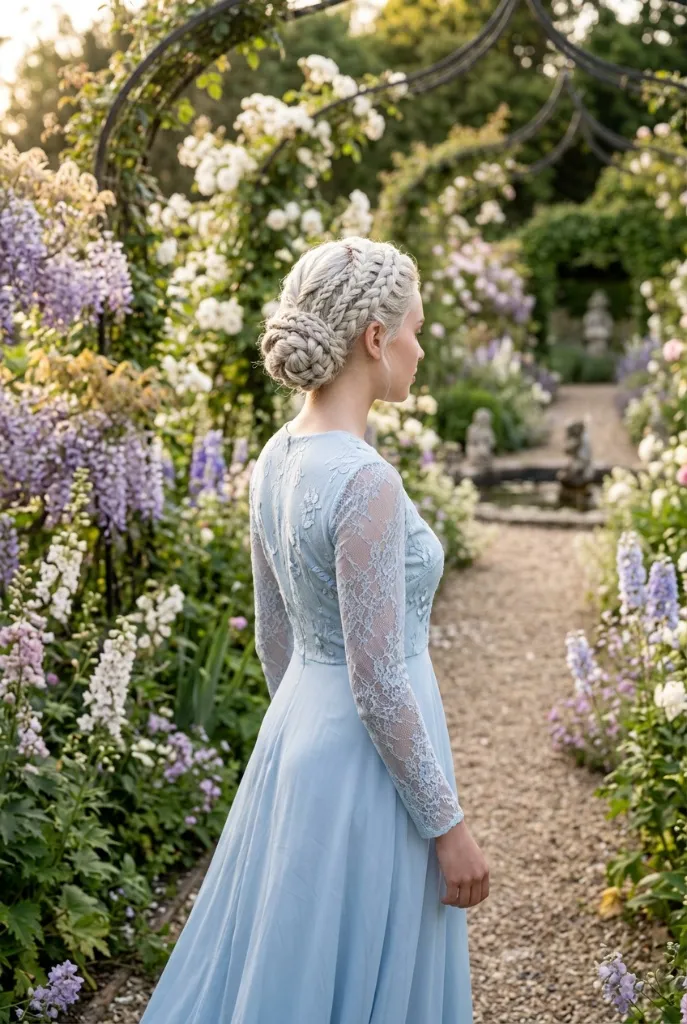
This style uses thick Dutch braids — the inverse of a French braid, where strands cross under rather than over, making the braid sit raised above the scalp’s surface — wrapped into a figure-eight coil at the nape. The platinum blonde shade is a true linen blonde with icy undertones, no warmth whatsoever, achieved either through lightening the natural hair or (preferably for hair health) braiding in color-matched extensions. The Dutch braid construction provides the necessary structural rigidity to hold the bun shape without excessive pinning — typically only 4–6 pins secure the entire construction because the braid’s own tension maintains the coil. Best suited for medium to thick hair (straight through 2B) with at least armpit-length to create adequate bun volume.
This is a special-occasion style that demands clean-sectioned, tangle-free hair as its starting point — dry shampoo or texturizing powder at the roots provides grip, while a smoothing serum along the lengths prevents flyaways within the braid. The construction holds for 16–20 hours with proper pinning, though humidity may cause some wisping at the hairline (which, honestly, often looks better than the pin-perfect version). The Dutch braid’s raised profile is what makes this read as a “crown” — it adds dimension and height that a flat French braid simply cannot replicate. A refresher trim isn’t necessary for the style itself, but healthy ends braid more neatly than split ones. Avoid if your arms tire easily — this is a challenging self-braid and may require a friend or stylist. Fairytale structure.
17. The Crown Braid with Pearl Accents

A milkmaid-style crown braid — two braids starting behind each ear, wrapped over the head and pinned — elevated with freshwater pearl pins spaced at 2-inch intervals along the braid’s surface. The braiding technique here is a standard three-strand with medium tension, not overly tight (which would flatten the braid) and not loose (which would make it collapse within hours). The visible texture is maximized by gently “pancaking” — pulling the outer edges of each braid stitch outward after completion to create a wider, flatter, more voluminous braid appearance. This technique works on hair from fine to medium density, straight through 2C, with at least past-shoulder length required for the braids to reach across the crown.
The pearl accessories serve a dual purpose: decorative and structural, since each pin adds an anchor point along the crown. Application of a flexible-hold hairspray during construction — not after — ensures each section is set before being pinned into place. The softly loosened face-framing pieces aren’t accidental; they’re intentionally pulled from the temple area before braiding begins, then curled with a small-barrel iron to create those romantic tendrils. This style pairs naturally with the garden-party aesthetic that’s dominating summer event dressing. The hold time is 10–14 hours before the crown begins shifting backward. Not suited for thick, heavy hair that resists being pinned upward — gravity wins against density here. Romantic whimsy.
18. The Dusty Rose Micro Twist

Micro Senegalese twists in a color I’d call dusty rose with mauve undertones — not the bright pink of earlier seasons but a muted, almost vintage-toned pink that leans slightly purple in cool light and slightly peach in warm. The two-strand twist technique at this fine diameter creates a rope-like texture that’s smoother and more uniform than braids, with each twist maintaining its spiral pattern through the natural torque of the wrapped strands. The parting pattern uses a brick-lay method (staggering the parts like bricklaying rather than aligning them in a grid) which creates a fuller, more natural-looking density at the scalp and prevents visible “rows.” Works on 3B–4C textures with any density, as the micro size adapts to both sparse and thick natural hair.
The color payoff of synthetic braiding hair versus dyeing your own strands cannot be overstated — zero ammonia, zero developer, zero damage, and this exact shade of dusty rose would require multiple salon sessions to achieve on natural dark hair. Installation takes a full day but yields 8–10 weeks of wear with proper maintenance: a diluted tea tree oil spray for scalp health, satin protection nightly, and a braid-and-twist refresher spray to prevent fuzzing. The micro size dries quickly after washing — an underrated practical advantage over thicker braids that can trap moisture and develop odor. These are the kind of braided hairstyles for summer 2026 that make strangers stop you on the street to ask where you got them done (or maybe that was just the golden-hour lighting, honestly). Avoid if you cannot sit for 10+ hours — micro installations demand patience. Soft power.