When Zendaya stepped out at the 2026 Met Gala with a deep apricot-copper wash through her signature waves, every colorist’s booking page crashed within hours. That single moment crystallized what had already been building on TikTok’s #SummerColorMelt hashtag and across salon chairs nationwide — the rise of peach-toned coppers, icy platinum washes, and rich berry saturations as the defining color palette of the season. Between the “expensive brunette” revival, the lavender hair renaissance, and the continued dominance of lived-in balayage, the color conversation this summer is broader and more specific than it’s been in years. People are done with safe, single-process neutrals — they want dimension, personality, and shades that look like they belong in golden-hour light.
The summer hair color for 2026 landscape covers everything from bold fantasy shades like smoky mauve and cherry cola to wearable naturals like champagne bronde and syrup brunette. You’ll find options suited to fine hair that needs the illusion of depth, thick coarse textures that benefit from strategic lightening, and wavy 2A–2C patterns that catch highlights in the most effortless way. Oval, round, and heart-shaped faces all get dedicated color-placement strategies this year — because where color falls around the face matters as much as the shade itself. Whether you’re exploring summer haircut trends for 2026 or looking for a low-maintenance cut that grows out gracefully, the common thread across every color on this list is the same: they all prioritize lived-in richness over salon-fresh perfection, and they’re built for real life in warm weather.
I spent two years clinging to an ashy mushroom brown that washed me out every single summer — convinced that going warmer would make me look “dated.” Last June, I finally let my colorist paint copper ribbons through my mid-lengths on a whim, and I genuinely didn’t recognize my own reflection in the best possible way. It turns out, fighting your season is the real mistake, and sometimes the boldest move is just letting warmth in.
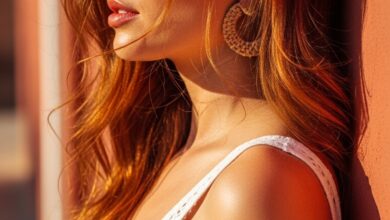
1. The Peach Crush Wave
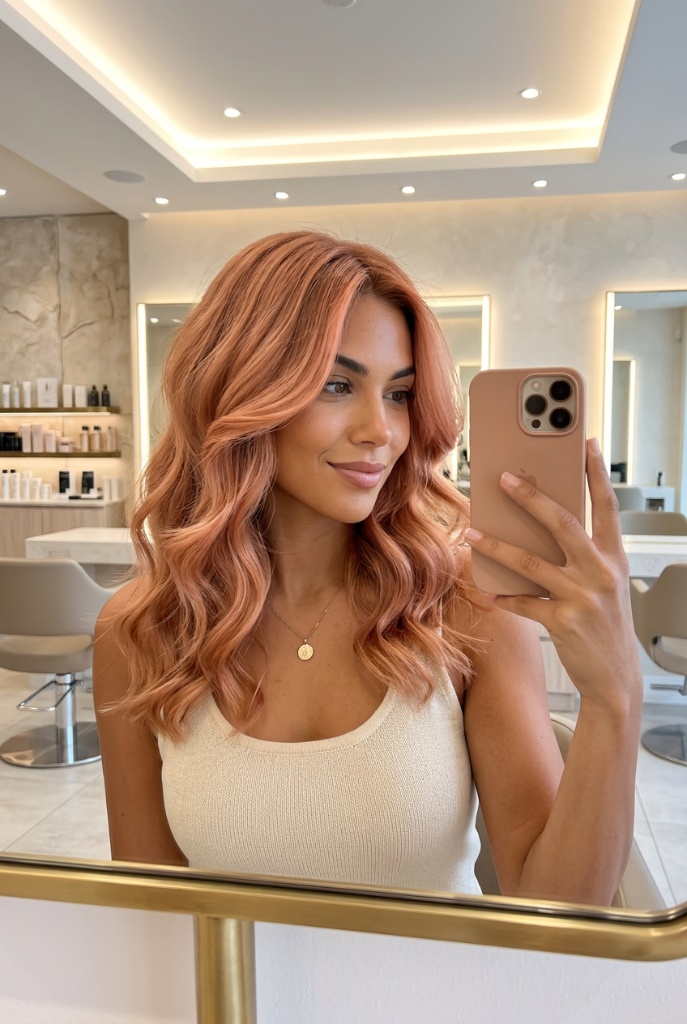
This shade sits at the intersection of copper and peach — what colorists are calling “apricot crush” — and it’s achieved through a balayage application where warm copper tones are hand-painted through a pre-lightened base, concentrating saturation at the mid-shaft and letting it diffuse toward the ends. The underlying technique involves lifting natural pigment to a level 8 gold base, then depositing a semi-permanent peach-copper glaze that reads warm and honeyed in direct light. It works exceptionally well on medium-density wavy hair in the 2A–2B range, where the natural wave pattern catches and refracts the multi-tonal color, creating movement that a flat iron could never replicate. On this texture, the color maintained its vibrancy without significant fading for roughly 4–5 weeks before needing a glaze refresh.
Styling here is minimal by design — a lightweight curl cream scrunched into damp hair, then air-dried or diffused on low heat to enhance the wave without disturbing the color’s dimension. The maintenance reality involves a color-depositing conditioner once a week in a peach or copper shade, plus a salon glaze every 5–6 weeks to prevent the peach from pulling too pink as it fades. The reason this color reads so well on waves is mechanical: multi-tonal pigment deposits create natural shadow and highlight as the hair curves, mimicking the kind of depth that would require three separate processes on straight hair. Skip if your natural base is darker than a level 4 — the lifting required to achieve this shade will compromise your hair’s integrity and the upkeep becomes unsustainable. Sun-warmed radiance.
2. The Sleek Syrup Brunette
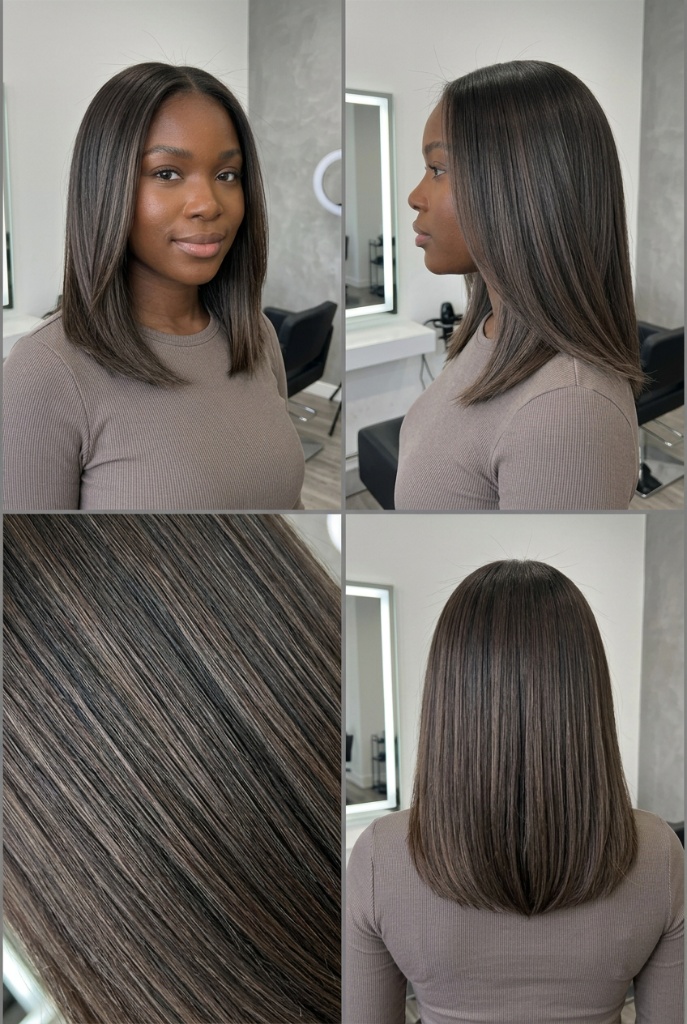
Syrup brunette is the shade that makes dark hair look expensive without going anywhere near blonde territory, and it’s accomplished through an extremely fine babylight technique — sometimes called “micro-weave highlights” — where sections thinner than a pinky nail are lifted just one to two levels above the natural base. The result is a glossy, almost lacquered dimension that catches light without reading as highlights at all. This works best on straight to slightly wavy hair with medium to thick density, where the fine light-play won’t get lost in curl compression. On hair this straight and smooth, the color held its tonal integrity for a solid 8 weeks before the babylights started looking even slightly grown out — which, honestly, is as good as maintenance gets for this kind of refinement.
A smoothing serum applied to damp hair before a round-brush blowout is the whole routine here, and you’ll want to finish with a lightweight shine spray to amplify that glass-like reflectivity that makes this color sing. Plan on trims every 6–8 weeks to keep the blunt perimeter sharp, since this kind of sleek color work loses its impact if the ends start splitting or looking ragged. The babylight technique works mechanically by creating the thinnest possible contrast between lifted and natural strands, so the eye reads “dimension” rather than “highlighted” — it’s a subtlety that flat single-process color simply cannot achieve. Not for anyone wanting a visible, high-contrast color change — this is stealth luxury, and if you need people to notice you colored your hair, this isn’t your shade. Quiet, liquid shine.
3. The Icy Platinum Veil
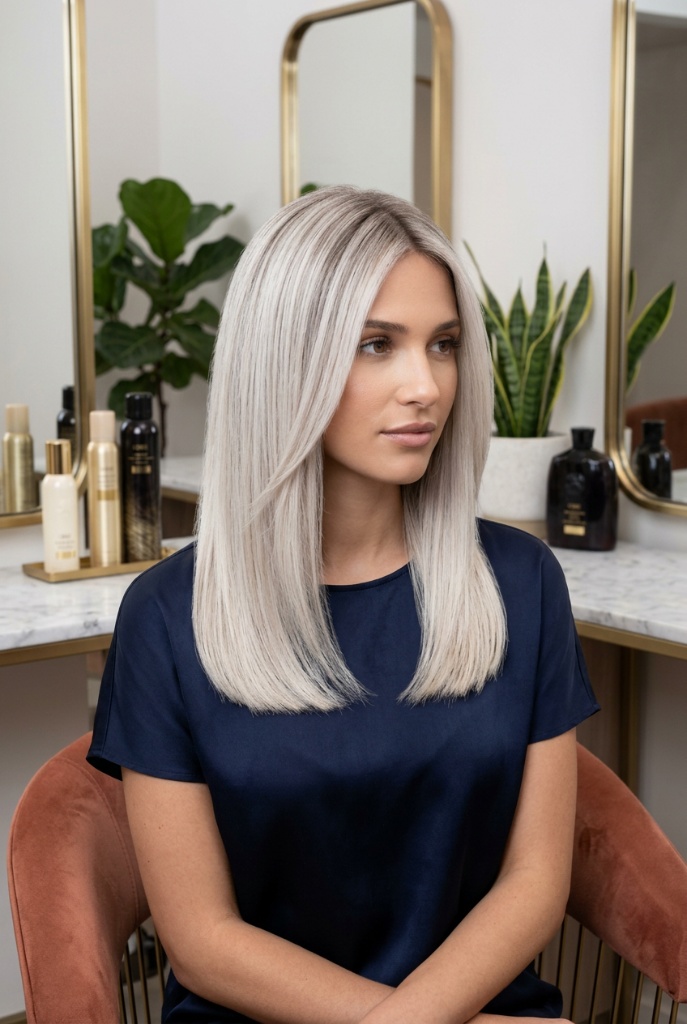
Going this pale requires a double-process — a full lift to level 10 followed by a custom toner that sits in the cool, slightly violet-based platinum family, neutralizing any residual warmth until the result reads like liquid silver. The precision matters enormously: even a slight toner miscalculation pulls this toward brassy gold or, worse, a muddy grey that reads aging rather than editorial. This shade is unforgiving and intentional, and it’s best suited for fine to medium hair that’s naturally light (level 6 or above) with a straight to barely-wavy texture, since the smoothness lets the color’s reflective quality do all the talking. In terms of longevity, the toner typically holds its truest cool tone for about 2–3 weeks before warming slightly, which means maintenance is a genuine commitment.
Purple shampoo becomes your primary styling product — used every second wash to counteract brassiness — alongside a bond-repair treatment weekly to mitigate the structural compromise of full-lift lightening. A smoothing serum and a flat iron on the lowest effective heat setting create that mirror-finish surface, and salon toner refreshes every 3–4 weeks are non-negotiable if you want to keep this side of icy rather than sliding into yellow. The mechanical principle is straightforward: when virtually all melanin has been removed from the hair shaft, the surface becomes a near-blank canvas that reflects ambient light with unusual intensity — which is why this shade looks dramatically different in warm versus cool lighting. Avoid if your hair is coarse, thick, or heavily processed — the damage required to lift and maintain this level of platinum will compound faster than treatments can repair. Frosted-mirror precision.
4. The Champagne Bronde Cascade
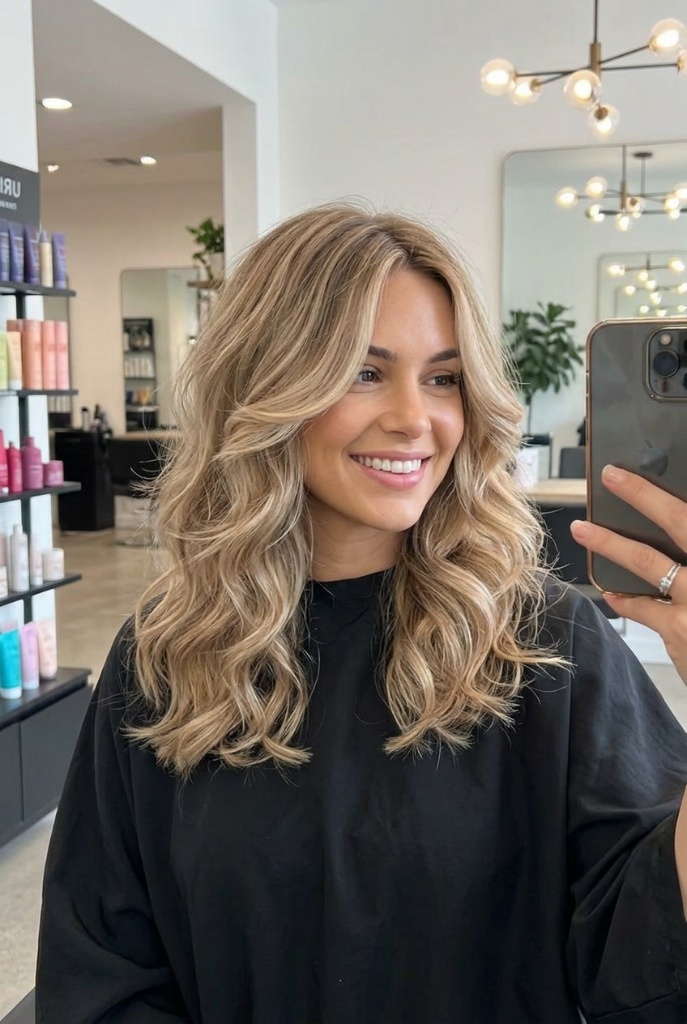
This is balayage done with a hand-painted champagne blonde overlay on a warm level-7 bronde base, and the key technique is “open-air processing” — the painted sections are left unwrapped so the lightener develops gradually and creates the soft, diffused graduation that gives this color its natural, sun-streaked quality. The color lands somewhere between a warm blonde and a light brunette, with honeyed undertones that lean golden without ever reaching full yellow. It’s ideal for medium-density wavy hair — the kind that already has natural body — and looks particularly effective on round and heart-shaped faces where the lighter pieces around the face create the illusion of lift and length. Color retention on this one is excellent: the blended nature of balayage means regrowth is virtually invisible for 10–12 weeks, making it one of the lowest-maintenance summer hair color for 2026 options on this list.
A texturizing spray scrunched into towel-dried hair followed by air-drying or a quick diffuse session is all this color needs to look intentional, and the natural wave pattern does the rest of the work. Trims every 8 weeks keep the mid-length shape from going shapeless, and a gloss treatment at the 6-week mark deepens the champagne tones if they’ve started fading toward a more generic blonde. The mechanical advantage of open-air balayage is that the gradual lightening creates dozens of micro-transitions between the base color and the highlighted sections, so the result reads as “naturally sun-bleached” rather than “processed” — which is why it looks better the messier you style it. Skip if you prefer high-contrast, uniform color — this is built for imperfection, and if that bothers you, a full foil highlight will serve you better. Effortless summer gold.
5. The Natural Espresso Gloss
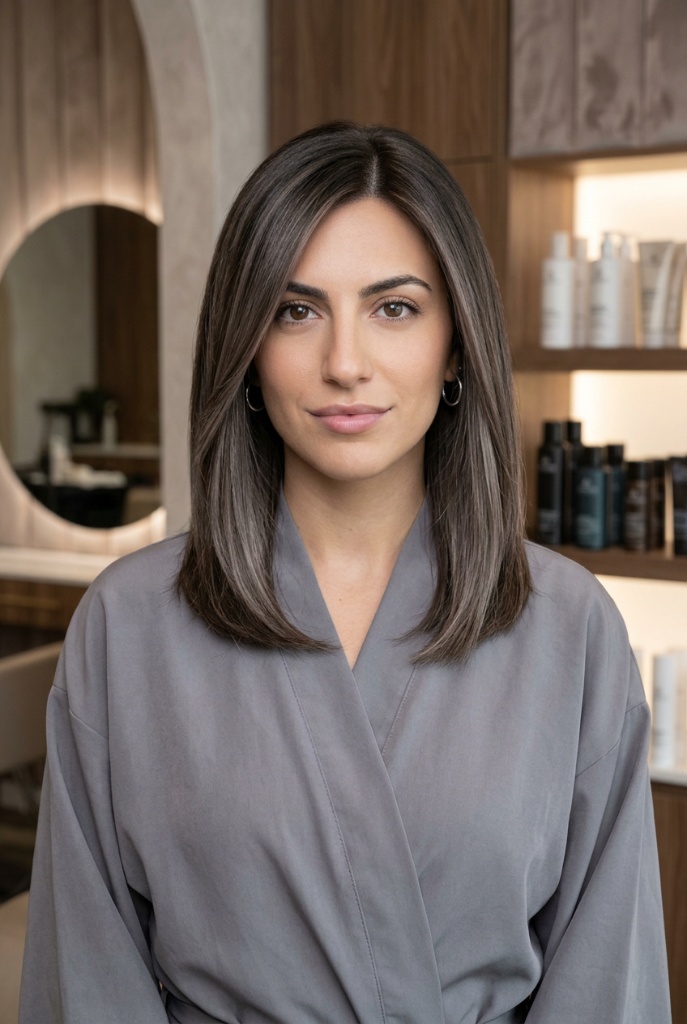
Sometimes the most effective color work is the kind no one can identify — and that’s exactly what a clear-to-smoky gloss over a natural dark brunette base achieves. This isn’t technically “coloring” in the traditional sense; it’s a demi-permanent glaze applied to virgin or previously untouched hair that deposits just enough tonal correction to shift the brown from flat to multidimensional, pulling it toward a cool espresso with the faintest ashy undercurrent. The gloss fills microscopic gaps in the hair cuticle, creating a physical smoothness that reflects light more uniformly. This works on virtually any hair type and density, though it particularly transforms medium-textured straight hair that tends to look “mousy” or undefined in its natural state. The glaze effect lasted impressively — about 6 weeks of noticeably elevated shine before gradually washing out to the natural base.
A lightweight smoothing serum is the only daily product requirement (which is all my fine hair can handle, frankly), and a round-brush blowout maximizes the mirror-like finish that makes this color worth the salon visit. Because the gloss is demi-permanent and sits on the surface rather than penetrating the cortex, there’s zero structural damage and no awkward grow-out — it simply fades back to your natural shade, making this the ideal collarbone-length color option for summer. The mechanical principle is essentially optical: the glaze creates a uniform surface that reflects rather than absorbs light, the same reason a polished marble floor looks different from matte concrete even when they’re the same color. Not for anyone wanting a visible color transformation — this is enhancement, not change, and it won’t photograph as dramatically different from your natural shade. Glass-finish subtlety.
6. The Warm Chocolate Blowout
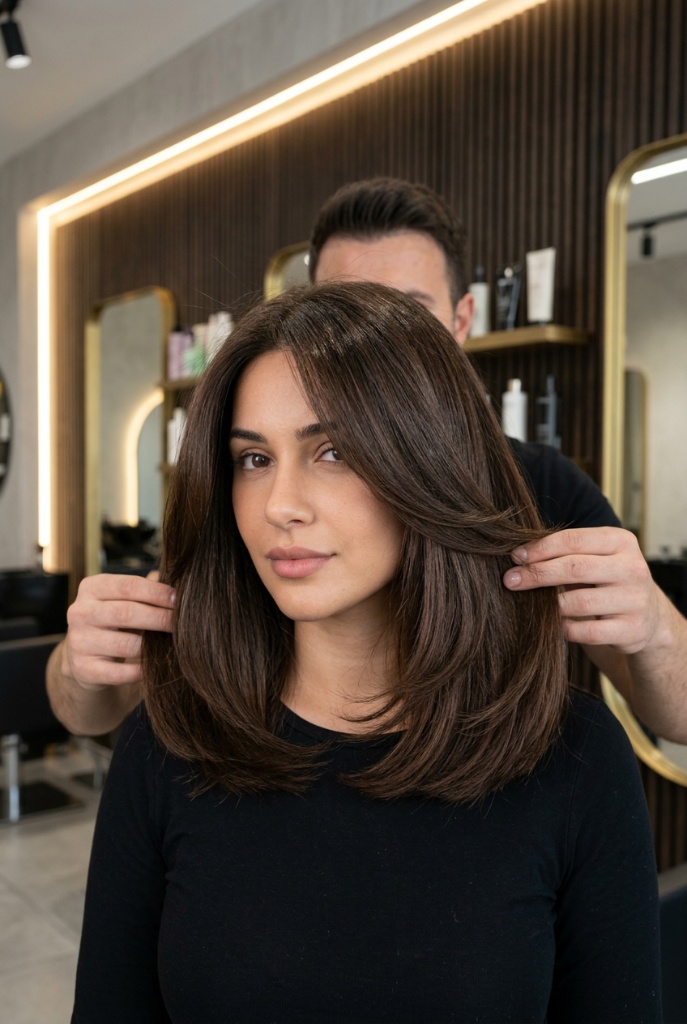
This is classic face-framing done through a foil highlight technique where warm caramel pieces are placed exclusively around the hairline and through the front sections, leaving the back and interior in a rich, level-4 chocolate brown. The contrast between the lighter frame and darker depth creates automatic dimension without the commitment of an all-over color change. Ghost layers — internal layers cut to remove weight without changing the visible length or outline — allow this medium-thick hair to achieve that voluminous, bouncy blowout shape without looking heavy or triangular. The cut and color combination is particularly effective on oval and heart-shaped faces, where the lighter front pieces draw attention upward. Those face-framing highlights maintained their warmth for about 6 weeks before the caramel started leaning slightly neutral, which is when a quick glaze refresh brings them back to life.
A volumizing mousse applied at the roots before blow-drying with a large round brush creates the body, and a medium-hold hairspray locks the shape without making the hair feel stiff or crunchy. Plan for foil touch-ups every 8–10 weeks and trims every 6 weeks to maintain the layered shape that makes the color placement effective — because the highlights are designed to fall along specific face-framing sections, and if the layers grow out of position, the highlighting pattern loses its purpose. The mechanical logic is simple: lighter tones advance visually (they appear closer to the viewer), so placing warm highlights around the face creates the illusion of the face being the focal point, essentially spotlighting your features. Avoid if you want an all-over lightening effect — this is strategic, targeted color, and the back of your head will still be decidedly brunette. Spotlight framing.
7. The Dimensional Honey Bronde
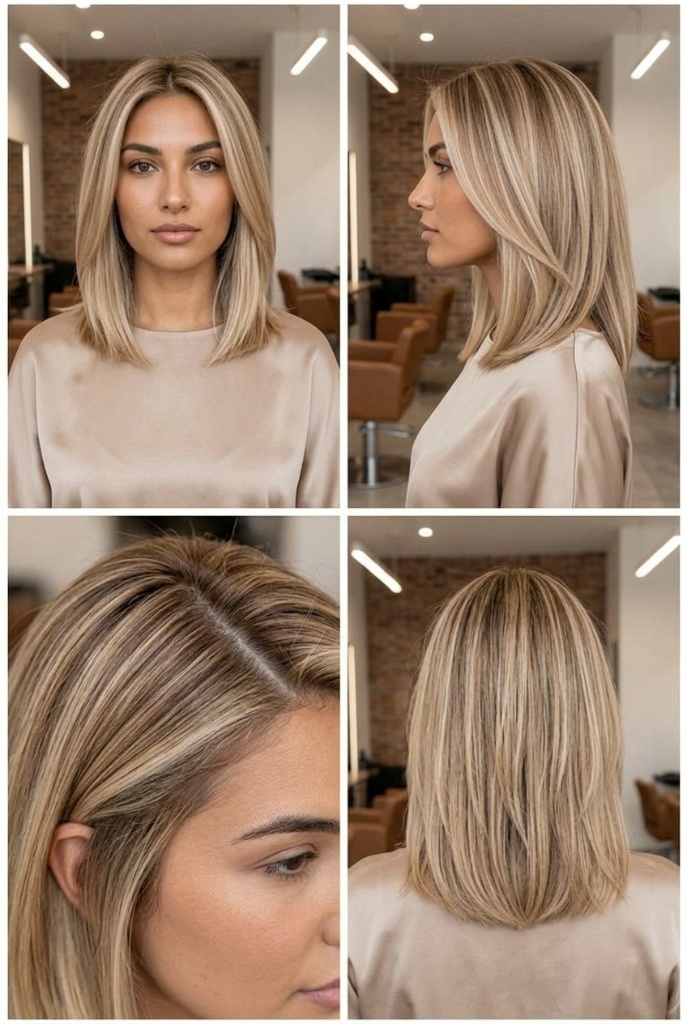
What makes this different from a standard highlight job is the “slicing” foil technique — wider, chunkier sections of hair are lifted to a warm honey level, creating visible panels of contrast rather than the seamless blend of traditional babylights. The result is deliberate, almost graphic dimension where you can actually see the interplay between the sandy level-6 base and the golden level-8 highlighted pieces. This works best on straight to slightly wavy medium-density hair, where the flat surface area allows each highlighted panel to read distinctly. On this texture, the highlighted sections held their golden tone without brassiness for a full 6 weeks, partly because the lift wasn’t extreme enough to create the rapid-fade problem that higher-lift platinum highlights face.
Styling is relatively low-effort: a smoothing cream through the mid-lengths and ends, then either air-drying or using a flat iron for that sleek, light-catching finish. Maintenance runs on the moderate side — foil touch-ups every 8–10 weeks and a toner refresh at the 5-week mark if the golden tones start leaning too yellow. The chunky slice technique works mechanically by creating wider surface areas of contrasting tone, which the eye processes as “movement” even when the hair is completely still — it’s a dimensional trick that fine babylights simply can’t achieve at this scale. Not for anyone who prefers a seamless, “did she or didn’t she” color result — this is meant to look highlighted, and if visible contrast bothers you, a traditional balayage will feel more comfortable. Bold, honest dimension.
8. The Sandy Balayage Wave
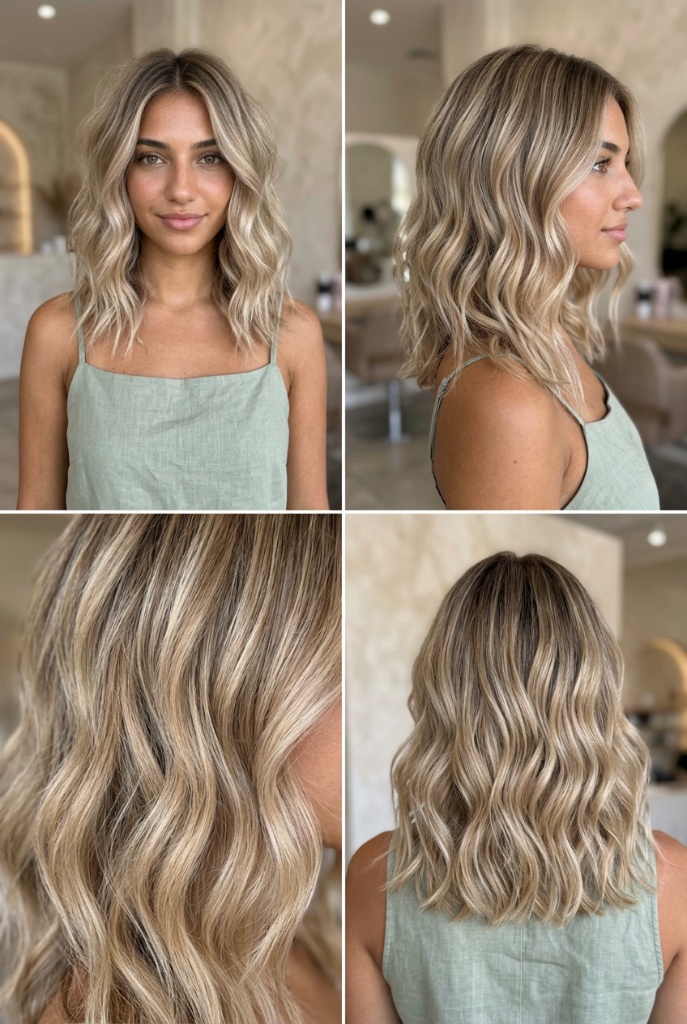
The root shadow here is the entire foundation — a deliberate 2-inch dark zone at the scalp that transitions into hand-painted sandy and champagne blonde through the mid-lengths and ends, created using a balayage technique where the colorist “melts” the transition zone with a darker glaze to prevent any hard demarcation line. The color reads as authentically sun-bleached because actual sun-bleached hair behaves exactly this way: dark at the roots where new growth pushes through, lighter where UV exposure has oxidized the melanin. This is ideal for medium to thick wavy hair in the 2A–2C category, where the natural wave pattern breaks up the color transitions even further. The root shadow is the key to longevity here — because the grow-out is built into the design, this color looks intentional for a remarkable 12–14 weeks between salon visits.
A salt spray is the hero product — applied to damp hair before scrunching and air-drying to enhance the natural wave and create that windswept, beach-day texture that makes this color come alive. Trims every 8 weeks maintain the shape, and the only color maintenance is a toning gloss around week 8 if the blonde sections start reading warmer than desired. The root shadow technique works mechanically as a visual anchor: the darker zone at the scalp creates the illusion of depth and density at the crown while the lighter ends open up the face — it’s the reason this looks equally good in a ponytail or worn down. Skip if you have fine, limp hair that doesn’t hold texture — this color’s entire appeal depends on wave and movement, and on flat hair, the root shadow just looks like neglected regrowth. Salt-air perfection.
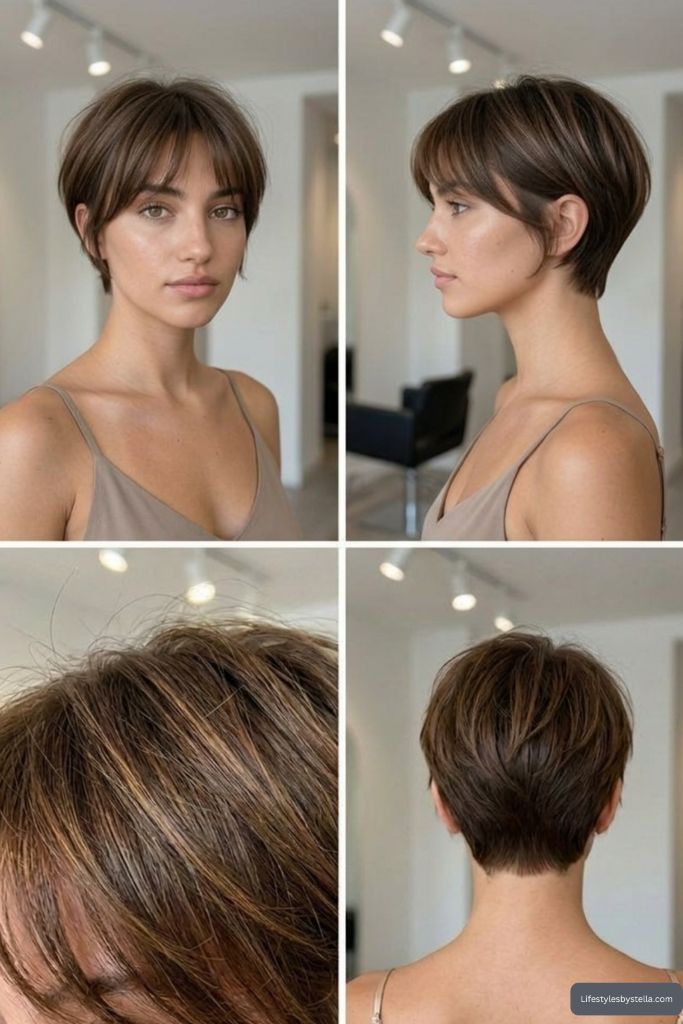
9. The Platinum Beach Lob
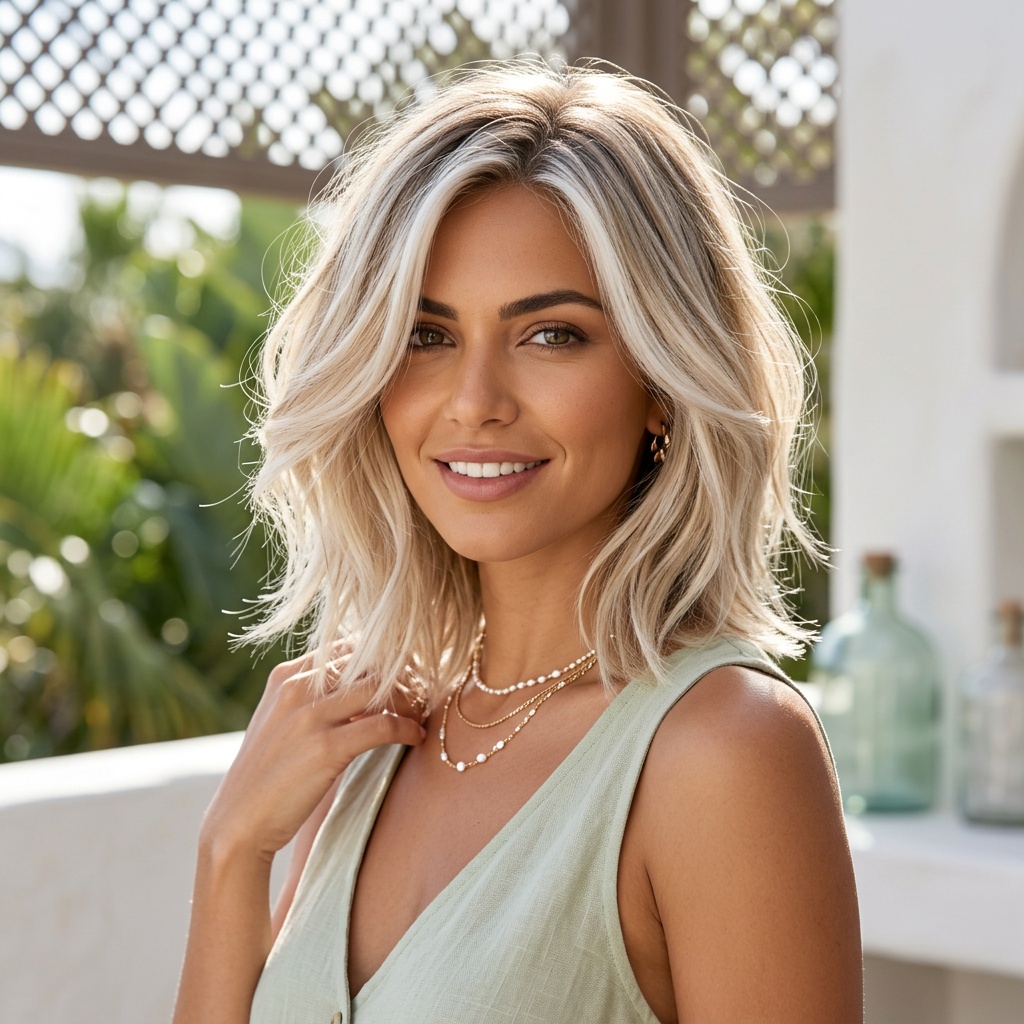
This is platinum that actually looks liveable — and the secret is the intentional root contrast combined with a razor-cut lob shape that creates piece-y, slightly disconnected movement through the ends. The platinum itself is a cool, icy shade deposited over a full lift, but instead of taking it all the way to the scalp, the colorist leaves a natural shadow root that’s roughly 1.5 inches long, which grounds the blonde and prevents it from reading costume-like. Razor cutting through the ends creates that slightly rough, textured perimeter that holds tousled styling without looking blunt or heavy. This combination works best on medium-density hair with slight natural wave — enough texture to create movement, but not so much curl that the razor-cut ends frizz. The shadow root bought an extra 3–4 weeks of wearability compared to a scalp-to-tip platinum application.
A texturizing paste — just a pea-sized amount worked through dry ends — creates the piece-y separation that defines this look, and a volumizing dry shampoo at the roots adds the lift that keeps the lob from falling flat against the head. This is still a platinum shade, so purple shampoo every other wash and bond-repair treatments weekly are baseline requirements, with toner refreshes every 3–4 weeks. The razor cutting works mechanically by creating tapered, individually shaped ends that move independently rather than as a single mass — which is why this lob feels kinetic and slightly undone even when there’s no wind. If you’re considering a short summer cut this year, this platinum lob is the bridge between commitment and caution. Avoid if you heat-style daily — the combination of platinum processing and regular flat-iron use will snap these already-compromised ends within weeks. Cool-girl platinum.
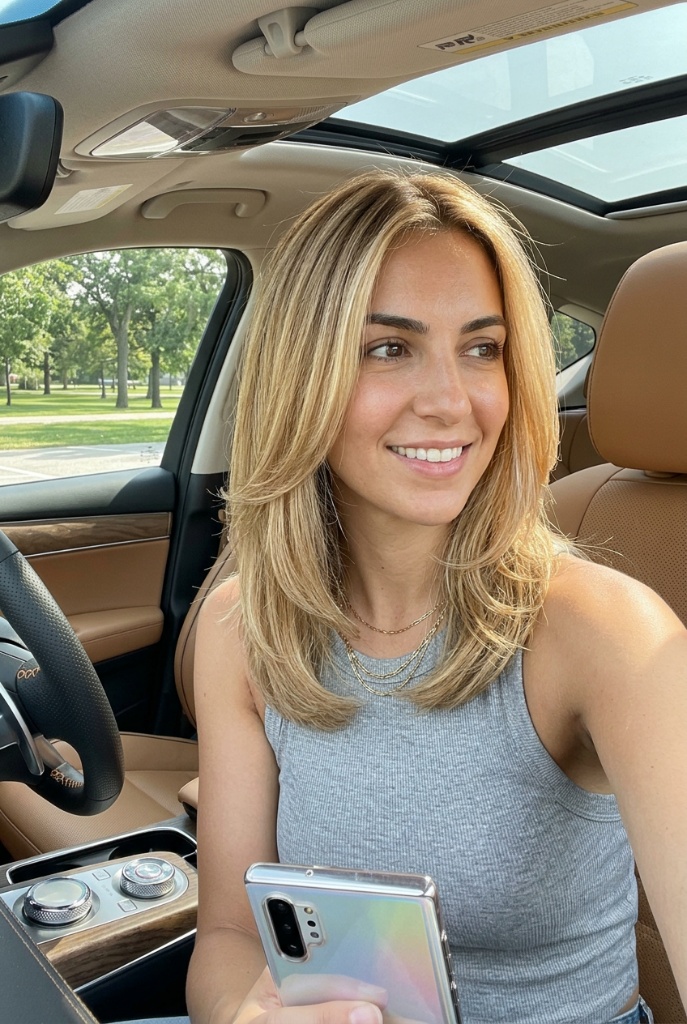
10. The Warm Honey Cascade

The color here is what I’d call “liquid honey” — a warm, level-8 golden blonde with caramel undertones that avoids the ashy territory entirely, achieved through a full-head foil with a warm golden toner that pulls the entire result toward a cohesive, rich warmth. The subtle dimension comes from alternating two toner formulas across the foils: one slightly deeper caramel, one lighter honey, creating variation within a very narrow tonal range. This reads most beautifully on medium to thick straight hair, where the sleek surface becomes a light-reflecting plane that showcases every micro-transition between the two warm tones. For face shape, this particular shade and length combination — falling just past the collarbone with subtle layers — is especially flattering on longer face shapes where the width of the color and cut adds visual balance. The warm toner held admirably for about 5 weeks before starting its inevitable drift toward a cooler, more neutral blonde.
A smoothing serum through damp hair followed by a blow-dry with a large round brush is the styling method — nothing more, nothing less — and a finishing spray for shine amplifies the honey quality of the color. Toner refreshes every 5–6 weeks and root touch-ups every 8 weeks keep this looking intentional rather than grown-out, and trims every 6 weeks maintain the layered shape that gives the blowout its polished bounce. The dual-toner technique works because the eye can’t isolate the two shades individually but reads their combined effect as “richness” — similar to how a painter uses multiple yellows in a single sunlight passage rather than one flat tone. Not for anyone who avoids warm tones — there is zero coolness in this shade, and if you’ve spent years chasing ashy blonde, this golden warmth will feel like a different universe. Honeyed warmth, refined.
11. The Pastel Rose Straight Lob
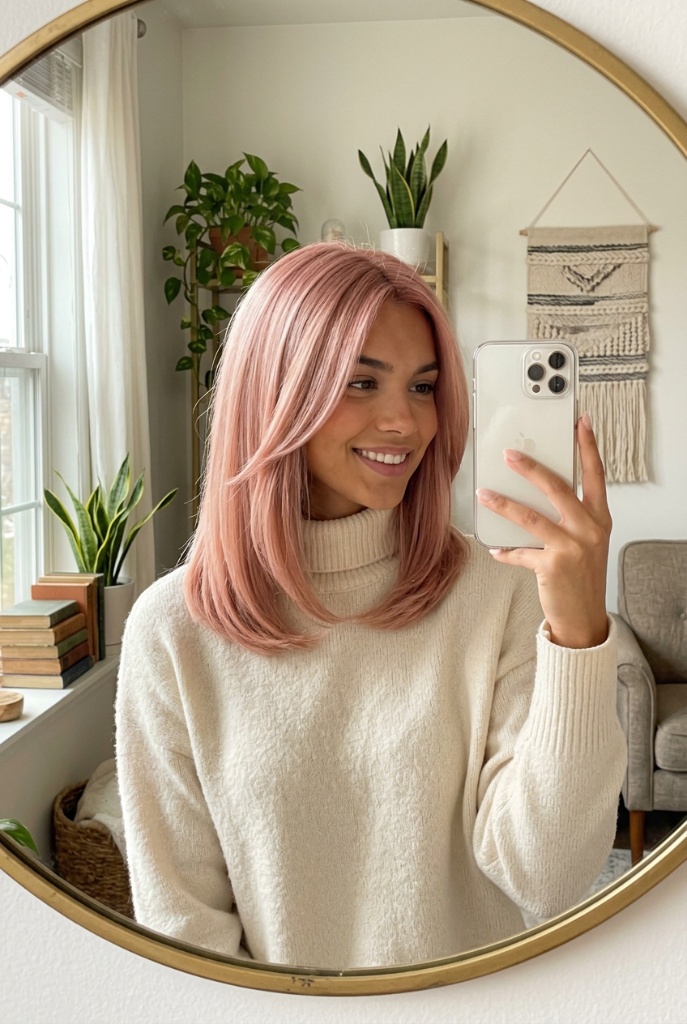
Pastel pink — specifically this dusty, muted rose shade — requires pre-lightening to at least a level 9 pale yellow base before depositing a semi-permanent pink with a warm, slightly peachy undertone that prevents the shade from reading bubblegum or juvenile. The application here is a full, even saturation rather than a balayage pattern, which creates that solid, almost candy-coated uniformity that makes the color look intentional rather than faded. The blunt-cut lob perimeter — no layers, no texturizing — keeps the shape clean and graphic, which counterbalances the inherently playful nature of the pink shade. This works on fine to medium straight hair where the sleek texture allows the color’s uniformity to shine, and the solid color maintained its intensity for about 3 weeks before beginning a gradual fade toward a softer, more washed-out rose (which, honestly, looked equally good).
A color-depositing conditioner in a pink or rose shade used every wash is the single most important maintenance product — it refreshes the deposit each time and extends the time between salon visits significantly. A lightweight smoothing serum and air-drying is sufficient for straight textures, though a flat iron can sharpen the blunt perimeter if the ends aren’t cooperating. Trim schedule is every 6 weeks to keep that blunt line crisp, because nothing undermines a graphic color like this faster than ragged, split ends. The mechanical reason the blunt cut works here is that uniform color looks most impactful across a uniform surface — layers would break up the color into segments that fade at different rates, creating patchy inconsistency. Skip if you aren’t willing to pre-lighten to a near-white base — this shade deposited over darker hair reads muddy or brown-tinted, and there’s no shortcut around the lift. Dusty rose confidence.
12. The Smoky Silver Transition

This isn’t “going grey” — this is deliberately engineered silver, and the technique involves a full lift to level 10 followed by a custom ash-violet toner that pushes the result past platinum into genuinely metallic silver territory, with a deliberate 2-inch natural root fade that grounds the look and adds dimension. The transition zone where the dark root melts into the silver is the hardest part technically, requiring a hand-painted shadow root using a demi-permanent ash formula that bridges the two tones without creating a visible line. Medium-density straight hair carries this best because the smooth surface showcases the tonal gradient from root to end, and the silver’s reflective quality is maximized on undamaged, cuticle-sealed strands. The toner’s cool silver tone held for about 2–3 weeks before warming slightly toward a more traditional platinum, making this one of the higher-maintenance colors on this list.
Purple shampoo is mandatory — every wash, no exceptions — and a bond-strengthening mask once weekly is essential to keep the twice-processed hair from feeling like straw. Styling should be minimal: a smoothing serum and air-drying, or the lowest heat setting on a flat iron if you need to refine the finish. Toner refreshes every 2–3 weeks keep the silver reading cool rather than warm, and root touch-ups every 6–8 weeks maintain the shadow root’s intentional gradient. The shadow root technique works mechanically by creating a visual “fade” that mimics natural regrowth patterns — the eye reads it as organic rather than dyed, even though the silver itself is obviously artificial, and that contradiction is what makes it look modern rather than aging. Avoid if your hair has been previously colored with permanent dye in the last 6 months — lifting through old color creates unpredictable undertones that will fight the silver toner relentlessly. Deliberately metallic.
13. The Glossy Espresso Curtain
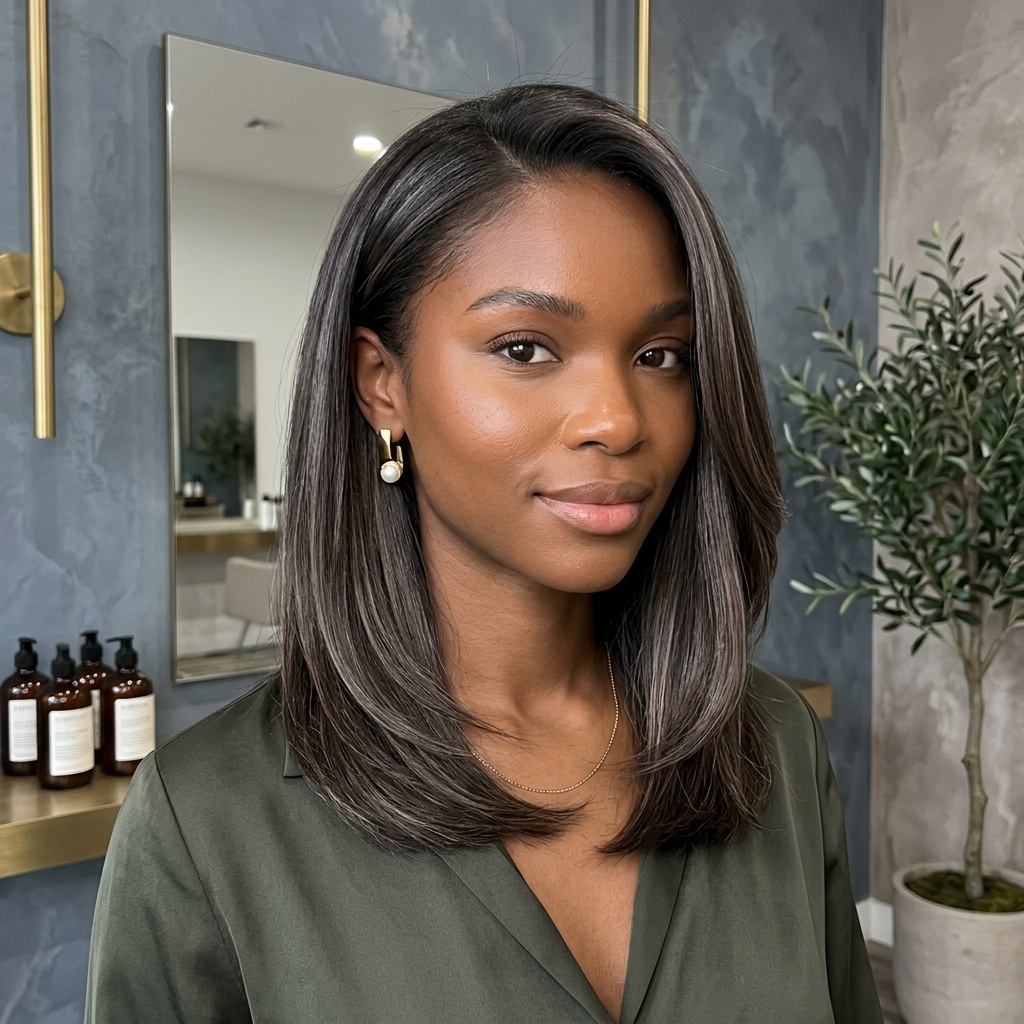
Deep, saturated espresso brown — achieved through a single-process permanent color at level 3 with a neutral-to-cool undertone — is having a significant moment as the antidote to years of highlighted, dimension-heavy color trends. The application is straightforward: root-to-tip deposit of a rich, uniform brown that reads almost black in low light but reveals warm chestnut undertones in direct sunlight. The “curtain” element comes from the cut: long, face-framing layers that part naturally and drape around the face in two panels, created through point-cutting that thins the interior of each layer for movement without reducing the perimeter weight. This suits thick, straight to slightly wavy hair where the density supports the single-process color’s depth, and the uniform tone maintained its richness for a solid 6–8 weeks before any noticeable fading or root visibility.
The styling routine is minimal — a smoothing serum on damp hair, then either air-drying or a blow-dry with a paddle brush for that polished, sleek drape. Because this is a deposit-only process with no lifting, there’s virtually zero damage, which means your trim schedule is dictated by the cut shape rather than strand health — every 6–8 weeks keeps the face-framing layers falling correctly. Point-cutting the interior of each layer works mechanically by reducing bulk from within — the outer perimeter retains its weight and clean line while the internal thinning allows the hair to move and drape rather than sitting in a solid, heavy curtain. If you’re looking for summer haircuts that flatter round faces, this face-framing espresso approach creates instant elongation. Not for anyone craving visible dimension or highlights — this is monochromatic by design, and if flat color bores you, look elsewhere. Single-shade richness.
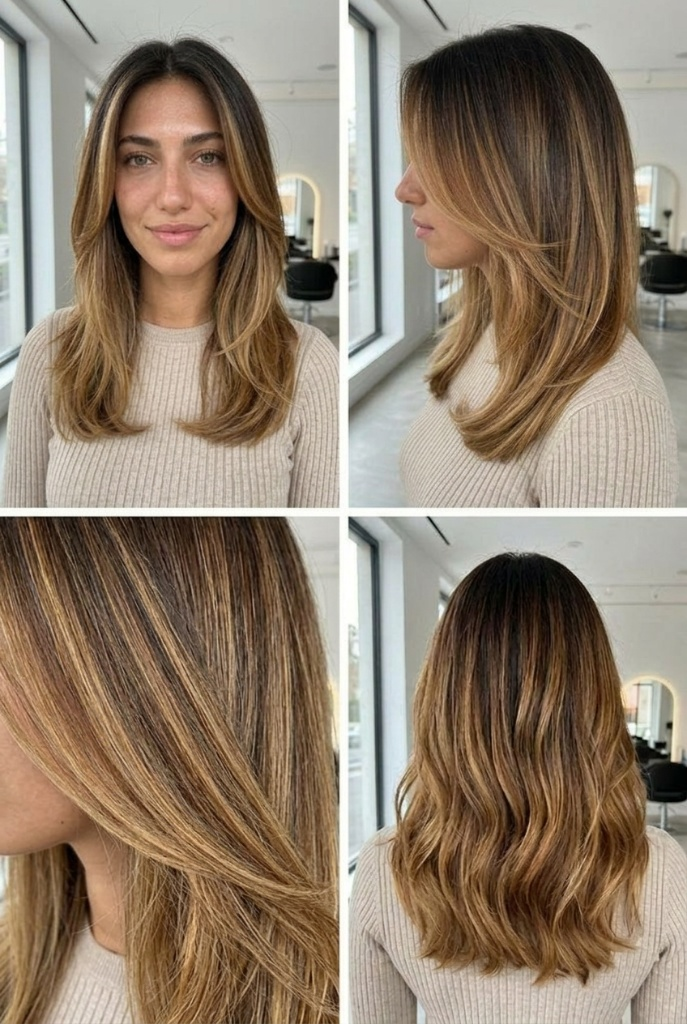
14. The Golden Caramel Lob
This is the summer hair color for 2026 that will look good on the widest range of people, and the technique is a partial foil highlight using a warm golden formula that lifts sections to a level 8 caramel before depositing a honey-toned glaze over the entire head for cohesion. The partial foil approach means only the top sections and face-framing pieces get lightened, preserving the natural depth underneath and creating that “lit from above” dimensional quality that mimics actual sunlight exposure. It’s suited to medium-density hair with straight to wavy texture, and the warmth of the golden caramel tones complements warm and neutral skin undertones particularly well. The glaze over the entire head is what ties it together — without it, the foiled sections would look disconnected from the base, but the golden overlay creates a unifying warmth. The color grew out gracefully for about 10 weeks before the foiled sections needed refreshing.
A lightweight texturizing spray for air-dry days and a round brush blowout for polished days — those are the two modes this color lives in, and both look equally good. Foil touch-ups every 10–12 weeks and a midpoint glaze refresh around week 6 keep the golden warmth from fading into a flat, neutral blonde that lacks personality. The partial foil technique works mechanically by concentrating lightness where natural sunlight would hit — the crown, part line, and face frame — while leaving the underside and nape at a natural level, creating realistic contrast without all-over processing. Skip if you have very cool, pink-toned skin — this much golden warmth will clash with cool undertones and create a ruddy, unbalanced appearance. Sunshine in a bottle.
15. The Copper Penny Blow-Out
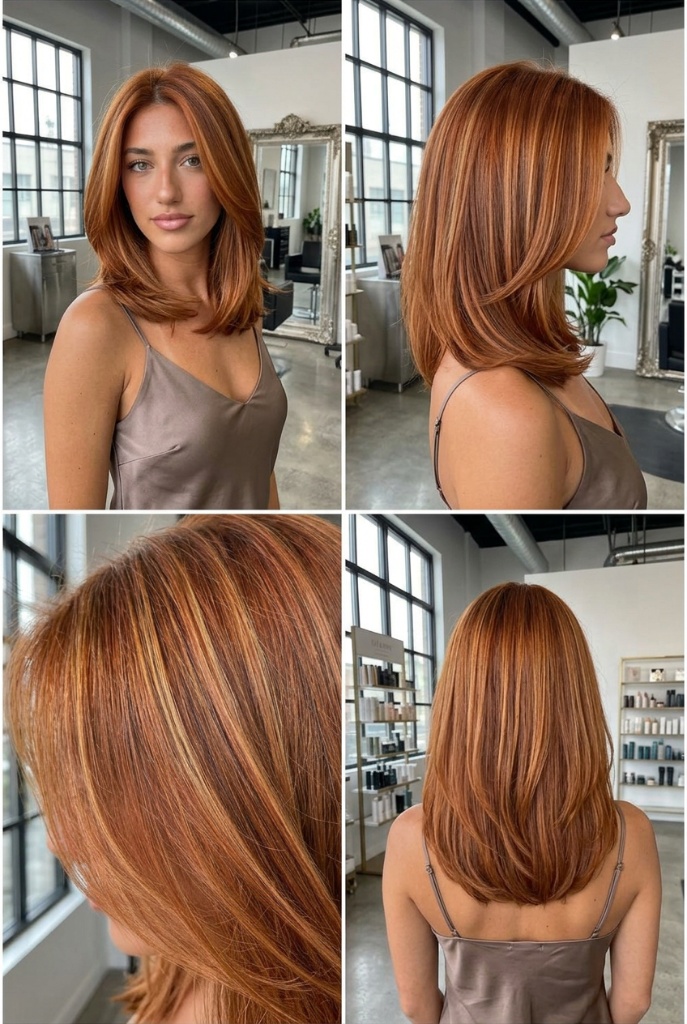
True copper — not strawberry, not auburn, but a legitimate level-7 copper penny with amber and rust-toned dimension — is the color that separates committed hair enthusiasts from everyone else, because it’s simultaneously the most head-turning and the most demanding shade on this list. The technique involves lifting to a gold base, then depositing a copper-forward formula with a warm amber underlying pigment that prevents the shade from pulling too red or too orange. Internal layers cut with a razor create the voluminous, flipped-end silhouette that gives this blowout its retro-modern shape, with the layering starting at the chin to create face-framing movement. This color reads best on medium to thick straight hair where a round-brush blowout can create that polished, intentional volume — and it particularly suits oval and oblong face shapes where the width of the blowout balances the length. The copper maintained its vivid saturation for about 3–4 weeks before the amber undertones started to dominate, which is the natural fade pattern for this pigment family.
A volumizing mousse at the roots before blow-drying with a medium round brush — working in sections from nape to crown — creates the shape, and a light-hold hairspray preserves the volume without stiffness. Color maintenance is the real conversation here: copper is one of the fastest-fading color families, so a color-depositing conditioner in a copper shade every single wash, plus salon toner refreshes every 3–4 weeks, are the baseline. The razor-cut internal layers work mechanically by removing bulk from the interior of each section, allowing the hair to expand and hold the voluminous blowout shape — without this internal thinning, medium-thick hair would collapse under its own weight within hours. Avoid if you aren’t prepared for aggressive color maintenance — this shade fades fast and fades visibly, and if you’re the type who stretches salon visits to 12 weeks, copper will punish you for it. Copper commitment, rewarded.
16. The Strawberry Honey Glaze
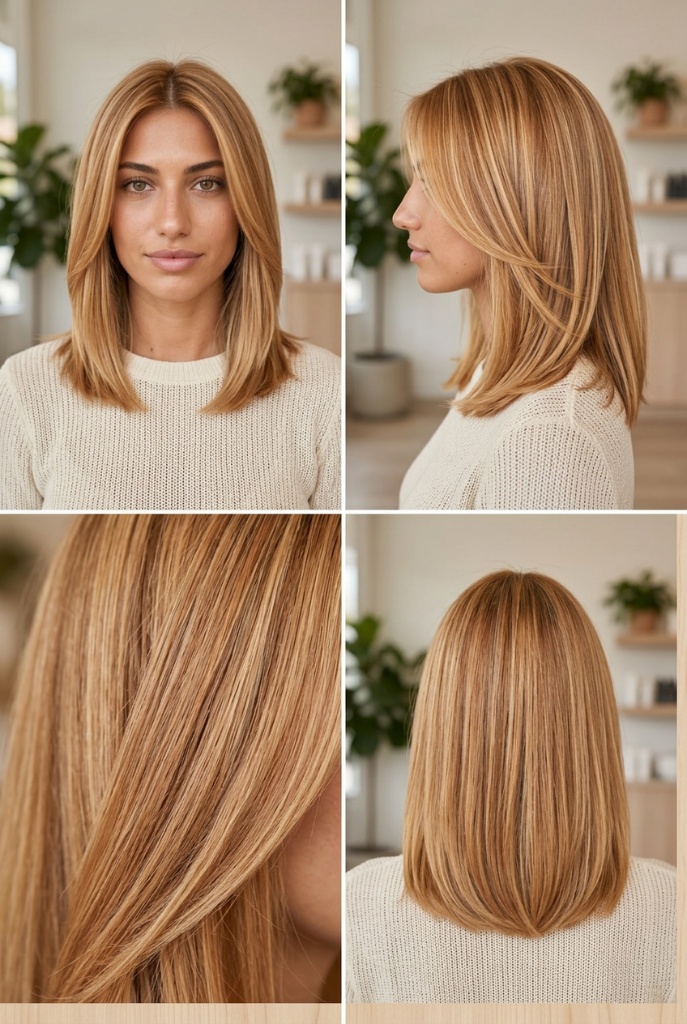
This occupies the delicate space between blonde and light copper — strawberry honey, where a warm golden base gets just enough red-family pigment to create a blush-like warmth without committing to full copper. The technique is a global glaze over pre-highlighted hair: the underlying highlights provide the lightness, and the strawberry-golden glaze deposited over the top shifts the entire result toward warm peach-gold. The cut uses long layers with a subtle bevel at the ends — created by angling the shears during cutting so each layer curves naturally inward — which gives the straight texture a polished, turned-under finish without requiring a round brush. This is ideal for fine to medium straight hair, where the bevel cut adds the illusion of thickness at the perimeter (probably worth the consultation at least, if your hair tends to look thin at the ends). The glaze held its strawberry warmth for about 4–5 weeks before fading toward a neutral blonde that still looked perfectly wearable.
Minimal styling: a smoothing serum through the ends and either air-drying or a single pass with a flat iron to enhance the bevel’s inward curve. The glaze itself has no ammonia and causes zero lift damage, so the maintenance conversation is purely about color refreshment rather than hair health — a glaze touch-up every 5–6 weeks and trims every 6–8 weeks to maintain the beveled shape. The bevel cut works mechanically by creating an internal weight line that pulls each layer’s natural fall inward, generating that “self-styling” curve that requires almost no effort to recreate at home — it’s geometry doing the styling work, not products. Not for anyone who wants a bold, visible color statement — this is warm-toned subtlety, and from across the room, it reads as “really good blonde” rather than “colored hair.” Warm-whisper blonde.
17. The Golden Apricot Beach Wave
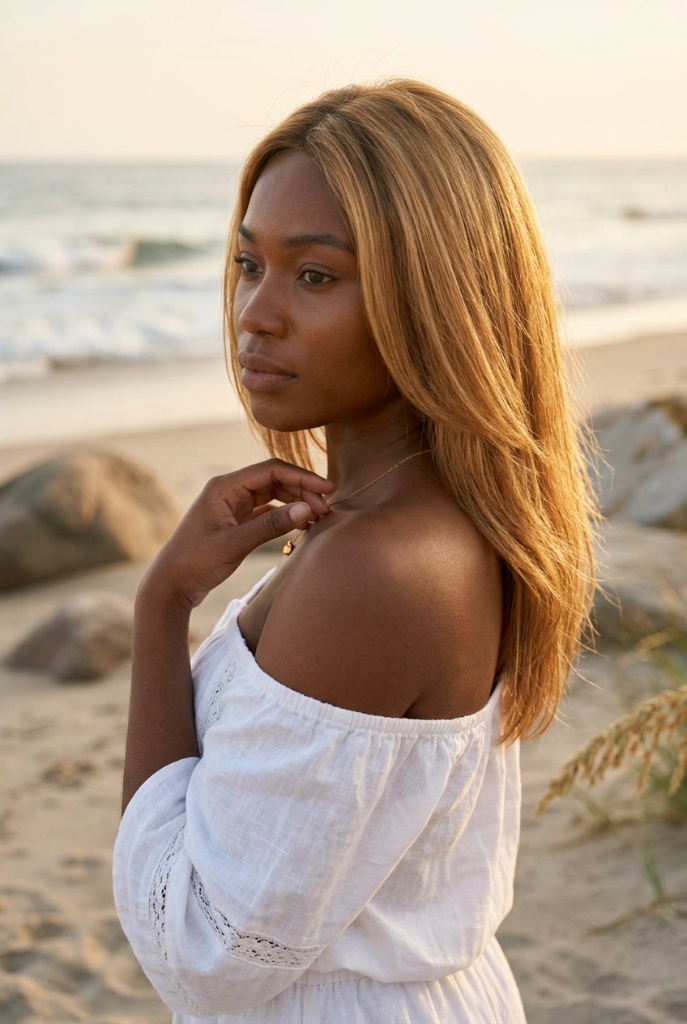
This shade lives in golden-hour lighting permanently — a warm, saturated apricot-strawberry that’s deeper and richer than the peach crush earlier on this list, sitting closer to a level 7 with distinct amber and gold undertones. The technique is a full, single-process color using a semi-permanent formula that deposits the apricot tone over a naturally light base, creating a uniform saturation that reads warm, rich, and deliberate. The natural wave texture here is the critical styling element: the 2B–2C wave pattern creates organic light and shadow through the color, adding dimension that no highlighting technique could replicate this naturally. This suits medium-density wavy to curly hair where the natural pattern can carry the color’s depth without assistance, and the semi-permanent formula means the color fades gradually and gracefully rather than growing out with a hard root line. If you’ve been exploring summer hairstyles for plus-size women, this warm, face-brightening apricot shade is universally flattering. The color maintained vivid saturation for about 3–4 weeks before softening into a lighter, peachier version of itself.
A curl cream applied to soaking-wet hair, then scrunched and air-dried — that’s the routine, and adding a diffuser on low heat speeds up drying without disrupting the wave pattern. Because the semi-permanent formula doesn’t penetrate the cortex, it causes no structural damage, which means maintenance is about color preservation rather than hair repair: a color-depositing conditioner in a warm copper-gold shade every other wash, plus a salon refresh every 4–5 weeks to maintain saturation. The natural wave works mechanically as a dimensional tool — each curve creates a shadow on one side and a highlight on the other, meaning the uniform single-process color appears multi-tonal in three dimensions despite being technically monochromatic. Avoid if your hair is straight without natural texture — this specific shade depends on wave for its visual complexity, and on flat hair, the single-process uniformity will look flat rather than rich. Permanent golden hour.
18. The Crimson Melt Bob
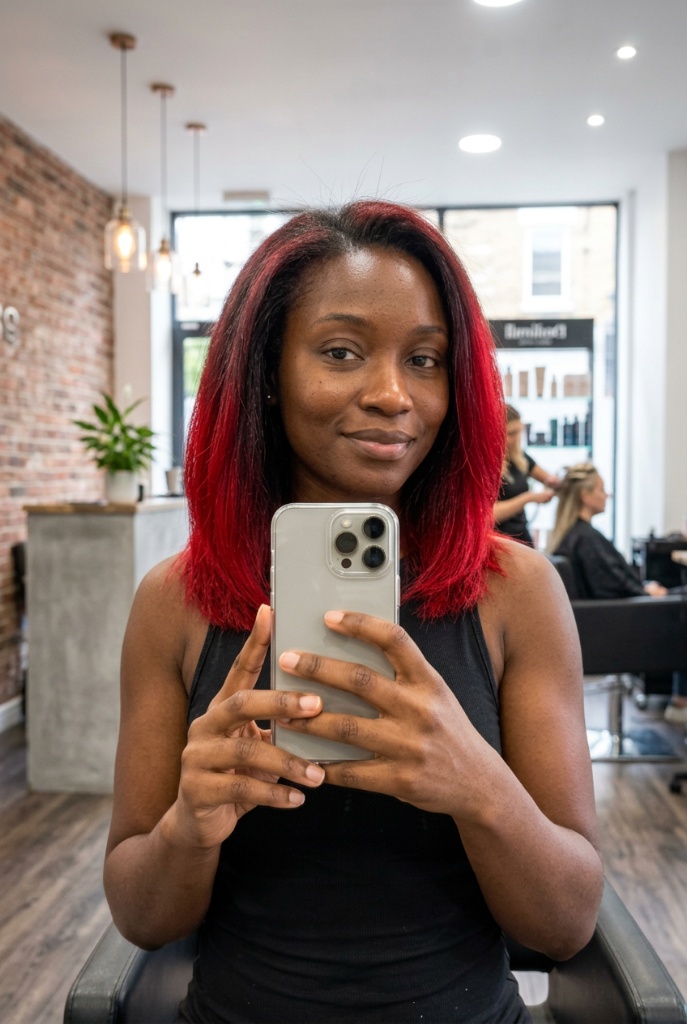
This is uncompromising. A vivid, saturated crimson red — darker than fire-engine but brighter than burgundy — applied through a root melt technique where the natural dark base at the scalp transitions into the intense red through a hand-blended zone, avoiding a hard line while maintaining the drama. The crimson itself is a direct-deposit vivid color applied over pre-lightened hair (lifted to about a level 7 orange-gold base), and the red pigment molecules in vivid formulas are notoriously large, which means they deposit intensely but also wash out faster than any other color family. The blunt bob cut — no layers, sharp perimeter — amplifies the color’s graphic intensity, creating a shape-and-color statement that’s deliberately bold. This works on any hair type dense enough to support a blunt bob, though the pre-lightening requirement means starting from a naturally light or medium base is significantly less damaging.
Cold-water washing — genuinely cold, not lukewarm — is non-negotiable for preserving red pigment, alongside a sulfate-free shampoo and a red color-depositing treatment every wash. Styling is straightforward: a smoothing serum and flat iron for maximum sleekness, or air-drying for a slightly more relaxed, natural finish. Red is the single fastest-fading color in hair chemistry because red pigment molecules are the largest and sit closest to the cuticle surface, which is why they’re the first to wash out — expect noticeable fading within 2 weeks and plan for color refreshes every 3–4 weeks to maintain this intensity. The blunt perimeter works mechanically to contain the color in a clean geometric shape — layers would diffuse the red’s visual impact across a more organic silhouette, diluting the boldness that’s the entire point. Skip if you’re not prepared for the most demanding color maintenance schedule in this entire article — this shade requires genuine dedication, and half-measures result in a patchy, faded orange that serves no one. Fearless crimson edge.
19. The Lavender Feather Layer
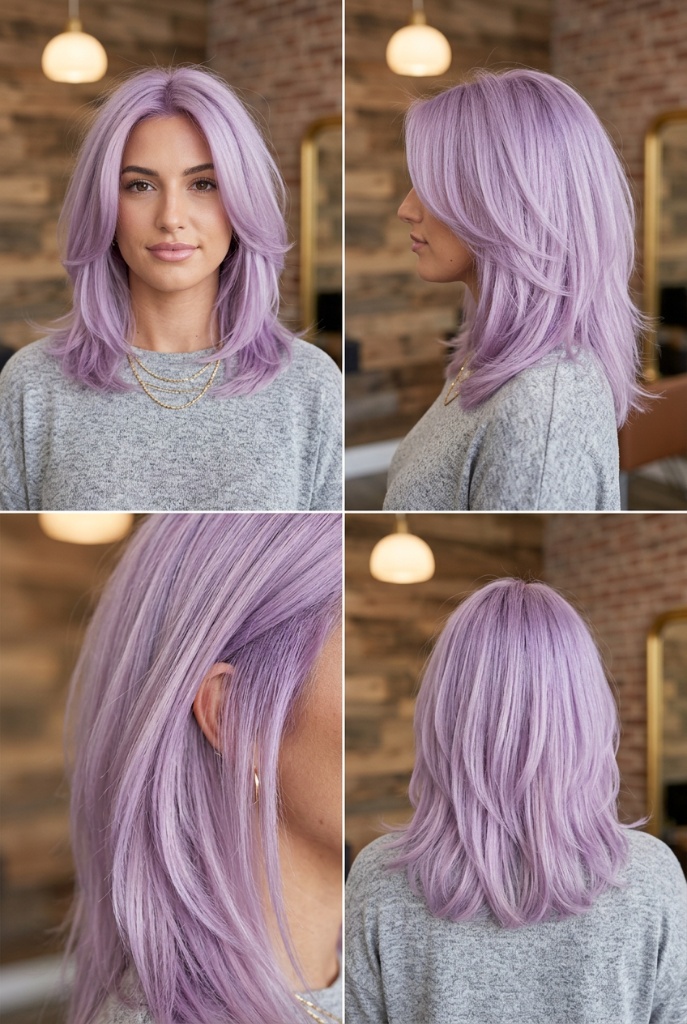
Lavender is the fantasy shade that actually reads sophisticated rather than costume — when it’s done with the right underlying base and the right cut to support it. The color requires pre-lightening to a level 10 pale blonde, then depositing a cool-toned violet-lavender semi-permanent formula that sits in that specific intersection of purple and grey, avoiding both the bubblegum pink of an under-toned violet and the blue-lean of a mismatched base. The cut is a feathered, face-framing layered style created through razor cutting, where each layer is sliced rather than bluntly cut to produce wispy, separated ends that create movement and airiness through the color. This works best on fine to medium hair with straight to slight wave, where the feathered layers create volume without the density that would make the color read heavy. The lavender held its truest cool-purple tone for about 2–3 weeks before drifting toward a softer, more pink-tinged mauve — still appealing, just different.
A lightweight volumizing mousse at the roots before blow-drying with a round brush enhances the feathered layers’ built-in movement, and a cool-toned purple shampoo every wash helps the lavender stay on the violet side rather than shifting pink. This is a high-maintenance summer hair color for 2026 — full stop — requiring toner refreshes every 2–3 weeks and bond treatments weekly to keep the double-processed hair healthy. Razor-cut feathered layers work mechanically by creating tapered ends of varying lengths within each section, allowing each strand to move independently and catch light at different angles — this creates visual volume without physical bulk, which is particularly valuable for fine hair. Not for anyone unwilling to invest in both salon visits and at-home color care — lavender rewards dedication and punishes neglect visibly and quickly. Ethereal, feathered violet.
20. The Burgundy Glass Lob
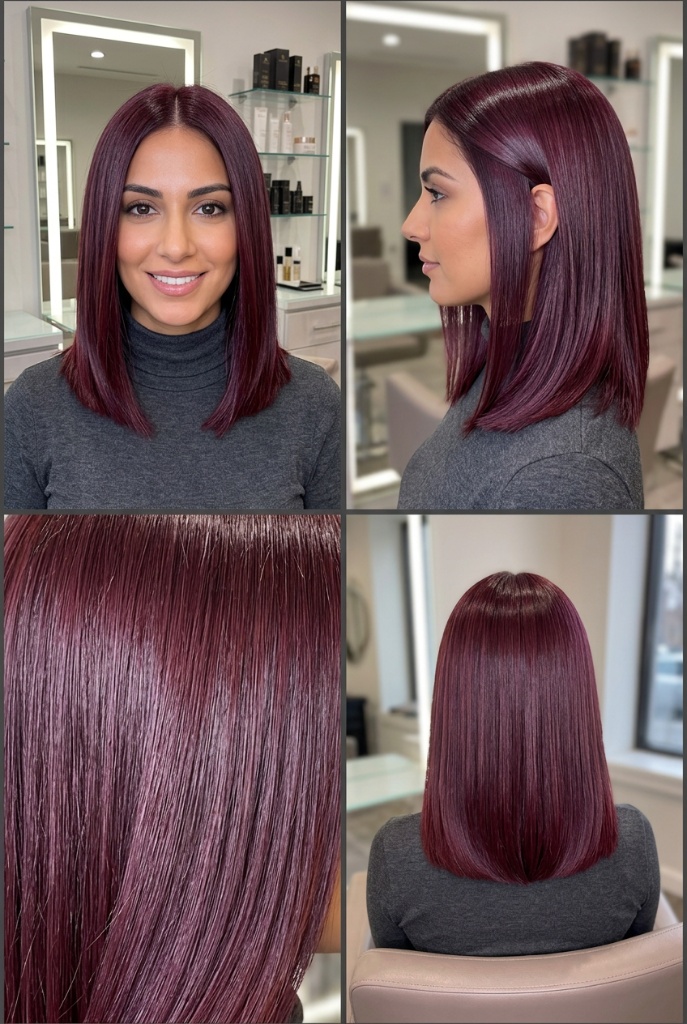
Deep burgundy — a level-3 wine shade with violet-red undertones that reads almost black in dim lighting but reveals rich plum dimension in sunlight — is the dark-color equivalent of going bold, and it’s achieved through a double-process: first lifting the natural base one to two levels to create receptivity, then depositing a burgundy permanent formula that penetrates the cortex for longer-lasting saturation. The “glass” effect comes from the finishing technique as much as the color: a keratin-based smoothing treatment seals the cuticle completely flat, creating a mirror-like surface that amplifies the burgundy’s depth. The blunt lob cut — one length, no layers, razor-straight perimeter — serves the same purpose here as it does with every high-saturation shade: it contains the color in a clean geometric shape that maximizes visual impact. This works on medium to thick hair with straight to slightly wavy texture, where density supports the blunt cut and the smoothing treatment lies flat without resistance. The permanent formula ensures the burgundy holds for 6–8 weeks with minimal fading, making it one of the more sustainable bold options on this list.
A smoothing serum and flat iron on medium heat create the glass-finish surface on days between salon smoothing treatments, and a sulfate-free, color-safe shampoo is essential — sulfates strip burgundy pigment faster than almost any other shade. Trim every 6 weeks to keep the blunt line sharp, and schedule a color refresh at the 6–8 week mark when the violet undertone starts losing intensity. The keratin smoothing treatment works mechanically by infusing protein into the cuticle and sealing it with heat, creating a physically smoother surface that reflects light in a uniform direction — this is what produces the “glass” effect, and without it, the same burgundy shade would look matte and less dimensional. If you’ve been browsing mid-length cuts for this season, this burgundy glass lob is the color-forward version that turns a standard cut into a statement. Avoid if your hair is fine or thin — the blunt cut requires density to look substantial rather than stringy, and the smoothing treatment can make fine hair look plastered to the head. Wine-dark polish.