The fourth day of Navratri falls on Wednesday, October 14 this year, and its colour is royal blue, worn in honour of Maa Kushmanda. Royal blue is one of the boldest colours of the nine nights: a saturated, jewel-bright blue that stands out in a crowd of festive reds and oranges, photographs beautifully after dark, and carries an unmistakable sense of ceremony. It is also one of autumn’s most talked-about colours this year, showing up in evening collections and festive styling alike. If you have been waiting for a reason to wear a strong blue, day four is it.
The nine looks below run from a royal blue lehenga built for garba movement to silk and Banarasi sarees with gold zari, an embroidered ethnic set, and five evening and daytime dresses, so you can match day four to your own plans, whether that is a morning puja, a workday in festive colour, or a full night of dancing. If you are dressing the complete festival, these Navratri outfit ideas for nine nights of dandiya set the wider plan, the colour before this one is covered in these grey outfit ideas for Navratri day seven (worn backwards through the week), and the blue-green register closes the festival in these peacock green outfit ideas for Navratri day nine.
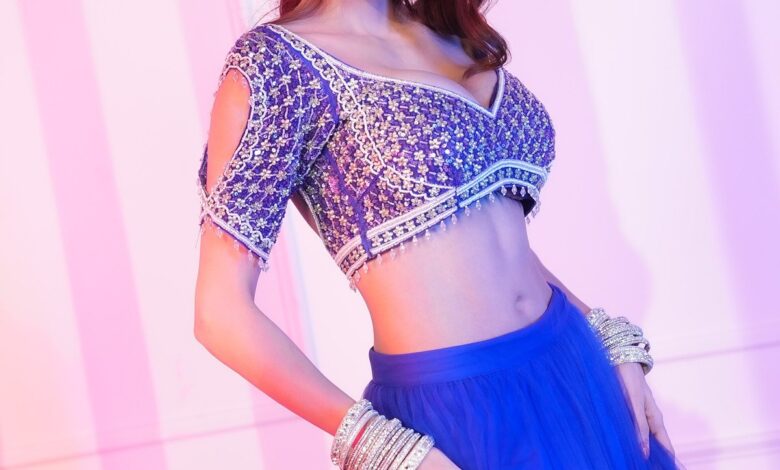
1. The Royal Blue Lehenga with an Embroidered Blouse
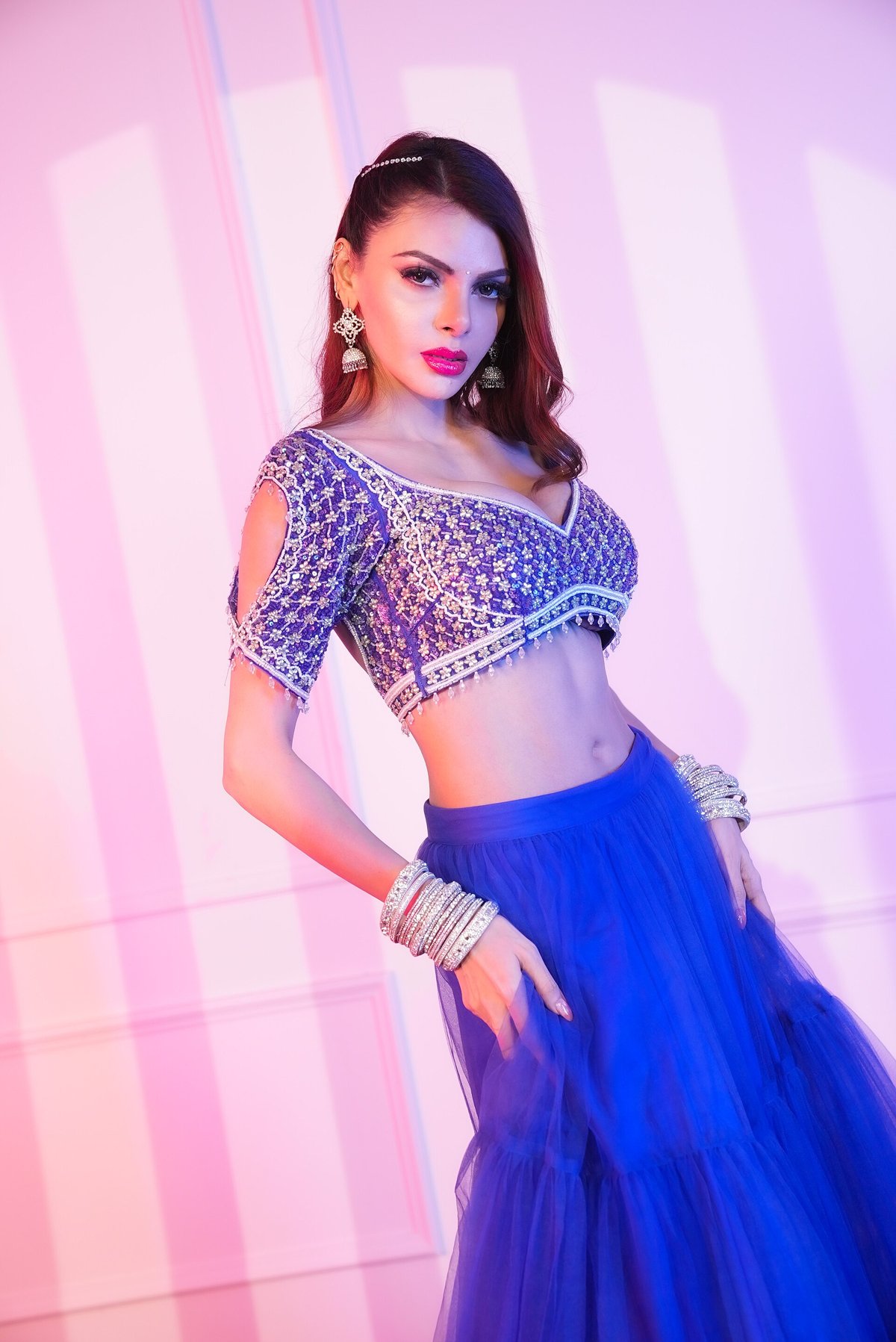
Photo credit: Hardyisback11188 via Wikimedia Commons (CC0)
Begin day four in the most dance-ready shape of all: a royal blue lehenga worn with a matching embroidered blouse. The unbroken column of blue keeps the silhouette long and clean, while the embroidery on the blouse concentrates the craft where the light lands, so the outfit reads festive without a heavy dupatta weighing down your shoulders. Stacked silver bangles and jhumka earrings supply the jewellery, and both stay put through a long garba set. Because the base colour is solid, you can repeat it in your bindi or your footwear without the look turning busy. Choose a blouse with sleeves that cover the shoulder so nothing slips while you dance. The principle: keep the blue solid from shoulder to hem, and let embroidery and silver do the festive work.
2. The Royal Blue Silk Saree with a Gold Zari Border
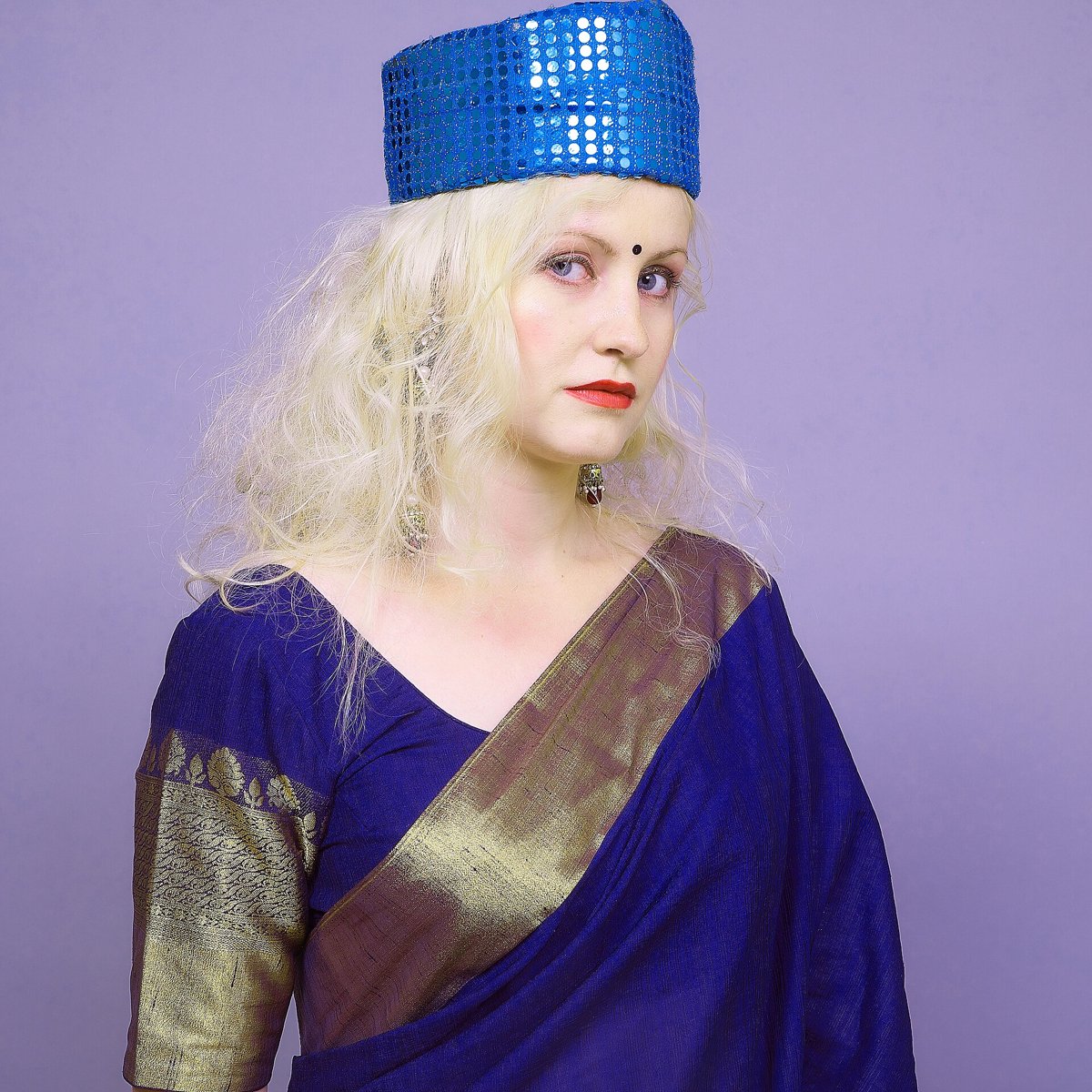
Photo credit: ChocolateLr18 via Wikimedia Commons (CC BY-SA 4.0)
For the morning puja, nothing honours day four like a royal blue silk saree with a wide gold zari border. The contrast is the whole point: deep blue silk absorbs light, gold zari reflects it, and together they give you the traditional festive register in the day’s exact colour. Keep the blouse in the same blue family rather than a contrast colour, so the border stays the brightest element, and pin your pleats so the fall stays crisp through the rituals. Gold temple jewellery or simple gold drops complete the picture; silver would fight the zari’s warmth. This is also the saree for the family photographs, where the blue-and-gold pairing reads unmistakably festive. The principle: pair royal blue silk with gold zari only, and let the two materials carry the ceremony.
3. The Royal Blue Banarasi Saree with Gold Buttis
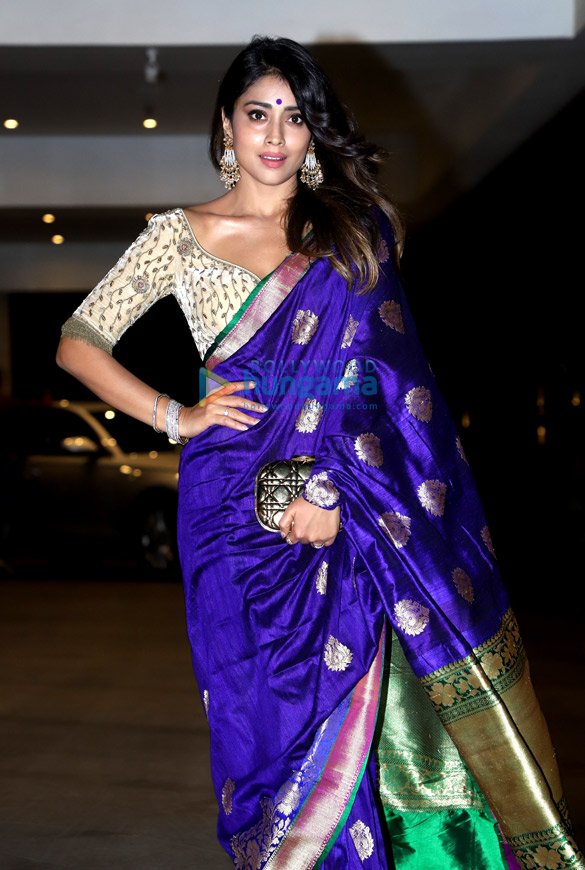
Photo credit: Bollywood Hungama via Wikimedia Commons (CC BY 3.0)
For a day-four evening out, a royal blue Banarasi saree with scattered gold buttis is the most evening-appropriate of the traditional options. The small gold motifs read as jewellery woven into the fabric, so you need very little actual jewellery: a pair of chandelier earrings and a thin gold bangle are enough. A cream or gold brocade blouse lifts the look under artificial light, where the buttis catch the glow and the blue deepens. Carry a small metallic clutch rather than a large bag, and keep your hair in a low bun or a sleek side part so the neckline and earrings stay visible. This is the saree for a dinner or a cultural programme rather than the garba floor. The principle: when the weave already has gold in it, wear less jewellery, not more.
4. The Royal Blue Skirt with an Embroidered Jacket
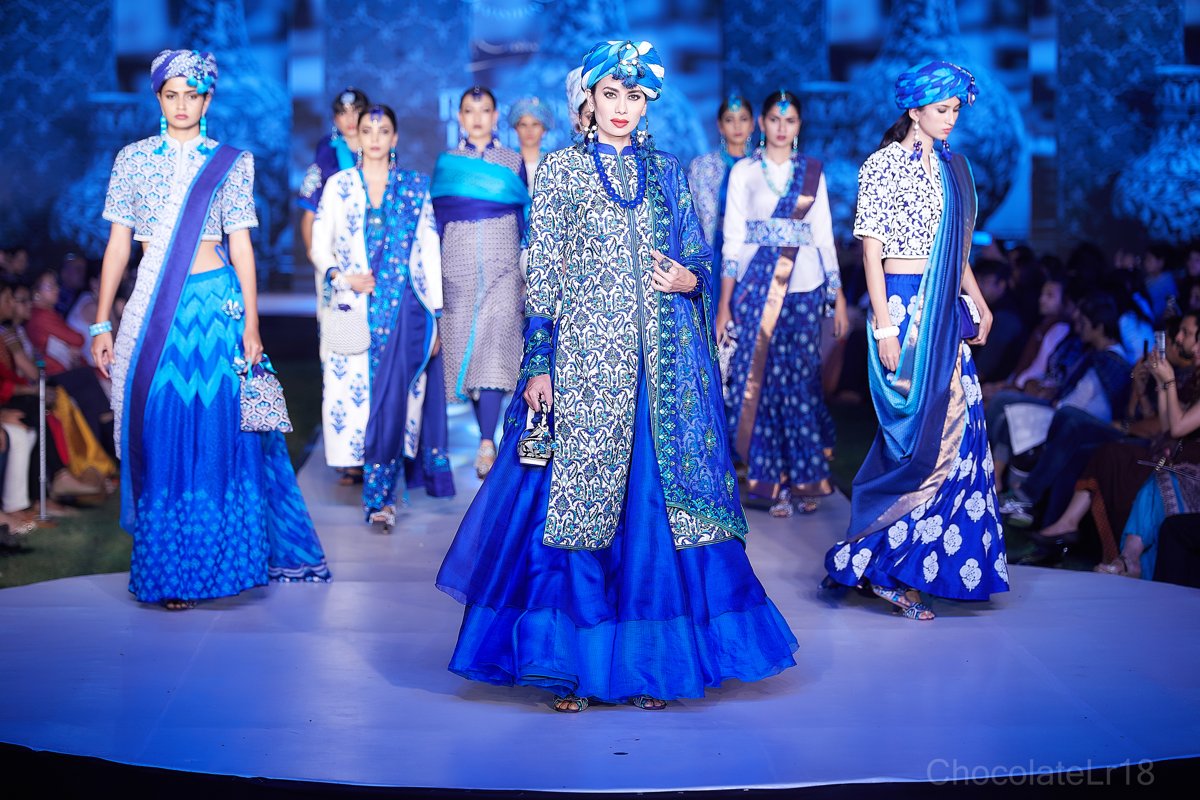
Photo credit: ChocolateLr18 via Wikimedia Commons (CC BY-SA 4.0)
Borrow a runway idea for day four: a royal blue flared skirt worn under a structured embroidered jacket. The jacket gives you the coverage and formality of a full ethnic set, while the flared skirt underneath keeps the silhouette festive and moves beautifully when you walk. This two-piece logic also suits an unpredictable October evening, since the jacket is a real layer, not decoration. Keep the inner skirt simple so the jacket’s embroidery stays the focal point, and finish with juttis or block heels rather than stilettos. In a modern festive frame, swap the runway’s turban for a simple hair accessory or a neat bun. The principle: let one embroidered jacket do the talking, and keep everything under it plain blue.
5. The Royal Blue Sequin Ruffle Gown
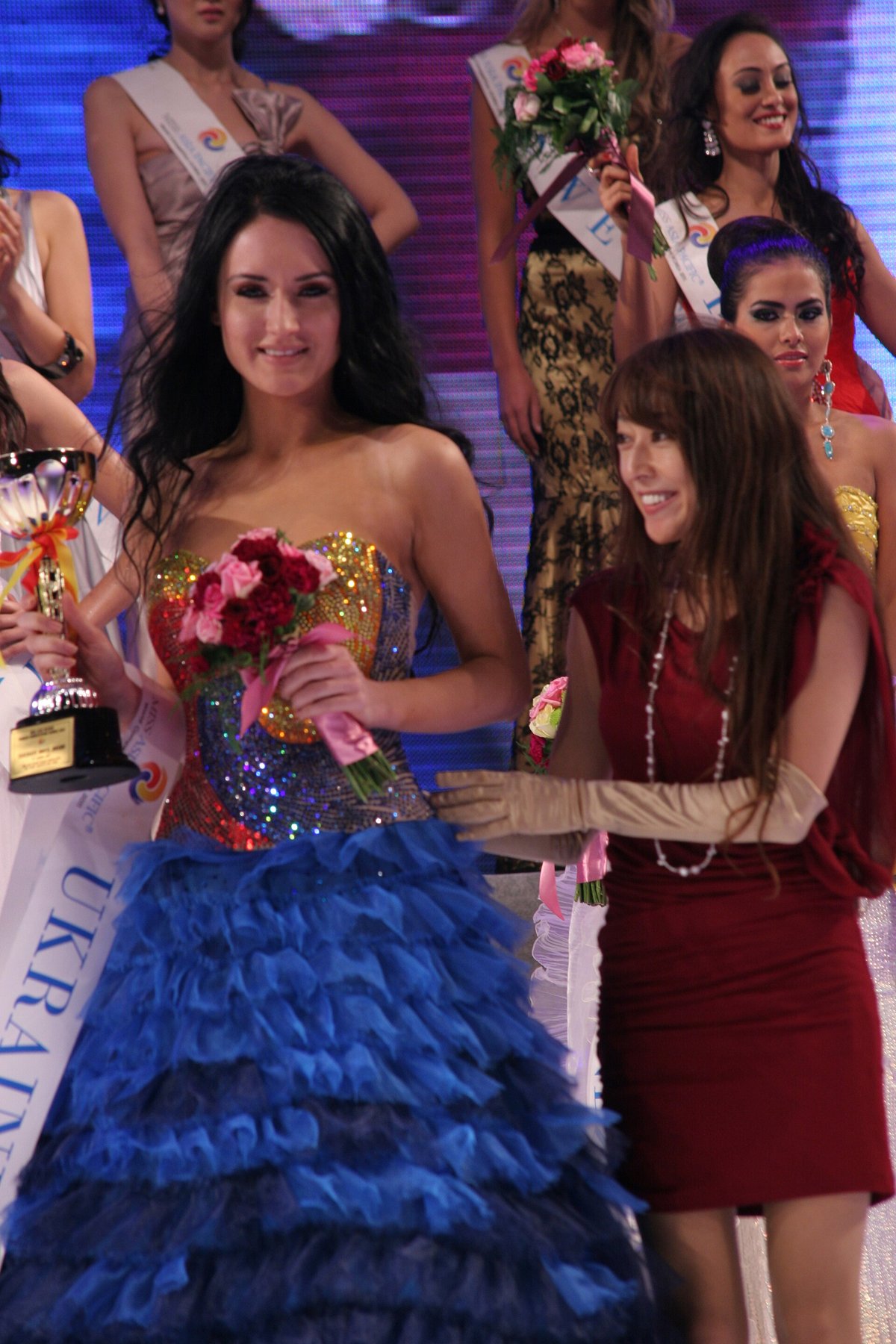
Photo credit: Khom-manag via Wikimedia Commons (CC BY-SA 3.0)
If day four ends at a celebration rather than a puja, a strapless royal blue gown with a sequinned bodice and a tiered ruffled skirt is the most festive western answer. The sequins concentrate the sparkle at the top where the eye lands, while the ruffled tiers give the skirt volume and movement without a single dance step. Because the surface does all the work, the styling stays quiet: small studs or drops, a simple bracelet, and your hair swept up or to one side so the neckline stays clean. A strapless cut suits an indoor evening best, so carry a light shawl in a toning blue for the journey. The principle: put the sequins on the bodice and the movement in the skirt, and keep everything else still.
6. The Royal Blue Pleated Evening Gown

Photo credit: Bollywood Hungama via Wikimedia Commons (CC BY 3.0)
“For a polished day-four evening, a pleated royal blue gown with a draped neckline is the most flattering of the evening options. The fine pleats catch light as you move, so the fabric shimmers without a single sequin, and the draped neckline softens the boldness of the colour at the face. A silver clutch and simple drop earrings are the right jewellery here, because cool metal suits royal blue better than warm gold when there is no zari in the picture. Wear your hair down in soft waves to balance the gown’s formality, and choose a shoe you can stand in for hours. This is the gown for a formal dinner or a festive evening function. The principle: let pleats create the shimmer, and pair royal blue with silver, not gold, in a western frame.”
7. The Royal Blue Watercolour-Print Strapless Gown
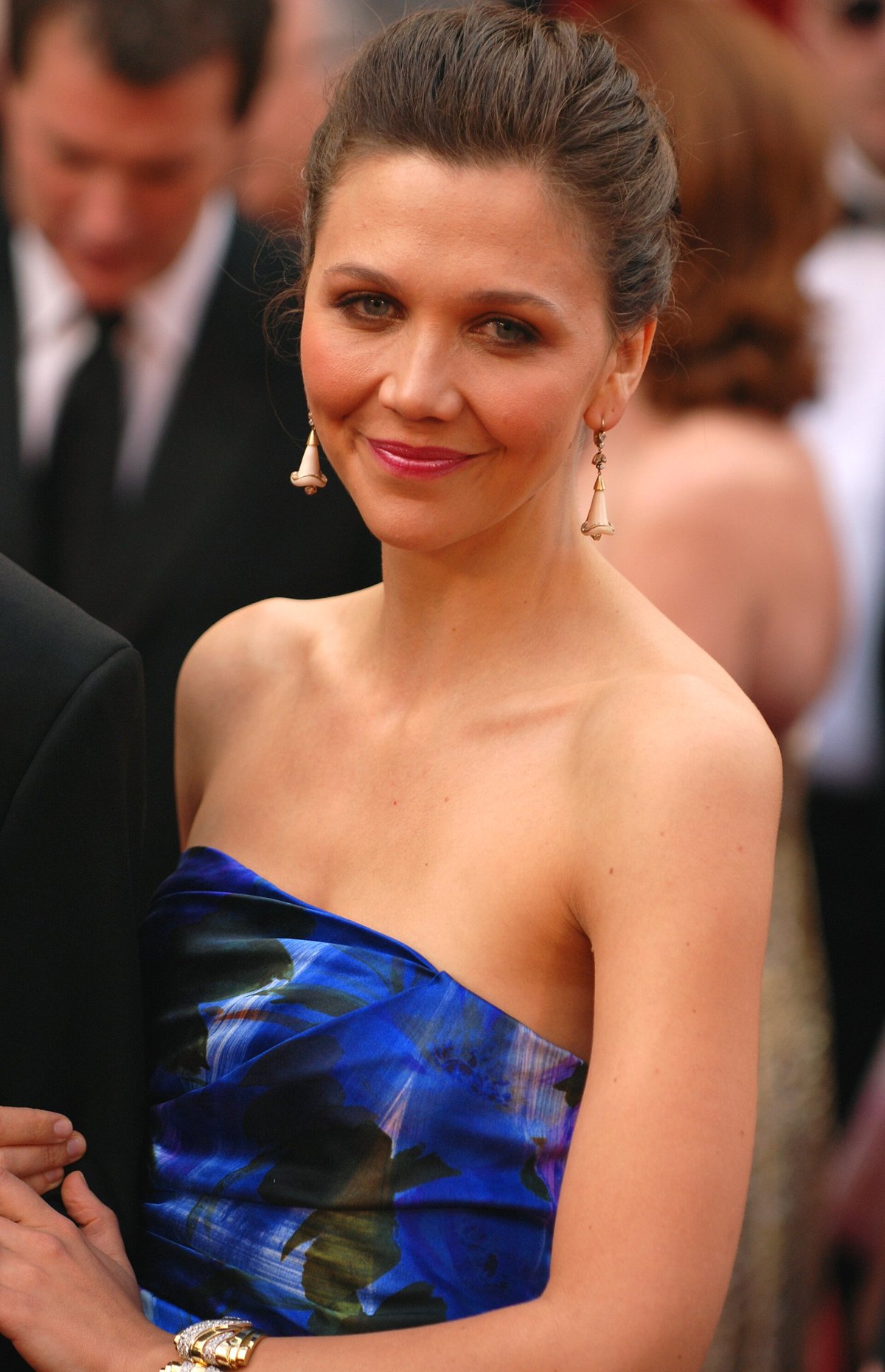
Photo credit: Sgt. Michael Connors via Wikimedia Commons (Public domain)
A printed royal blue gown is the answer when solid blue feels too stark for you. The dark watercolour pattern breaks the colour into shades and shadows, which makes the blue easier to wear against your skin and gives the gown an arty, editorial edge. Keep the styling minimal, because the print is already the decoration: simple drop earrings, bare arms, and a sleek updo or side-swept hair that does not compete with the pattern. This is an evening-out look rather than a religious-venue look, so save it for the dinner or the cultural programme after the puja. A plain dark clutch and simple heels keep the attention on the gown. The principle: if the blue comes printed, treat the print as the embellishment and add nothing patterned.
8. The Royal Blue Sequin Ballgown
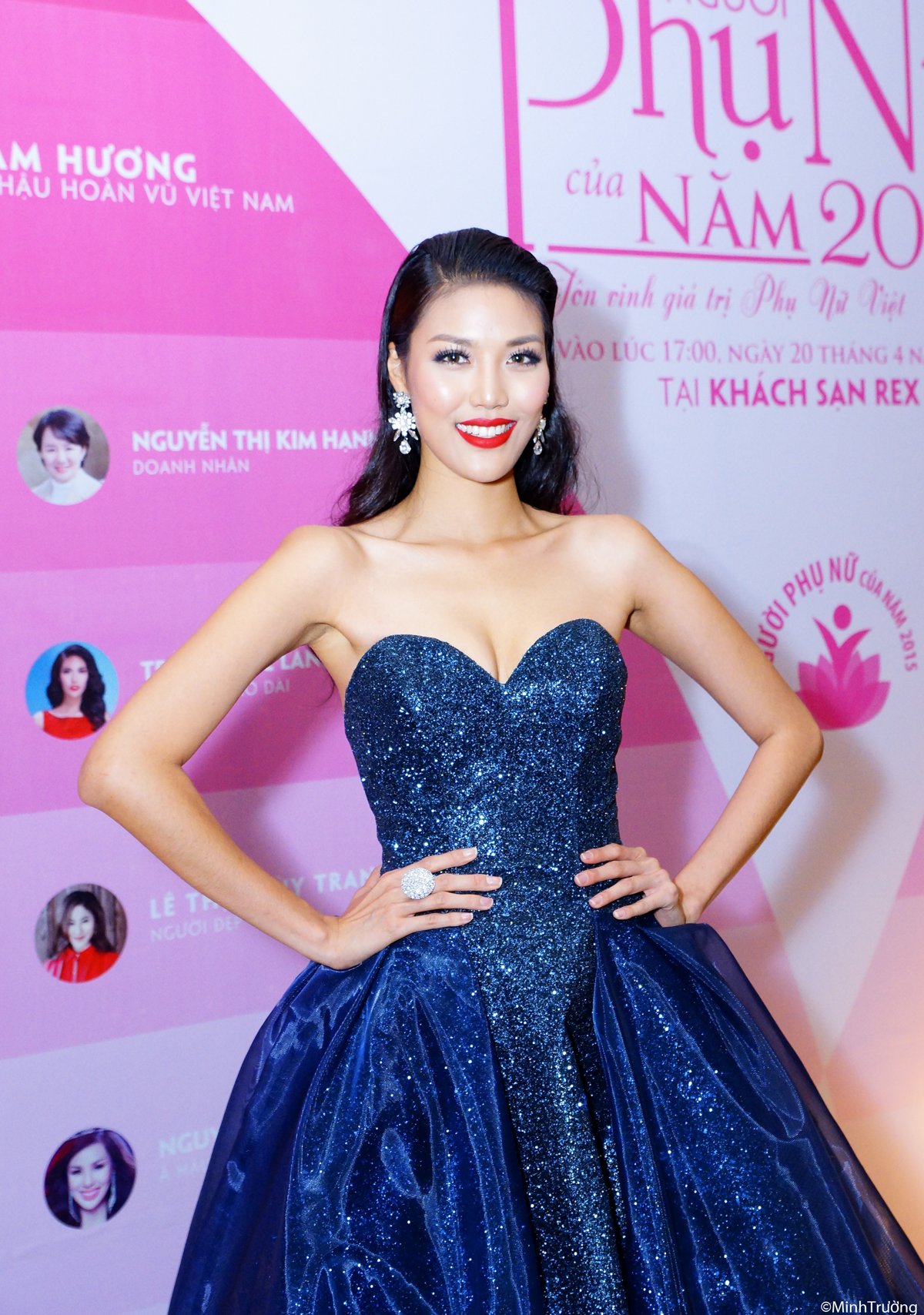
Photo credit: Lê Nguyễn Minh Trường via Wikimedia Commons (CC BY 2.0)
The boldest way to wear day four is the full statement: a strapless royal blue sequinned ballgown with a sweetheart neckline and a full skirt. All-over sequins turn the colour into light itself, and the ballgown shape gives the look its occasion. Because the gown is the entire outfit, everything around it goes quiet: statement earrings or a simple pendant, but not both; a small clutch; hair in a neat bun or a high ponytail so the neckline stays clean. This is the look for the biggest night of your week, the kind of evening where arriving is the point. Keep your makeup polished but not heavy, since the sequins already supply the drama. The principle: when the gown is all-over sequin, the styling around it should disappear.
9. The Royal Blue Floral-Print Day Dress
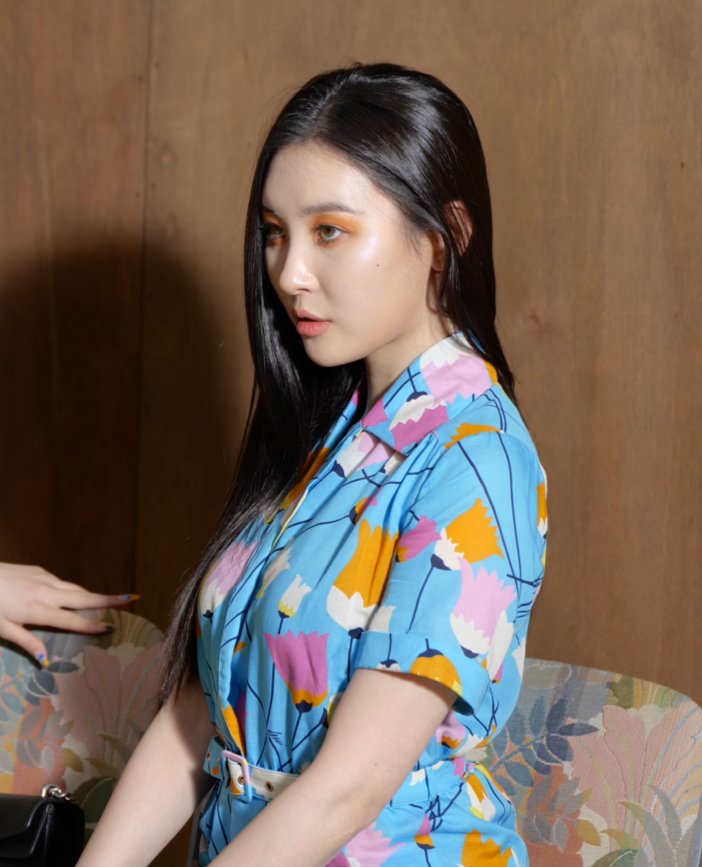
Photo credit: Marie Claire Korea via Wikimedia Commons (CC BY 3.0)
Day four does not have to be formal: a royal blue floral-print shirt dress is the most wearable daytime answer. The blue base keeps you in the day’s colour, while the scattered pink, orange and white flowers soften it into a friendly, everyday register. Wear it with simple flats or block heels, a small structured handbag, and minimal jewellery, because the print already supplies the detail. This is the look for a workday in festive colour, a day of errands between pujas, or a casual lunch, and it photographs well in daylight. If the evening turns cool, a plain navy cardigan or a light shawl layers over it without disturbing the print. The principle: keep the blue in the base and the flowers in the print, and let one do the festive work.
Final Thoughts
Royal blue rewards commitment: it is too strong a colour to wear apologetically, so choose the register that matches your day and wear it fully. A lehenga with an embroidered blouse for the garba floor, a silk or Banarasi saree with gold zari for the puja and the evening, a sequinned gown for the celebration after, and a floral-print day dress for everything in between. Pick one, add jewellery with a steady hand, and let day four of Navratri, Wednesday, October 14, be the bluest day of your week.
Frequently Asked Questions
Why is royal blue the colour for Navratri day four?
Day four of Navratri, which falls on Wednesday, October 14 in 2026, is dedicated to Maa Kushmanda, and royal blue is her day’s colour. The saturated blue is associated with depth, calm and quiet strength, which is why it is worn as the festival’s boldest colour after the red of day three.
What is the difference between royal blue, cobalt blue and navy?
They sit on one blue scale. Royal blue is the brightest and most saturated of the three, cobalt blue is close to it with a slightly more electric cast, and navy is much darker and more muted. All three read as festive, but for day four, the brightest royal blue is the most faithful to the colour calendar.
How do you style royal blue for a daytime puja versus a garba night?
For a daytime puja, choose royal blue silk or Banarasi with gold zari and restrained jewellery, so the ceremony leads. For a garba night, choose a lehenga or a flared skirt in solid royal blue with secure footwear and jewellery that stays put while you dance, because movement is the priority.
What jewellery goes best with royal blue?
Gold suits royal blue in a traditional frame, especially against silk and zari, while silver suits it in a western evening frame. The rule is one metal per outfit: gold with the sarees and lehenga, silver with the gowns, and never both at once.