When Zendaya stepped out at the 2025 Met Gala afterparty with cherry cola highlights woven through a razor-cut lob, something shifted. Suddenly, salons everywhere started fielding requests for “lived-in burgundy” and “sun-kissed dimension” — a far cry from the flat, single-process color that dominated the previous two years. The highlight resurgence has since split into distinct lanes: cherry glazes, smoky mauve ribbons, platinum money pieces, and warm copper melts are all competing for attention on TikTok’s #HighlightSeason tag, which has accumulated over 900 million views since March. Meanwhile, Instagram’s “glass hair” aesthetic is giving way to something more textured, more dimensional, more human. People are done with flat, opaque color — they want light movement, depth, and highlights that actually catch the sun.
The summer hair highlights for 2026 landscape covers an enormous range this year, from subtle face-framing balayage on blunt lobs to full-coverage fantasy shades painted through disconnected layers. You’ll find variations like foilyage on long layered cuts, hand-painted ribbons through collarbone-length bobs, babylights on fine straight hair, and bold panel color on razor-cut shags. These highlights work across thick wavy textures, fine straight strands, coarse curly patterns (2A through 4C), and medium-density hair alike. Oval, round, and heart-shaped faces all have dedicated options here — and if you’re exploring summer haircuts for round faces, many of these color techniques enhance those cuts beautifully. The common thread? They all prioritize dimension over uniformity, and they’re built for real-world wearability under actual sunlight.
I spent the better part of last summer clinging to a single-process dark brunette that looked fine indoors and absolutely dead in every photo taken outside. It was a stubborn choice — I’d convinced myself that highlights meant “high maintenance” and I didn’t have the bandwidth. Then, on impulse during a September appointment, I let my colorist paint a few face-framing caramel ribbons through the front. The difference in how my hair moved in natural light was immediate and, honestly, a little embarrassing given how long I’d resisted. That experience is exactly what this list is about: finding the specific highlight technique that makes your existing cut come alive without turning your bathroom into a toning station.
1. The Dark Plum Ribbon Balayage
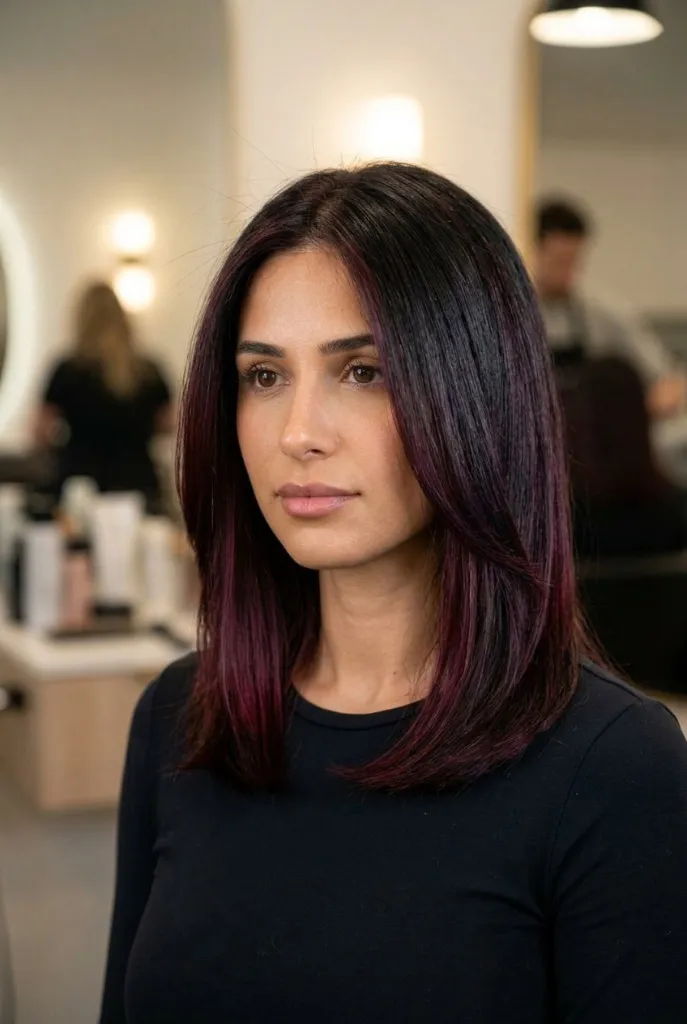
This technique relies on hand-painted balayage applied in wide, ribbon-like sections through a blunt-perimeter lob — the colorist sweeps product from mid-shaft to ends, skipping the root entirely to create a seamless melt from deep espresso into dark plum. It works best on medium to thick hair with straight or slight wave (1C–2A), where the sleekness lets the color transition read clearly without texture breaking it up. The plum tones here lean cool — think burgundy wine rather than red-violet — and the internal face-framing pieces catch light at exactly chin level, which narrows and elongates the jawline. On my own hair, a similar technique held its vibrancy for about 5 weeks before the plum began softening into a dusty mauve, which was honestly just as wearable.
Styling is straightforward: blow-dry with a paddle brush and a smoothing serum to keep the surface reflective, which is where ribbon balayage does its best work. You’ll need a color-depositing conditioner in a violet-red shade once a week to keep the plum from fading toward brown, and trims every 6–8 weeks maintain that clean blunt edge. The mechanical advantage of ribbon sections over traditional foil highlights is width — broader strokes of color create fewer harsh lines and a more painterly effect, especially on straight hair where every stripe shows. Skip if you have very fine hair under medium density — the wide sections can overwhelm thin strands and look patchy rather than intentional. Dark, deliberate drama.
2. The Deep Burgundy Textured Wave

This is an all-over burgundy with subtle dimension achieved through tone-on-tone layering — the colorist applies a base of deep wine, then weaves slightly brighter cherry cola highlights through the mid-lengths using a freehand technique. The cut itself features internal texturizing done with point-cutting, which removes weight from the interior while keeping the perimeter full and wavy. It’s built for medium-density wavy hair (2A–2C) and does particularly well on heart-shaped and oval faces, where the curtain-parted volume at the cheekbones creates balance. Wave definition held for 2 full days after diffusing, with the burgundy tones catching light differently at each bend of the curl.
For styling, scrunch a lightweight curl cream into damp hair and diffuse on medium heat — the point-cut layers will separate naturally into defined, piecey waves without any clumping. Maintenance is honest-to-moderate: burgundy fades faster than most shades, so expect a toning gloss appointment every 4–5 weeks and a sulfate-free purple-red shampoo in between. The point-cutting is what makes this haircut breathe — without it, the wave pattern would create bulk at the sides and lose that lived-in separation. This is also a strong option if you’ve been browsing collarbone-length cuts for summer, since the length sits perfectly at that sweet spot. Avoid if you prefer low-effort color upkeep — burgundy demands attention. Rich, textured payoff.
3. The Wine-Kissed Salon Melt
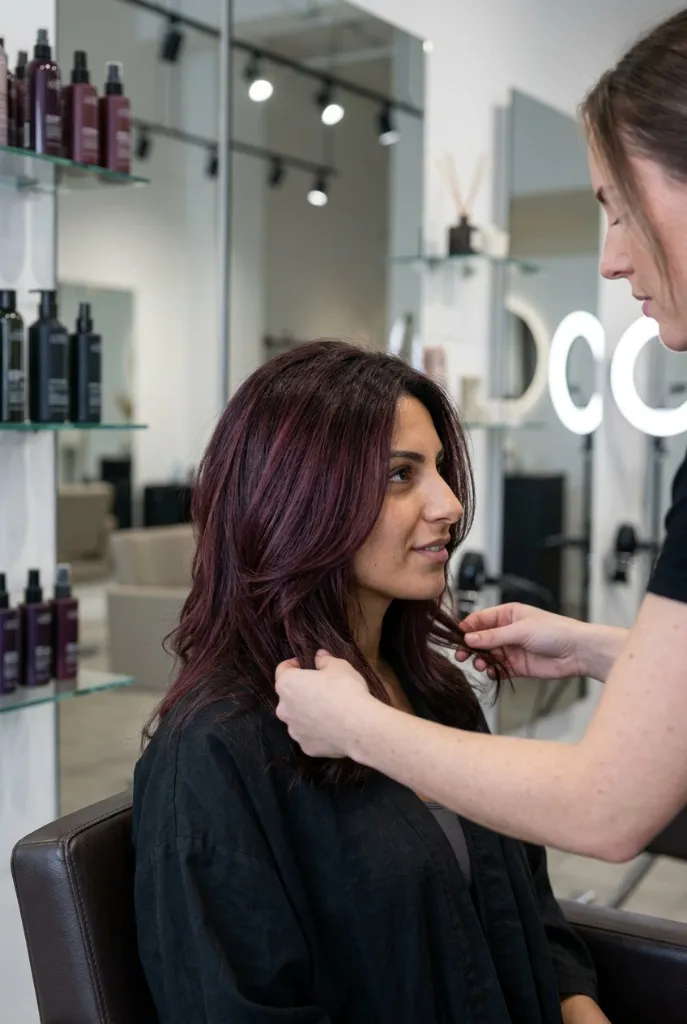
The technique here is a color melt — a seamless gradient from a dark espresso root through wine-toned mid-lengths into brighter plum ends, blended so gradually that there’s no visible line of demarcation. The cut uses disconnected layers, where the top layers are cut shorter than expected while the underneath remains long, creating that illusion of volume and movement without actual bulk. This works on medium to thick hair with slight wave or straight texture (1B–2B), and the cascading layers are especially effective on square and oblong face shapes because the movement around the jaw and shoulders softens angular lines. The color held its gradient integrity for roughly 6 weeks before the plum ends began shifting toward a dusty rose — which, surprisingly, still looked intentional.
Round-brush blow-drying is the move here: wrap sections away from the face for a polished flip that shows off the melt from root to tip. A heat protectant and a shine-boosting finishing serum are non-negotiable, since the reflective surface is what makes a color melt actually read as a melt rather than just “two-toned hair.” Plan on trims every 6 weeks — the disconnected layers lose their shape faster than uniform layers because the contrast between lengths is the whole point. The mechanical logic of a color melt is that it tricks the eye into perceiving more length and movement than actually exists, which is why it photographs so well. Not for anyone who air-dries exclusively — this technique needs heat styling to fully land. Salon-polished glow.
4. The Cherry Ombré Blunt Bob
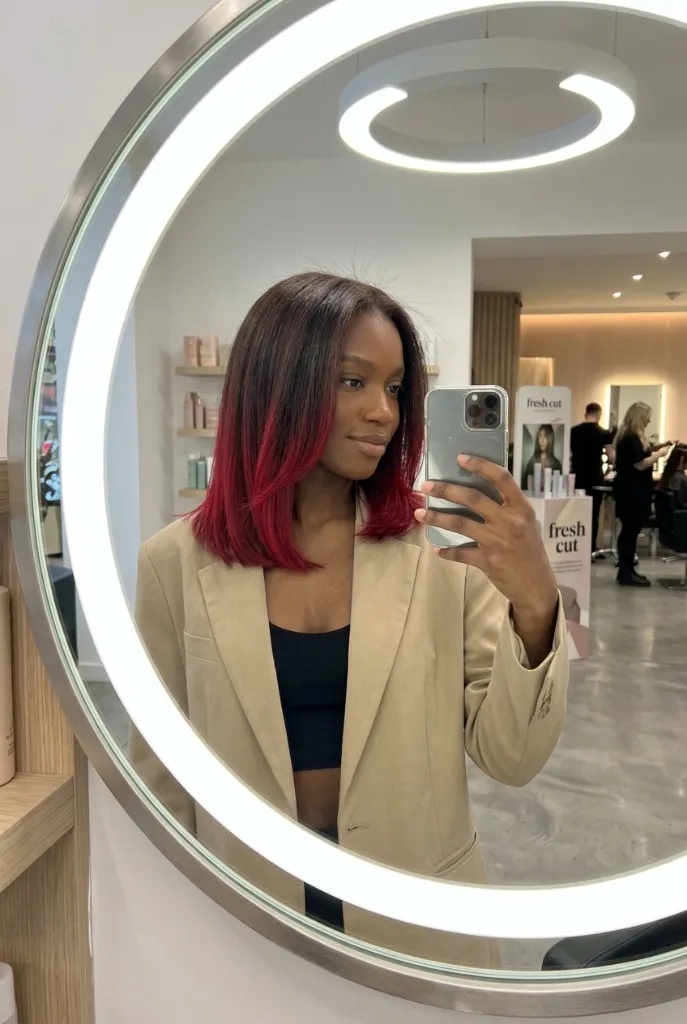
A blunt one-length bob with a dramatic ombré that transitions from natural dark roots into a vivid cherry red at the ends — this is achieved through sectioned lightening followed by a semi-permanent red deposit, and the blunt perimeter is cut with shears (no razoring) to keep the color line razor-sharp and graphic. It suits medium to coarse hair that’s naturally straight or heat-styled straight, and the chin-length crop is particularly effective on oval and heart-shaped faces where the blunt edge emphasizes the jawline. The cherry shade sits in warm territory — more true red than burgundy — and the contrast against dark roots gives it a graphic, editorial quality that photographs with real impact. Color saturation remained vibrant for about 3 weeks before the cherry began fading toward a softer coral, which meant toning was needed sooner than expected.
Style with a flat iron for maximum impact — the straighter the bob, the more dramatic the ombré reads. Apply a lightweight smoothing serum on dry hair and skip volumizing products entirely; this look is about weight, density, and that clean bottom line. Trims every 4–5 weeks are essential because blunt bobs show even a quarter-inch of uneven growth, and the ombré line shifts as hair grows. The absence of layers is the design choice — a blunt perimeter concentrates the brightest color at the very tips, creating a dip-dyed effect that layered cuts diffuse. Skip if your hair has a lot of natural wave or curl you don’t plan to heat-style — the ombré line will break up and lose its graphic punch. Bold, unapologetic edge.
5. The Icy Silver Platinum Dimension
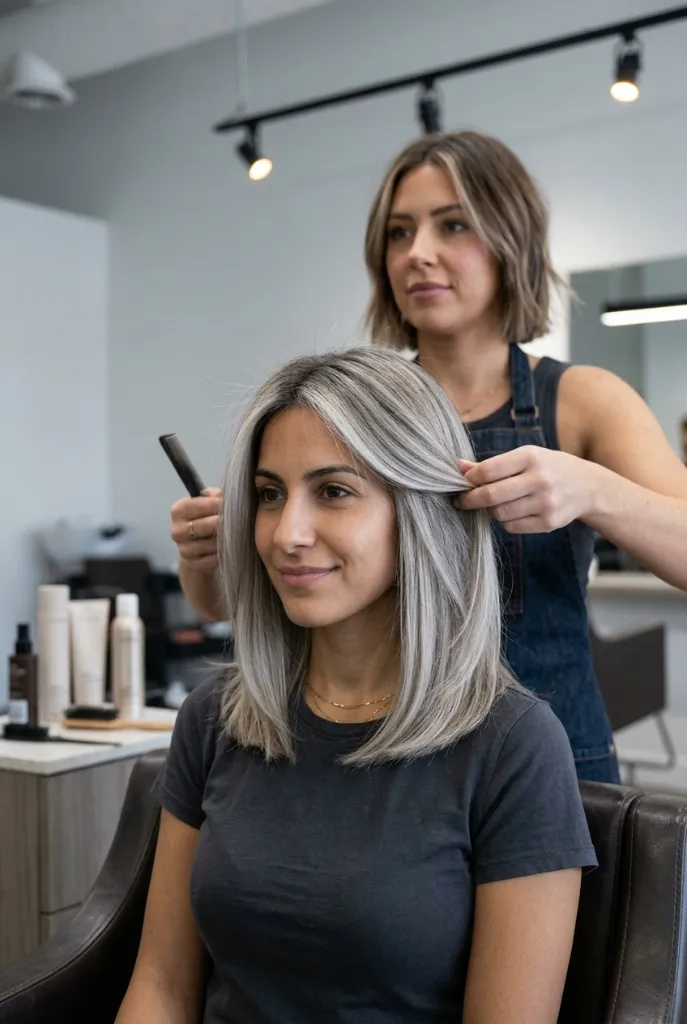
This is a full foilyage — foil-placed highlights processed to level 10 platinum, then toned with an icy silver-violet formula that eliminates all warmth. The cut is a clean, center-parted lob with minimal interior layering, which keeps the silver tones on a smooth, unbroken surface where they reflect maximum light. It’s designed for fine to medium hair with straight texture (1A–1C), where the foil-placed highlights create the illusion of density that fine hair desperately needs. The silver sits firmly in cool territory — no warmth, no gold, just clean metallic ash — and the dimensional variation between silver pieces and the darker root shadow prevents it from reading as “gray.” The tone held beautifully for about 3 weeks with purple shampoo used twice weekly, which is all my fine hair can handle before it starts feeling dry.
Blow-dry with a round brush for smoothness, or air-dry with a drop of finishing oil if your texture cooperates. Purple shampoo every other wash is mandatory — miss a week and the silver creeps toward yellow, which kills the effect entirely. Trims every 6–8 weeks maintain the lob shape, and a toning gloss every 4 weeks keeps the silver cool and clean. The foilyage technique places highlights closer to the root than traditional balayage, which means more coverage and a brighter overall result — the tradeoff is slightly more visible grow-out. Avoid if your natural base is darker than level 6 — the amount of lifting required to reach platinum will compromise hair integrity. Cool, liquid-metal precision.
6. The Ash Brunette Subtle Lift
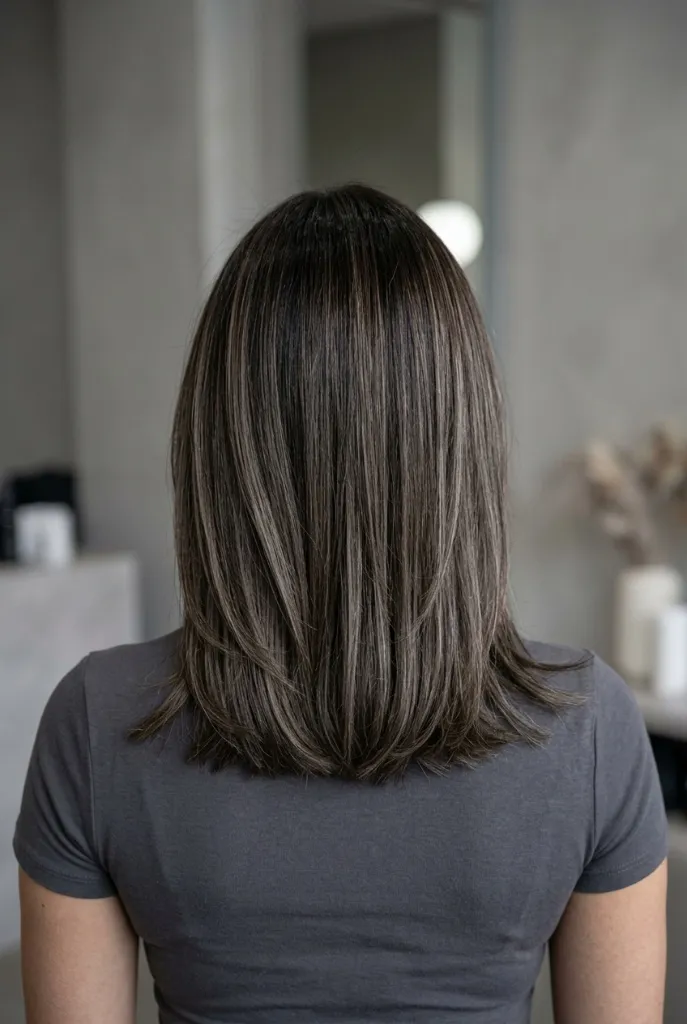
This is what happens when a colorist uses babylights — ultra-fine foil highlights placed through the mid-lengths and ends only — to lift a dark brunette base by just 1–2 levels into ashy, cool-toned territory. The cut features classic long layers with a slight V-shape at the back, finished with point-cutting at the ends to prevent that blunt, heavy bottom edge. It works on literally every hair type from fine to thick and straight to wavy, which is rare — the babylights are so small that they create diffused brightness rather than visible stripes, adapting to whatever texture carries them. The color reads as “your natural hair, but in better lighting,” with cool ash undertones that prevent any brassiness. This grew out gracefully over 10–12 weeks with almost no visible root line, which is the whole appeal of babylights on brunettes.
Air-dry with a lightweight anti-frizz serum, or blow-dry with a round brush for a smoother finish — this style is genuinely flexible and doesn’t demand one styling method. If you’ve been looking for low-maintenance summer haircuts that grow out well, this color technique pairs perfectly with those cuts. Trims every 8–10 weeks keep the layers shaped, and color appointments can stretch to every 12–14 weeks because the babylights grow out without a harsh line. The mechanical advantage here is the fineness of each highlight section — because each foil packet contains only a few strands, the lift blends invisibly into the natural base. Not for anyone wanting a dramatic transformation — this is refinement, not reinvention. Quietly elevated.
7. The Platinum Ice Money Piece Bob

Money pieces — those thick, face-framing highlights that run from root to tip on either side of the part — are taken to their most extreme here, with level 10 platinum against a dark, cool-toned brunette base. The bob itself is a blunt, slightly below-chin length with no visible layering, and the clean perimeter showcases the color contrast like a frame around the face. This technique works on straight to slightly wavy hair (1A–2A) with medium density, where the platinum sections lie flat against the darker base and create that high-contrast stripe effect intentionally. The platinum reads icy and almost white, with violet toning keeping it from yellowing. The contrast held its graphic quality for about 4 weeks before the platinum began showing the faintest warmth at the root, requiring a quick toner refresh.
Flat-iron styling maximizes the drama — every bend or wave in the hair diffuses the contrast between the platinum pieces and the dark base. Use a purple shampoo every other wash and a bond-repair treatment weekly, because those money pieces are processed to within an inch of their lives and need structural support. Trims every 5–6 weeks keep the blunt line crisp. The money piece technique is mechanically simple — it’s just two thick sections at the front — but the precision of toning is what separates a polished result from one that reads as accidental skunk stripe. Not for anyone uncomfortable with visible root growth — the dark-to-platinum contrast means even two weeks of grow-out is noticeable. Striking high contrast.
8. The Deep Cranberry All-Over Glaze
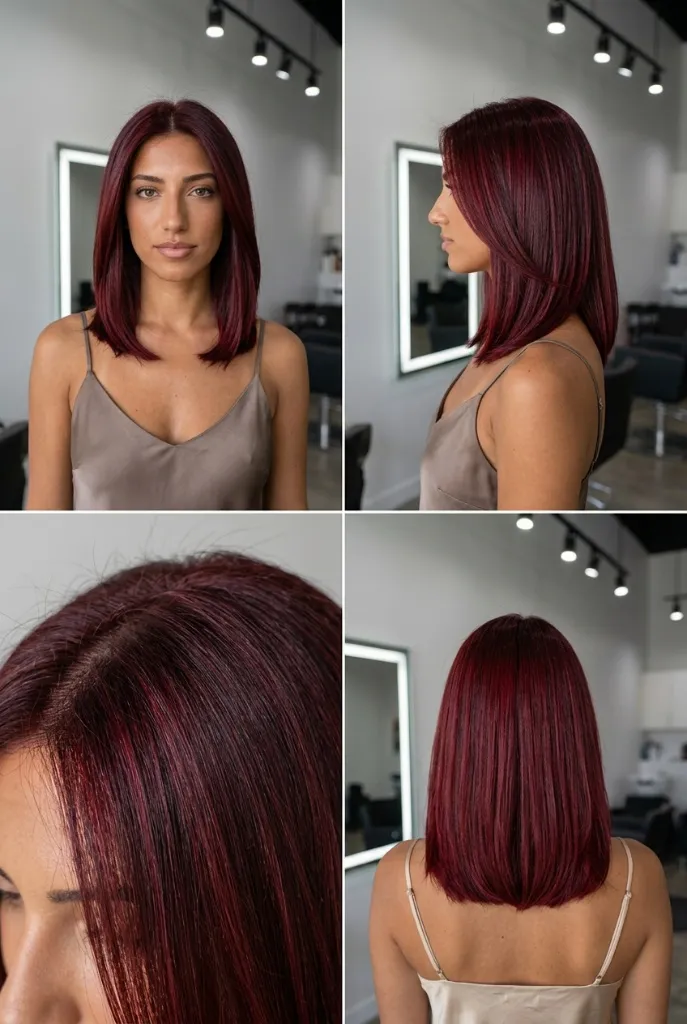
This is an all-over permanent color with a glossing treatment layered on top — the base is a deep cranberry burgundy, and the gloss adds a reflective, almost lacquered finish that makes the color appear more dimensional than a single process alone. The cut is a medium-length lob with internal layering done through slide-cutting, a technique where the shears glide down the hair shaft to remove weight without creating visible layer lines. It suits straight to slightly wavy hair (1B–2A) with medium to thick density, and the sleek styling in this particular example shows how the cranberry reads from every angle — warm in direct light, almost black in shadow. The four-angle view reveals that the color is most vibrant at the mid-lengths where light hits directly, which is exactly where the slide-cutting removes weight and lets strands separate. Vibrancy maintained for about 4 weeks before the cranberry began shifting toward a muted plum.
Style with a blow-dry bar technique — rough dry to 80%, then finish with a paddle brush and a nozzle attachment for smoothness, followed by a dime-sized amount of shine serum. A color-depositing mask in a red-violet tone every 10 days will extend the cranberry’s life significantly, and this is a cut that truly rewards summer hair highlights for 2026 enthusiasts who appreciate salon-level results. Trims every 6–8 weeks maintain the internal layers, and a gloss refresh at each trim appointment keeps that lacquered surface intact. Slide-cutting’s mechanical advantage is that it creates movement without visible steps — the weight removal happens inside the hair, not at the perimeter, so the outline stays full and blunt while the interior moves freely. Avoid if you want a wash-and-go situation — this level of cranberry saturation plus the gloss finish looks best when blow-dried smooth. Lacquered, light-catching depth.
9. The Warm Honey Butterfly Blowout
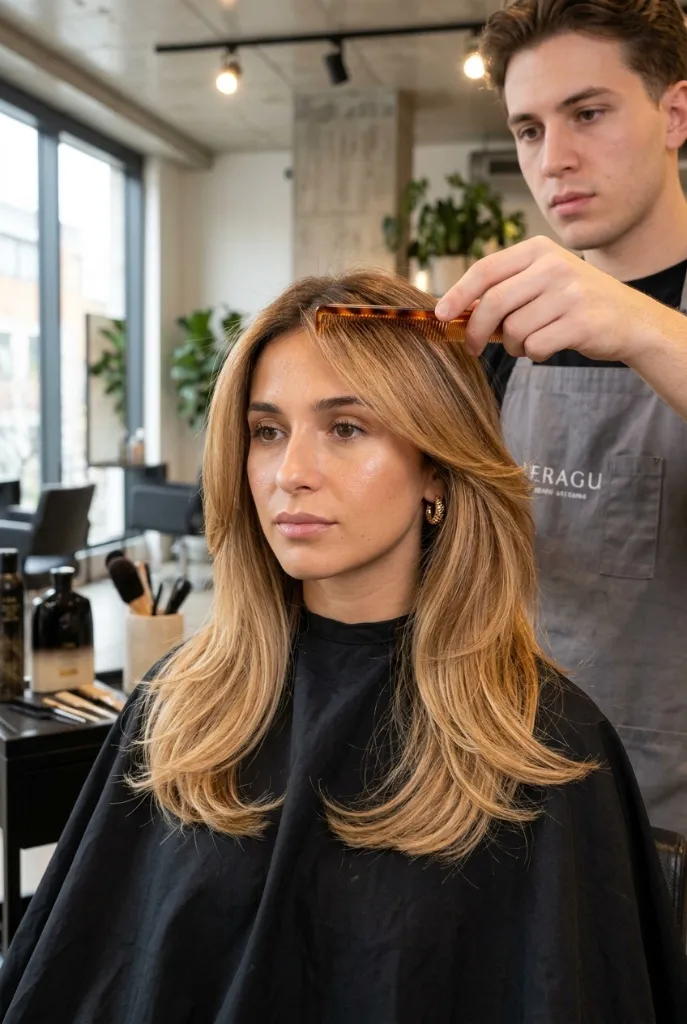
Butterfly layers are the structural star here — they’re long, face-framing layers that sit at cheekbone and chin level while the rest of the hair remains one length, creating a lifted, voluminous shape when blown out. The color is a hand-painted balayage using warm honey and golden caramel tones over a darker bronde base, concentrated through those shorter top layers so the lightest pieces frame the face. This works on medium to thick hair with straight or wavy texture (1C–2B), and the butterfly layers are particularly effective on round and square face shapes because they create vertical movement and the illusion of elongation. The warm honey tones have a golden-amber undertone — not yellow, not orange, but that saturated, sun-drenched warmth that looks like you spent July somewhere coastal. The balayage maintained its dimension for about 8 weeks because the hand-painted application sits away from the root.
Round-brush blow-drying is essential to get the full butterfly effect — wrap the shorter face-framing layers away from the face for lift, and use a volumizing mousse at the roots before drying. A heat protectant is non-negotiable since this look requires regular blow-drying, and a weekly deep conditioning mask keeps the lightened sections from drying out. Trims every 6–7 weeks keep the butterfly layers from growing out into generic long layers (which defeats the entire purpose). The mechanical logic of butterfly layers is that by concentrating shorter pieces at the crown and face, you create lift and body at the top without sacrificing length — it’s engineering volume through cutting, not products. Not for fine hair that lies flat — the butterfly layers need enough density to hold their shape when blown out. Golden, gravity-defying movement.
10. The Mushroom Bronde Lived-In Wave

Mushroom bronde is one of the most requested shades of the year — it sits in that ambiguous territory between brunette and blonde, with cool, ashy undertones that eliminate all warmth. The technique is a combination of foilyage through the mid-lengths and a root melt that feathers the darker base down 2–3 inches from the scalp, creating a seamless transition. The cut features long ghost layers — internal layers that are invisible when hair is straight but reveal themselves when texture is added — making it ideal for medium-density wavy hair (2A–2C). The bronde reads differently in every lighting condition: silvery indoors, warm taupe in sunlight, almost lavender-ash under certain artificial lights. That chameleon quality is what makes it so photogenic. The grow-out on this was remarkably graceful — even at 12 weeks, the root melt just looked like a deeper shadow.
Air-dry with a salt spray for enhanced wave definition, or diffuse if your natural wave needs encouragement. This is the kind of color that actually looks better slightly undone — a texturizing paste scrunched through dry ends adds that “I didn’t try” quality that makes mushroom bronde feel so modern. Trims every 8–10 weeks maintain the ghost layers, and color can stretch to 12–14 weeks thanks to the root melt. Ghost layers work by removing internal weight without shortening the visible perimeter — when you scrunch or wave the hair, those internal layers separate and create dimension, but when you blow it straight, it looks like one length. If you’re exploring the broader summer haircut trends for 2026, this bronde pairs with nearly all of them. Skip if you have warm-toned skin that clashes with cool ash — mushroom bronde can wash out golden and olive complexions. The air-dry dream.
11. The Peach Copper Layered Shag

This is a modern shag with heavy layering through the crown and face — the shorter pieces at the top create volume and the longer layers through the back add length, all cut with a razor for that soft, feathered edge that shags demand. The color is a peach copper — lighter and warmer than traditional copper, with pink-peach undertones that give it a softer, more approachable warmth than true ginger. It’s built for medium-density hair with natural wave or texture (2A–2C), and the face-framing fringe pieces — cut with a razor in a curtain-bang shape — soften round and square face shapes effectively. The peach copper tone leaned toward a warm apricot in direct sunlight, which was probably the best lighting I’ve seen on this shade family (or maybe it was just the right base level to start from, honestly). Color maintained its peach quality for about 5 weeks before shifting toward a warmer, more traditional strawberry.
Apply a curl cream to damp hair and scrunch, then either air-dry or diffuse — the razor-cut layers will separate into piecey, shaggy sections naturally. This is a low-fuss styling cut that actually looks worse when over-styled, which is part of its appeal. Trims every 5–6 weeks are essential — shags grow out faster than any other cut because the layers lose their graduated shape quickly. A color-depositing conditioner in a peach or rose-gold shade every week extends the tone’s life between salon visits. The razor-cutting mechanically creates tapered, feathered ends that separate and move independently — it’s what gives the shag that effortless, undone texture that shears alone can’t replicate. Avoid if you have very thick, coarse hair — the razor can create frizz on resistant textures and the volume at the crown may become overwhelming. Warm, undone energy.
12. The Sandy Blonde Beach Wave

The highlight technique here is a classic balayage with a focus on the front sections and ends — the colorist paints sandy blonde tones in a freehand sweep, leaving the root area completely natural for that “spent a month at the beach” effect. The cut is a long bob with minimal layering and textured ends achieved through point-cutting, which creates that soft, piecey movement without removing too much weight. This works beautifully on fine to medium hair with natural wave (2A–2B), where the sandy tones add the illusion of thickness and the point-cut ends prevent the bob from looking thin or wispy. The sandy blonde sits in neutral-warm territory — not golden, not ashy, but that perfect “sun-lightened” shade that looks like nature did the work. The grow-out was the most graceful of any highlight technique I’ve tried — at 14 weeks, it still looked intentional.
A salt spray on damp hair, air-dried with scrunching, is the only styling this look needs — or throw it up wet and let it dry naturally for an even more relaxed result. A lightweight dry shampoo at the roots on day two extends the style without any heat. Trims every 8–10 weeks keep the point-cut ends fresh, and color appointments can stretch to 14–16 weeks because the balayage sits away from the root and the sandy tone is so close to natural that regrowth blends seamlessly. The point-cutting at the ends creates individual strand movement rather than a blunt, heavy bottom edge — it’s the mechanical reason this bob looks breezy rather than boxy. Not for anyone who wants high-impact, dramatic color — this is the opposite of statement hair. Sun-kissed simplicity.
13. The Chocolate Caramel Ribbon Curl
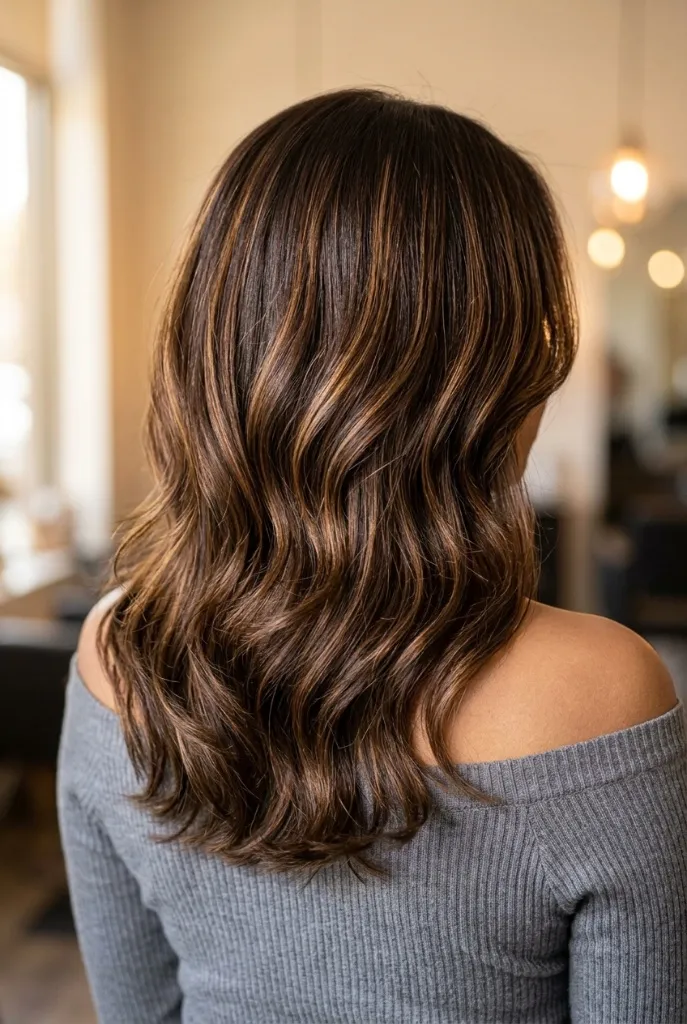
Caramel ribbons through a chocolate base — this is one of the most universally flattering summer hair highlights for 2026 combinations, achieved through a foilyage technique where wider foil sections are placed strategically through the mid-lengths and ends. The caramel shade has warm, honeyed undertones that catch light at every curl bend, while the chocolate base provides depth and prevents the overall look from reading too blonde. The cut uses long, rounded layers with a C-shaped curl finish, and the internal texturizing — done through notching, where the shears make small vertical cuts into the ends — gives each layer independent movement. This suits medium to thick wavy hair (2B–3A) and is particularly effective on round faces, where the vertical fall of the caramel highlights creates a lengthening effect. Curl definition held for 3 days after styling with a curling iron, with the caramel pieces maintaining their dimensional pop even as the curls loosened.
Wrap sections around a 1.25-inch curling iron, alternating directions, then shake out with fingers — no brushing. A curl-defining cream applied before ironing keeps the shape, and a flexible-hold hairspray sets it without crunch. Trims every 6–8 weeks maintain the rounded layer shape, and the foilyage grows out well over 10–12 weeks. The notching technique at the ends prevents the curls from clumping into thick, heavy ringlets — instead, they separate into distinct, airy ribbons that show off the color variation. This is a strong choice if you’ve been looking at mid-length haircuts for spring and summer. Skip if your hair is fine and straight — the ribbon technique and curled finish require enough density to hold volume, and fine hair will fall flat within hours. Warm, dimensional depth.
14. The Smoky Lavender Sleek Bob
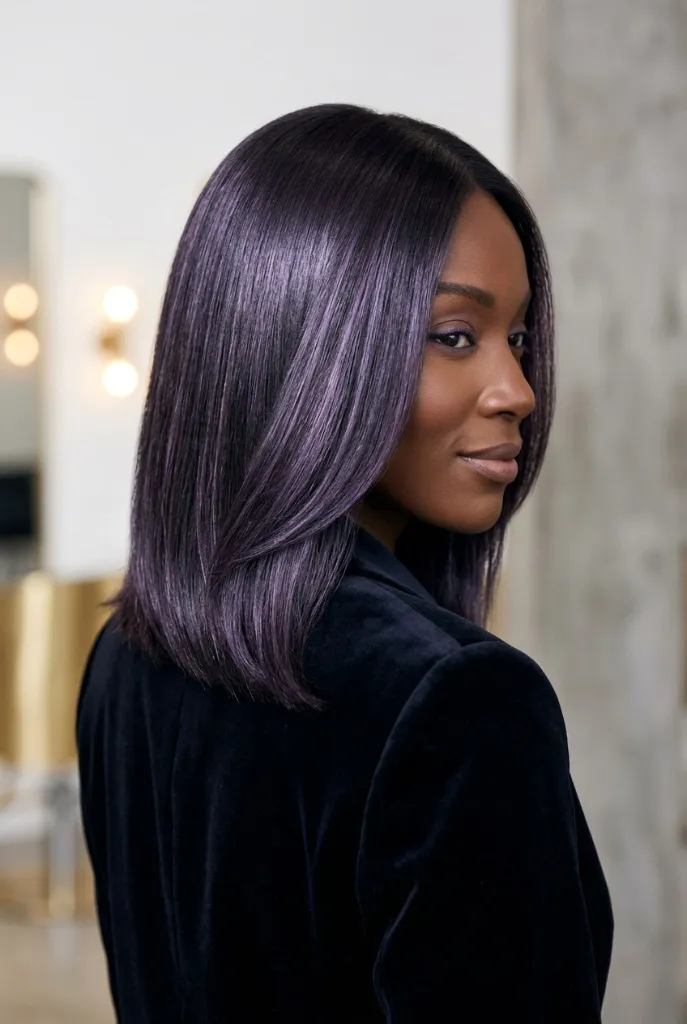
This is a fashion-forward technique: the colorist pre-lightens select panels through the interior and face-framing sections, then deposits a smoky lavender — a muted, almost gray-purple that reads as cool sophistication rather than costume purple. The bob is a classic one-length cut ending just below the shoulders, styled bone-straight with a flat iron to create that mirror-like surface where the lavender panels catch light against the dark base. It works on medium to thick straight hair (1A–1C), and the density required is important — thin hair doesn’t provide enough canvas for the panel color to make its statement without looking sparse. The smoky quality comes from the toner formula mixing violet with an ash base, creating a purple that whispers rather than shouts. The lavender held its smoky quality for about 3 weeks before beginning a slow fade toward silver-gray, which honestly looked like a second style entirely.
Flat-iron styling is the only option that does this look justice — waves and texture break up the color panels and muddy the distinction between the lavender sections and the dark base. Apply a thermal protectant and a silicone-based finishing serum for high shine. Trims every 5–6 weeks keep the one-length line precise, and toning appointments every 3–4 weeks are necessary to maintain the lavender’s smoky character. The panel color technique — where selected sections are lightened and colored while surrounding hair stays natural — creates a stained-glass effect on straight hair, with light passing through the colored sections differently than the dark ones. Not for anyone who avoids flat irons or prefers wash-and-go styling — this technique demands heat. Smoky, editorial cool.
15. The Violet Ash Dimensional Lob
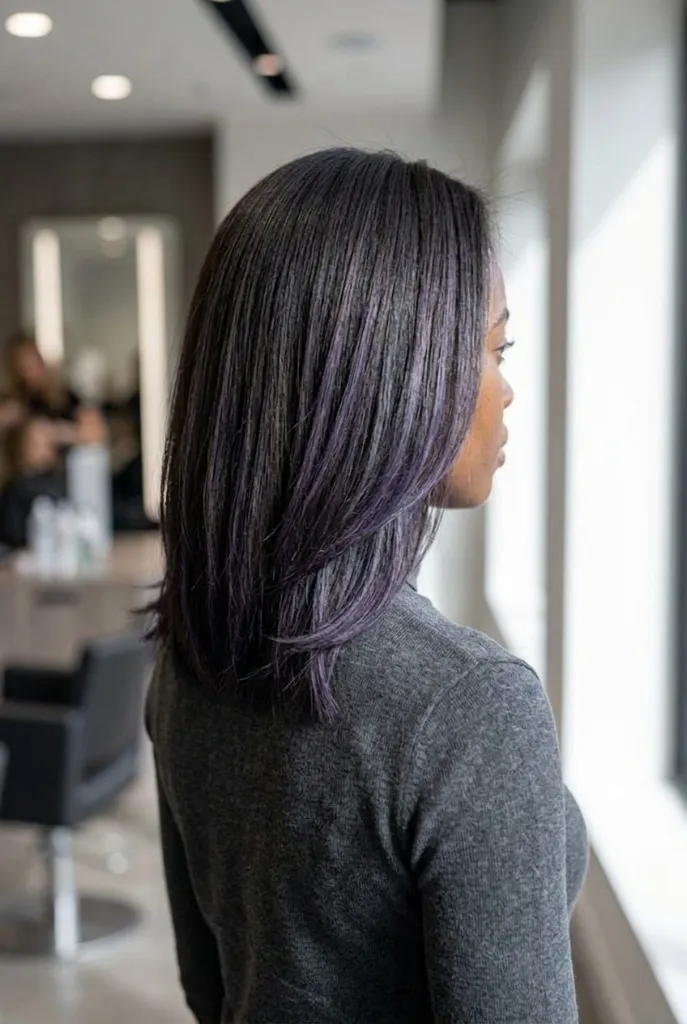
The color here is a violet ash — a cool, dark-toned purple that sits closer to charcoal than to bright violet, achieved by lifting the natural dark base only 2–3 levels and depositing an ash-violet formula. The technique is a partial foilyage — highlights placed only through the mid-lengths and ends, leaving the roots and crown completely natural — which creates dimension without commitment. The cut features medium-length layers with a slightly angled perimeter (longer in front, shorter in back), finished with point-cutting for movement. This works on medium to thick hair with straight to wavy texture (1B–2B), and the violet ash is especially effective on cool-toned skin that might look washed out with warmer highlights. The color appeared almost black in low light but revealed its violet character in sunlight — that subtlety is exactly the appeal. The ash component kept the violet from looking costume-purple for about 6 weeks.
Style with a blow-dry and round brush for smooth polish, or air-dry with an anti-frizz serum for a more relaxed, textured finish — the violet ash reads well in both contexts. A purple shampoo maintains the cool tone, and a weekly bond-repair treatment addresses the lightening damage. Trims every 6–8 weeks keep the angled perimeter sharp. The partial foilyage technique’s advantage is that it concentrates color where light naturally hits the hair — the mid-shaft and ends — while the darker roots provide depth and dimension at the crown. The result is that the violet feels woven into the hair rather than painted on top. Avoid if you want an obvious color statement — this is designed to be subtle, almost hidden until the light catches it. Understated violet edge.
16. The Vivid Plum Statement Bob

No subtlety here — this is a full-commitment vivid plum achieved through double-process coloring: the entire head is pre-lightened to a pale yellow, then saturated with a semi-permanent vivid purple-plum deposit. The bob is a textured, just-past-chin cut with internal point-cutting that creates soft movement without visible layers, and the vivid color saturates every strand from root to tip with no variation. It suits all hair types from fine to thick and straight to wavy, since the all-over application doesn’t depend on texture for its effect — the color is the entire point. The plum leans warm — more red-violet than blue-violet — and in direct sunlight it practically glows. I’ll say this: the best $30 I’ve ever spent on hair was a color-protecting conditioner that extended my last fantasy shade by two extra weeks, and this kind of vivid plum benefits enormously from that same investment. Color intensity lasted about 3 weeks at full vibrancy before the first signs of fading appeared.
Styling can go any direction — air-dry, blow-dry, flat iron, diffuse — because the color does all the work and the texture is secondary to the shade. What’s non-negotiable is a sulfate-free shampoo, cold water rinses, and minimal washing (3 times per week maximum) to preserve the semi-permanent deposit. A color-depositing conditioner in purple used at every wash is the single most effective maintenance step. Trims every 5–6 weeks keep the bob shaped. The full-saturation technique means there’s nowhere for the eye to rest — every strand is the same vivid plum — which is why the point-cut texture matters; it creates tiny shadows and separations that keep the color from looking flat. Not for anyone unwilling to commit to cold showers and limited wash days — this shade punishes hot water and daily washing ruthlessly. Full-volume, full-color statement.
17. The Champagne Bronde Soft Wave
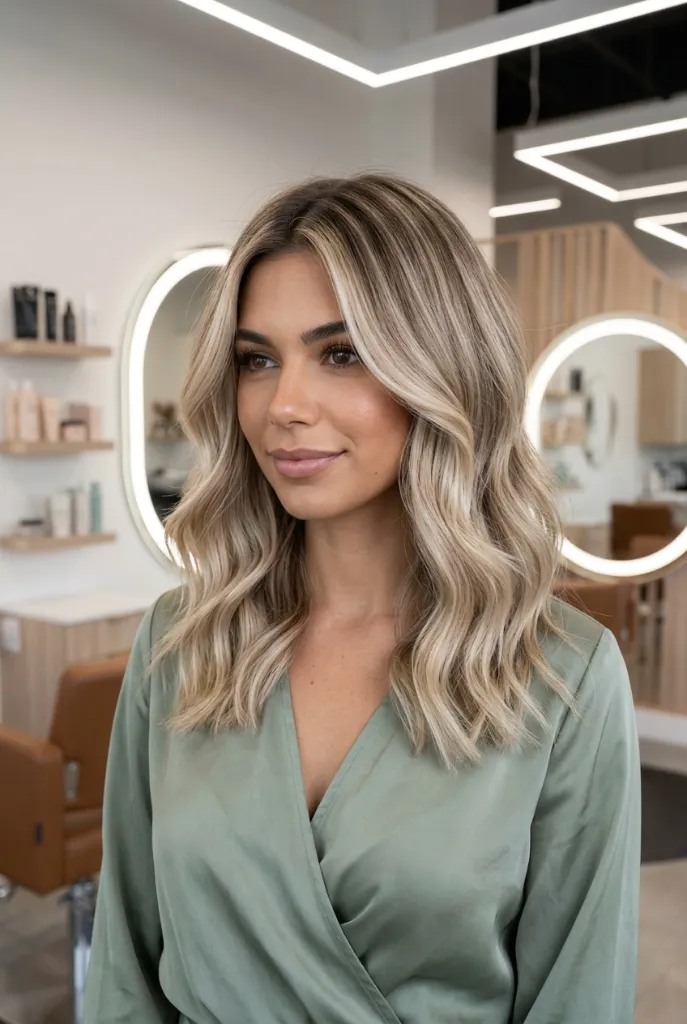
Champagne bronde — that exact middle ground between dark blonde and light brunette — is achieved here through a combination of babylights at the crown and hand-painted balayage through the mid-lengths and ends. The champagne tone has a neutral-cool undertone with the faintest golden shimmer, and the face-framing pieces are lifted 2 levels brighter than the rest for subtle contouring. The cut features long, invisible layers — also called ghost layers — that maintain a one-length appearance when straight but create gentle volume and movement when waved. This works on fine to medium hair with slight natural wave (1C–2B), and it’s one of the more universally flattering combinations for fair to medium skin tones. The summer hair highlights for 2026 conversation often centers on bold shades, but this champagne bronde proves that quiet dimension can be just as compelling. Tone held for 8–9 weeks with purple shampoo used once a week, and the grow-out was virtually seamless.
Wave with a 1-inch iron in alternating directions, then brush through with fingers for a soft, blended wave — not tight ringlets. A texturizing spray on dry hair adds grip and separation. Trims every 8–10 weeks maintain the ghost layer shape, and color stretches to 12–14 weeks because the babylights blend into the natural base so gradually. The ghost layer technique creates a “your hair but more” effect — the layers are cut internally, so the perimeter stays full and heavy while the interior has enough graduation to hold a wave. Skip if you want visible, dramatic layers — the whole point of ghost layers is that they’re undetectable. Champagne sophistication.
18. The Linen Blonde Curtain Layer
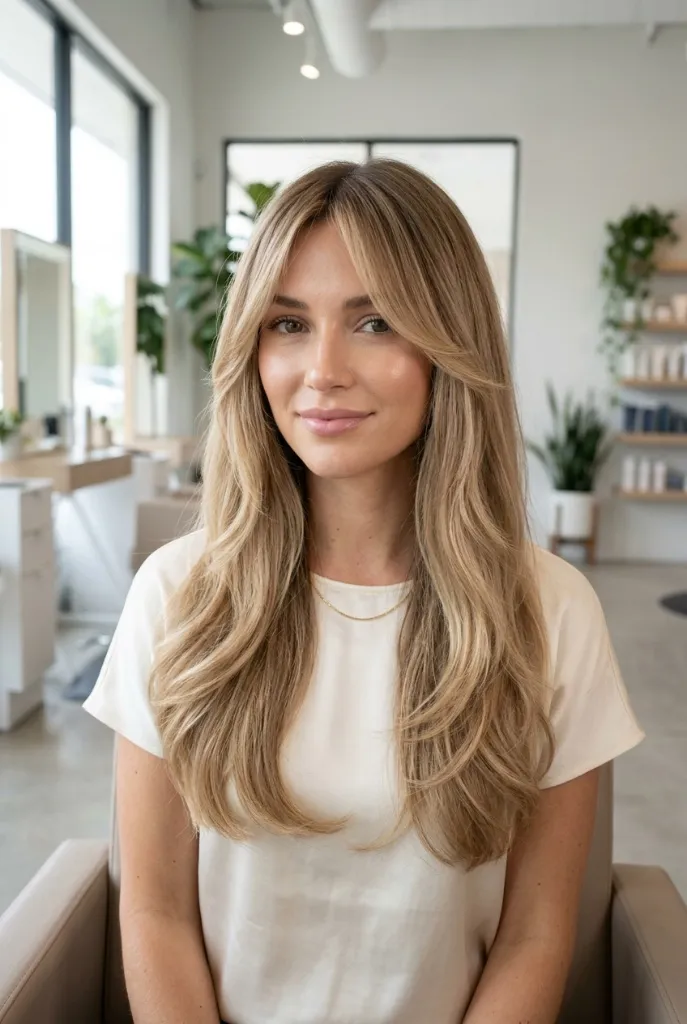
The linen blonde here is a pale, warm-neutral tone that avoids both the iciness of platinum and the yellowness of golden blonde — it’s that perfectly faded, sun-bleached quality that looks like it took three months of beach time to develop. The technique is a global balayage with heavier saturation at the face-framing curtain bangs and lighter application through the lengths, creating a natural gradient of brightness. The cut features long curtain-framing layers — cut with shears in a sliding motion to create soft, graduated pieces that part like curtains from the center — and the rest of the length is maintained with minimal internal texturizing. This works on fine to medium straight or wavy hair (1B–2A), and the curtain layers are particularly effective on long and oval face shapes. The linen tone photographed beautifully in warm and cool light alike, maintaining its neutral quality without skewing yellow or ashy. The balayage grew out so seamlessly that at 14 weeks I genuinely couldn’t tell where the highlights started.
Blow-dry with a large round brush, focusing on lifting the curtain framing pieces up and away from the face — that outward flick is what creates the “curtain” effect and keeps the bangs from falling flat across the forehead. A volumizing mousse at the roots and a light-hold hairspray at the ends are the only products needed. Trims every 6–8 weeks keep the curtain layers from growing past the face-framing sweet spot (once they’re too long, they just become regular layers). The sliding cut technique creates a gradual transition from short face-framing pieces to the full length — there’s no blunt step, just a continuous gradient that flows naturally. If you’re looking at best short summer haircuts but aren’t ready to go that short, this cut gives you that face-framing impact at long length. Not for anyone who skips blow-drying — curtain layers need volume at the root to maintain their shape. Breezy linen elegance.
19. The Wine Velvet Bouncy Set
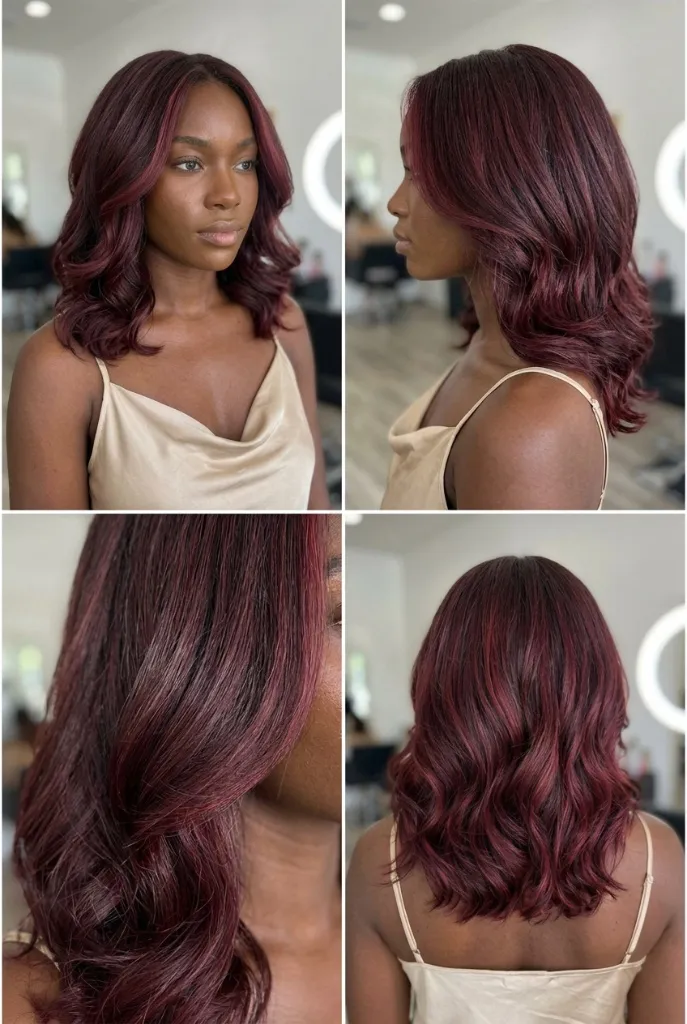
Wine velvet — a deep, warm-toned burgundy with a red undertone that gives it that plush, fabric-like richness — is applied here as an all-over color with subtle tone-on-tone highlights in a slightly brighter cranberry woven through for dimension. The cut is a medium-length style with rounded layers (cut with shears, not razor) and the ends are shaped into C-curls using a curling iron, giving the entire style a bouncy, set quality reminiscent of a classic blowout. This suits medium to thick hair with wavy or curly texture (2B–3B), and the rounded layers work particularly well on oval and heart-shaped faces, where the bouncing curls create softness and width at exactly the right points. The wine tone in direct sunlight revealed its red core — almost like looking at a glass of Cabernet — while in shade it appeared nearly black. Color held its wine quality for about 5 weeks.
Curl with a 1.5-inch iron in uniform sections, all in the same direction, then let cool completely before shaking out — that cool-down period is what sets the curl memory and creates lasting bounce. A flexible-hold mousse before curling adds body, and a medium-hold hairspray sets the finished style without stiffness. Trims every 6 weeks maintain the rounded layers, and a color gloss every 4–5 weeks refreshes the wine tone. Rounded layers mechanically distribute weight evenly around the head — unlike choppy or disconnected layers that create contrast and angularity, rounded layers create a continuous, flowing silhouette that’s the foundation for this bouncy set style. This is also a standout option for anyone exploring summer hairstyles for plus-size women, since the volume and dimension flatter beautifully. Avoid if you want a wash-and-go — this look requires heat styling every time. Velvet-rich bounce.
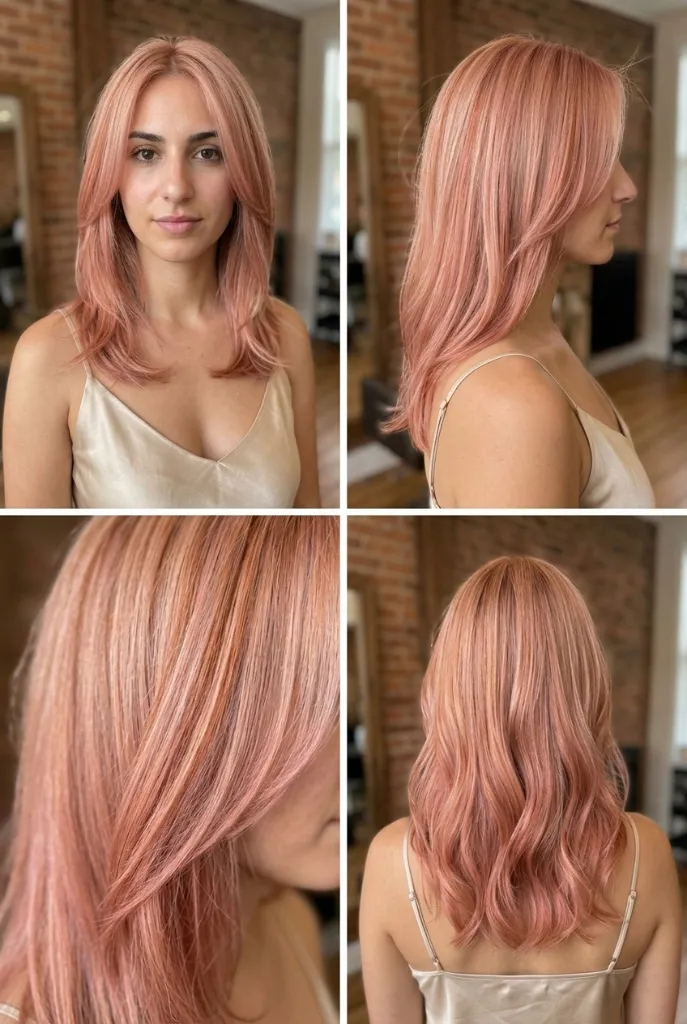
20. The Rose Gold Feathered Layer
Rose gold is achieved by pre-lightening to a level 9 pale yellow, then depositing a formula that blends pink, peach, and gold in equal measure — the result is a color that shifts between pastel pink and warm copper depending on the light. The cut features long feathered layers done with a razor, creating soft, tapered ends that flip outward at the shoulders and frame the face in wispy, piecey sections. It works best on fine to medium hair with straight or slight wave (1B–2A), where the razor’s feathering creates the most visible texture. The rose gold tone has warm undertones — more peach than bubblegum — and it reads as romantic and soft rather than edgy or punk. The feathered layers catch light at each tapered tip, which makes the rose gold appear to shimmer and shift. Color held its pink-gold balance for about 4 weeks before the pink faded faster than the gold, leaving a warm peachy blonde that was still very wearable.
Blow-dry with a round brush, flipping the ends outward at the shoulders for that feathered shape — this is a cut that rewards blow-drying more than any other styling method. A heat protectant, a smoothing cream, and a medium-hold hairspray are the essential trio. Trims every 5–6 weeks are critical because razor-cut feathered ends grow out into blunt, shapeless strands faster than shear-cut layers. A pink color-depositing conditioner every wash extends the rose gold’s life significantly. The razor-cut feathering creates ends that taper to a fine point — mechanically, this means each strand ends at a slightly different length, which allows light to pass through the tips and creates that translucent, shimmering quality. Not for thick, coarse hair — the razor creates frizz and bulk on resistant textures rather than the intended feathery softness. Romantic shimmer movement.
21. The Copper Penny Blunt Lob
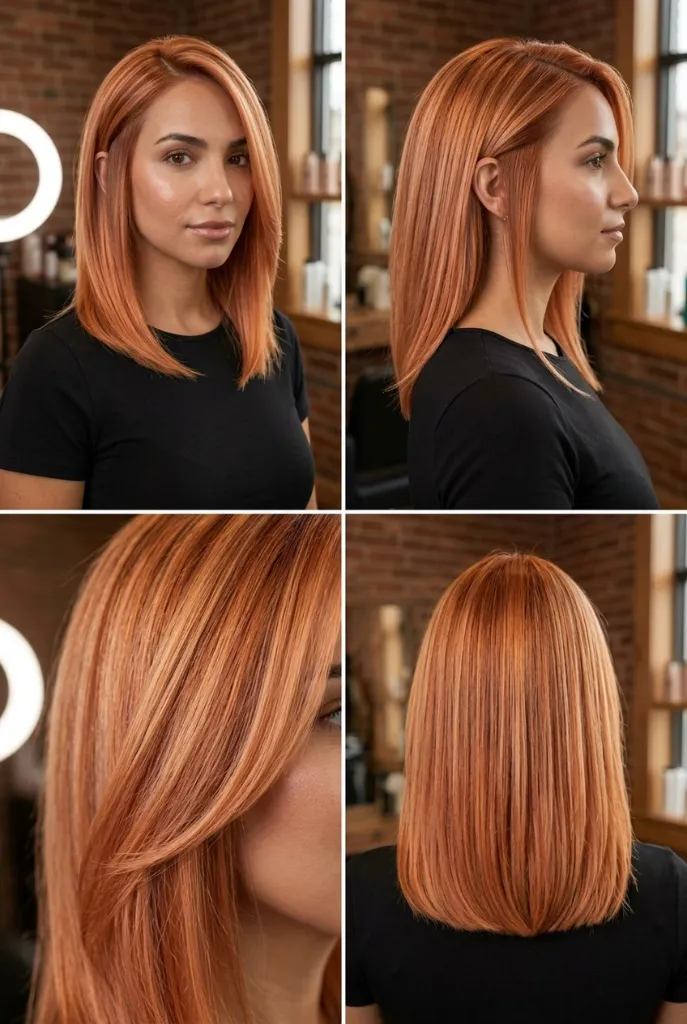
Copper penny — a true, warm, medium-bright copper that falls between auburn and ginger — is applied as a permanent all-over color with a high-shine gloss finish that makes it reflective enough to see yourself in (yes, the mirrored one). The cut is a clean blunt lob with zero visible layers, cut with shears in a straight horizontal line, and the face-framing pieces are slightly beveled inward with a round brush during blow-drying to create subtle inward movement. This suits medium-density straight hair (1A–1C) and also works on relaxed or heat-straightened hair, where the smooth surface lets the copper’s reflective quality do its work. The penny copper has a warm, orange-gold undertone — no red, no brown, just pure warm copper — and it is strikingly bright without crossing into unnatural territory. The color maintained its clean copper tone for about 6 weeks before the first hints of brassiness appeared.
Blow-dry with a paddle brush and a smoothing serum — this look lives and dies by its smoothness, and any frizz or flyaway will compete with the color’s reflective quality. A copper or warm gold color-depositing shampoo once a week maintains brightness, and an anti-humidity spray is essential in summer weather. Trims every 4–5 weeks keep the blunt line perfect — this is one of the most demanding trim schedules on the list, but a blunt perimeter shows every millimeter of uneven growth. The absence of layers is a deliberate mechanical choice: a one-length cut maximizes surface area, which means more light reflection, which means the copper appears brighter and more metallic than it would on a layered cut. Avoid if you dislike regular trims — this cut looks unkempt the moment the ends become uneven. Mirror-shine copper.
22. The Dark Cherry Cola Face Frame

Cherry cola highlights — a blend of deep brown-black base with warm, reddish-burgundy pieces concentrated at the face — are placed using a freehand painting technique that focuses all the brightness around the hairline and front sections, leaving the back and interior darker. The bob is a textured, chin-to-shoulder length with internal point-cutting that creates soft separation when the hair moves. This works on all textures from straight to curly and all densities from fine to thick, which is part of why cherry cola face-framing has become one of the most requested looks this year — it’s genuinely versatile. The cherry cola shade has a warm red-brown undertone — think cola held up to light — and the face-framing placement means the color effect is visible in every selfie and video call. Color lasted about 6 weeks at the face frame with minimal fading, since the burgundy tones are dark enough to hold without washing out quickly.
Air-dry with a lightweight styling cream, or blow-dry smooth — this technique adapts to whatever styling you prefer because the color placement (not the cut) is doing the heavy lifting. A sulfate-free shampoo preserves the red-burgundy tones, and a color gloss every 6–8 weeks refreshes the face-framing pieces. Trims every 6–8 weeks maintain the bob shape. The freehand face-framing technique mechanically concentrates dimension where the eye naturally goes first — framing the face — so even someone with limited styling time gets maximum visual impact from a targeted application. If you’re also thinking about what to ask for at a haircut appointment, requesting “cherry cola face-framing highlights” gives your colorist a clear, specific reference. Not for anyone who wants all-over color change — this is an accent, not a transformation. Warm-framed radiance.
23. The Ash Blonde Layered Contour
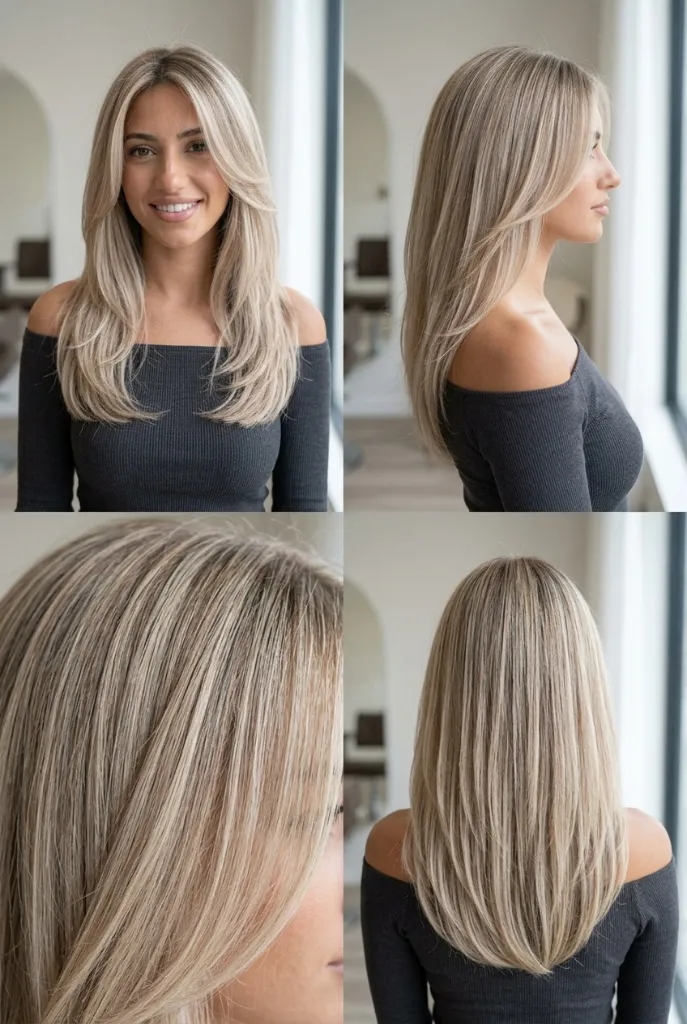
The highlight technique here is a contour balayage — strategically placed light and dark tones that mimic the principles of makeup contouring, with brighter ash blonde at the face frame and darker shadow tones at the nape and crown. The cut features long layers with heavy face-framing pieces that start at the cheekbone, cut using a slide-cutting technique that creates a gradual graduation from short front pieces to the full length at the back. This works on medium-density straight to wavy hair (1C–2B), and the contouring color placement is specifically designed for round and square face shapes, where the brightness at the face and darkness at the sides creates a slimming, sculpting effect. The ash blonde has cool, silvery undertones — no warmth whatsoever — and it’s the kind of blonde that reads as expensive and intentional. The four-angle view reveals how the darker pieces at the nape add depth while the brighter face pieces lift the features. The contour effect remained visible for about 10 weeks before the tonal contrast softened.
Blow-dry with a round brush for smoothness, or wave with a flat iron for textured dimension — the contouring reads clearly in both styling contexts. A purple shampoo every other wash keeps the ash tones cool, and a weekly deep-conditioning mask addresses the dryness that comes with lightened sections. Trims every 6–8 weeks keep the face-framing layers at their most effective length. The slide-cut face-framing technique creates a soft, curtain-like graduation rather than blunt steps — mechanically, this means the shorter pieces blend into the longer lengths without any visible line, which makes the contouring effect look natural rather than color-blocked. This is a perfect complement to short summer haircuts for anyone who wants similar dimension at a longer length. Not for anyone with warm-toned skin who prefers golden highlights — the ash-cool tone flatters cool and neutral undertones only. Sculpted, dimensional cool.