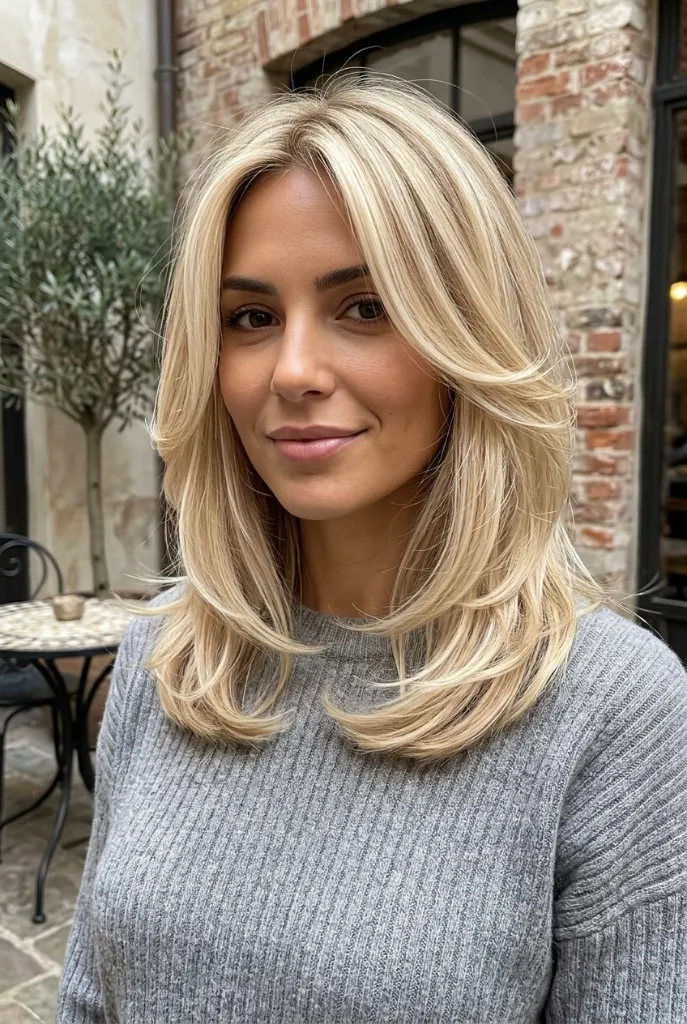
When Sydney Sweeney debuted her honey-drenched balayage at the 2026 Met Gala — paired with a backless column dress and zero jewelry — the internet collectively decided that blonde highlights were back in a way that felt entirely new. The “butter blonde melt,” “sandy ribbon highlights,” and “champagne foil” techniques have since exploded across salon booking platforms, with TikTok’s #SunKissedSummer trend generating over 900 million views by May alone. Instagram’s “quiet luxury hair” aesthetic has merged with this resurgence, and the result is clear: people are done with flat, one-dimensional platinum, and they want depth, dimension, and highlights that actually look like sunlight did the work.
The blonde highlight for summer 2026 encompasses everything from face-framing money pieces on sleek lobs to full-head foil work on long, textured layers. This year’s iterations include lived-in balayage on collarbone-length cuts, chunky ribbon highlights on blunt bobs, icy platinum streaks through ash bases, and warm caramel foils woven into mid-length layered styles. These techniques work beautifully across thick, fine, wavy, straight, and coily hair types, and flatter oval, heart, and round face shapes with equal ease — if you’re looking for ideas tailored to round faces specifically, we’ve covered that too. The common thread? They all prioritize dimension over uniformity, and they’re built for low-effort summer styling that still looks intentional.
I spent three years avoiding highlights entirely after a bad foil job left me with tiger stripes that took eighteen months of toning to correct. Last April, I finally let my colorist try a hand-painted balayage — just six pieces around my face — and the difference was immediate. My hair looked fuller, my complexion looked warmer, and I stopped reaching for bronzer every morning. That experience taught me something this entire article reinforces: the right blonde highlight isn’t about going lighter everywhere, it’s about placing light exactly where it matters.
1. The Sleek Ash-Blonde Precision Lob

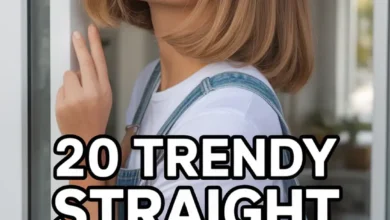
This cut is pure geometry. The blunt perimeter — cut with a zero-elevation technique that keeps every strand at the same length line — creates a density at the ends that makes fine-to-medium hair look twice as thick. The color sits in the linen blonde family with cool mushroom undertones woven through a deeper root shadow, and the blonde highlight for summer 2026 here is all about restraint: thin, micro-foiled ribbons that catch light without screaming “highlights.” Internal thinning through the mid-lengths prevents the blunt line from looking bulky, allowing this lob to air-dry into a smooth, glass-like finish that holds its shape for three full days between washes.
Styling demands a smoothing serum applied to damp hair, followed by a paddle-brush blow-dry with tension — pull the hair taut as you dry each section, which is what creates that editorial straightness without a flat iron. Maintenance is every six weeks for the blunt line (any longer and split ends destroy the clean edge) and toning every eight weeks to keep the ash from pulling yellow. The zero-elevation cut works mechanically because it eliminates all layering, meaning weight holds the hair down and prevents flyaways. Skip if you have naturally curly or thick hair — this cut will feel heavy and require daily heat styling. Glass-hair energy.
2. The Textured Sandy Balayage Lob

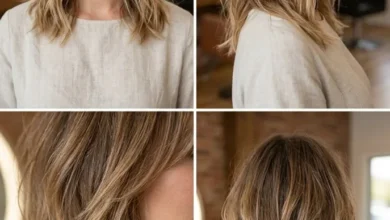
The four-angle view here tells the whole story: this is a cut designed to move. Internal point-cutting through the layers removes weight from medium-to-thick hair without sacrificing the perimeter length, creating that specific “I woke up at the beach” separation between strands. The color is a sandy bronde — darker at the roots, melting into warm wheat and golden tones at the mid-lengths and ends — achieved through hand-painted balayage that avoids harsh foil lines. This lived-in blonde highlight placement means you can stretch salon visits to twelve weeks without obvious regrowth, which is the entire point of this low-maintenance approach.
A salt spray scrunched into towel-dried hair is all this needs — diffuse on medium heat for two minutes if you want faster drying, or let it air-dry completely for a softer wave pattern. Trims every eight to ten weeks keep the layers fresh without losing length. The point-cutting technique works by creating irregular, tapered ends that naturally fall into textured separation rather than clumping together, which is why this cut looks better on day-two hair than freshly washed. Not for anyone wanting a sleek, polished finish — this cut is inherently undone, and fighting that defeats the purpose. The air-dry dream.
3. The Honey-Kissed Face-Framing Layer Cut
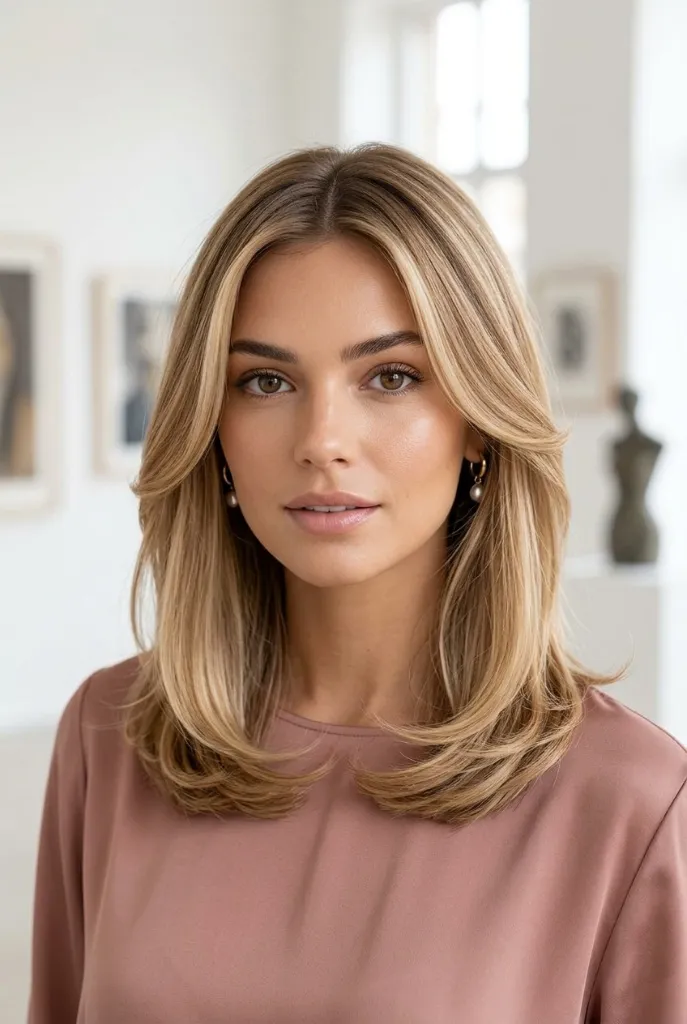
Curtain layers are having a moment — again — but this version earns its place through precision. The layers are cut using a slide-cutting technique that creates soft, feathered ends rather than blunt shelves, starting at chin length and graduating down to collarbone length in the back. The color is a warm honey blonde with buttery face-framing highlights that brighten the complexion without touching the back sections, keeping the overall look dimensional rather than uniformly light. On medium-density straight-to-wavy hair (1B–2A), these layers maintain their flip and bounce for a solid six to eight weeks before growing out.
A round brush blow-dry is the move here — wrap mid-lengths away from the face while directing heat downward, which creates that classic flipped-end effect without a curling iron. Use a lightweight volumizing mousse at the roots before drying to prevent flatness at the crown. The slide-cut layers work by graduating the weight removal gradually, so hair cascades rather than stacks — this prevents the dreaded “helmet” shape that poorly cut layers create. Maintain with trims every seven weeks, and toning every six to keep the honey from oxidizing into brassy orange. Avoid if you have very fine hair with low density — these layers need enough hair to actually separate and move independently. Polished, but breathing.
4. The Peach-Kissed Rose Blonde Waves

This is where blonde highlight for summer 2026 gets creative. The color — an apricot crush melting into rose gold — sits somewhere between blonde and strawberry, with warm pink undertones that make it feel like sunset bottled into hair color. The cut itself is a simple one-length base with invisible layers created through internal channel cutting — a technique where the stylist cuts sections underneath the surface to remove weight without visible layering from the outside. On medium-textured 2A–2B hair, this creates a wave pattern that looks uniform and bouncy rather than chaotic, maintaining its shape through humidity (which is the real summer test, honestly).
Style with a curl cream distributed evenly through damp hair, then scrunch and diffuse upside-down until 80% dry — the remaining 10% of moisture sets the wave naturally. This color requires purple shampoo once weekly to prevent the rose tones from fading into yellow, and a gloss treatment every four to five weeks keeps the peach dimension alive. The internal channel cutting mechanically reduces bulk while preserving the exterior weight line, meaning waves have enough weight to elongate rather than poofing outward. Not for anyone committed to low-maintenance color — rose gold fades faster than traditional blonde and demands consistent toning. Sunset waves, contained.
5. The Bronde Money-Piece Blowout

The money piece — those two front sections bleached lighter than everything else — has been around for a few years, but this execution elevates it into something genuinely sophisticated. The base is a rich bronde (that exact middle ground between brown and blonde) with champagne blonde ribbons framing the face from root to tip, while the rest stays warmer and deeper. Long layers cut with a razor — which creates softer, more feathered ends than scissors — start below the chin and cascade to mid-back length, giving medium-to-thick hair movement without losing that “I have a lot of hair” impact. This is the kind of style that makes collarbone-length cuts jealous of longer hair’s versatility.
The blowout is essential here — this isn’t an air-dry style. Use a large barrel round brush, directing all sections away from the face while lifting roots with a concentrator nozzle, which is what creates that salon-commercial volume. A light-hold hairspray locks the bounce without stiffness. Trims every eight weeks keep the razor-cut ends from looking stringy (razor cuts grow out less gracefully than scissor cuts — that’s the trade-off for softer texture). The razor technique mechanically tapers each strand to a point rather than a blunt edge, which allows individual strands to curve and bend naturally. Skip if you have fine, thin hair — razor-cutting can make sparse ends look even thinner. Volume that actually moves.
6. The Platinum Wispy Layer Cut
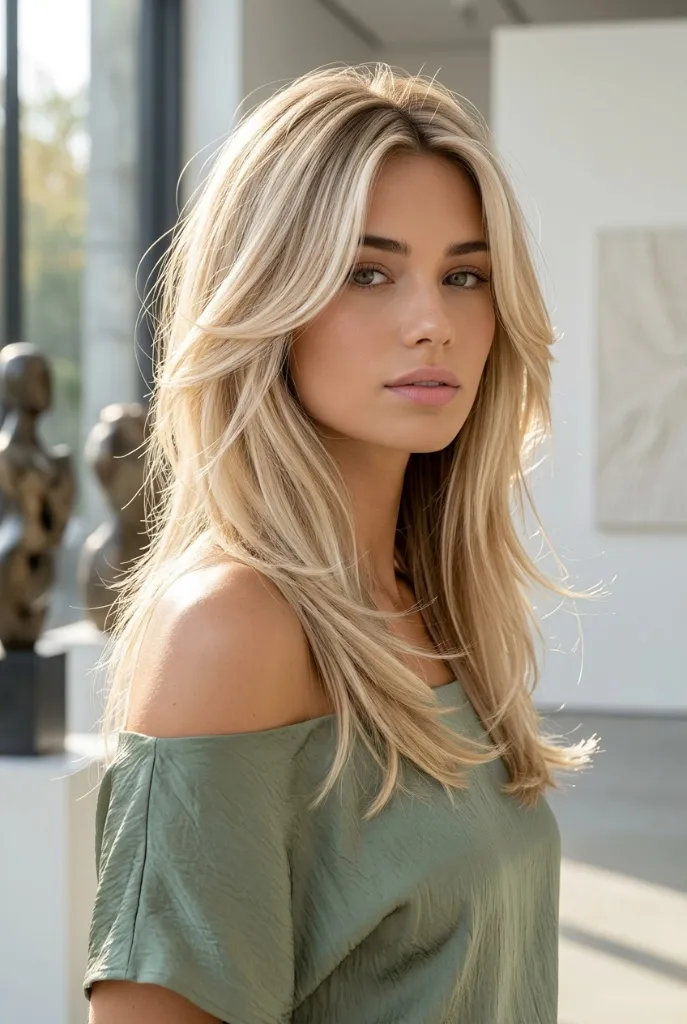
Full platinum still hits different when the cut supports it properly. Here, disconnected face-framing pieces — cut two to three inches shorter than the overall length — create movement around the face while the rest of the length stays long and layered. The cutting technique is dry-cutting, which means the stylist shapes the hair in its natural fall rather than wet, ensuring the layers land exactly where they should when styled. On straight-to-slightly-wavy hair (1B–2A), this creates that effortless “model off duty” texture that holds without product for up to two days.
This one works with minimal effort: a texturizing paste rubbed between palms and raked through dry hair gives it that piece-y separation without looking greasy. The platinum requires toning every three to four weeks (yes, that frequently — icy blonde is high-maintenance, no way around it) and a trim every six weeks because bleached ends are fragile ends. Dry-cutting works mechanically because hair behaves differently wet versus dry — cutting it dry eliminates the guesswork of shrinkage and natural fall patterns. Not for anyone with a tight curl pattern or coarse texture — platinum-level bleaching on those types risks serious damage without extensive bonding treatments. Bright and unbothered.
7. The Caramel Ribbon Highlight Lob

Traditional foil highlights get a bad reputation because of poor placement — but when done as thin, alternating ribbons of caramel and cream blonde through a light-brown base, the result is pure dimension without any of that stripey 2005 energy. The cut is a slightly angled lob — shorter in back, longer in front by about one inch — with minimal internal layering to maintain density and weight. Point-cutting at the very ends softens the perimeter just enough to prevent bluntness from looking severe. On straight, medium-density hair, this grows out beautifully because the highlights aren’t starting at the root — they begin about two inches down, creating a shadow root effect that extends time between appointments to ten or twelve weeks.
Style with a smoothing serum on damp hair and blow-dry straight with a flat brush for this polished look, or let it air-dry with a drop of argan oil for a more casual finish. Maintenance is refreshingly minimal: trims every eight weeks, and a glaze (not a full highlight session) every twelve weeks to keep the caramel from fading ashy. The angled perimeter works mechanically by creating the illusion of length from the front while keeping the back light and manageable. Avoid if you want visible volume — this cut is designed to lay flat and sleek, not bounce. Mediterranean in a bottle.
8. The Caramel Foil Dimension Bob
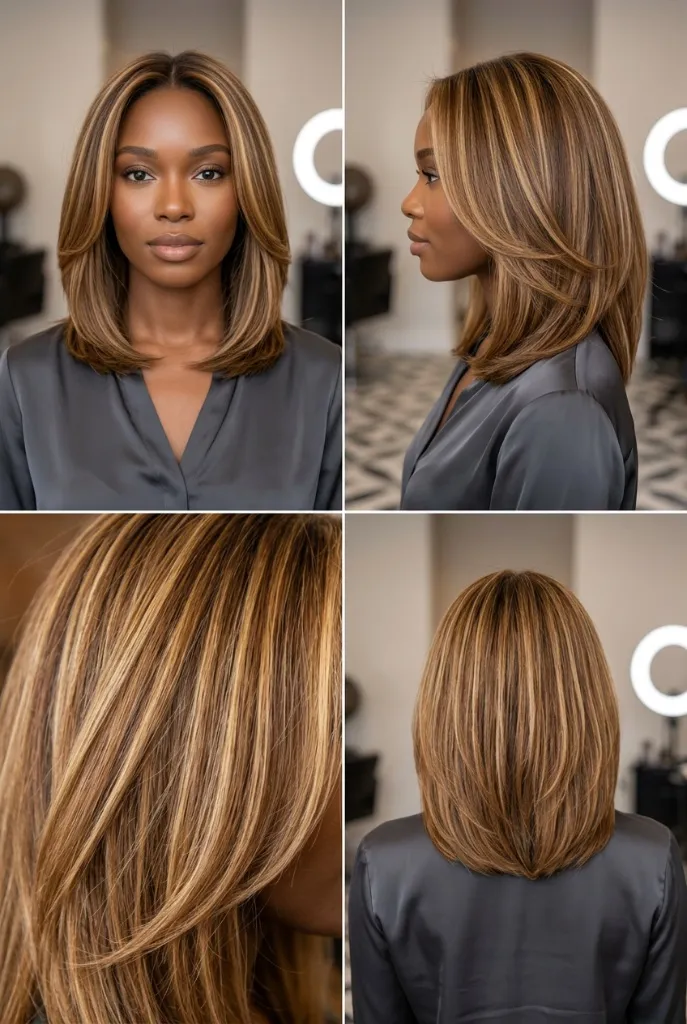
This four-angle view shows how strategic highlight placement can completely transform a dark base without going “blonde.” The golden and caramel foils are concentrated through the crown and face-framing sections while the underneath stays darker — a technique called “spotlight highlighting” that draws the eye upward and creates the illusion of volume at the top. The cut is a classic graduated bob with internal beveling — where the underneath sections are cut slightly shorter than the top — which creates that natural inward curve at the ends. Medium-to-thick type 1B–2A hair holds this shape for a solid eight weeks without looking overgrown.
Blow-dry with a medium round brush, wrapping sections under at the ends to enhance the natural bevel. A light hold serum prevents humidity from disrupting the smooth finish. The graduated bob with beveling works mechanically because the shorter underneath layers push the longer top layers outward, creating natural body without requiring any styling product for volume. Trim every six to seven weeks to maintain the graduation — once it grows out, the beveled shape loses its inward curve and starts flipping randomly. This style works particularly well for plus-size women wanting face-framing dimension without going too short. Not for anyone wanting messy, textured hair — this bob demands smoothness to show its architecture. Structured dimension.
9. The Icy Silver-Blonde Glass Lob

Silver blonde is the high-risk, high-reward end of the blonde highlight for summer 2026 spectrum — and this execution proves why the risk is worth it when done correctly. The color is a true icy silver with cool violet undertones that prevent any warmth from reading as brassiness, achieved through double-processing to level 10 before toning. The cut mirrors the first section’s precision lob approach: zero-elevation blunt perimeter, no layers, razor-straight finish that reads as “glass hair.” On fine-to-medium straight hair, this creates maximum density at the ends — which is all my fine hair can handle before it starts looking see-through.
This style lives or dies by your flat iron technique and your heat protectant. Apply a thermal smoothing serum, then single-pass each section at 380°F — never higher on bleached hair, or you’ll literally melt your strands. Purple shampoo every second wash is non-negotiable; silver blonde turns yellow within a week without it. Toning every three weeks keeps the icy tone alive, and trims every five weeks prevent bleach-damaged ends from splitting upward. The zero-elevation cut works identically to the first section — weight creates smoothness — but on silver-blonde hair, it also maximizes light reflection across a uniform surface. Skip if you can’t commit to bi-weekly toning and careful heat work — this is the highest-maintenance entry on this list by far. Ice, perfected.
10. The Warm Buttery Beach Wave

Sometimes the best blonde highlight isn’t about contrast — it’s about a seamless warm golden wash that makes you look like you’ve been swimming in saltwater all summer. This is a full buttery blonde with slightly darker shadow roots (about one inch of natural color at the scalp), which prevents that “growing out with a harsh line” problem. The cut features long layers starting below the shoulders, created through slide-cutting for soft, barely-there graduation. On naturally wavy 2A–2B hair, this essentially enhances what’s already there rather than creating something artificial, maintaining its wave for three days easily.
Air-drying is the intended method: apply a lightweight salt spray to damp hair, scrunch once, and walk away. For more defined waves, braid two sections while damp and release after an hour. Trims every ten weeks are sufficient because the long layers grow out gradually without losing shape. The slide-cutting technique creates such a gradual taper that there’s no visible “line” where layers begin — it just looks like natural thickness variation. Color refresh every ten to twelve weeks with a gloss, not a full foil session. This is one of those summer haircut trends that works precisely because it doesn’t try hard. Not for anyone wanting precision or structure — this is deliberate imperfection. Saltwater blonde, landlocked.
11. The Golden Caramel Cascade

This is balayage at its most painterly — sweeps of golden caramel and warm honey layered over a deeper brunette base, with the lightest pieces concentrated at the face and through the mid-lengths where light naturally hits. The curl pattern (a solid 2B–2C) is supported by long layers cut with the Ouidad carving technique — where each curl is individually shaped while dry to respect its natural spring pattern. This approach prevents the classic “pyramid” problem that plagues curly hair cut with traditional wet techniques, and the result holds its defined curl structure for four to five days between wash-and-gos.
A curl cream (medium hold) is essential — apply to soaking-wet hair in sections, then scrunch upward to encourage clumping. Diffuse with a hover technique (don’t press the diffuser against your head) until 90% dry, then let the last bit set naturally. Trims every twelve weeks are fine because curly hair hides growth better than straight hair. The dry-carving technique works mechanically because each curl’s individual length is accounted for in its natural state — meaning no shrinkage surprises after drying. The golden caramel placement is strategic too: lighter pieces on the outer curl layer catch light when curls move, creating a halo effect. Avoid if your hair is straight — this color placement and cutting technique are engineered specifically for curl patterns. Curls that glow.
12. The Platinum Shadow-Root Textured Bob
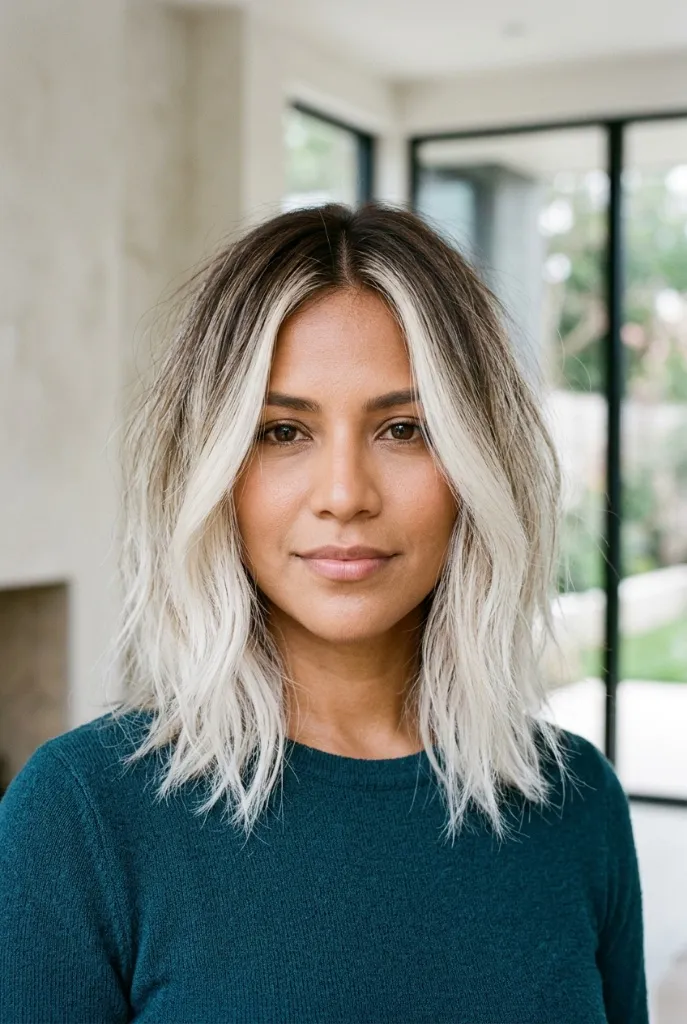
The contrast here — dark espresso roots dissolving into icy platinum ends — is deliberately dramatic, and the cut supports that drama through aggressive texturizing. Internal razor-cutting through the mid-lengths creates choppy, separated pieces that move independently, while the perimeter stays at one length just below the shoulders. This shadow-root technique means zero maintenance on the color for up to sixteen weeks because the dark root is intentional — as it grows, it just looks more lived-in rather than neglected. On medium-to-thick straight or wavy hair, this cut maintains its textured separation for about three days before needing a refresh with dry shampoo.
A texturizing paste is the hero product: warm it between palms, then scrunch into dry day-two hair for maximum piece-y separation. Washing every three to four days extends the texture — overwashing makes this cut fall flat. The internal razor-cutting works by removing weight from the interior of each section, which allows the outer strands to separate and move without the bulk pushing everything together. Trims every seven weeks, and toning the platinum ends every six weeks (the roots take care of themselves). This approach to blonde highlight for summer 2026 works for anyone who wants the brightness of platinum without the full-head commitment — or the full-head upkeep. Not for fine, thin hair — the razor texturizing will make sparse sections look even sparser. Contrast, weaponized.
13. The Warm Bronde Balayage Wave
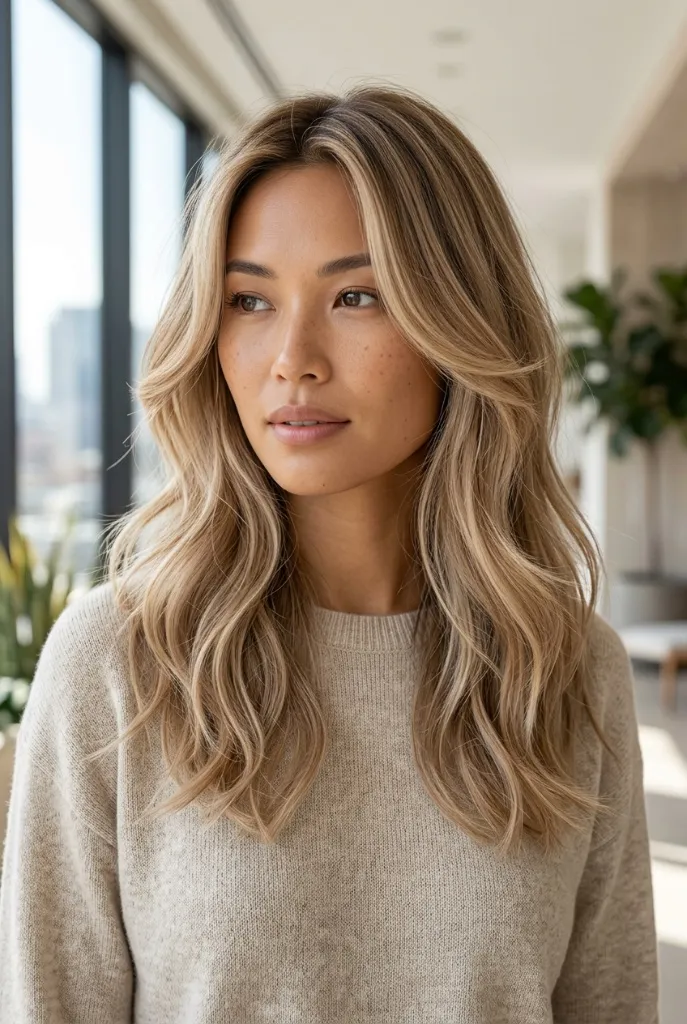
This is the “your hair but better” of blonde highlights — so seamless that people can’t tell if you colored your hair or just came back from two weeks in Greece. The balayage uses three tones: a cool-toned mushroom bronde base, sandy blonde mid-lengths, and the lightest champagne pieces only at the very front. Long layers with ghost layering — where layers are cut so subtly they’re invisible when hair is flat but reveal themselves in movement — create wave separation without any visible “steps.” On naturally wavy 2A–2B hair of medium density, this is essentially a enhance-and-release approach that cooperates with existing texture rather than fighting it.
Style with literally nothing, or a single pump of lightweight argan oil through the ends for shine. This cut and color are designed for minimal intervention — the whole point is looking like you didn’t try. Color refresh every twelve to fourteen weeks with a gloss; trims every ten weeks. Ghost layering works by cutting sections at very slight angles — just enough to remove connecting weight between wave groups, which allows each wave cluster to form independently. The result is natural-looking texture that doesn’t rely on product. This is what low-maintenance cuts that grow out well actually look like in practice. Skip if you want dramatic contrast or visible highlights — this is about subtlety, and anything more defeats its purpose. Effortless, truly.
14. The Ash-Mushroom Dimensional Lob
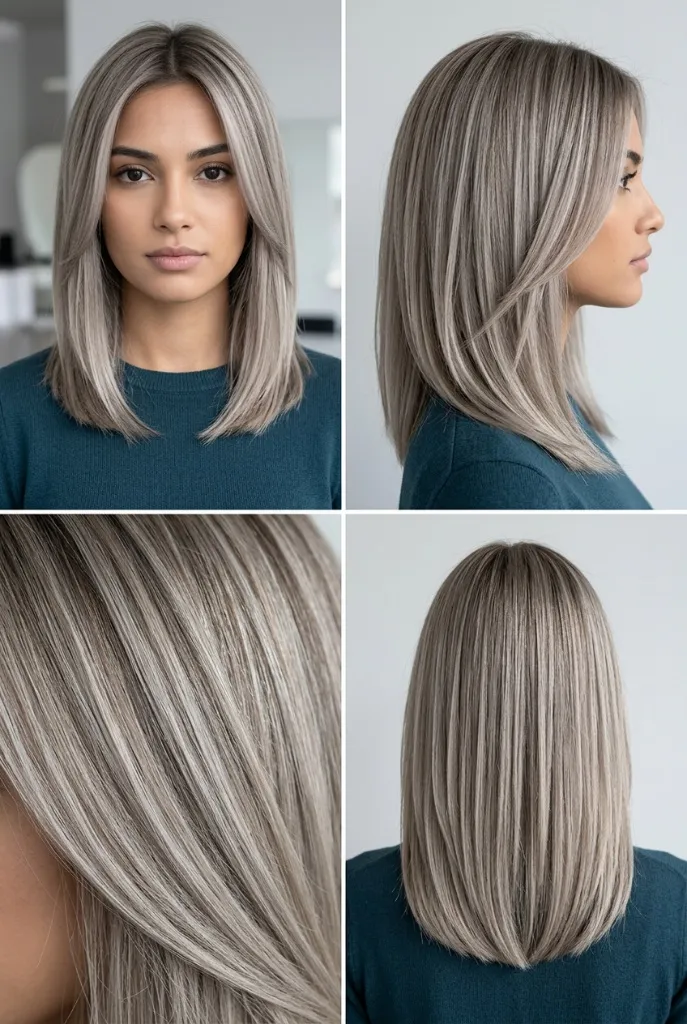
Cool-toned blondes are dominating the salon chair this summer, and this ash-mushroom blend is the most wearable version I’ve seen. The color layers silver-toned highlights through a cool mushroom-blonde base — neither warm nor icy, sitting in that perfect neutral zone that flatters both warm and cool skin undertones equally. The cut is a collarbone-length lob with face-framing layers that start at the jawline, cut with a point-cutting technique that creates soft, feathered ends rather than blunt edges. On straight-to-slightly-wavy hair of any density, this maintains its smooth, polished shape for up to five days (probably the best longevity of any cut on this list, honestly).
Blow-dry with a flat brush for this exact smooth finish, or let it air-dry and embrace a slight natural bend. A smoothing serum prevents flyaways without adding weight. Color maintenance is moderate: toning every six weeks to prevent the ash from warming up, and trims every seven weeks to keep the face-framing layers sharp. Point-cutting at the perimeter creates enough softness that the blunt shape doesn’t look severe — it’s the best of both worlds between clean lines and movement. This pairs perfectly with the overall summer haircut trends for 2026 that lean into cool-toned, low-contrast color. Not for anyone wanting visible warmth or sun-kissed vibes — this is decisively cool-toned and deliberately muted. Cool neutrality wins.
15. The Platinum Curtain-Layer Blowout
Classic blonde — high-lift platinum with subtle champagne lowlights to prevent flatness — looks entirely different depending on the cut carrying it. Here, curtain layers begin at chin length and sweep backward away from the face, cut with a pivoting technique where the scissors angle changes mid-strand to create that specific curve without needing a curling iron. The overall length hits just past the shoulders with long layers through the back for movement. On medium-to-thick hair, these curtain layers create volume at the cheekbones and jaw — which makes this particularly effective for elongating round face shapes.
The blowout is everything: large round brush, sections wrapped away from the face, with root lift from a concentrator nozzle held at 90 degrees to the scalp. Finish with a flexible-hold hairspray at arm’s length — never close up, or you’ll create crunchiness. Trims every six weeks are essential because curtain layers that grow too long lose their face-framing curve and just become flat pieces hanging forward. The pivoting cut technique creates a built-in bend at each layer’s endpoint, meaning the curve reappears every time you blow-dry even without wrap-around brushing. Skip if you exclusively air-dry — curtain layers need some heat styling to maintain their intended shape. The bounce is earned.
16. The Warm Chestnut-to-Caramel Melt

Not every blonde highlight needs to read as “blonde” — sometimes the most impactful version lives in that space between deep chestnut and caramel toffee, where warmth radiates without brightness overpowering. The color here is a rich chestnut base with caramel and toffee-blonde pieces concentrated from the mid-lengths downward, using a color-melting technique that eliminates any visible line between shades. Long layers cut with internal texturizing — where bulk is removed from underneath rather than the surface — create soft wave separation on thick, type 2A–2C hair without reducing the overall appearance of fullness.
Style with a curl-enhancing cream on damp hair and diffuse, or wrap two-inch sections around a large barrel wand for more polished waves. The color is remarkably low-maintenance: because the lightest pieces start far from the roots, regrowth is invisible for up to fourteen weeks. Gloss every ten weeks keeps the caramel from fading into flat beige. Internal texturizing works mechanically by thinning the hair’s interior — what the client sees on the surface stays thick and full, but the weight underneath is gone, allowing waves to form without bulk pulling them straight. Trims every nine weeks maintain the layer shape. Not for anyone wanting an obviously “blonde” result — this is for depth-lovers who want just a kiss of warmth. Warmth from within.
17. The Copper-Peach Soft Wave
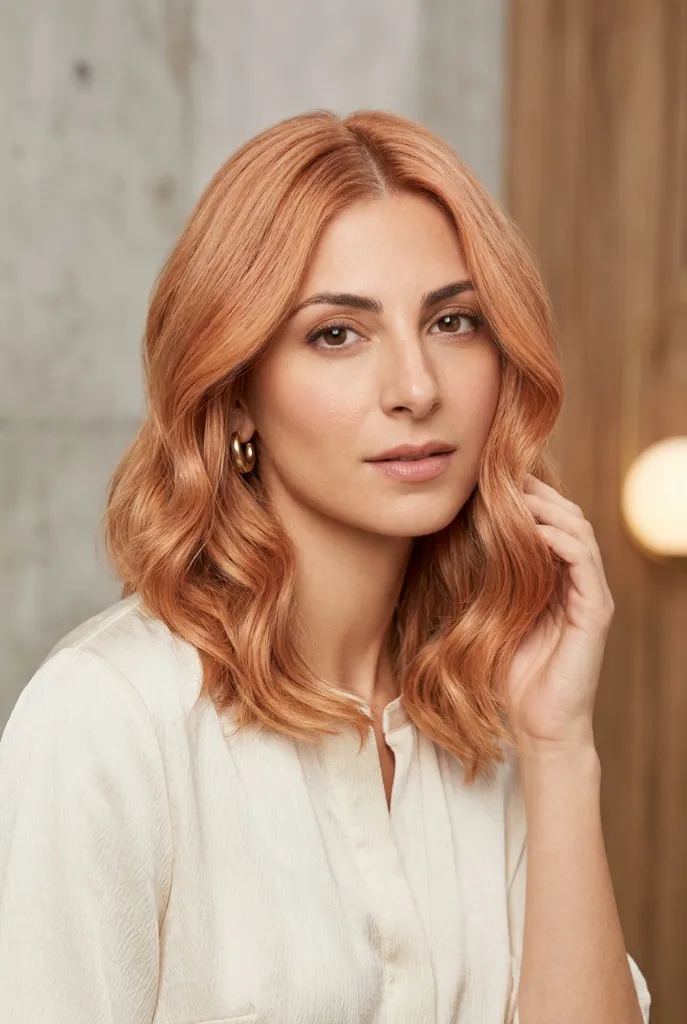
Copper continues its reign into 2026, and this peach-inflected version bridges the gap between traditional copper and the softer rose-gold blonde family. The shade is a warm apricot-copper — brighter and more overtly warm than typical blonde highlights, but still within the “blonde highlight” conversation because of its lightness and golden base. The cut is a one-length bob hitting just past the shoulders with no visible layers, shaped through internal channel cutting to reduce weight without disturbing the surface. On medium-textured 2A–2B hair, this holds a soft S-wave pattern that’s uniform and polished rather than chaotic.
Styling requires a smoothing curl cream applied to damp hair and either diffusing or air-drying — the wave pattern here is loose enough that it doesn’t need much encouragement. A color-depositing conditioner in a copper-peach shade extends vibrancy between salon visits, which you’ll need every five to six weeks because copper oxidizes and fades faster than cooler tones (the one honest downside to this shade family). The channel cutting technique removes interior bulk strategically, which prevents the one-length cut from looking heavy or triangular on denser hair types. This is the kind of creative blonde highlight for summer 2026 that stands out without requiring a complete bleach-and-tone process. Avoid if you prefer cool tones or if your undertone is very pink — copper-peach can clash with strongly cool complexions. Sunset in a shade.
18. The Lavender-Silver Sleek Lob
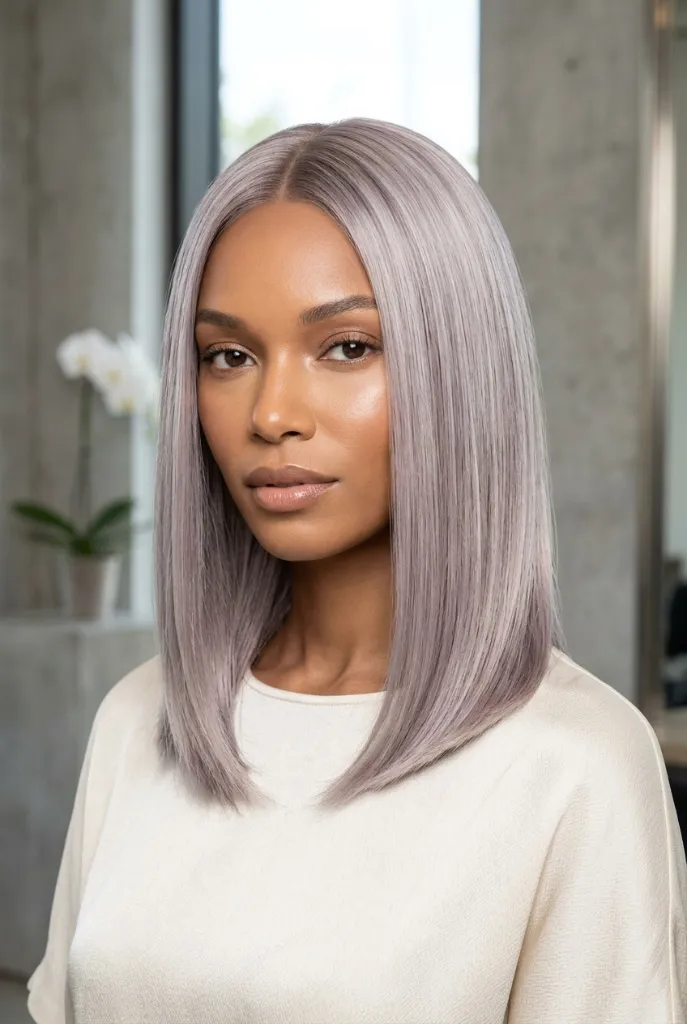
This is fashion-color territory that still reads as a “blonde” from a distance — a smoky mauve-silver with lavender undertones that only reveal themselves in direct light. Achieving this requires pre-lightening to a level 10 platinum before applying a semi-permanent lavender toner, which means this is built on the same blonde highlight base as icier options but finished with a creative overlay. The cut is a chin-to-shoulder lob with a single-length blunt perimeter and zero internal layering, keeping maximum density to showcase the color’s uniformity. On straight fine-to-medium hair, this glass-like finish reflects light across the lavender tones beautifully.
A thermal smoothing serum and a single flat-iron pass at 360°F create this mirror-like finish — and on pre-lightened hair, that lower temperature is non-negotiable. Color-safe sulfate-free shampoo only, and cold-water rinses extend the lavender tone. The semi-permanent nature means the color fades gracefully toward silver-blonde over four to five weeks, at which point you re-tone. Trims every five weeks for the blunt perimeter. The lack of layering works mechanically by creating a single, uniform surface for light to reflect off — any layering would break the glass effect with shadows and movement. This is among the best short-to-mid summer cuts for those wanting editorial impact. Not for anyone who can’t commit to weekly toning maintenance or wants a “natural” look — this is deliberately artificial and proud of it. Lilac steel.
19. The Ash-Blonde Blunt Long Bob
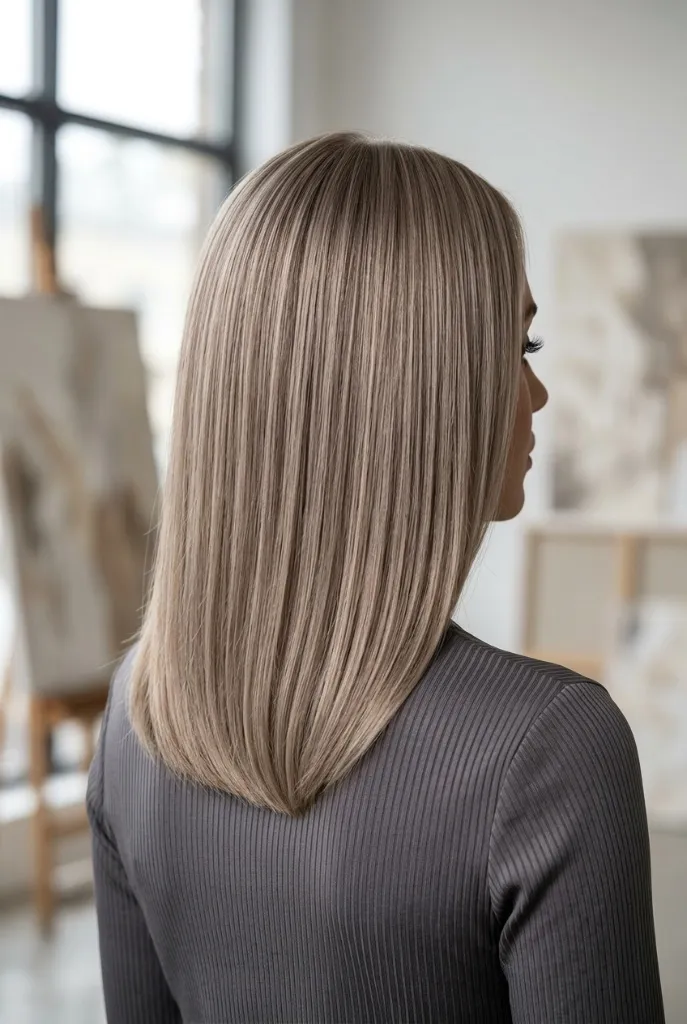
The back view is what sells this cut: a perfectly straight, blunt hemline that hits between the shoulder blades with absolutely zero layering or texturizing. The color is a cool ash blonde — not silver, not warm, just that perfectly neutral sandy-ash that photographs as effortlessly expensive. The blonde highlight technique here is a “highlight melt” where foils are placed through the top sections only and blended downward with a toner, creating a seamless root-to-end gradient without visible highlight lines. On straight, medium-density hair, this zero-layer approach creates incredible weight and swing — the kind of hair that swishes when you turn your head.
Blow-dry with a paddle brush pulling sections straight down, or flat-iron in single passes for maximum smoothness. A shine serum (not an oil — oils are too heavy) layered over the surface creates that reflective finish. Maintenance is relatively simple: trims every six weeks to keep the blunt line sharp, and toning every eight weeks to maintain the ash tone. The zero-layering approach works because all strands end at the same point, creating density and weight that naturally smooths the hair through gravity alone. This eliminates the need for heavy products or extensive heat styling for smoothness. Skip if you have thick or wavy hair — without layers, thick hair becomes unmanageably heavy, and wave patterns will fight the straight silhouette constantly. Weight as a weapon.
20. The Bronde Textured Wave Four-View
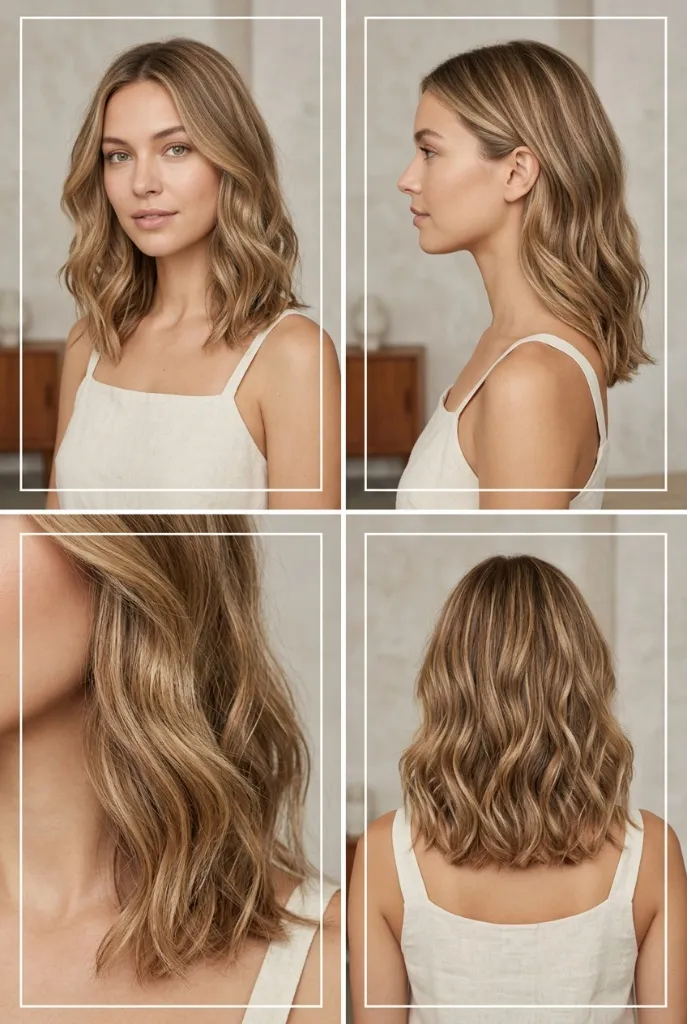
The four-view presentation here demonstrates what makes a great cut: it looks intentional from every angle. Front, side, close-up, and back all show consistent texture and highlight placement — which means the colorist worked in 360 degrees, not just painting what’s visible from the front (a common shortcut that looks obvious from behind). The bronde base with honey-toned highlights is applied through a combination of foils at the crown and hand-painting through the mid-lengths, creating multi-tonal depth. The cut uses long layers with disconnected face-framing pieces that sit two inches shorter than the rest, giving the front more movement than the back.
Style with a lightweight mousse scrunched into damp hair, then air-dry or diffuse — this texture is meant to look undone, so perfection defeats the purpose. Day-two hair actually looks better than day-one here, which is the mark of a well-cut textured style. Trims every eight weeks maintain the disconnected face-frame; the rest can stretch to ten weeks. The disconnected layering technique creates visual interest at the front without disturbing the length or density at the back — essentially giving you two different hair experiences depending on the angle. If you’re exploring summer hairstyle options that photograph well from every direction, this is the answer. Not for anyone who needs uniformity — the front and back deliberately behave differently. Every angle, considered.
21. The Classic Champagne Blonde Bob
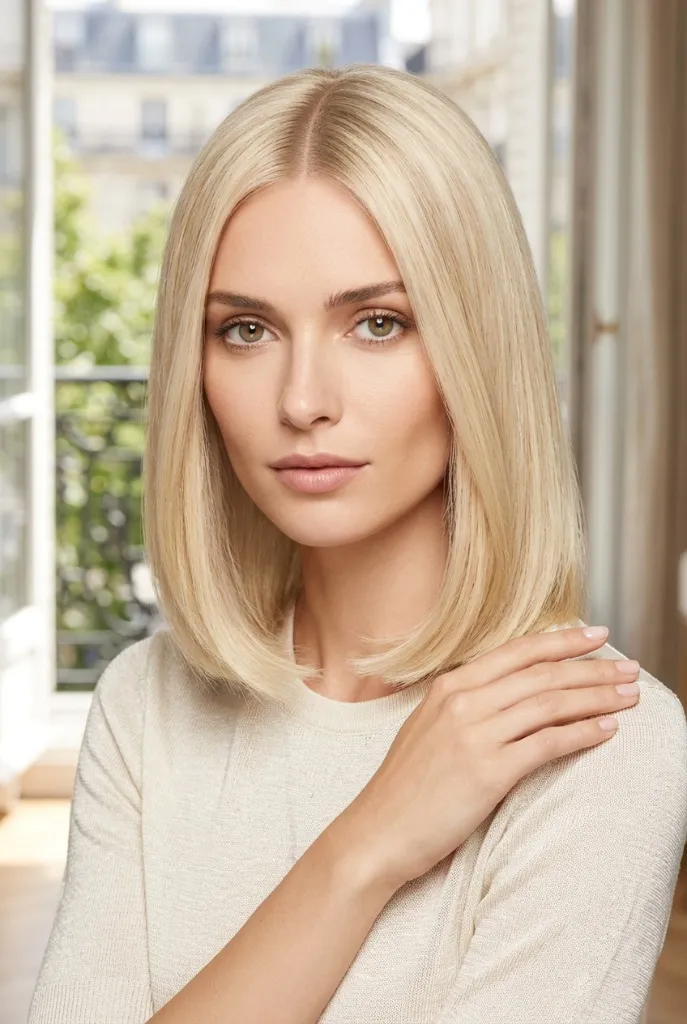
We end where blonde highlights perhaps work their purest magic: a single-process champagne blonde — warm but not golden, light but not platinum — on a clean, shoulder-length blunt bob. No balayage, no foils, no contrast — just one consistent, luminous shade from root to end. The cut is a textbook blunt bob with a center part, shaped at zero elevation with slight internal graduation (the very back is cut one centimeter shorter than the front for a subtle forward fall). On fine-to-medium straight hair, this creates the maximum illusion of thickness and health because every strand reflects light at the same angle.
Blow-dry with a round brush for this smooth, curved-under finish, or air-dry with a smoothing cream for a more relaxed version. The champagne tone — a warm undertone level-9 blonde — requires toning every five to six weeks and root touch-ups every four weeks if you’re maintaining root-to-tip coverage. Trims every five weeks keep the blunt line pristine. The internal graduation mechanically creates a slight inward curve at the ends without visible layering — the back gently pushes the sides forward, framing the face. This is the most “classic” blonde highlight for summer 2026 on this list — nothing experimental, nothing edgy, just technical excellence in cut and color. Avoid if you prefer dimension or contrast — this deliberate uniformity reads as “flat” to anyone wanting multi-tonal work. Timeless, and correct.