
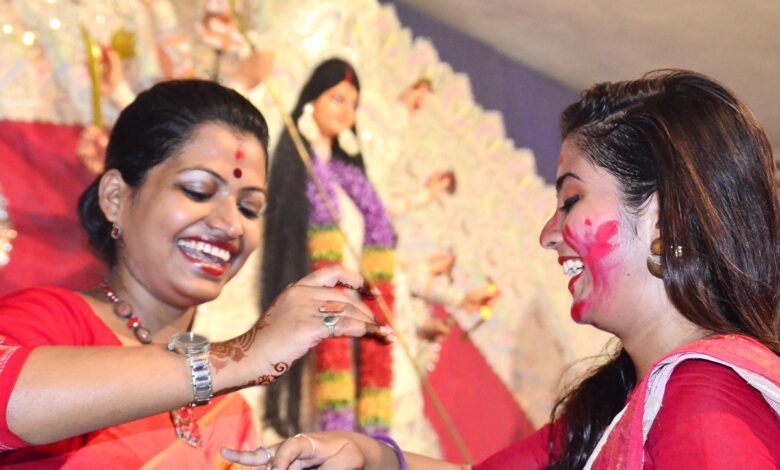
Dussehra, or Vijayadashami, falls on Tuesday, October 20 this year, and it closes the festive arc that begins with Navratri. It is a day of two moods at once: celebration for the victory of good over evil, and, in Bengal, a tender farewell as Durga returns to her home. Your outfit has to honour both. Across most of India that means auspicious red, yellow, and orange, rich silks, and jewellery that can carry a full day of rituals, visits, and photographs. In Bengal, where some calendars mark Vijayadashami on October 21, it means the white and red laal-paar saree, a thali in hand, and sindoor on your forehead.
The eight looks below are drawn from how women actually dress for this day, from the boron farewell and sindoor khela to the Mysore Dasara procession, so each one is rooted in a real ritual rather than a generic festive formula. If you are still building your festive wardrobe, the colour stories in these Navratri outfit ideas for nine nights of dandiya lead naturally into this day, and the celebrations continue with these Diwali outfit ideas for a festive glow and these Karva Chauth outfit ideas later in the month.
1. The White and Red Laal-Paar Saree for Devi Boron
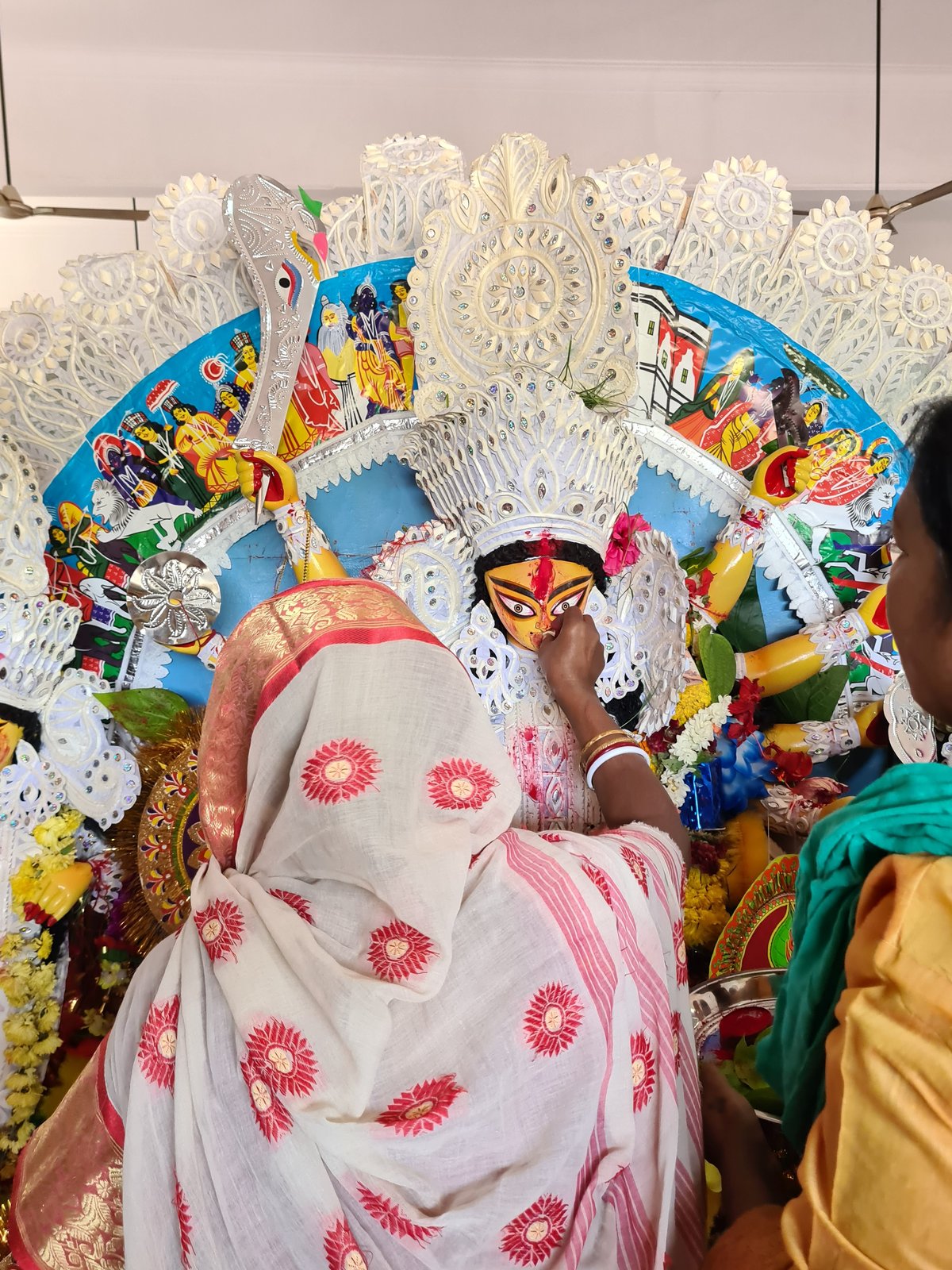
Photo credit: Souvik23 via Wikimedia Commons (https://commons.wikimedia.org/wiki/File:Dashami_Boron.jpg) (CC BY-SA 4.0)
The laal-paar saree is the signature look of Vijayadashami in Bengal, and this white saree with red floral motifs and a gold-edged border shows why it endures. White carries purity and farewell, red carries celebration and marriage, and together they photograph with a clarity that heavier festive colours cannot match. You will wear this saree bent over a boron thali, touching sweets and betel leaves to the goddess, so choose a cotton-silk or soft silk that drapes close and stays tucked through the ritual. A red blouse keeps the frame classic, and small gold earrings are enough because the border and the sindoor do the rest. The principle: for the farewell ritual, let white carry the emotion and red carry the celebration.
2. The Classic Red Saree for Sindoor Khela
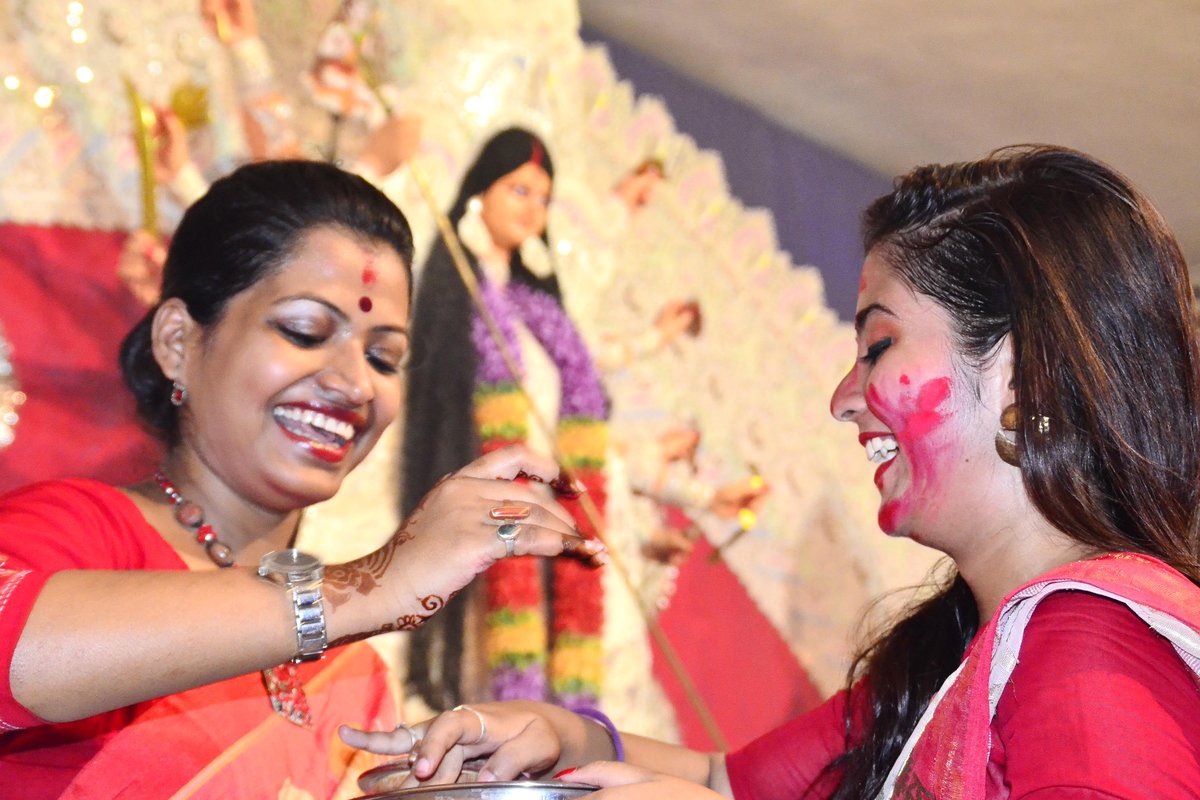
Photo credit: Diganta Talukdar via Wikimedia Commons (https://commons.wikimedia.org/wiki/File:Bijoya_Dashami.jpg) (CC BY 4.0)
After the boron, married women smear sindoor on each other in sindoor khela, and the only correct colour for it is red on red. These two women in bright red sarees, laughing as the vermilion goes on, capture the spirit of the ritual exactly: joyful, unguarded, and completely saturated in the colour of the day. Practicality matters here, because sindoor will land on your clothes. Choose a red saree you love but do not fear for, in a washable silk blend or cotton silk, and keep the blouse in the same family of red so stray marks disappear into the pattern. Wear your shakha pola bangles and a simple gold chain. The principle: dress for the sindoor, not against it, and let one joyful colour own the ritual.
3. The Red Saree with Temple Gold Jewellery
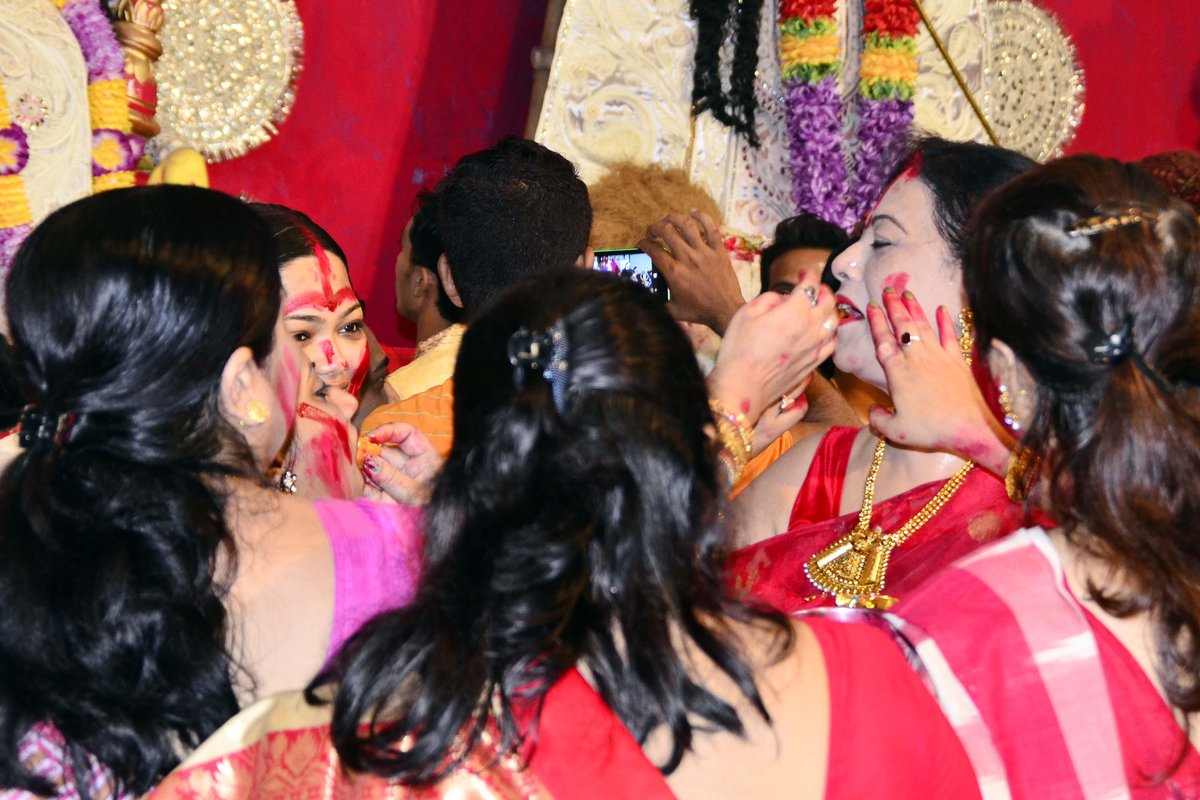
Photo credit: Diganta Talukdar via Wikimedia Commons (https://commons.wikimedia.org/wiki/File:Nowgong_Bengali_Association_Durga_Puja%22Sindorr_Khela%22_on_Bijoya_Dashami.jpg) (CC BY-SA 4.0)
If your Dussehra includes a community pandal and photographs with half the neighbourhood, this is the day to bring out your heaviest gold. The woman here pairs her red saree with a long, temple-style gold necklace that rests over the drape and reads clearly even in a crowd, and that single decision lifts a familiar saree into celebration dress. Temple jewellery works on Dussehra because the day honours a goddess, and its matte, carved finish suits silk better than polished modern sets. Balance the necklace with plain gold bangles and skip heavy earrings, or the frame crowds around your face. Tie your hair back so the sindoor ritual stays comfortable. The principle: one heirloom-scale necklace can carry a whole festive outfit, so let it.
4. The Cream Saree with a Red Border
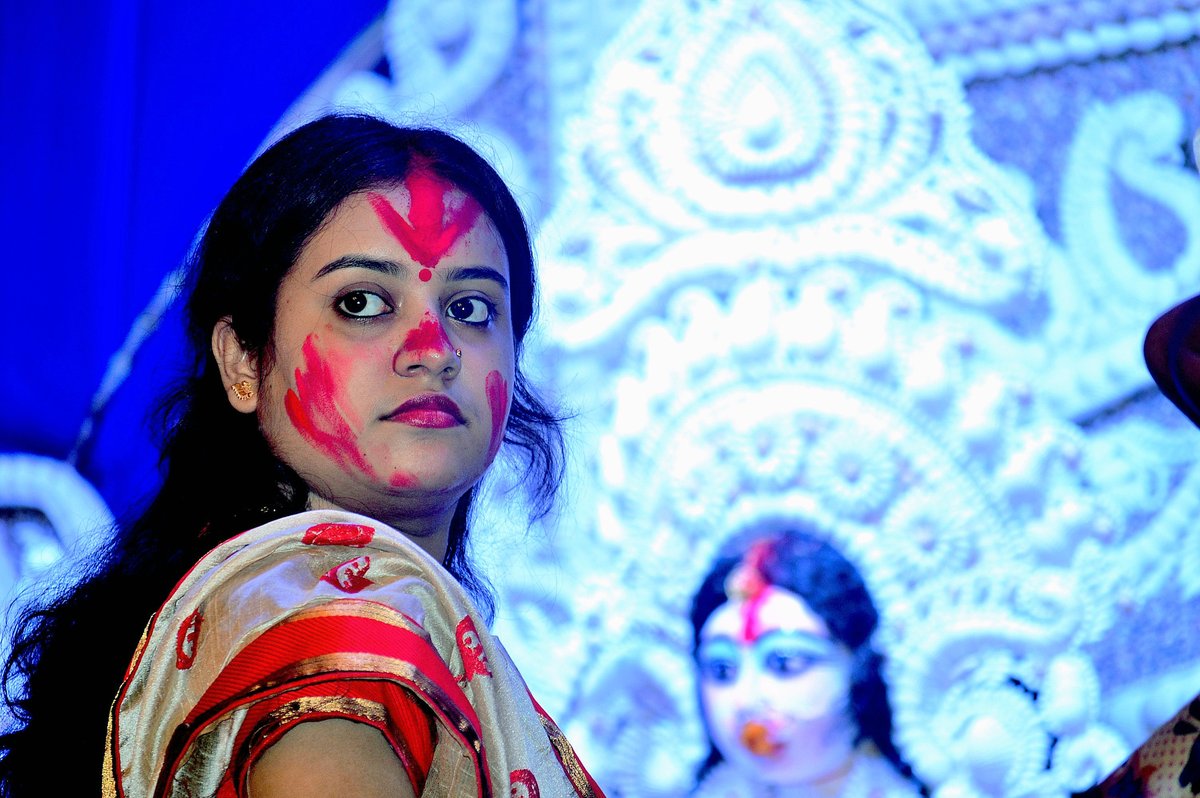
Photo credit: Tushar Baran Sinha via Wikimedia Commons (https://commons.wikimedia.org/wiki/File:Living_durga-01.jpg) (CC BY-SA 4.0)
Not every Dussehra look needs to start from a fully red saree. A cream saree with a red and gold border gives you the same festival language in a softer register, and it flatters the sindoor markings beautifully, as this portrait shows: the red tilak on the forehead and the smear on the cheek become part of the outfit rather than accidents on it. Cream silk or tussar keeps the look luminous in pandal lighting and in daylight processions alike. Because the base is quiet, your blouse can carry the red, and gold studs or a small jhumka finish the frame without competing with the border. This is the choice for women who find head-to-toe red heavy by evening. The principle: a pale base with a strong border lets the ritual colours complete your outfit.
5. The Red and Gold Sarees for the Boron Ceremony
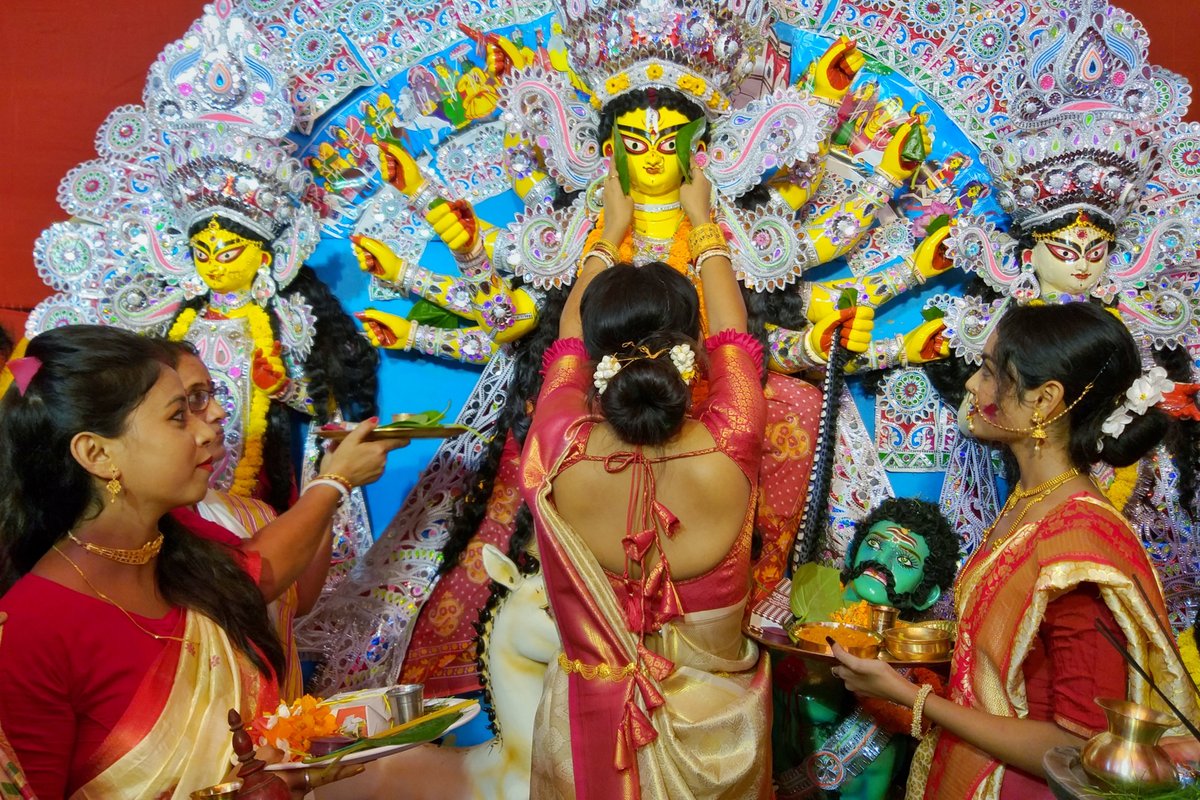
Photo credit: AjoyDutta1997 via Wikimedia Commons (https://commons.wikimedia.org/wiki/File:Mother’s_welcome.jpg) (CC BY-SA 4.0)
Devi boron is a group ritual, and these three women show how Bengali festive dressing works in company: cream sarees with red and gold borders, red blouses, gold at the neck and wrists, and hair pinned with flowers. Nobody matches exactly, yet the shared palette makes the group read as one celebration. If you are attending with sisters, cousins, or friends, agree on the palette rather than identical outfits: cream and red, or red and gold, in whatever weave each of you owns. Silk and silk blends hold their pleats through an hour of standing, offering, and being photographed. Keep one hand free for the thali and pin the pallu at the shoulder. The principle: coordinate the colours with your group, and let each woman keep her own weave and drape.
6. Colourful Sarees for the Family Temple Gathering
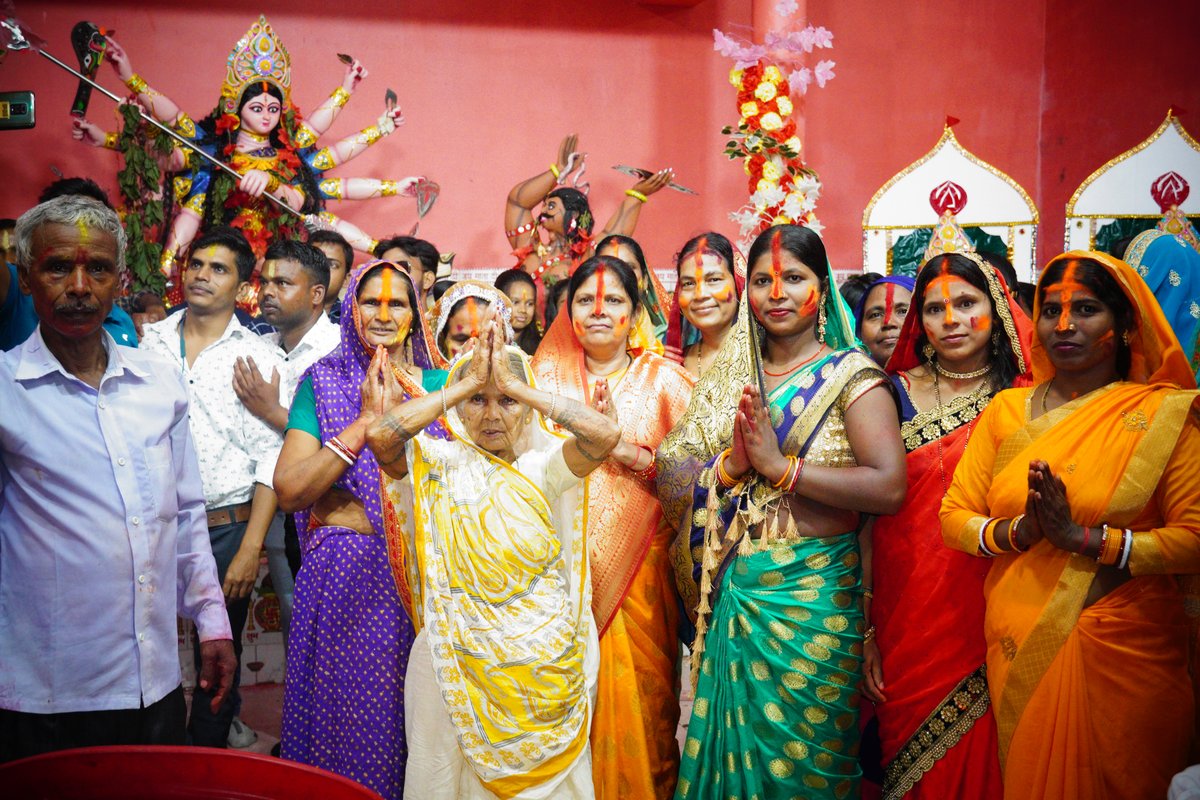
Photo credit: Mukesh Kumar via Wikimedia Commons (https://commons.wikimedia.org/wiki/File:Celebrating_Dussehra_with_devotion_and_togetherness.jpg) (CC BY-SA 4.0)
Beyond Bengal, Dussehra morning often means a family visit to the temple before the evening Ravan dahan, and this group of women in green, orange, yellow, purple, and red sarees is the truest picture of it. Every woman wears a different auspicious colour, several with tilak on the forehead, and the effect is a rainbow that still feels entirely traditional. This is your permission to choose the colour that suits you rather than the colour the calendar suggests. A zari border or a brocade blouse supplies the festive note, while the saree itself can be one you already own and love. Add fresh flowers in your hair if your family tradition allows. The principle: for the family gathering, auspicious colour matters more than any single prescribed shade.
7. Sarees in Every Colour for the Boron Queue
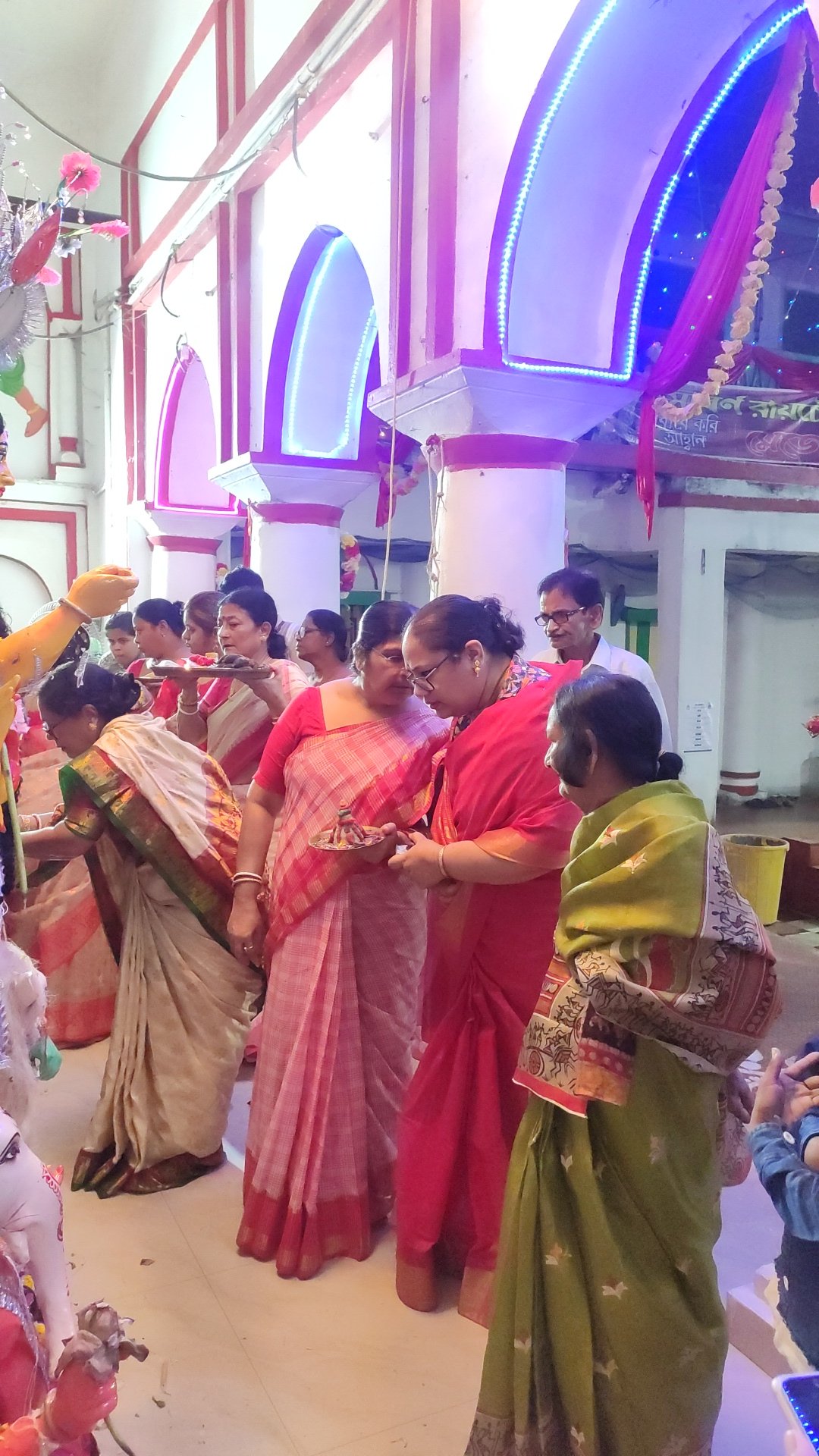
Photo credit: Sumita Roy Dutta via Wikimedia Commons (https://commons.wikimedia.org/wiki/File:Devi_Boron_a_poignant,_emotion-filled_farewell_ritual_on_Bijoya_Dashami_at_Sabarna_Roy_Choudhury_Mejo_bari_29.jpg) (CC BY-SA 4.0)
The boron queue at a traditional bari puja is where Dussehra dressing becomes wonderfully democratic. In this frame, a deep red saree stands beside a pink checked one, a green saree with a woven border, and a cream drape, each woman holding her small thali of sweets and leaves. The lesson is that the ritual does not ask for new clothes; it asks for your best clothes, worn with care. A handloom cotton or a well-kept silk from your wardrobe, freshly pressed and paired with clean gold or shell bangles, is completely right. What unifies the queue is the thali, the bindi, and the intention, not the price of the weave. The principle: wear your best existing saree with full ritual detail, and you are dressed correctly for boron.
8. Traditional Dress for the Mysore Dasara Procession
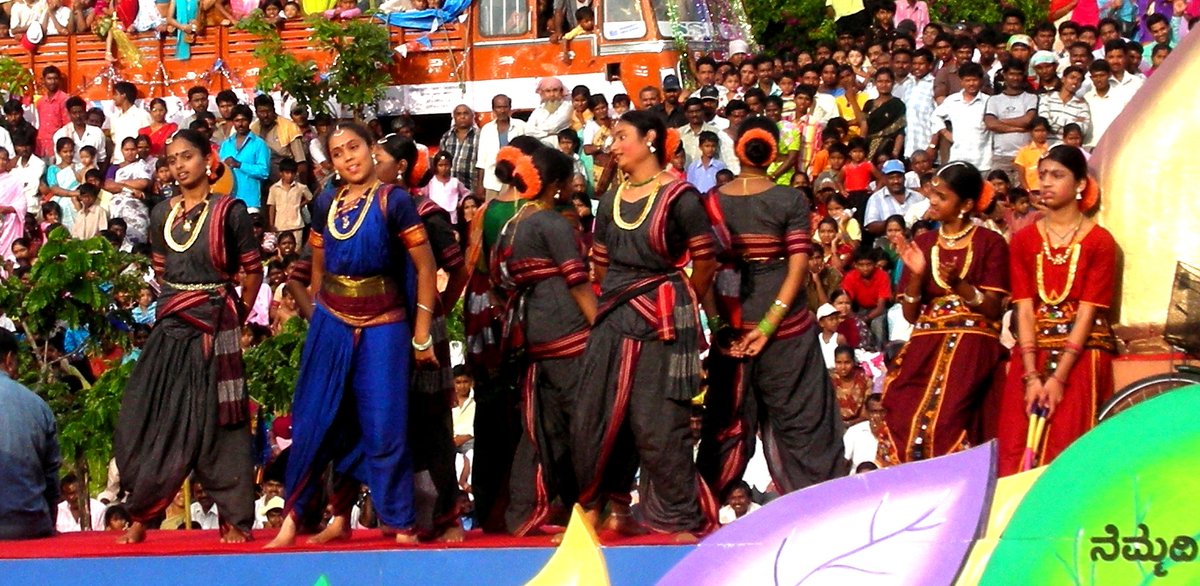
Photo credit: Kalyan Kumar via Wikimedia Commons (https://commons.wikimedia.org/wiki/File:Mysore_Dasara_women.jpg) (CC BY-SA 2.0)
In Mysuru, Dasara belongs to the procession, and these women folk performers in black, royal blue, and maroon traditional Karnataka dress show the regional face of the festival. Their draped skirts, wrapped sashes, and layered gold necklaces are built for movement and for being seen from a distance, which is exactly what procession dressing demands. You can borrow the logic without wearing a performance costume: choose strong, saturated colour blocks, a defined waist through a sash or a structured blouse, and jewellery that reads at arm’s length. If you are watching the procession or joining a local Dasara event in Karnataka, a silk saree in one bold colour with antique gold is the spectator version of this look. The principle: procession dressing rewards bold colour and visible jewellery, so scale both up.
Final Thoughts
Dussehra dressing works best when it follows the ritual in front of you. Wear the laal-paar saree for boron, surrender to red for sindoor khela, bring out the temple gold for the community pandal, and let a cream or handloom saree carry the quieter gatherings with the same confidence. The regional frames, Bengal’s farewell, the North’s temple morning and evening effigy burning, and Mysuru’s great procession, all point to the same idea: auspicious colour, honest fabric, and one considered piece of jewellery will take you through the whole day. Choose the look that belongs to your family’s version of October 20, and wear it like a victory.
Frequently Asked Questions
When is Dussehra in 2026, and what should you wear for it?
Dussehra, or Vijayadashami, falls on Tuesday, October 20, 2026, with some Bengali calendars marking Vijayadashami on October 21. Auspicious red, yellow, and orange are the classic choices, in silk sarees, lehengas, or suits, with Bengali women traditionally wearing the white and red laal-paar saree for the farewell rituals.
What is a laal-paar saree and when do you wear it?
A laal-paar saree is a white or cream saree with a red border, worn by Bengali women for Durga Puja’s closing rituals, especially Devi boron and sindoor khela on Vijayadashami. The white stands for purity and the red for celebration and married life, and it is usually paired with a red blouse, gold jewellery, and shakha pola bangles.
What do you wear for sindoor khela?
A red saree is the traditional choice, ideally in a washable silk blend or cotton silk, because vermilion will inevitably mark the fabric during the ritual. Keeping the blouse and saree in the same red family makes any marks blend in, and simple gold jewellery plus glass or shell bangles complete the look.
How is Dussehra dressing different in Mysuru?
Mysuru celebrates Dasara with a famous royal procession, so dressing leans towards bold, saturated silks and antique gold jewellery that reads from a distance. A single-colour silk saree with a wide zari border is the classic spectator choice, while performers wear draped traditional Karnataka dress in strong colour blocks.





One Comment