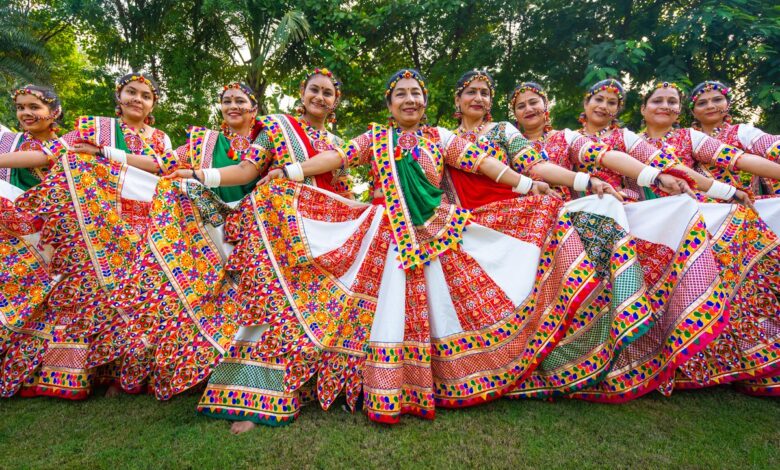
Navratri is the one festival where your outfit has to work as hard as you do. Nine nights of garba and dandiya mean nine chances to dress up, but every look also needs to survive hours of twirling, clapping, and dancing under bright lights. The good news is that festive dressing for Navratri follows a simple logic: bright colors, breathable fabrics, a skirt with real flare, and jewelry that jingles without getting in the way.
This guide walks you through twelve outfit ideas that cover the full nine nights, from the classic chaniya choli to easy kurti looks for the nights when you want to keep things simple. Every idea is built around real festive dressing, with styling notes on color, fabric, and accessories so you can plan your wardrobe before the first dhol beats.
The Classic Colorful Chaniya Choli
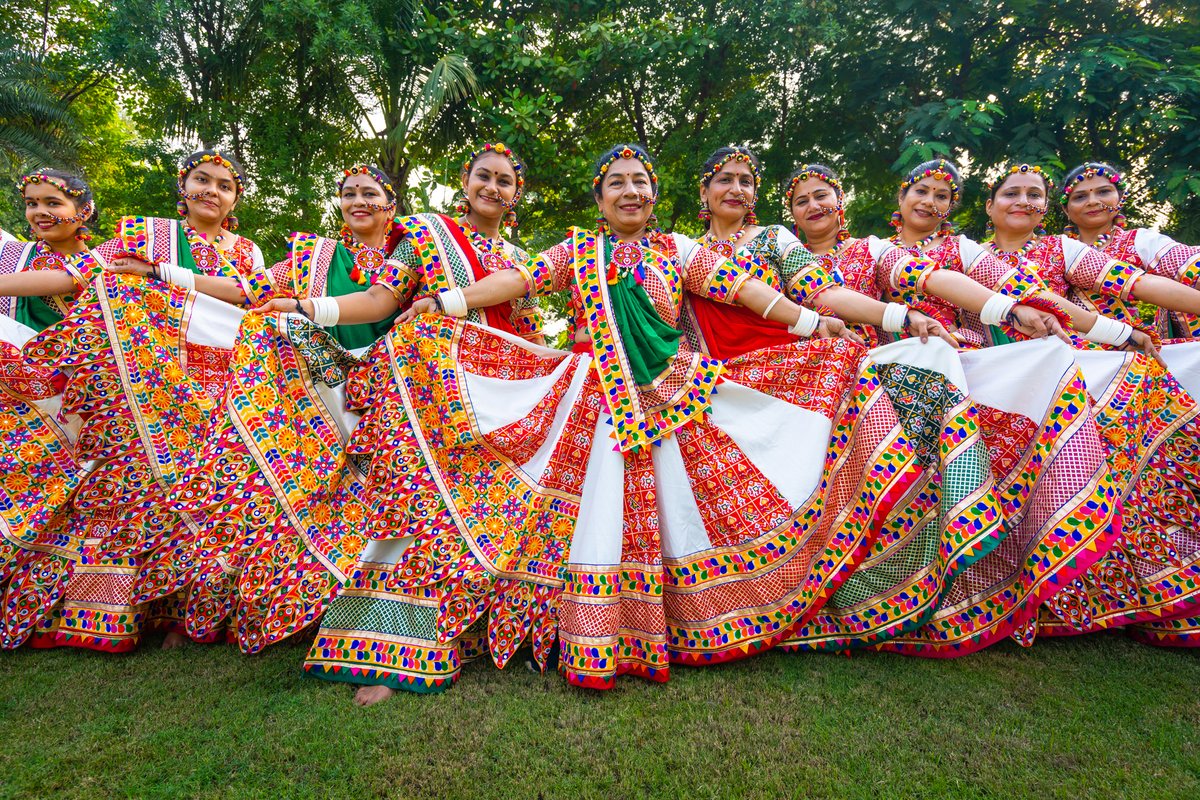
Photo credit: Saurabh sirohiya via Wikimedia Commons (CC BY-SA 4.0)
You can never go wrong with the traditional chaniya choli for garba night, and this is the look to anchor your first evening. Choose a flared skirt in bright multicolor embroidery with mirror work, shells, or colorful threadwork, because the skirt is the star when you spin. A flared silhouette looks especially beautiful mid-twirl, so check the flare by giving the skirt a full spin before you buy. Pair it with oxidized silver jewelry, a statement choker, stacks of bangles, and a colorful dupatta pinned securely over one shoulder so it stays put while you dance. The principle: when the skirt has this much movement, keep the blouse simple and let the flare carry the look.
A Garba-Night Chaniya Choli with Oxidized Jewelry
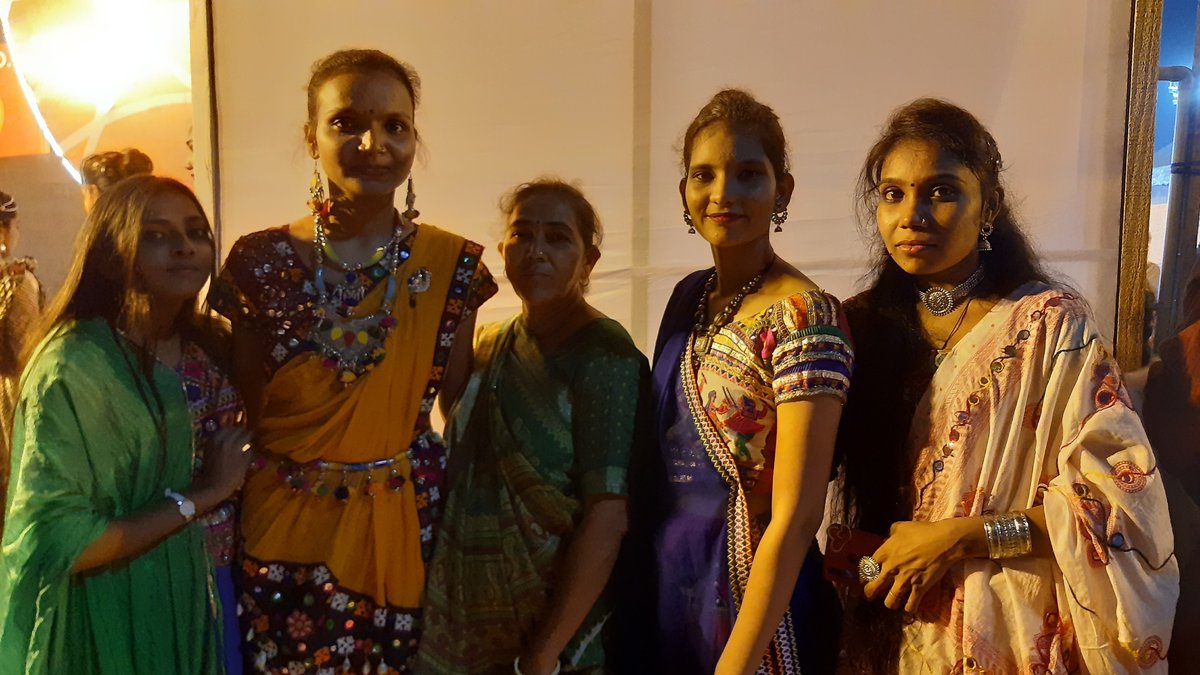
Photo credit: PARMAR BHARGAV SURESHBHAI via Wikimedia Commons (CC BY-SA 4.0)
Dandiya demands more arm movement than a regular festive gathering, so your second-night look should be festive but practical. A chaniya choli in warm tones works beautifully under garba-night lights, and this is where your jewelry does the talking. Layer oxidized silver earrings, chandbalis or jhumkas, colorful bangles, and a lightweight kamarbandh around the waist. Avoid very long sleeves, loose trailing dupattas, or dangly pieces that can catch on your partner’s dandiya sticks. Keep your hair in a secure braid or bun with a gajra so nothing flies loose mid-dance. The principle: anchor the look with statement silver jewelry and keep every other element dance-proof.
The Traditional Red Garba Look
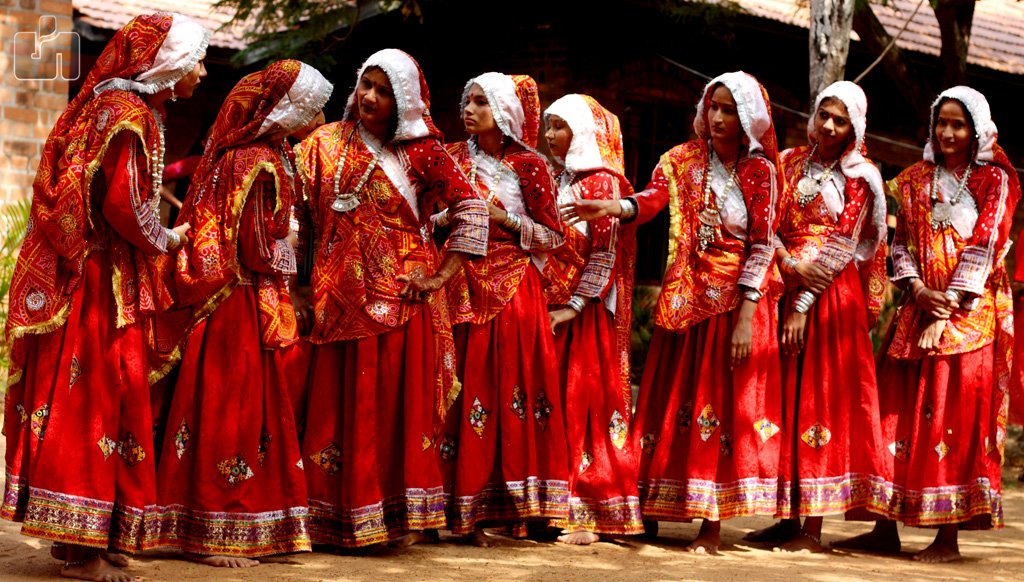
Photo credit: Sudhamshu Hebbar via Wikimedia Commons (CC BY 2.0)
Some nights call for going fully traditional, and red is the color that reads most powerfully on a garba floor. The classic Gujarati garba dress pairs a red embroidered skirt and blouse with a contrasting odhni draped over the head, finished with heavy silver tribal jewelry. This look is about heritage rather than trend, so lean into authentic details like coin necklaces, chunky kada bracelets, and an embroidered potli bag. The red palette photographs beautifully and stands out in group pictures, which makes it ideal for the night your whole family dresses up together. The principle: when you wear red head to toe, let traditional silver jewelry be your only accessory story.
Mirror-Work Chaniya Choli
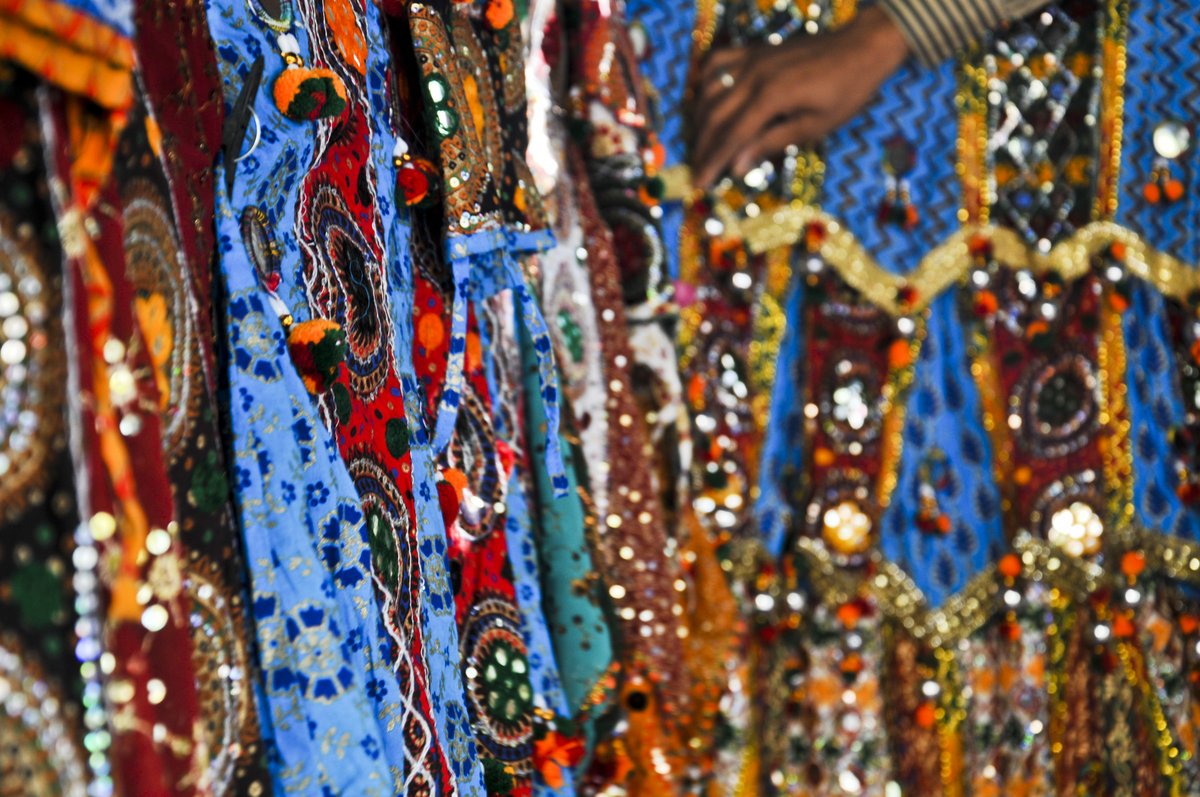
Photo credit: Dhruvdhakan via Wikimedia Commons (CC BY-SA 3.0)
Nothing catches dandiya-night lights quite like mirror work, so dedicate one evening to a mirror-work chaniya choli. Look for small mirrors set into colorful embroidery across the skirt and blouse, with playful tassels or pom-poms at the hem for extra movement. Because the mirrors do the visual work, you can skip heavy necklaces and keep jewelry minimal: a pair of mirror-work earrings, a delicate kamarbandh, and simple bangles are enough. Choose a lightweight version rather than an extremely heavy skirt so you can move freely through long garba sets. The principle: one reflective element per outfit is the limit, so let the mirror work shine without competition.
The Regal Red and Green Lehenga
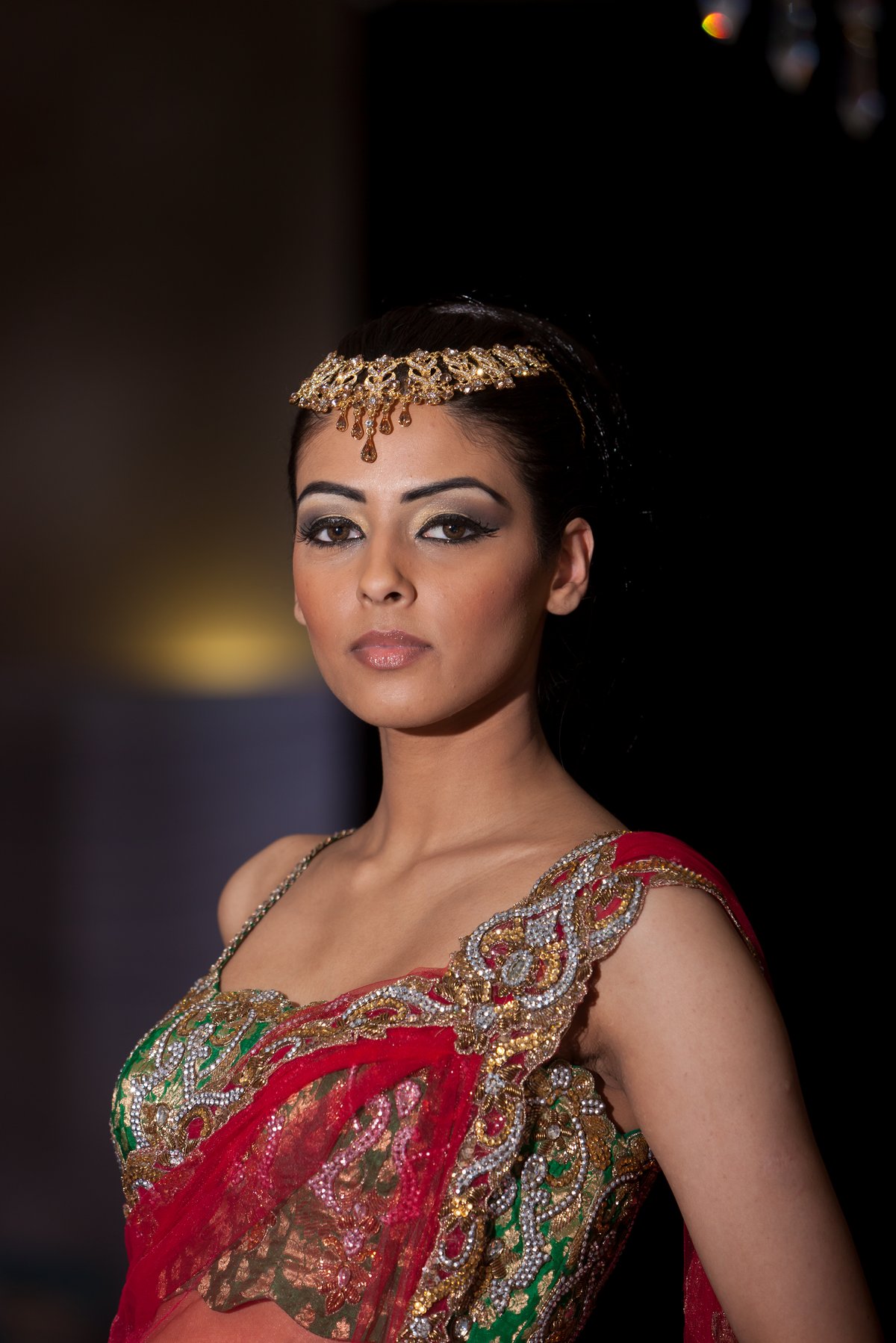
Photo credit: Ray Anderson via Wikimedia Commons (CC BY 2.0)
For the night you want to look polished and regal, a red lehenga with gold embroidery is the festive equivalent of evening wear. The red and green combination with gold zari-style embroidery is timeless for Navratri, and a maang tikka instantly elevates the whole look. Keep the blouse relatively simple so the embroidered skirt stays the focus, and choose a sheer dupatta in a matching shade draped over one arm. This is the look for family dinners and aarti evenings rather than hardcore dandiya, since the richer fabric and jewelry ask for slower, more graceful movement. If you love rich textures, our velvet outfit ideas for autumn explore the same luxe mood in winter fabrics. The principle: pair a heavy embroidered lehenga with a quiet blouse and one strong hair accessory.
The Midnight Blue Lehenga
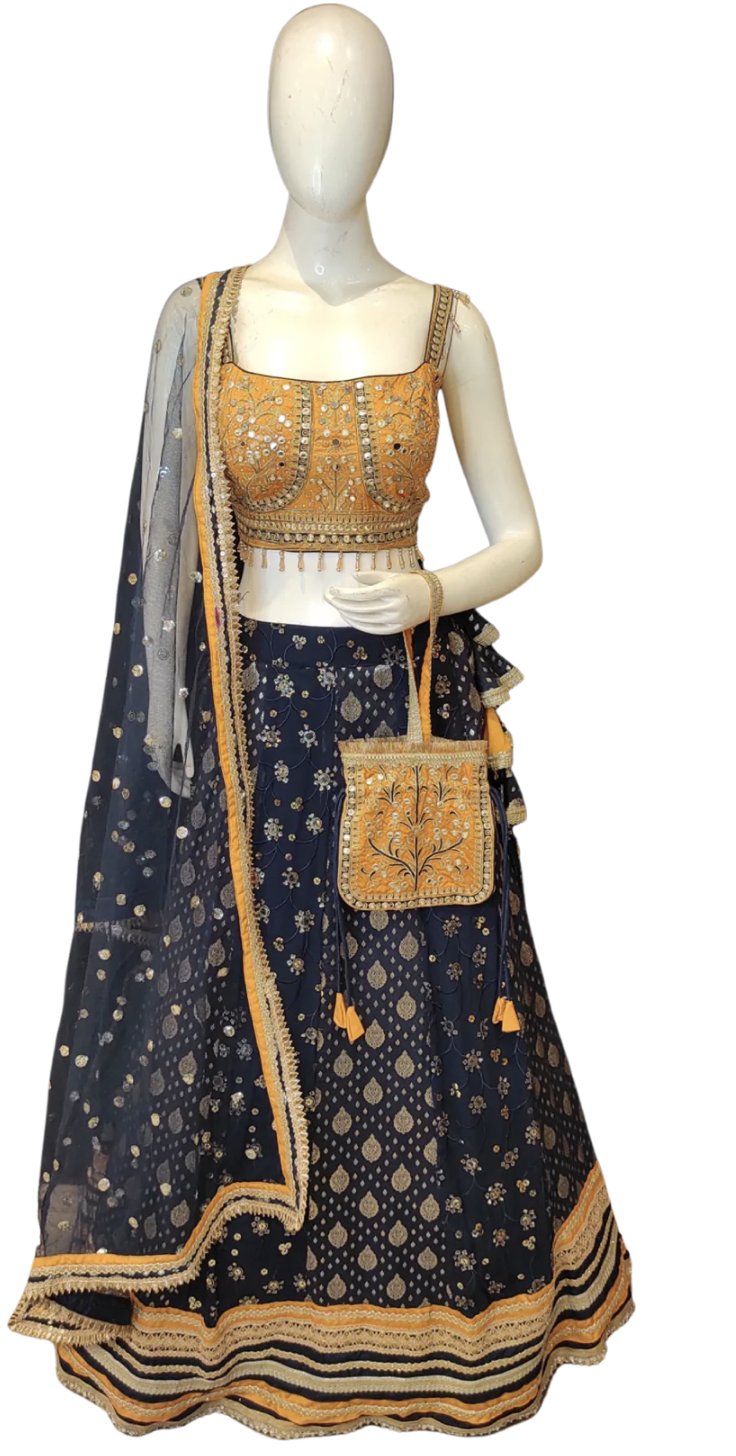
Photo credit: Kanchan Fashion via Wikimedia Commons (CC BY-SA 4.0)
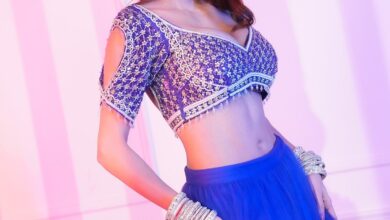
If everyone else is wearing red, pink, and orange, a midnight blue lehenga makes you stand out without trying. Navy is deep, elegant, and surprisingly festive when paired with a contrasting mustard or gold blouse, and a matching embroidered potli bag ties the whole look together. The dark base makes gold embroidery and sequins pop, which is exactly what you want under event lighting. Style it with gold jhumkas and a sleek low bun so the color contrast between the navy skirt and the bright blouse stays the center of attention. The principle: on a dark lehenga, put all the contrast in the blouse and let the skirt stay rich and quiet.
Bridal-Inspired Red for Ashtami Night
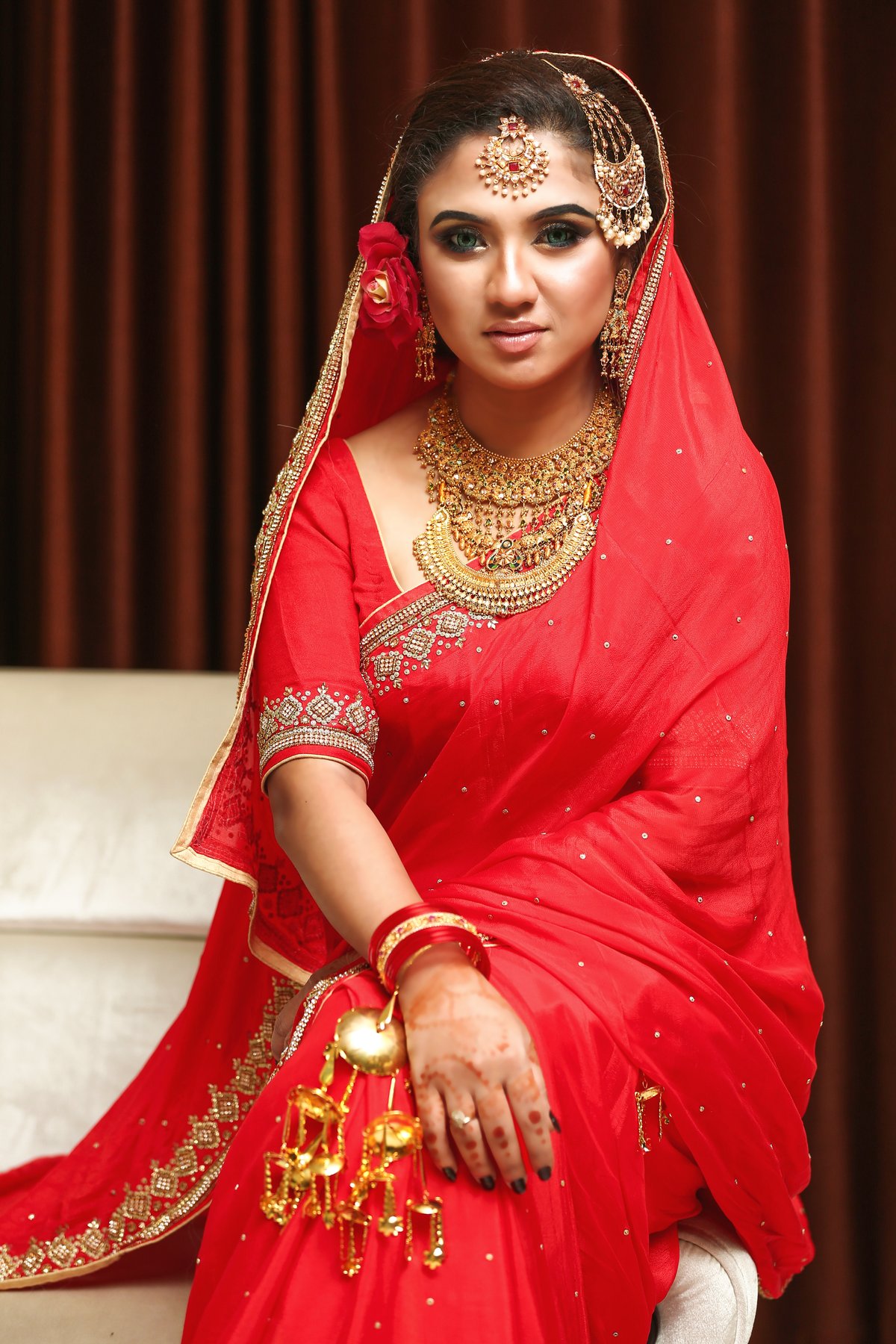
Photo credit: Rafi Ahmed Haven via Wikimedia Commons (CC0)
Ashtami is one of the most significant nights of Navratri, and it deserves your most dressed-up look. Take inspiration from bridal styling: a red lehenga with a sheer embellished dupatta worn over the head, layered gold necklaces, a statement maang tikka, chandelier earrings, and red and gold bangles stacked on both wrists. A touch of henna on your hands completes the bridal mood even if the occasion is just the neighborhood garba. Keep your makeup dewy with a classic red lip and a small bindi as the finishing detail. The principle: reserve your heaviest jewelry and richest red for the most auspicious night, and keep the other eight lighter.
The Bandhani Saree with a Belt
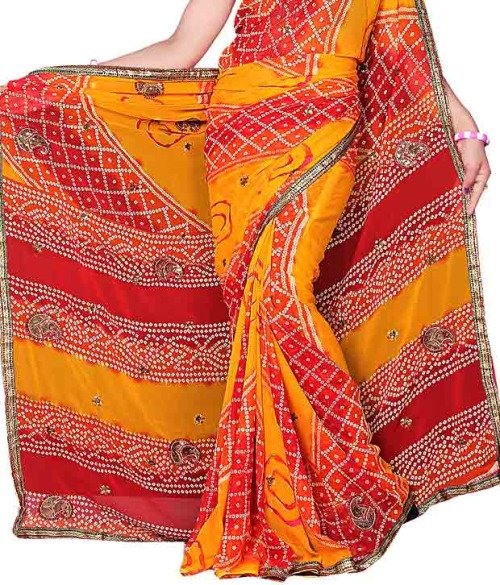
Photo credit: Mohancy via Wikimedia Commons (CC BY-SA 4.0)
Bandhani and Navratri are a beautiful combination, and a bandhani saree gives you a look nobody else on the garba floor will be wearing. The tiny tie-dye dots in orange and red feel joyful and unmistakably festive, and adding a slim belt at the waist gives the traditional drape a modern, structured finish. A belt also keeps the pallu secure while you move, which is a practical win for dance nights. Pair it with layered silver neckpieces, pom-pom bangles, and comfortable kolhapuris or embellished flats. The principle: one modern accessory, like a belt, is all it takes to make a heritage weave feel current.
A Silk Saree, Draped Fresh
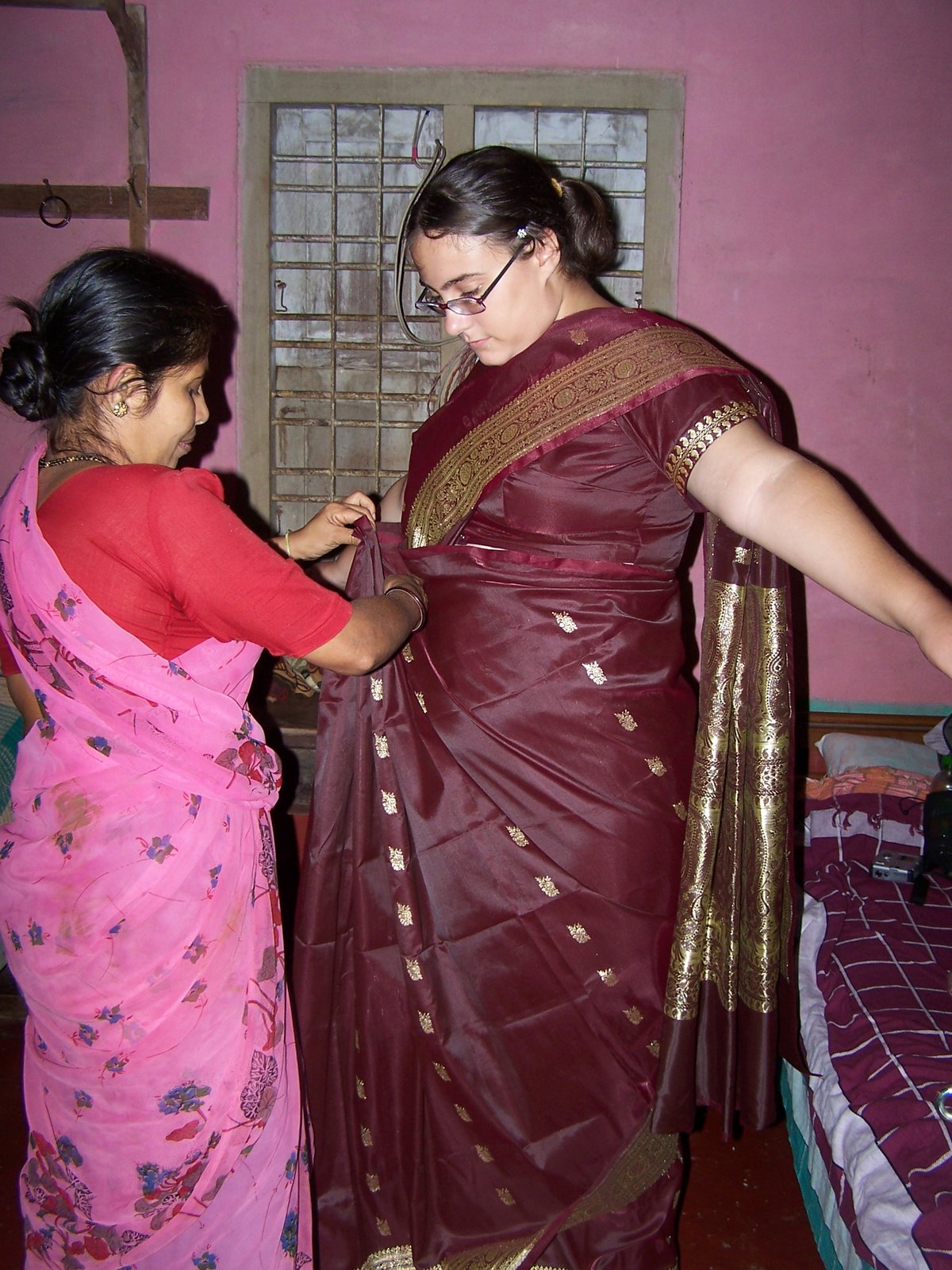
Photo credit: miramurphy via Wikimedia Commons (CC BY 2.0)
A silk saree in deep maroon or wine with a gold zari border is the most elegant low-effort Navratri look you can wear. The key is the drape: pleat neatly, pin the pallu at the shoulder, and let the border do the talking. Because a saree restricts big twirls, save this one for puja evenings, aarti, and family gatherings rather than the dance floor. Small gold earrings, a thin gold bangle stack, and a neat bun are all the styling this look needs. If silk feels too formal, the same deep tones work in georgette or chiffon for easier movement. The principle: with a rich silk saree, perfect pleats matter more than any accessory.
The Printed Kurti with Jeans

Photo credit: NabeelJV via Wikimedia Commons (CC BY-SA 4.0)
Not every Navratri evening needs a lehenga. For casual garba nights, office-day Navratri, or the evenings when you want comfort first, a printed kurti with jeans is festive without the fuss. Choose a kurti in festive colors like maroon and mustard with bold floral or folk prints, and add a simple red beaded necklace and a silver kada to lift it into festive territory. The jeans keep you comfortable through hours of standing and dancing, and you can throw a colorful dupatta over your shoulders if the evening turns dressier. The principle: put the festivity in the print and the jewelry, and let the jeans handle the comfort.
The Solid Red Kurti
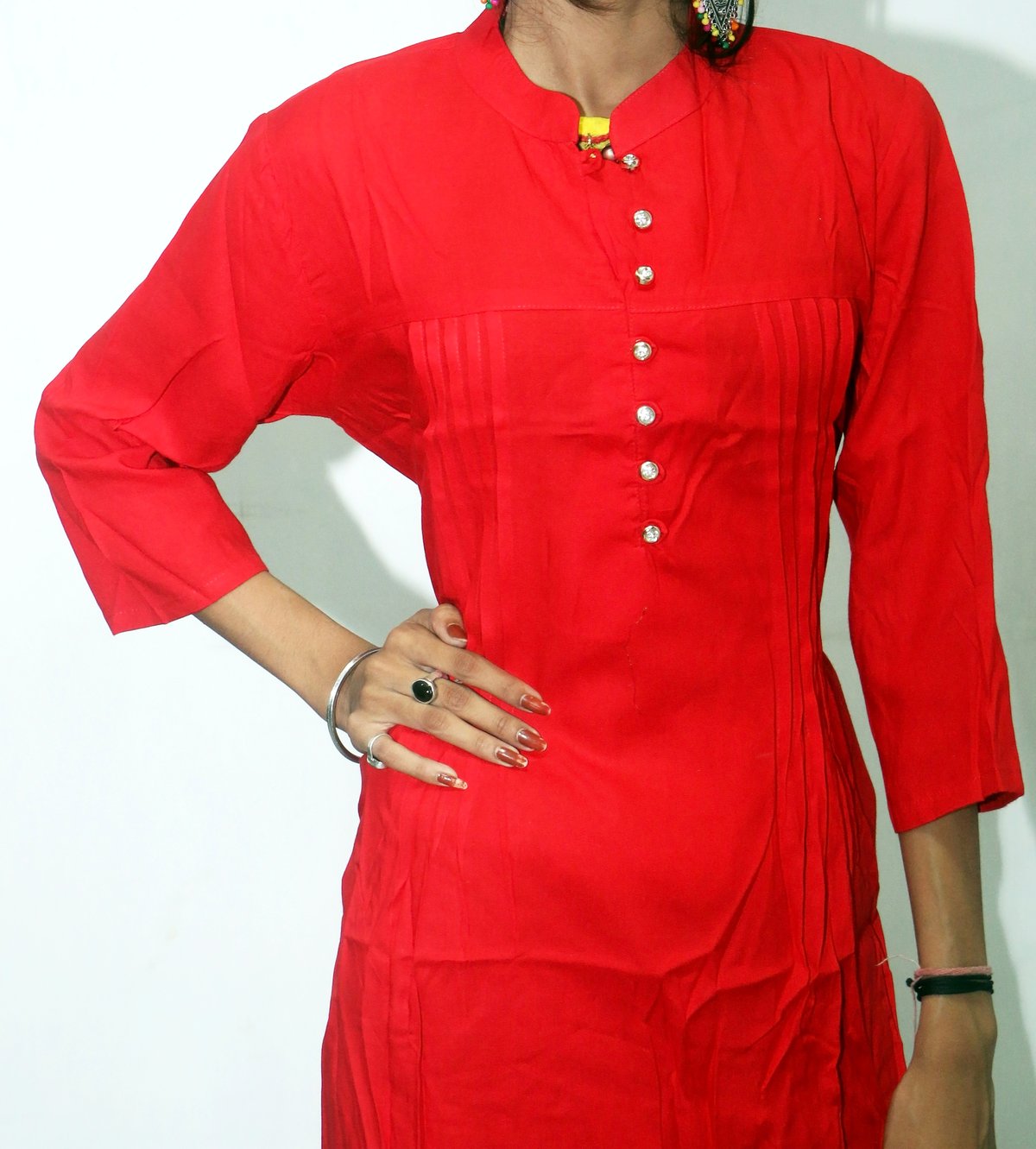
Photo credit: NabeelJV via Wikimedia Commons (CC BY-SA 4.0)
A solid red kurti is the minimalist answer to festive dressing, and it works for both puja mornings and evening events. Look for subtle detailing like pintucks, a mandarin collar, or delicate buttons that add interest without prints or embroidery. Red needs almost no help, so style it with silver or oxidized jewelry, a small bindi, and a pair of classic juttis. This is also the easiest look to repeat across the nine nights in different colors: maroon, mustard, emerald, and royal blue all work on the same formula. The principle: when the color is this strong, texture and tailoring carry the outfit, not embellishment.
Sunshine Yellow Kurti with Leggings
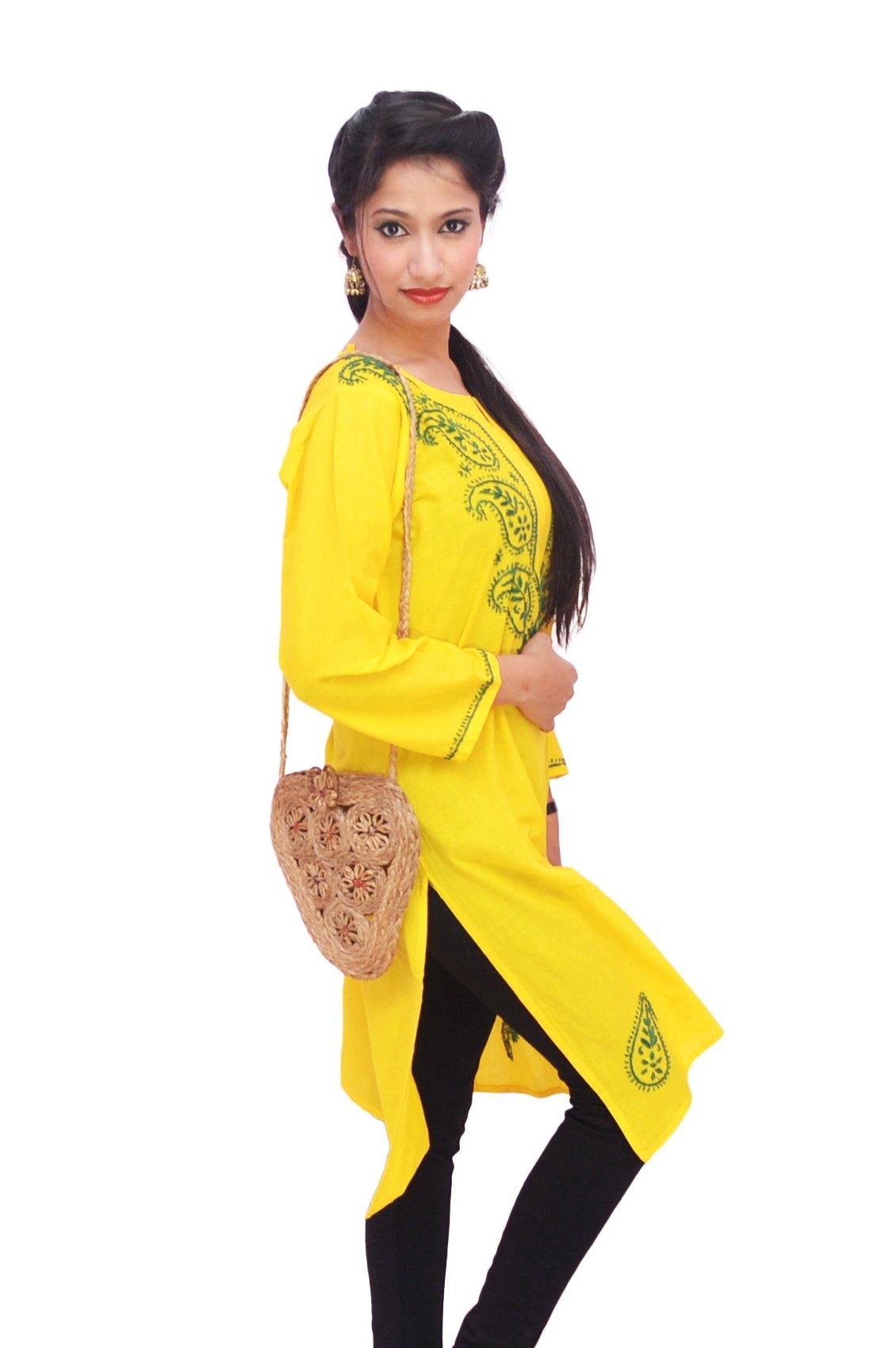
Photo credit: AddictionBazaar via Wikimedia Commons (CC0)
Yellow is the color of the morning aarti and the daytime Navratri events, so keep one bright yellow kurti ready for the daylight hours. An embroidered yellow kurti with black leggings is cheerful, comfortable, and easy to move in, and a woven sling bag adds a handmade, festive touch. Gold jhumkas and a red lip are the only extras this look asks for. It also layers well: add a contrasting dupatta in pink or orange for the evening, or a light jacket if the night turns cool. For more ideas on dressing through the cooler festive weeks, see our November outfit ideas. The principle: keep daytime festive looks bright, breathable, and easy to layer.
Final Thoughts
Nine nights of Navratri give you room to play, so treat your wardrobe like a playlist with a few big moments and plenty of comfortable favorites. Start with the classic chaniya choli, save your heaviest red and gold for Ashtami, and keep the kurti looks ready for the nights when comfort wins. Whatever you wear, pin your dupatta, choose jewelry that dances with you instead of against you, and wear footwear you can actually move in. If you love a dramatic skirt with real movement, our embellished skirt outfits for winter break down the same flare-first styling logic for the colder months.
Frequently Asked Questions
What should I wear for dandiya if it is my first time?
Start with a simple chaniya choli or a printed kurti with leggings. Both let you move freely, and you can add bolder jewelry once you are comfortable with the dance steps.
Can I wear a saree for garba night?
A saree works for puja and aarti evenings, but it restricts the big twirls that make garba fun. If you want to dance, choose a chaniya choli, lehenga, or kurti instead, and save the saree for the calmer nights.
What jewelry goes best with a chaniya choli?
Oxidized silver is the classic pairing: jhumkas or chandbalis, stacked bangles, a statement choker, and a lightweight kamarbandh. Avoid very long necklaces or dangly pieces that can catch while you dance.
What footwear is best for dancing all night?
Flat juttis, mojaris, or embellished sandals with a low block heel. You need grip, cushioning, and zero heel wobble, because you will be on your feet for hours.


6 Comments