I still remember the January I realized that winter business casual outfits are a skill, not a shopping list. It was 7:40 a.m., four degrees outside, and I was standing on a subway platform in a cute blazer over a thin blouse, freezing, puffy, and late. My coat hid the entire outfit. My tights were doing nothing. And the woman next to me — warm as toast, chic as anything — was somehow wearing layers I could actually see.
That morning bothered me for weeks. How do some people look polished at work all winter while the rest of us cycle between “sweater blob” and “coat with legs”? It took me three winters of experimenting to crack it, and the answer turned out to be simpler than I expected. It’s a formula, plus a handful of fabric rules, plus the confidence to let one layer peek out at a time.
Here’s everything I learned, worn across one very real work week.
The Morning It All Clicked
Back to that platform. The woman beside me wore a long pale coat, and through the open front I could see a bright layer underneath — just a strip of it — with matching color repeating at her shoes. Three layers. Each one visible. Nothing bulky, nothing hidden.
That’s the whole secret of polished winter layers: every layer needs a job and a visible edge. A coat that swallows your outfit isn’t warm and stylish — it’s just warm. Business casual in winter isn’t about wearing more clothes. It’s about wearing the right three, in the right order, where people can see them.
The 3-Layer Formula Every Winter Work Outfit Needs
Before the outfit diary, memorize this. Every great winter business casual outfit I’ve ever admired — on colleagues, on clients, on that platform stranger — follows the same skeleton:
- Layer 1 — The base: a fitted layer in a fabric that regulates temperature. Fine merino, a crisp cotton shirt, a silk-blend shell. This is the layer your colleagues actually see indoors, so it should look intentional, not like thermal underwear (even when it sometimes is).
- Layer 2 — The structure: a blazer, a waistcoat, a cardigan with shape, or a knit with a defined shoulder. This is the “business” in business casual. It holds the silhouette when the coat comes off in the meeting room.
- Layer 3 — The exit: the coat, cape, or jacket you wear out the door. Choose one with a clean line — and wear it open on the walk in, so layers one and two stay part of the look.
The rule that changed everything for me: keep at least one edge of each layer visible. A collar out over a knit. A cuff turned back over a sleeve. A hemline showing under a cropped jacket. Edges are what read as “styled” instead of “stacked.”
Five Days, Five Polished Layers: A Real Work Week
Monday — The Pale Coat and the Pop of Red
📸 Image Credit: Instagram — open original post
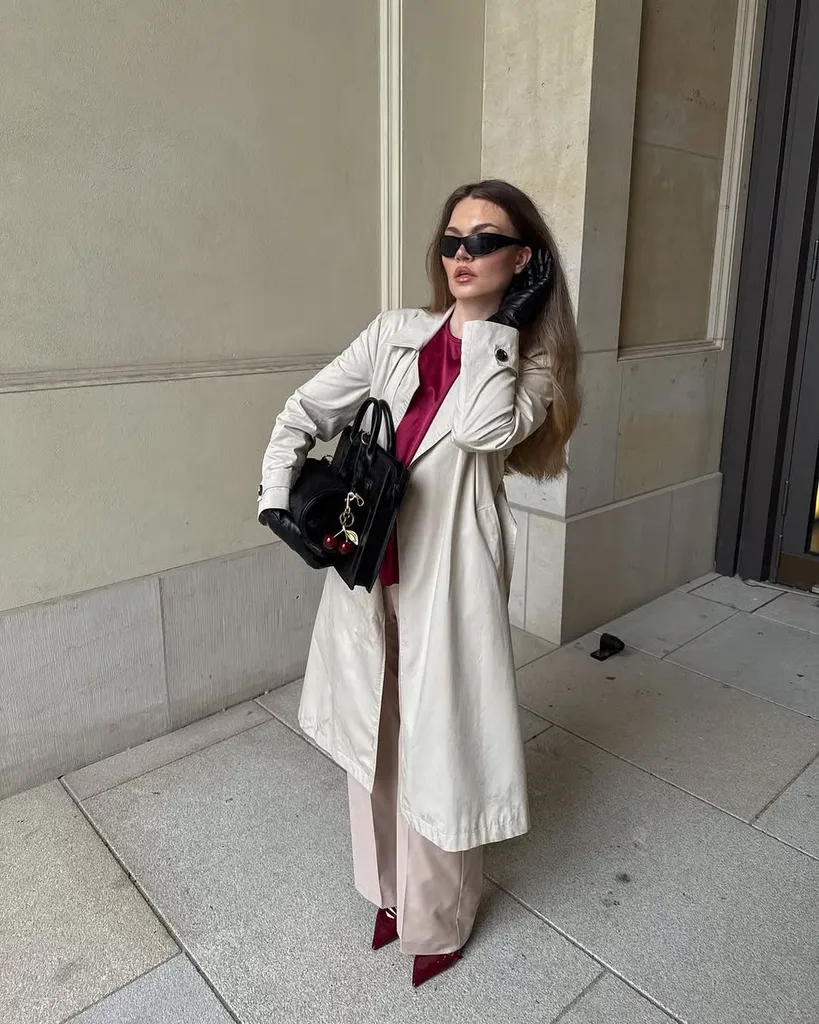
Monday sets the tone, so start with the version of the formula that carries a meeting. A long light-neutral coat over matching pale wide-leg trousers creates one unbroken vertical line — and then a single strip of vivid color under the coat, echoed in the shoes, does the work of a whole statement necklace. Notice what the black gloves and structured bag are doing too: small dark punctuation marks. Color placement like this is what makes winter office outfits feel composed instead of loud.
Tuesday — Charcoal Blazer, Soft Midi
📸 Image Credit: Instagram — open original post
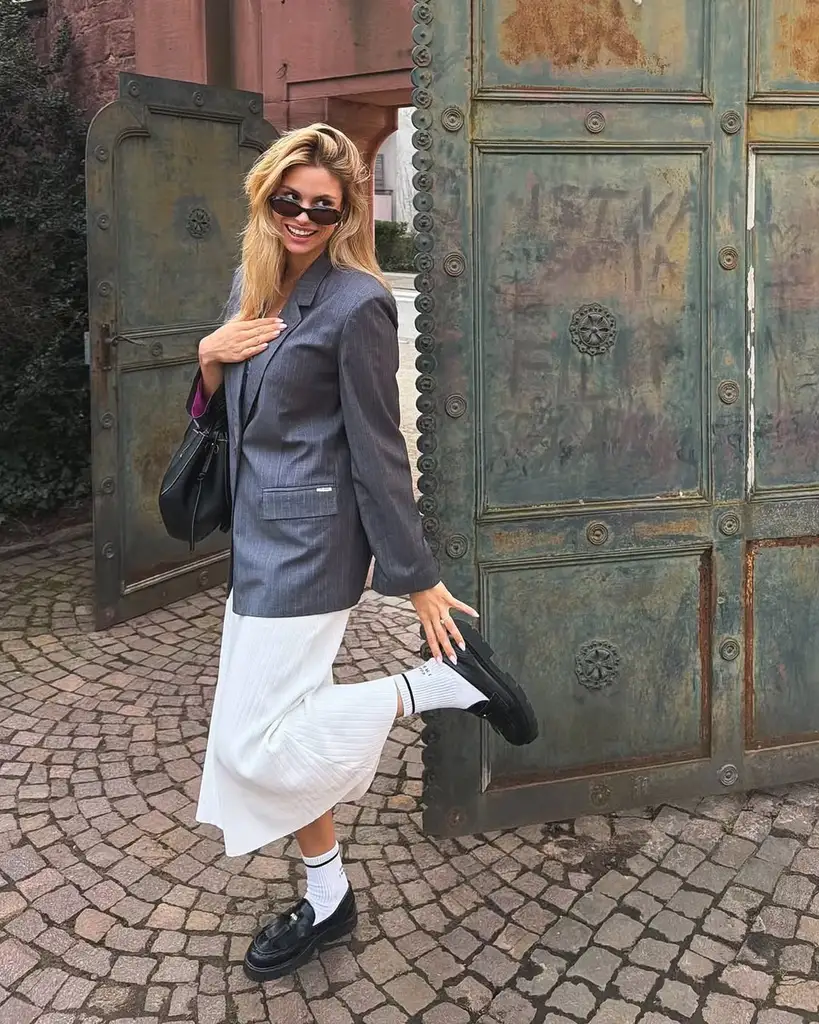
The blazer-and-skirt combo gets a winter upgrade when the proportions swing — a chunkier charcoal blazer over a lighter fluid midi skirt. The contrast in weight is the point: heavy on top, airy below, with opaque tights grounding everything. This is my favorite template for days with client presentations, because the blazer does the talking indoors and the tights do the working outdoors.
Wednesday — Brown Layers, Relaxed Denim
📸 Image Credit: Instagram — open original post
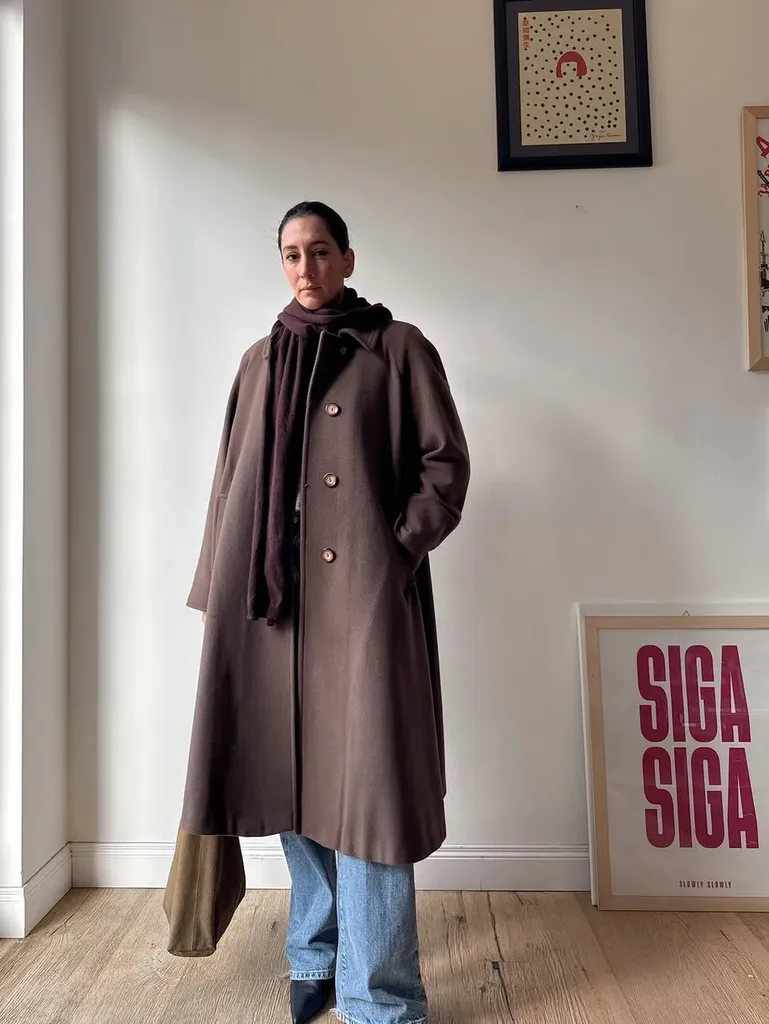
Every office has a jeans day, and this is how you honor it without looking like you gave up. Deep chocolate layers over relaxed blue denim keep the richness of winter workwear while the denim relaxes the mood. The trick is keeping the denim dark-ish and the layers above it structured — the outfit should lean “creative director,” not “casual Friday in July.”
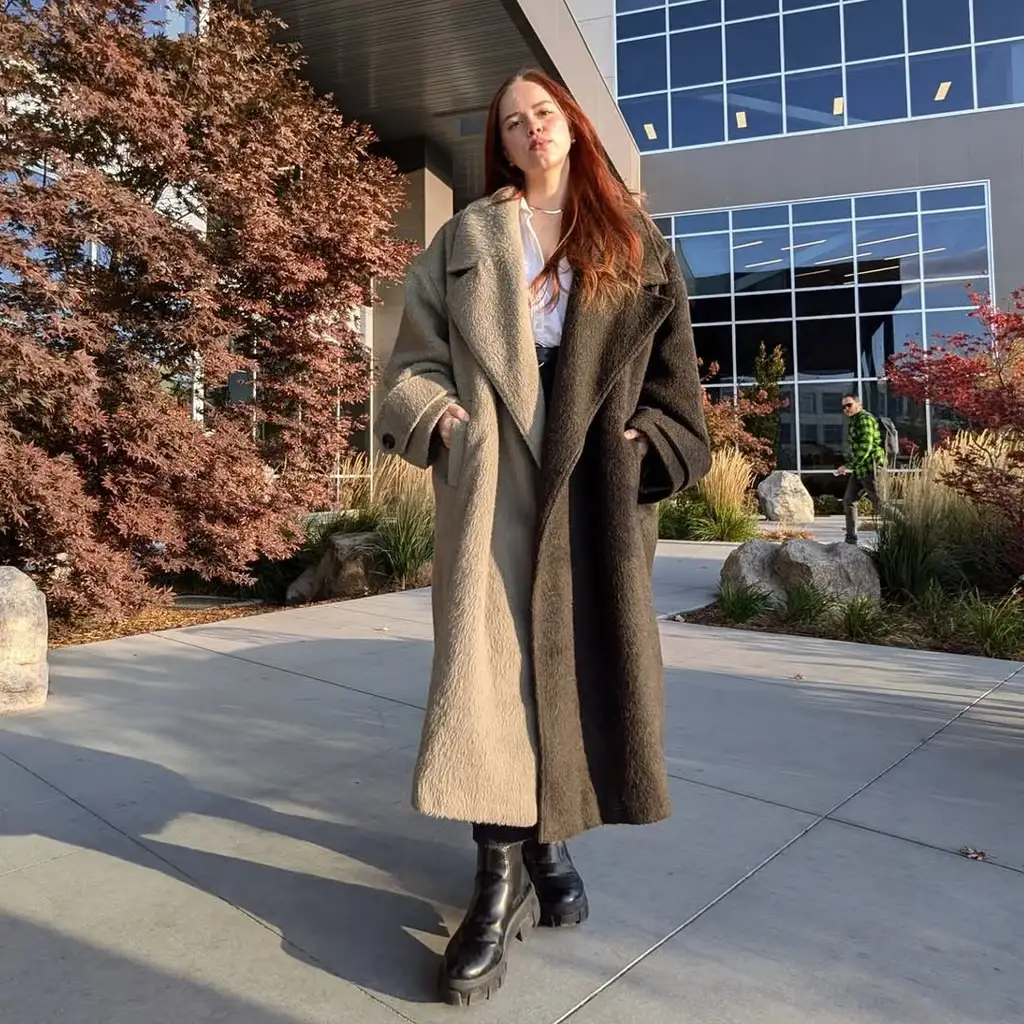
Thursday — The Taupe Coat and the Column
📸 Image Credit: Instagram — open original post
Thursday is when the week gets heavy, so dress the part with quiet power. An oversized taupe coat over a slim, dark base layer is the easiest high-contrast formula in winter business casual dressing: big outside, sleek inside. Ankle boots with a bit of height sharpen the whole line. When your outfit is this simple, fit becomes the entire statement — so this is the day to steam everything the night before.
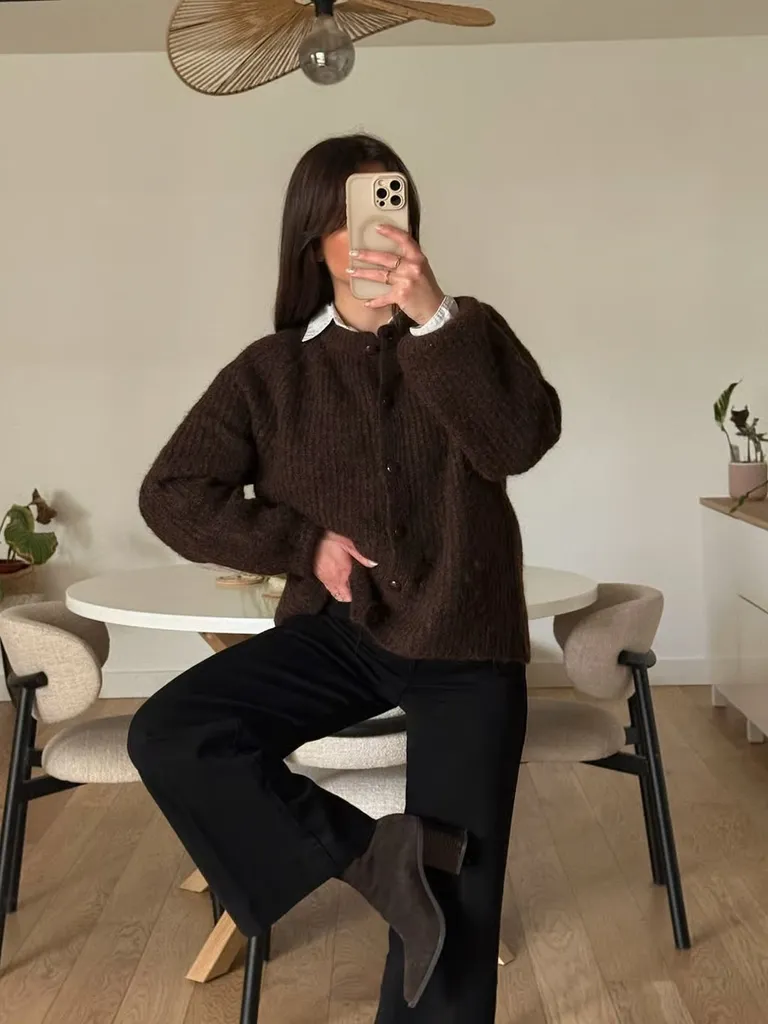
Friday — Fuzzy Cardigan, Crisp White Collar
📸 Image Credit: Instagram — open original post
End the week with texture instead of tailoring. A fuzzy brown cardigan over something crisp — a white collared shirt is the classic move — keeps the polish alive while your brain checks out at 2 p.m. The white collar visible at the neckline is exactly the “visible edge” from the formula, and it’s the difference between cozy-coordinated and wearing a blanket with good intentions.
Fabrics That Look Expensive and Behave in Cold
Winter business casual outfits live or die on fabric. These five earn their hangers in my cold-weather capsule:
- Merino wool — thin, warm, never itchy. The single best base layer fabric for office life.
- Wool-blend tailored trousers — hold a crease, block wind, and don’t wrinkle under desk chairs.
- Structured knits — ponte and double-knit fabrics read as “jacket” while stretching like a sweater.
- Leather or coated accessories — gloves, belts, and bags in leather add polish and shrug off slush.
- Thick opaque tights (60+ denier) — non-negotiable. Anything sheer is a summer garment with ambition.
If you want a quick primer on where the dress code itself comes from, the business casual Wikipedia entry is a surprisingly fun two-minute read — the code was literally invented to make offices less rigid, which is exactly the spirit of these outfits.
Shoes and Tights: The Office Winter Reality
Let’s talk about the part nobody writes down. You will walk through salt, slush, and one week of icy sidewalks, and your shoes need a plan. My honest system:
- Commute boots, desk shoes. If your office allows it, keep sleek flats or loafers at your desk and wear weatherproof boots door to door.
- Choose soles with grip. A beautiful pointed flat with a slick leather sole is a liability in January. A rubber-lug sole now comes in genuinely elegant shapes.
- Match your tights to your boots. Dark tights + dark boots elongate the leg and hide every crime the salt commits.
- Waterproof spray is self-care. Ten minutes on a Sunday protects every pair you love.
Five Mistakes That Make Winter Work Outfits Look Sloppy
I’ve made all five, so you don’t have to:
- Wearing the coat closed all day. Your beautiful layers exist — show them indoors.
- Sizing up for sweaters. Oversized is a proportion choice, not a size. Buy your size in structured knits.
- Ignoring the neck. A bare neck under a coat reads unfinished. A fine turtleneck or a scarf solves it in seconds.
- Static-lit slip skirts. Line them or spray them; nothing ruins a midi faster.
- Forgetting the third piece. Two layers (top + trousers) always looks like something’s missing in winter. Blazer, vest, cardigan, cape — add the third.
If your commute involves a proper puffer and you’re debating cropped versus long, I breaks down exactly that choice in my puffer comparison — and if you want the same layering logic applied to the hardest-working jacket of the season, the down jacket styling guide pairs perfectly with this formula. For everything else in this corner of the internet, the fashion archive is where the winter dressing lives.
Your Winter Work Uniform Starts Here
The best winter business casual outfits aren’t the ones with the most pieces — they’re the ones where every layer is doing a visible job. Base, structure, exit. One edge of each showing. Fabrics that hold a shape. Shoes with a plan.
Start with Monday’s look this week. Wear the coat open on the way in. And when a colleague asks where the outfit came from, tell them it came from a subway platform, a very cold January, and a stranger who understood the assignment.
FAQs About Winter Business Casual Outfits
How do I look business casual in winter without wearing a coat all day? Build the outfit for indoors — base layer, structured third piece, proper trousers or skirt — and treat the coat as an accessory layer you remove. Keep at least one edge of each inner layer visible so the outfit reads complete the moment the coat comes off.
What fabrics are best for winter business casual outfits? Merino wool, wool-blend tailoring, ponte and double-knit fabrics, and 60+ denier opaque tights. They insulate without bulk and hold a polished shape all day.
Are jeans acceptable in business casual offices during winter? Usually yes on relaxed days — keep them dark or mid-wash, pair them with at least one structured layer like a blazer or waistcoat, and finish with leather shoes or heeled boots rather than sneakers.
How many layers is too many for the office? Three visible layers is the sweet spot. Beyond that, bulk builds fast indoors; if you need more warmth, upgrade the base layer’s fabric rather than adding a fourth piece.
What shoes work for winter commutes and the office? Water-resistant ankle boots or loafers with rubber-lug soles cover most winter office situations. If your commute is brutal, use the commute-boots-plus-desk-shoes system.





One Comment