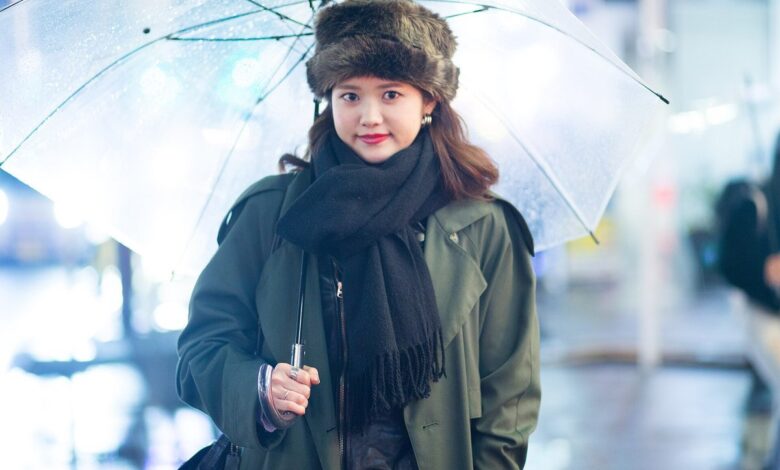
Olive green has quietly become one of the most useful colors in a winter wardrobe. It sits right between neutral and statement: deep enough to carry a coat or a pair of trousers, soft enough to pair with cream, camel, black, or chocolate brown without a second thought. On the autumn winter 2026 runways, moss and olive greens showed up at Ralph Lauren, Balenciaga, and Chloe, treated less like an accent and more like a foundation color for the season.
What makes olive so wearable is its warmth. Unlike a true black or navy, olive green flatters most skin tones and softens heavy winter fabrics like wool, corduroy, and leather. It also layers beautifully, which matters when your outfits are built from four or five pieces. The eight ideas below cover outerwear, knits, dresses, and accessories, each built around real, wearable combinations that work for office days, weekends, and winter evenings.
An Olive Trench for Rainy Nights
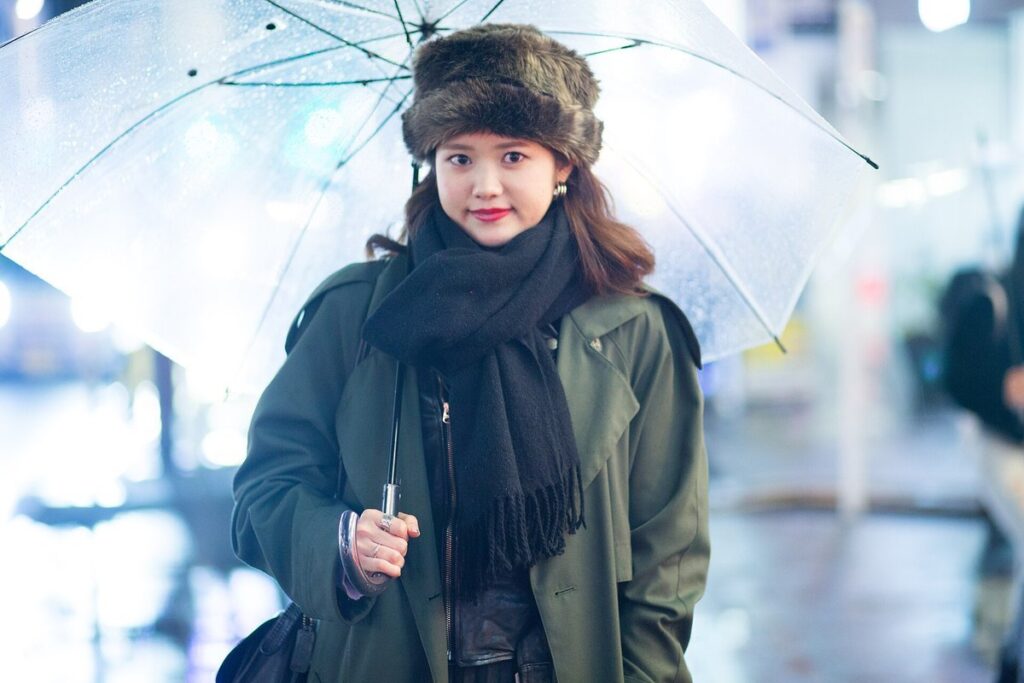
Photo credit: Dick Thomas Johnson via Wikimedia Commons (CC BY 2.0)
A clear umbrella, a rainy night, and an olive trench coat is a combination that never needs an occasion. The trench falls in a relaxed, slightly oversized cut, and the olive tone keeps it softer than classic khaki or black. A chunky black scarf fills the neckline and adds the warmth a real winter night demands, while the fur hat finishes the look with a touch of drama that feels intentional rather than costume. Notice how the whole palette stays within three tones: olive, black, and the warm brown of the hat. That restraint is what makes the outfit look expensive. You can copy this with pieces you already own: any olive or moss trench, a dark scarf, and one statement cold-weather accessory. The principle: when the weather is bad, keep your palette tight and let one great coat do the talking.
The Long Green Coat, Royal Style
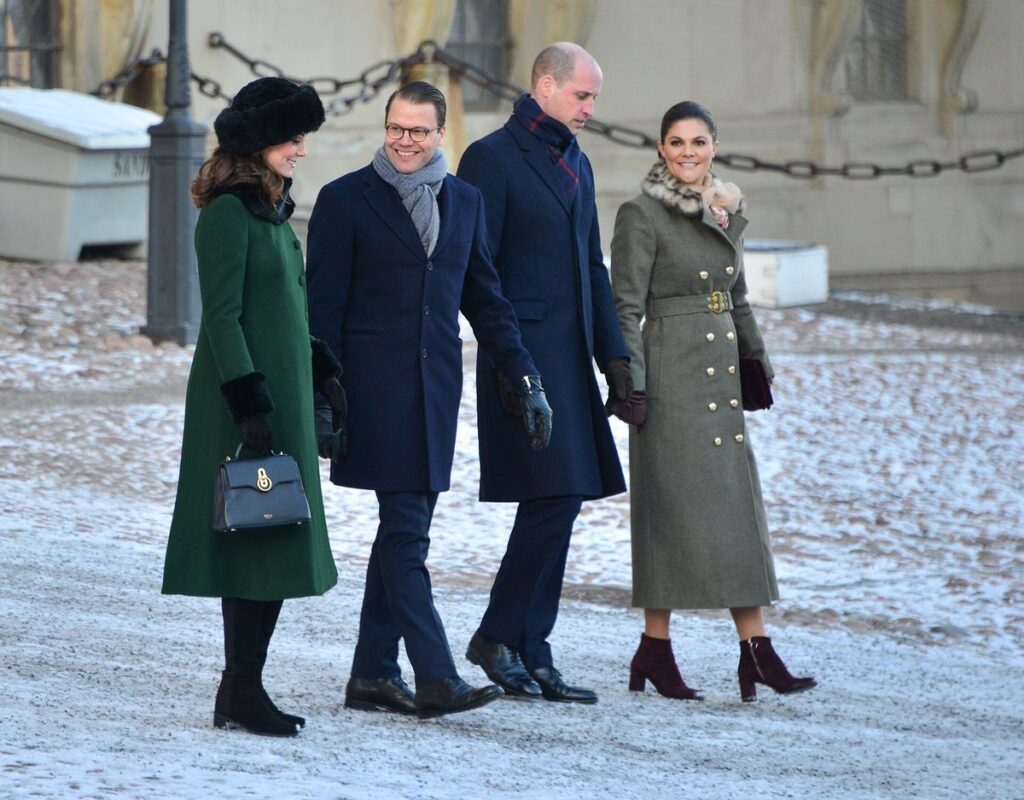
Photo credit: Frankie Fouganthin via Wikimedia Commons (CC BY-SA 4.0)
Dress like royalty on a winter state visit. The two green coats here show how one color family can look completely different depending on cut and styling. On the left, a deep emerald coat with a fur collar and fur hat reads formal and festive with black gloves and a structured handbag. On the right, a grey-olive double-breasted military coat with brass buttons and a fur collar feels more relaxed with burgundy ankle boots instead of black. Both work because the coats are the statement and everything else is quiet. For your own wardrobe, a long green coat in any shade from emerald to olive is one of the hardest-working winter purchases you can make: wear it over black for evenings, over denim for daytime. The principle: invest in the coat, keep everything under it simple, and let the silhouette carry the outfit.
A Suede Coatdress with Leather Details
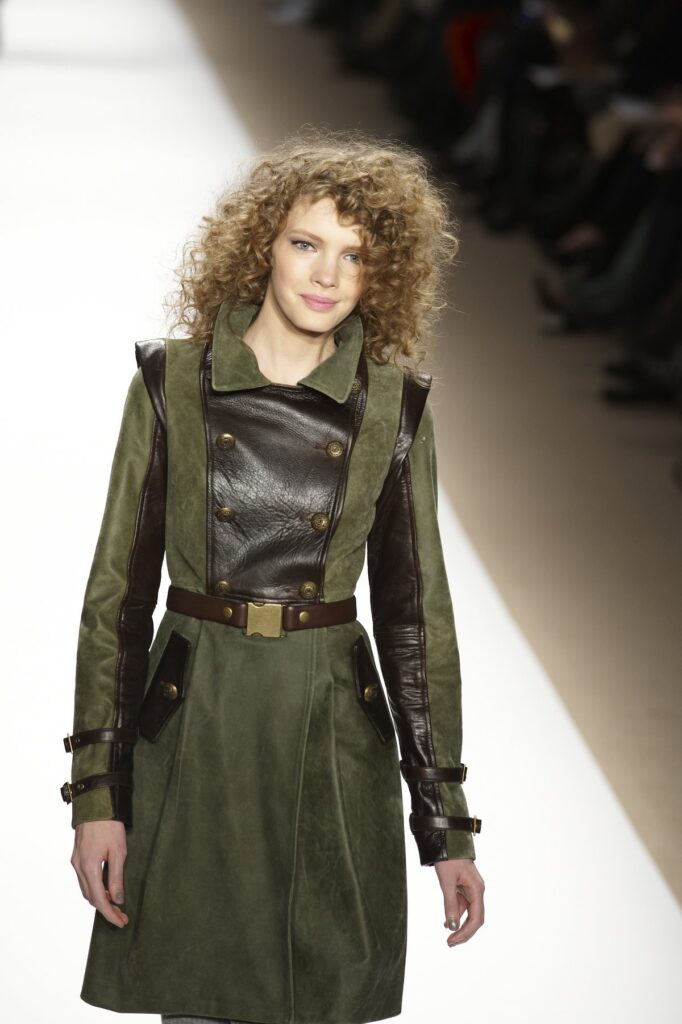
Photo credit: Masaki-H via Wikimedia Commons (CC BY 2.0)
Some pieces blur the line between coat and dress, and this olive suede coatdress does it beautifully. The dark brown leather panels down the front add structure and contrast, while the brass buttons and belted waist give it a tailored, almost equestrian feel. Worn as a dress with bare legs or sheer tights, it becomes an evening piece; thrown over trousers and a turtleneck, it works as outerwear. The lesson here is about mixing textures within one color story: suede and smooth leather in olive and chocolate brown feel rich without needing any print or color contrast. If a full coatdress feels like too much, take the idea smaller with an olive suede skirt or a leather-trimmed jacket. The principle: pair two textures in the same color family and the result always looks deliberate.
A Field Jacket Over a Dark Dress
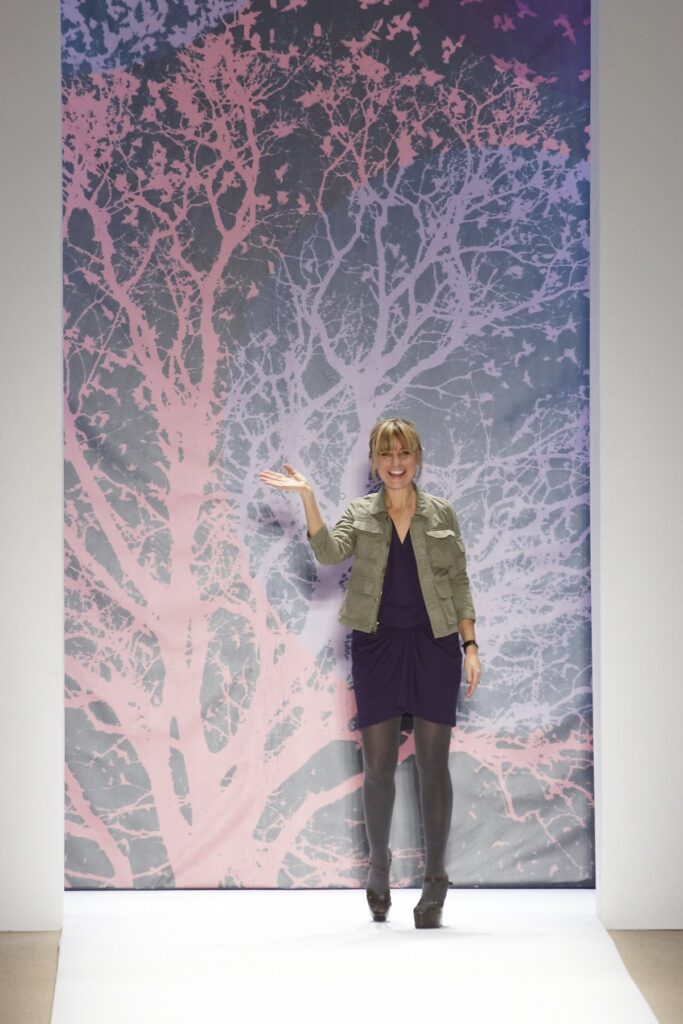
Photo credit: Masaki-H via Wikimedia Commons (CC BY 2.0)
A field jacket does not have to look rugged. Here, an olive field jacket is thrown over a dark purple wrap dress, and the combination is softer than you would expect. The relaxed cut and flap pockets keep it casual, but the dress underneath, with its draped neckline, pulls the whole look toward evening. Grey tights and platform heels bridge the gap between the two pieces. This is a useful formula for transitional winter days when you need warmth but do not want to look bundled. Any unstructured olive jacket works: field, utility, or overshirt. The principle: contrast a relaxed jacket with a dressier piece underneath and let the tension between them create the style.
A Utility Jacket with Soft Details
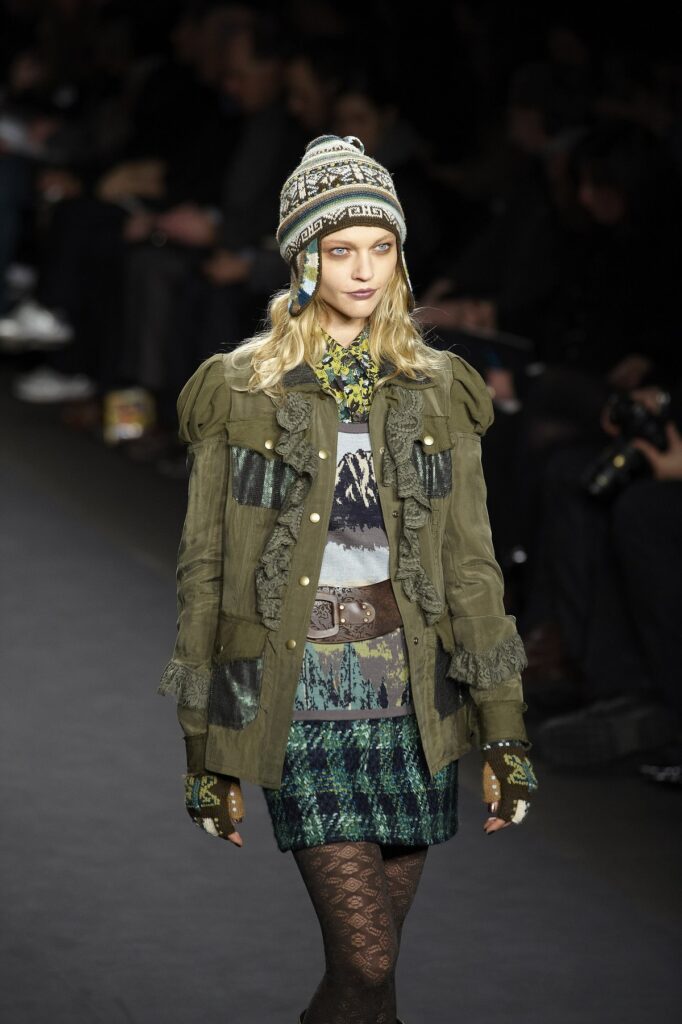
Photo credit: Masaki-H via Wikimedia Commons (CC BY 2.0)
Anna Sui proves that a utility jacket can be romantic. This olive jacket keeps the classic military details, flap pockets, brass buttons, a structured shoulder, but softens everything with lace ruffles down the front and at the cuffs. Underneath, a patterned knit, a floral shirt, and a brocade mini skirt pile on texture and print, while lace tights and fingerless gloves finish the story. It is a lot of look, but it holds together because every piece shares the same earthy, vintage-tinged palette. You do not need to copy the maximalism. Take one idea: an olive utility jacket over a floral dress, or lace tights with a plain olive skirt. The principle: when you mix feminine details into a utilitarian piece, keep the color palette unified so the textures can speak.
A Quilted Leather Jacket in Deep Green
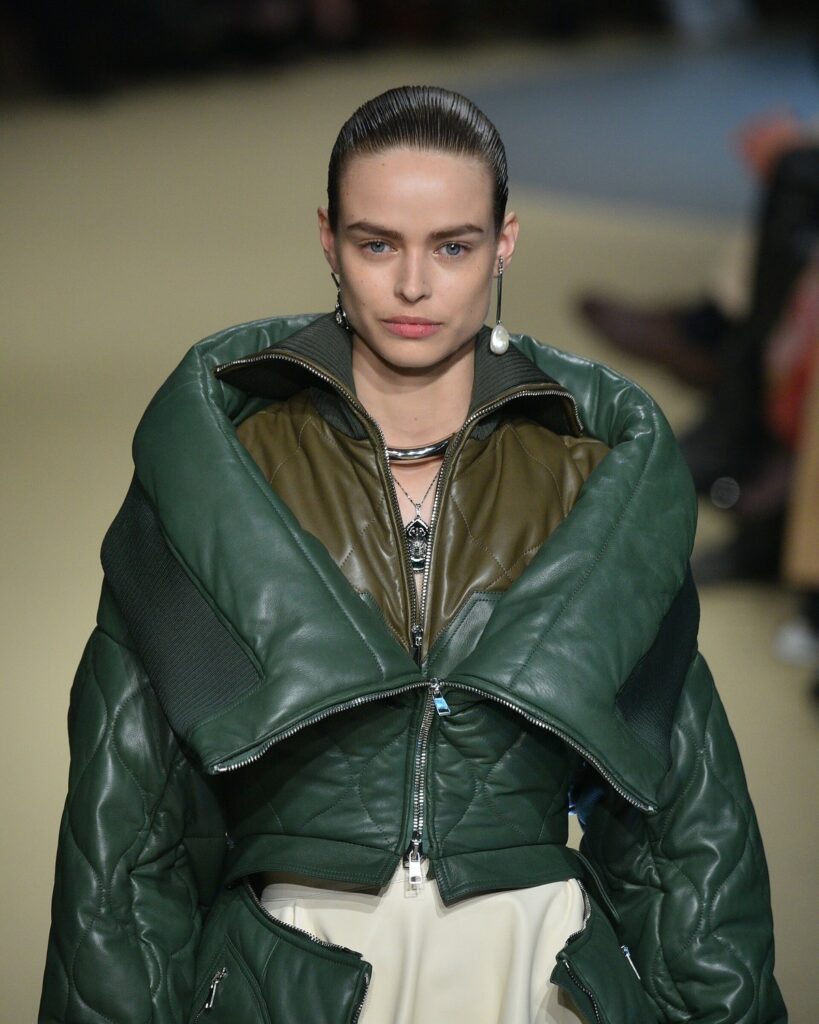
Photo credit: Christopher Macsurak via Wikimedia Commons (CC BY 2.0)
This is olive green at its most dramatic. The quilted leather jacket in deep forest green has exaggerated, almost sculptural lapels that frame the face, worn over a bronze quilted vest with the zip pulled high. A silver choker and a pendant necklace sit at the throat, and a single pearl drop earring adds polish. The whole look is dark, glossy, and architectural, proof that green can be an evening color. For real life, you do not need runway proportions. A quilted jacket in dark green, an olive leather moto, or even a green puffer captures the same mood. Keep the rest of the outfit dark and simple so the jacket stays the focus, and add one piece of jewelry at the neckline. The principle: one sculptural outerwear piece in dark green replaces an entire evening outfit.
An Olive Sweater Layered Over Florals
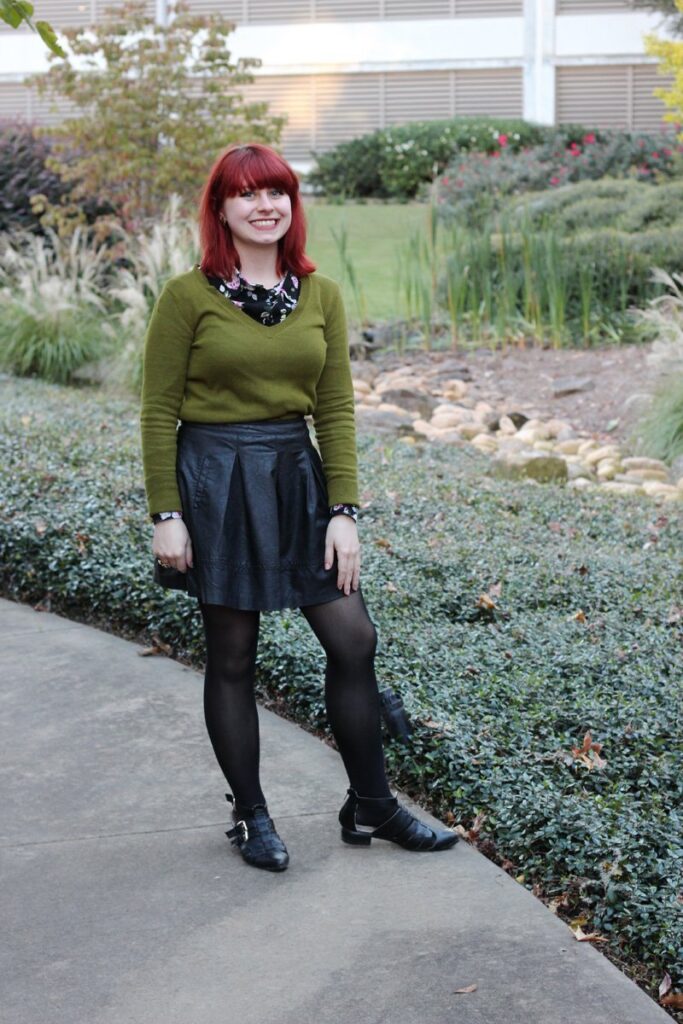
Photo credit: Jamie via Wikimedia Commons (CC BY-SA 2.0)
This is the everyday olive outfit most of us will actually wear. A soft olive v-neck sweater is layered over a dark floral collared shirt, so just the collar and cuffs peek out, a small detail that makes a plain knit look considered. The black pleated skirt, opaque tights, and ankle boots keep the lower half dark and streamlined, which lets the green on top glow a little brighter. Red hair is not required; the combination flatters every coloring because olive sits so comfortably next to black. It is also endlessly adaptable: swap the floral shirt for a striped one, the pleated skirt for black trousers, the ankle boots for loafers. The principle: layer a collared shirt under a v-neck knit and let a half-inch of pattern do the work of accessorizing.
An Off-Duty Olive Utility Jacket
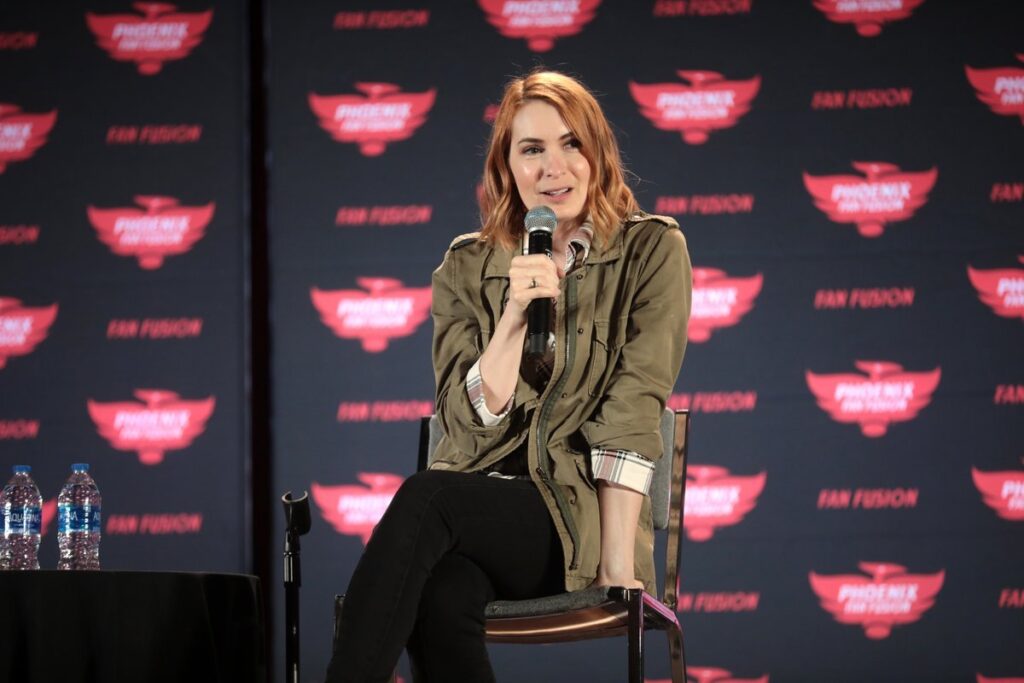
Photo credit: Gage Skidmore via Wikimedia Commons (CC BY-SA 2.0)
Off-duty dressing is where olive green truly lives. An olive utility jacket over a plaid shirt and black trousers is the uniform of someone who has somewhere to be but refuses to look boring. The rolled sleeves show the plaid cuff, a tiny styling choice that keeps the outfit from looking sloppy. This is the easiest olive outfit to build because the pieces are wardrobe basics: a utility or field jacket, any checked shirt, dark jeans or trousers, and flat shoes or boots. It works for school runs, casual Fridays, and weekend errands. To keep it from tipping into actual uniform territory, add one soft element, a scarf, a piece of jewelry, or a bag in a warm neutral. The principle: roll the sleeves, show a layer underneath, and treat the utility jacket as a neutral.
Final Thoughts
Olive green earns its place in your winter rotation because it behaves like a neutral while looking like a choice. A moss coat over black basics, an olive knit tucked into camel trousers, or khaki layers finished with leather boots all follow the same quiet logic: one earthy green piece anchors everything around it. Start with a single hero piece, keep your palette to three tones or fewer, and let texture do the talking.
If you are building a color-led wardrobe this season, olive pairs naturally with the deeper winter tones Stella covers elsewhere on the blog. Try matching your olive pieces with rich chocolate brown layers, or revisit the basics in our winter fashion guide. And if outerwear is your weakness, the coat styling rules apply just as well to an olive wool coat as to a camel one.
Frequently Asked Questions
What colors go best with olive green in winter?
Olive green pairs beautifully with cream, camel, chocolate brown, black, and slate grey. Warm neutrals keep the outfit soft and expensive-looking, while black sharpens it for evenings. If you want contrast, a touch of burgundy or rust sits well against olive without clashing.
Is olive green a good color for winter coats?
Yes. Olive green is one of the easiest coat colors to wear because it reads as a neutral but keeps your look from feeling flat. A moss or army-green wool coat works over office outfits, casual layers, and evening looks alike, and it hides winter wear far better than a black coat.
Can you wear olive green head to toe?
You can, as long as you vary the tones and textures. Pair a darker olive coat with lighter khaki trousers, or mix a matte olive knit with a suede or leather piece in a deeper green. Keeping at least one neutral in the mix, like cream or black, prevents the look from feeling one-dimensional.
How do you keep an olive green outfit from looking military?
The trick is in the fabrics and accessories. Swap utility details for softer ones: choose wool, knit, or suede over ripstop cotton, add gold jewelry, a structured handbag, or heeled boots. Styling the green piece with cream or camel instead of more green also shifts the mood from uniform to intentional.






2 Comments