Nobody agrees on what business casual means — not your HR department, not the style guides, and definitely not the woman two desks over who interprets it as “jeans are fine if the blouse is silky.” Even Wikipedia calls it an “ambiguously defined” dress code, which is fashion-speak for “good luck, everyone.”
So instead of another rigid list of allowed and forbidden items, this guide works differently. We’ll take the six problems women actually run into with the business casual dress code for women — and solve each one with a specific, copyable outfit move. By the end, you’ll be able to read your office’s unwritten rules like a pro and dress somewhere between “client meeting” and “casual Friday” with total confidence.
Problem 1: The Dress Code Policy Says Almost Nothing
Most workplace policies were written in 2009 and mention exactly three things: no flip-flops, no ripped jeans, “dress appropriately.” Helpful.
The solution: decode, don’t read. Spend one week observing the most respected woman in your office — the one people take seriously. Notice two things only:
- What does she wear on presentation or client days? That’s your formal anchor.
- What does she wear on quiet Fridays? That’s your casual anchor.
Your entire wardrobe should live between those two anchors. That’s the real business casual dress code for women, because it’s the only one that exists in your actual building.
Quick answer: What is business casual for women, in one sentence? A put-together look where a full suit isn’t required — think trousers or skirts with blouses, knitwear, and one polished layer — rather than jeans-and-a-hoodie territory. (There’s no universal definition, which is why observation beats policy documents.)
Problem 2: Comfortable Outfits Read as Sloppy
The trap: you dressed for comfort, and somehow the outfit tells the room you gave up. Usually the problem is looseness everywhere — an untucked shirt over soft pants over flat shapeless shoes.
The solution: one structured piece per outfit. Structure anywhere makes comfort look intentional.
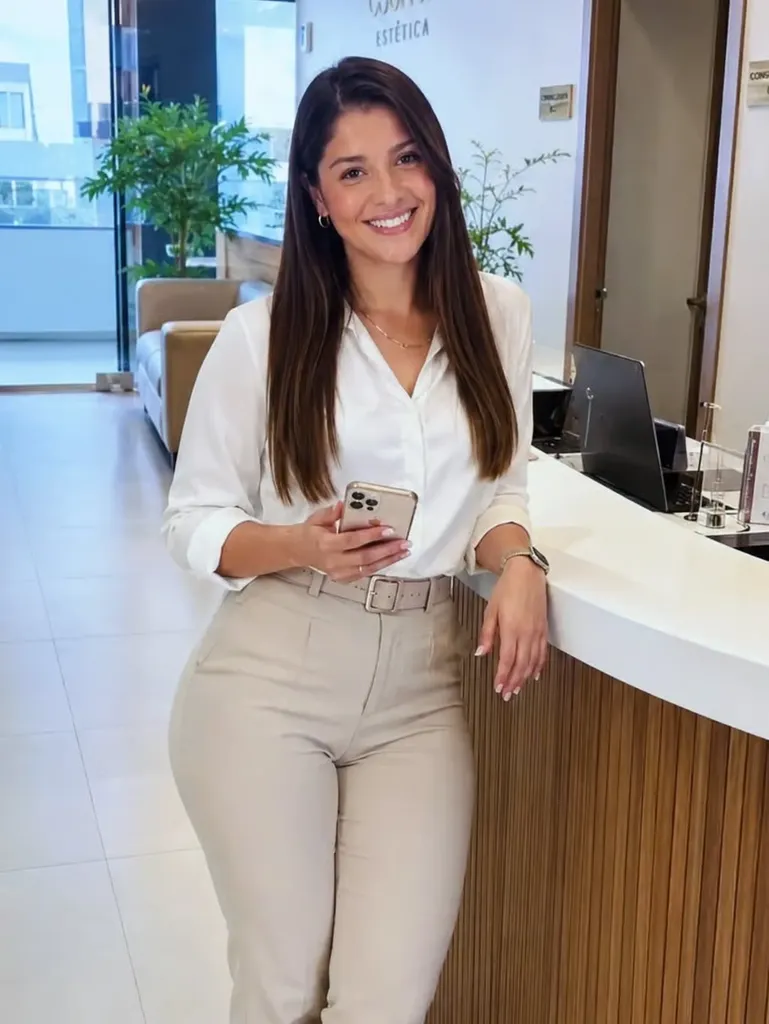
Photo via Instagram
Look at how little this formula asks of you: a white blouse with a collar, tucked into belted beige trousers. The tuck and the belt are doing the work that a stiff blazer would normally do. Light colors stay polished because the waistline is defined — that’s the whole secret. A tuck, a belt, and a quiet palette will carry you further than most “power pieces” ever will.
Problem 3: Color Feels Too Risky for the Office
You bought the beautiful red shirt. It’s still on the hanger in March.
The solution: one saturated piece, disciplined base. Bright color in a professional outfit works when everything around it is dark, narrow, and easy to read.
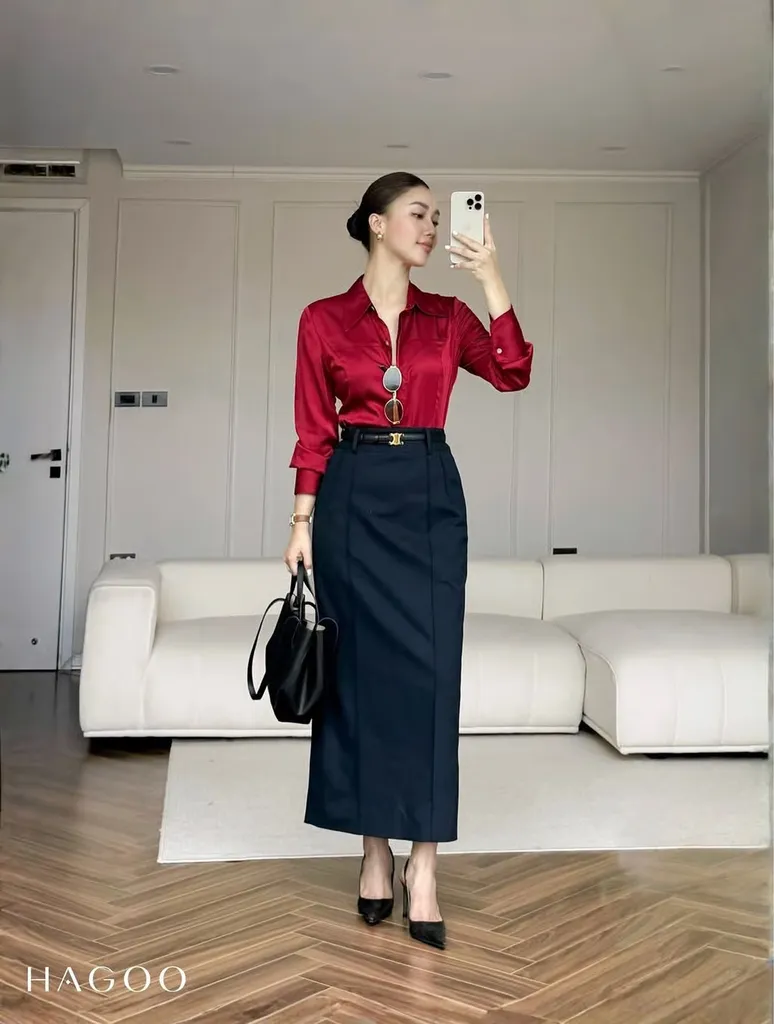
Photo via Instagram
This is the formula in action: the red button-up is tucked into a dark straight midi skirt, with a black belt, pointed heels, and a black handbag keeping the lower half quiet. The red gets to be the personality; the base keeps it professional. Notice there’s no second bright element competing — one saturated color per outfit is the rule, and it applies to cobalt, fuchsia, and emerald exactly the same way.
Quick answer: Can you wear jeans under a business casual dress code? Usually only on defined casual days, and never distressed. If your office allows denim, keep everything else elevated — dark wash, tailored fit, polished shoes — so the jeans read as a fabric choice, not a downgrade.
Problem 4: All-Black Outfits Look Flat by 10 A.M.
Black is the office uniform nobody officially voted for. The problem isn’t black itself — it’s black in one flat, shapeless block.
The solution: interruption. One slim, contrasting line reorganizes an entire dark outfit.
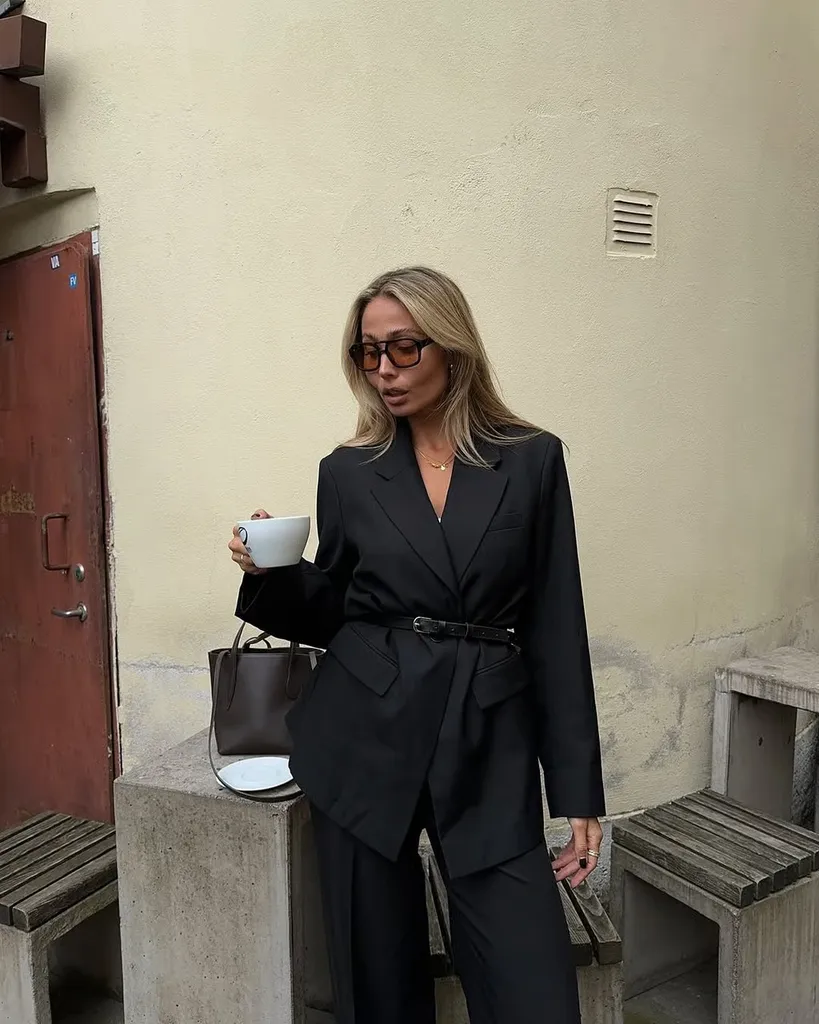
Photo via Instagram
Here, a thin belt cuts a narrow center through a black lapel jacket and black wide trousers. Same pieces, completely different result — the belt gives the torso a stopping point so the outfit has architecture instead of just absorbing light. A white collar peeking through, a pair of shoes with a pale toe detail, or a structured bag in a warm tone all work as the interruption. Pick one.
Problem 5: You’ve Run Out of Outfits by Wednesday
Nobody talks about this one, but it’s the real reason office wardrobes balloon: it’s not that you need more clothes, it’s that your clothes don’t remix.
The solution: build around two color stories, not fifteen single outfits. Professional outfits for women get expensive when every piece is a one-off. Instead, hold your wardrobe to two or three palettes — say, black-and-cream, and lavender-with-burgundy — so nearly everything pairs with everything.
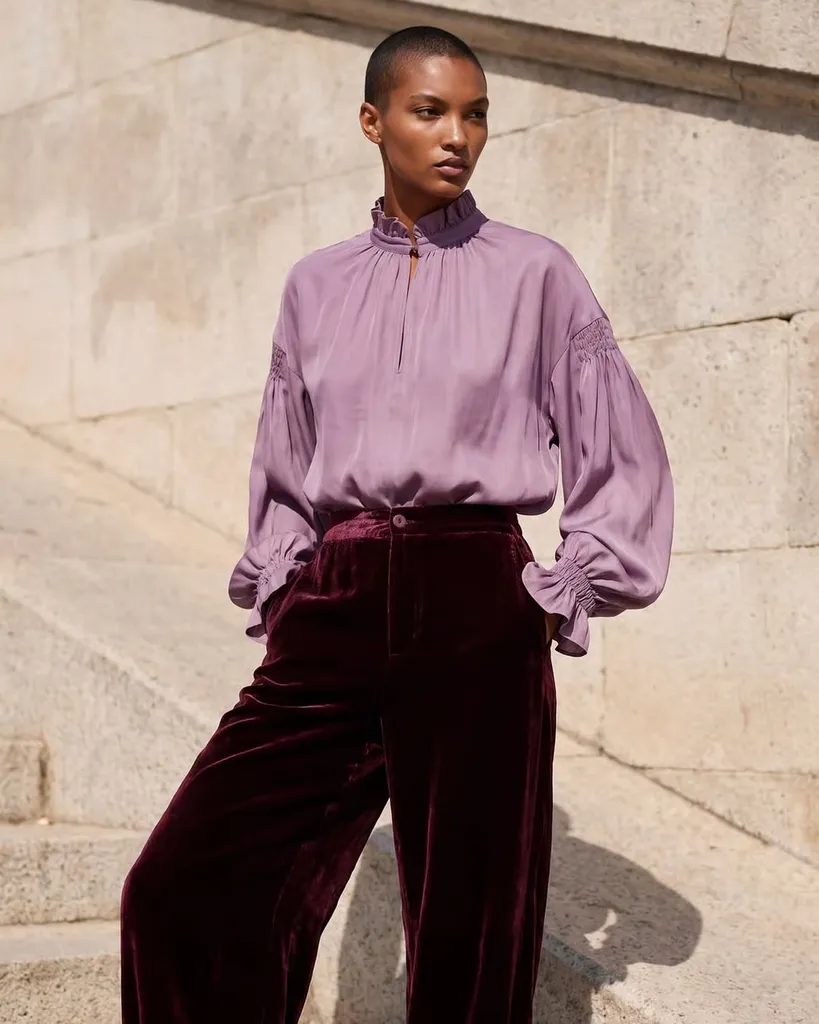
Photo via Instagram
That’s a color story doing its job: a lavender blouse with gathered sleeves and volume up top, grounded by burgundy wide-leg trousers. Expressive but limited — two rich colors, no third opinion. When your wardrobe works in pairs like this, Wednesday’s outfit is just Tuesday’s pieces rearranged, and nobody at work will ever notice.
Problem 6: “Smart Casual” Keeps Sliding Too Casual
Hybrid work blurred every line. The office dress code now tolerates sneakers, but there’s a difference between intentionally relaxed and rolled out of bed.
The solution: keep the suit, change the shoes. A coordinated set in a soft color does the formal work; footwear decides the temperature.
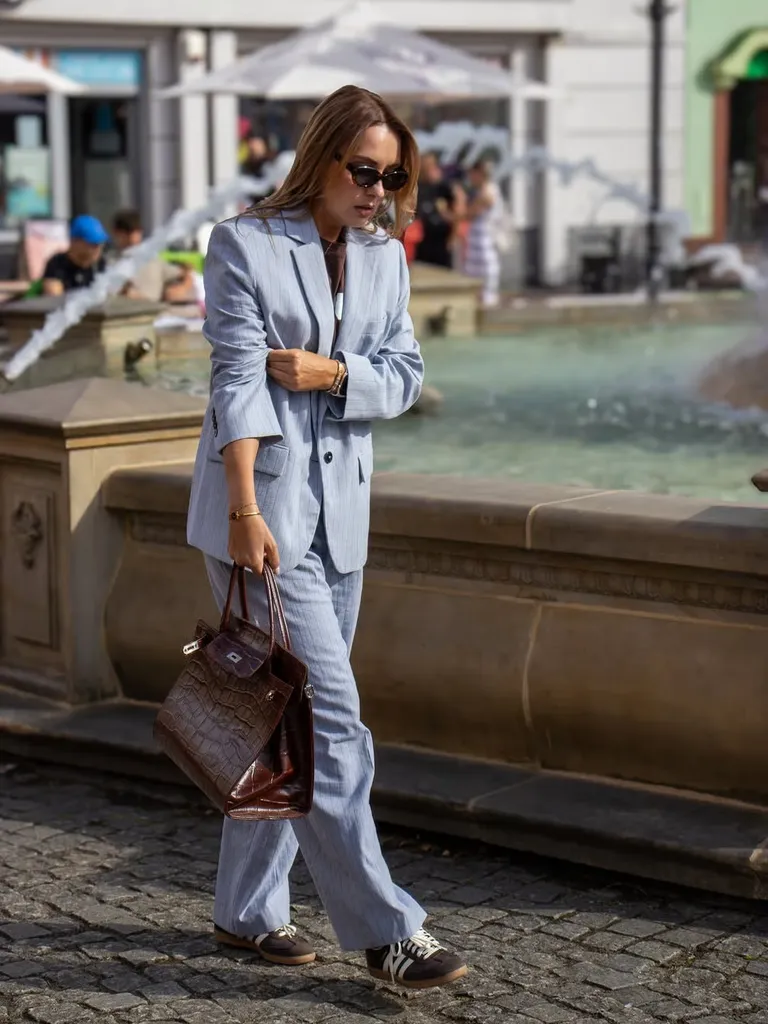
Photo via Instagram
This pale blue lapel jacket and wide trousers keep a coordinated frame, while dark sneakers and a slouchy brown bag pull it toward smart casual. The outfit still reads “dressed” because the pieces match in color and intent. That’s the trick: relax one element — never three. Sneakers or the oversized cut or the untucked shirt, not all at once.
What Business Casual Actually Means (The 60-Second Version)
If your new job needs a literal answer tomorrow morning: business casual is professional dressing without the full suit. Collared shirts and blouses, tailored trousers, skirts and dresses at work-appropriate lengths, knitwear that isn’t pilled, and closed or polished shoes. When in doubt on day one, err formal — it’s far easier to relax a first impression than to fix one.
FAQ: Business Casual Dress Code for Women
Are sleeves required? Is a sleeveless blouse okay? Sleeveless is fine in most modern offices, especially under a jacket or cardigan. If the room skews conservative, keep a layer at your desk for meetings.
Do I need heels? No. Flats, loafers, and clean minimal sneakers all pass in most workplaces now. Pointed or almond shapes look more polished than round toes if the dress code is strict.
What’s the difference between business casual and smart casual? Smart casual leans more relaxed and personal; business casual keeps one foot in traditional workwear. If you can wear it to brunch without comment, it’s probably smart casual.
How do I dress business casual in summer without breaking the code? Linen-blend trousers, sleeveless tailoring, and lighter colors — the structure rules stay identical, only the fabric weight changes.
What do I wear when the dress code is “business casual” for an interview? One step up: add the blazer. Interviews are the one day to take the formal anchor, not the casual one.
Is a wrap dress business casual? Yes — a tied waist and a work-appropriate length hit the exact balance of polish and ease this dress code asks for.
Closing Thought
The business casual dress code for women was never really about the clothes — it’s about reading a room and answering it. Once you’ve decoded your office’s two anchors, everything else is remixing: one structured piece, one honest color, one relaxed element at a time. Save this guide for your next “I have nothing to wear” Monday morning — and send it to the colleague still wearing flip-flops to stand-up meetings.