
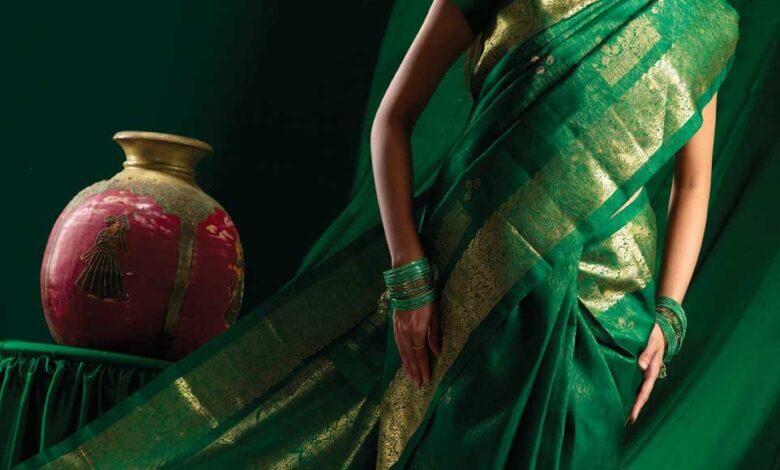
Green is the colour of the festive season this year, from the jewel-toned earth palette designers are pushing for autumn 2026 to the green day of Navratri itself. The ideas below span the full festive wardrobe — printed temple sarees, bottle-green silks, a teal anarkali, easy kurtas for home celebrations and two vintage-inspired western looks — so whatever your plans are, you will find a shade of green that fits them.
You do not need a new wardrobe to wear green festively. One strong green piece with gold jewellery and the right drape carries the whole outfit, which is why every idea here is built around a single green anchor. Pair your greens with jewel tones you already own — our purple outfit ideas and velvet outfit ideas show how rich autumn textures layer with a green centrepiece — or deepen the palette with burgundy accents.
The Temple Green Saree
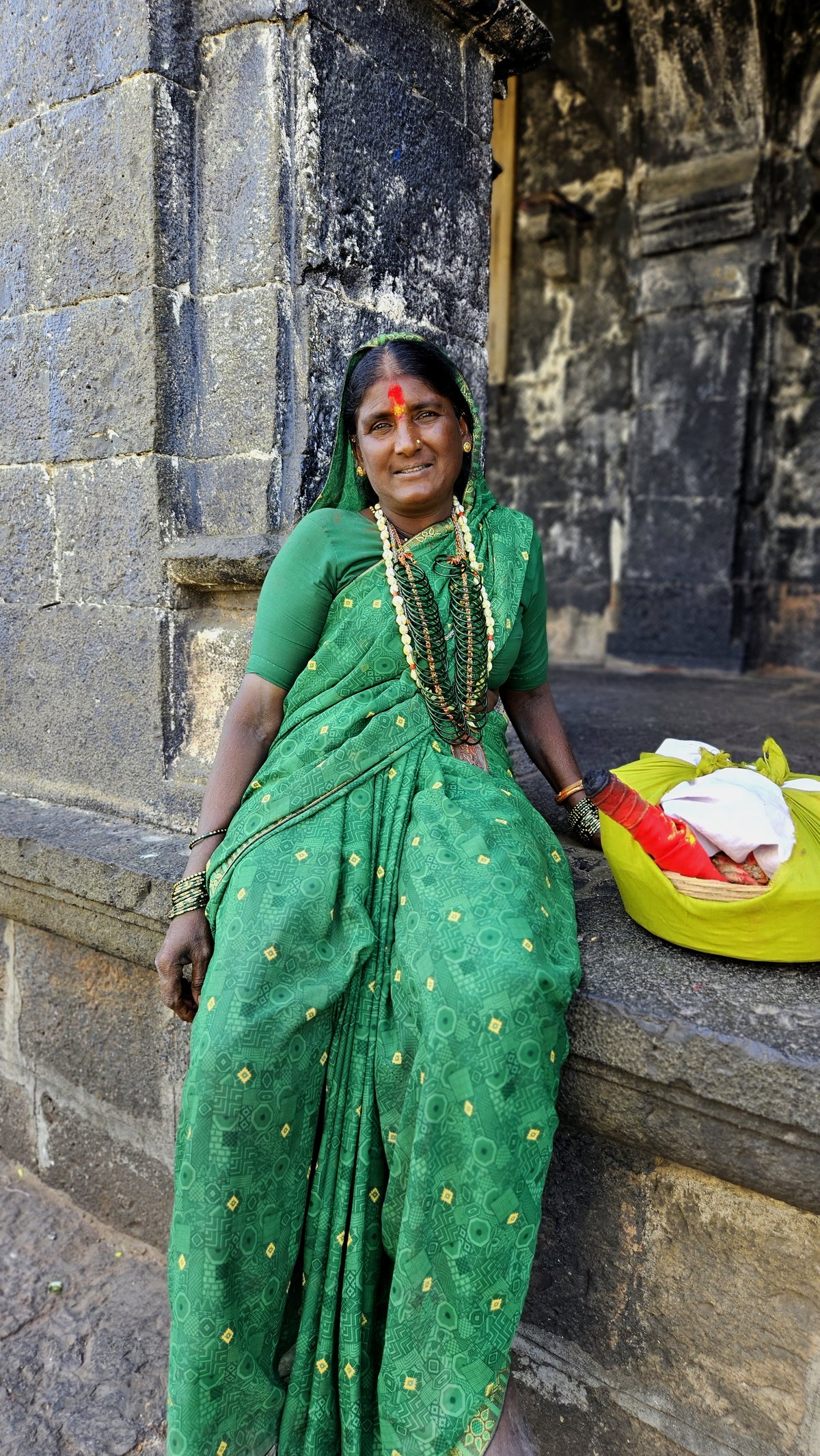
Photo credit: Art Projects MKCL KF via Wikimedia Commons (CC BY-SA 4.0)
There is no more authentic festive green than a printed cotton saree worn the way it has been worn for generations. The green here is deep and leaf-like, patterned with small golden motifs, and the styling does the festive work: stacks of green glass bangles, layered beaded necklaces and a red bindi against the green drape. This is the look for morning aarti, temple visits and daytime Navratri gatherings where comfort matters as much as colour. A printed cotton saree in green is also the most forgiving festive choice if you are new to draping, because the print hides imperfect pleats. Wear it with flat juttis and keep your hair in a simple braid so the jewellery stays the focus. The principle: when the saree is a classic, invest your effort in the bangles and the bindi, not the blouse.
The Bottle-Green Silk Saree with a Maroon-Gold Border
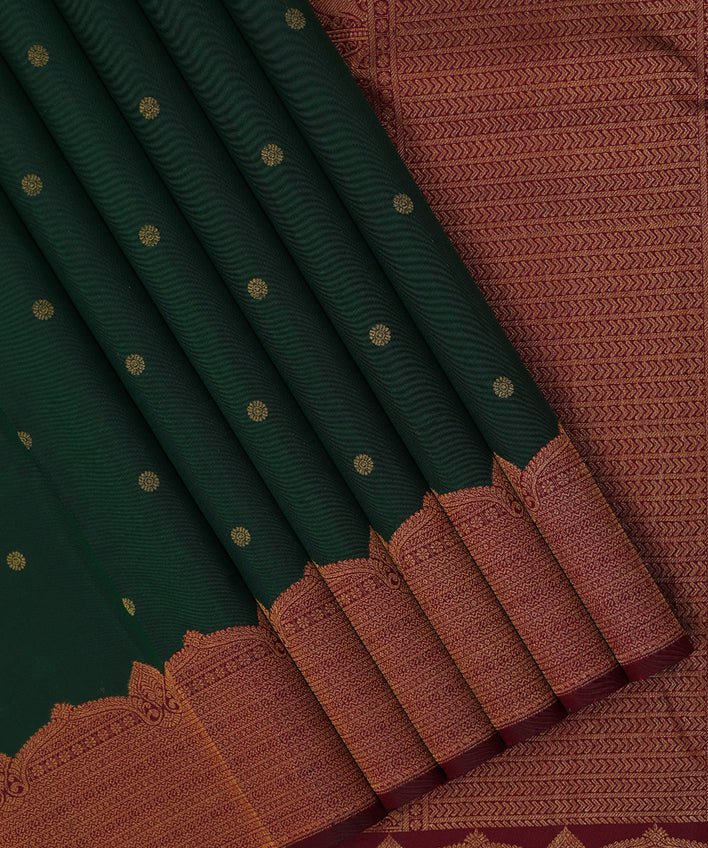
Photo credit: Pachiyappassilks via Wikimedia Commons (CC0)
Bottle green is the festive evening answer to black: dark, rich and flattering after sunset. This silk is scattered with tiny gold zari buttis and finished with a wide maroon and gold woven border, the exact combination that reads celebratory without extra embellishment. For a Navratri evening or a Diwali card party, drape it with a pleated pallu so the border falls in a straight, gleaming line, and choose a maroon blouse that picks up the border rather than competing with it. Gold jhumkas and a single statement ring are all the jewellery this weave needs, because the zari is already doing the light-catching work. Keep your makeup warm, bronze eyes and a berry lip, so the green stays the cool anchor of the look. The principle: a dark silk needs only one metallic thread to glow, so add jewellery sparingly and let the border be the second colour.
The Emerald Brocade Saree
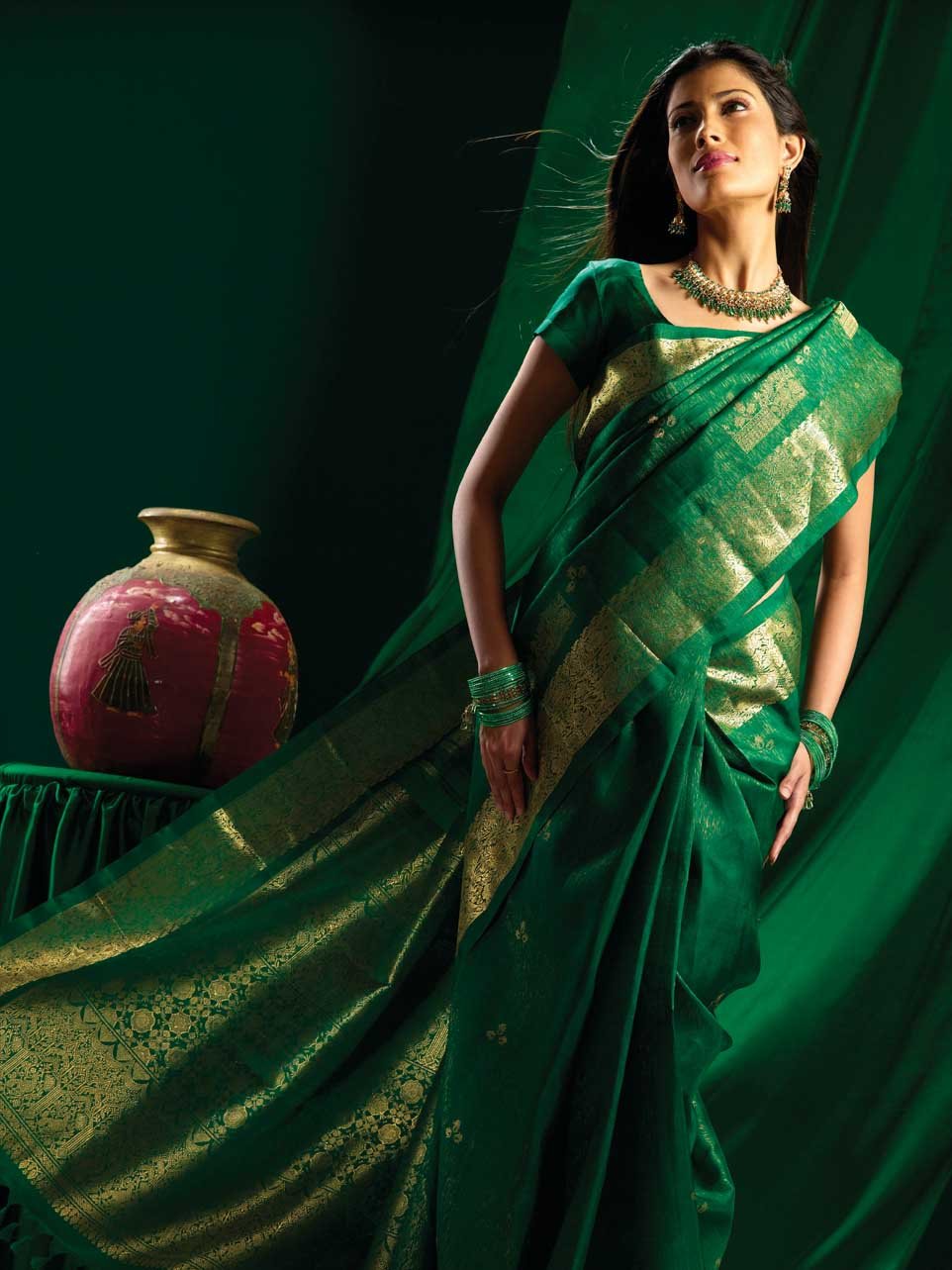
Photo credit: Sreekumar K. S. via Wikimedia Commons (CC BY 2.0)
When the invitation says festive and means it, emerald brocade is the answer. The silk here is a jewel-toned green shot through with a heavy gold brocade border, styled with a matching emerald blouse and green-gold jewellery that mirrors the weave. This is the saree for the night you want to be remembered in — a wedding sangeet, a big Diwali dinner, the final Navratri garba night. Because the fabric is already at maximum richness, keep everything else quiet: hair swept into a low bun, a small bindi, heels in gold or nude. If you own one such saree, you own your festive season, since it needs no accessories beyond what you wore the last time and still looks new to everyone else in the room. The principle: with brocade, one jewel tone plus gold is a complete outfit, so stop styling and start celebrating.
The Teal Anarkali with Gold Embroidery
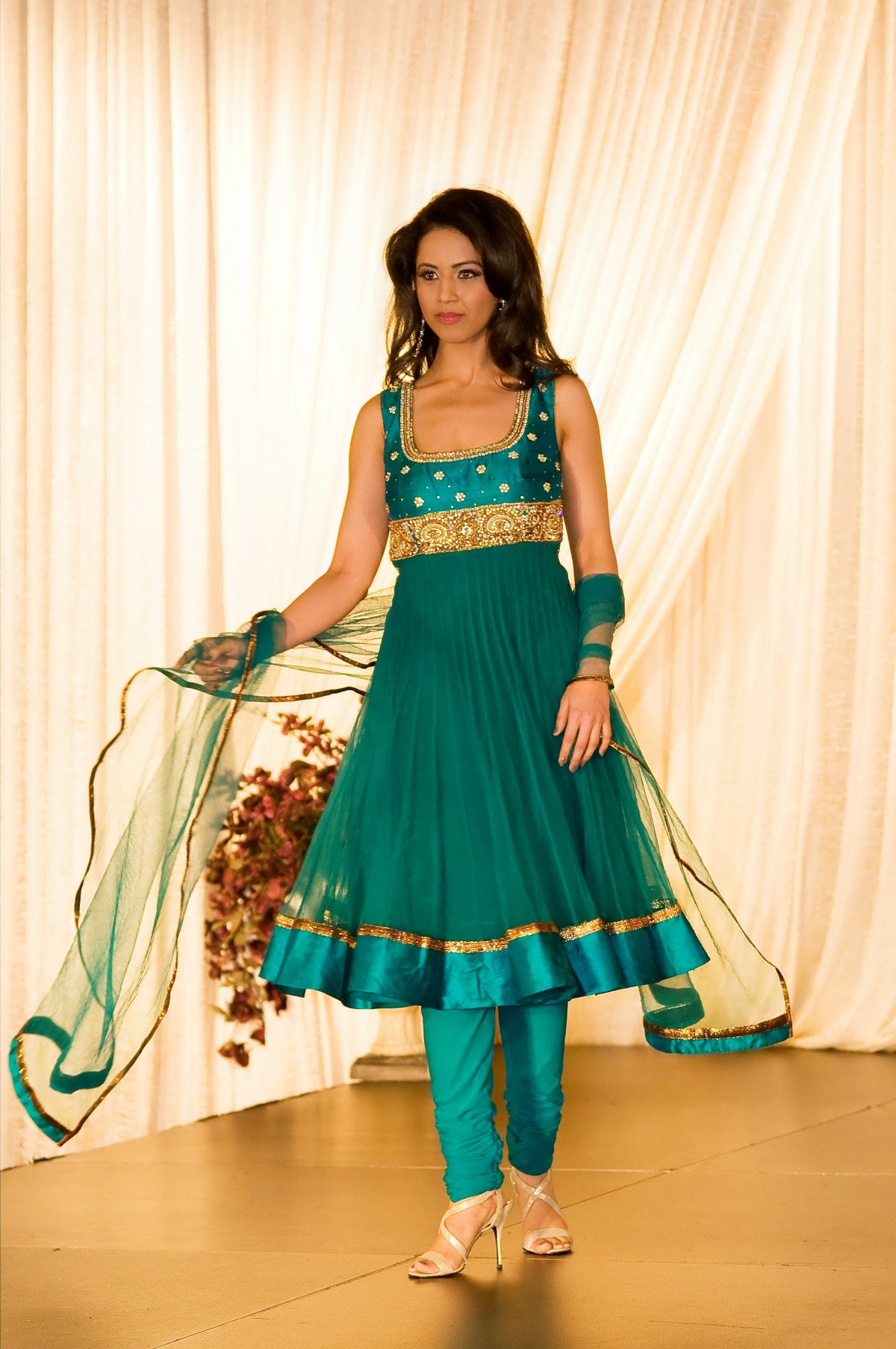
Photo credit: Brendan via Wikimedia Commons (CC BY 2.0)
The anarkali is the festive silhouette that lets you move, twirl and dance without a second thought, and teal is its freshest colour this season. This sleeveless version pairs a gold-embroidered bodice with a flowing teal skirt, matching churidar and a sheer dupatta edged in gold, which means the outfit photographs beautifully from every angle. Wear it for garba nights, mehendi functions or any festive evening with dancing on the agenda, and choose strappy metallic heels that disappear under the hem. The sleeveless cut keeps you cool through hours of celebration, while the sheer dupatta gives you the option of a covered shoulder for family photographs. Add a maang tikka or a pair of chandbalis and nothing else. The principle: when the silhouette moves this well, choose jewellery that stays still and let the twirl do the talking.
The Lime-Green Kurta with a Bandhani Dupatta
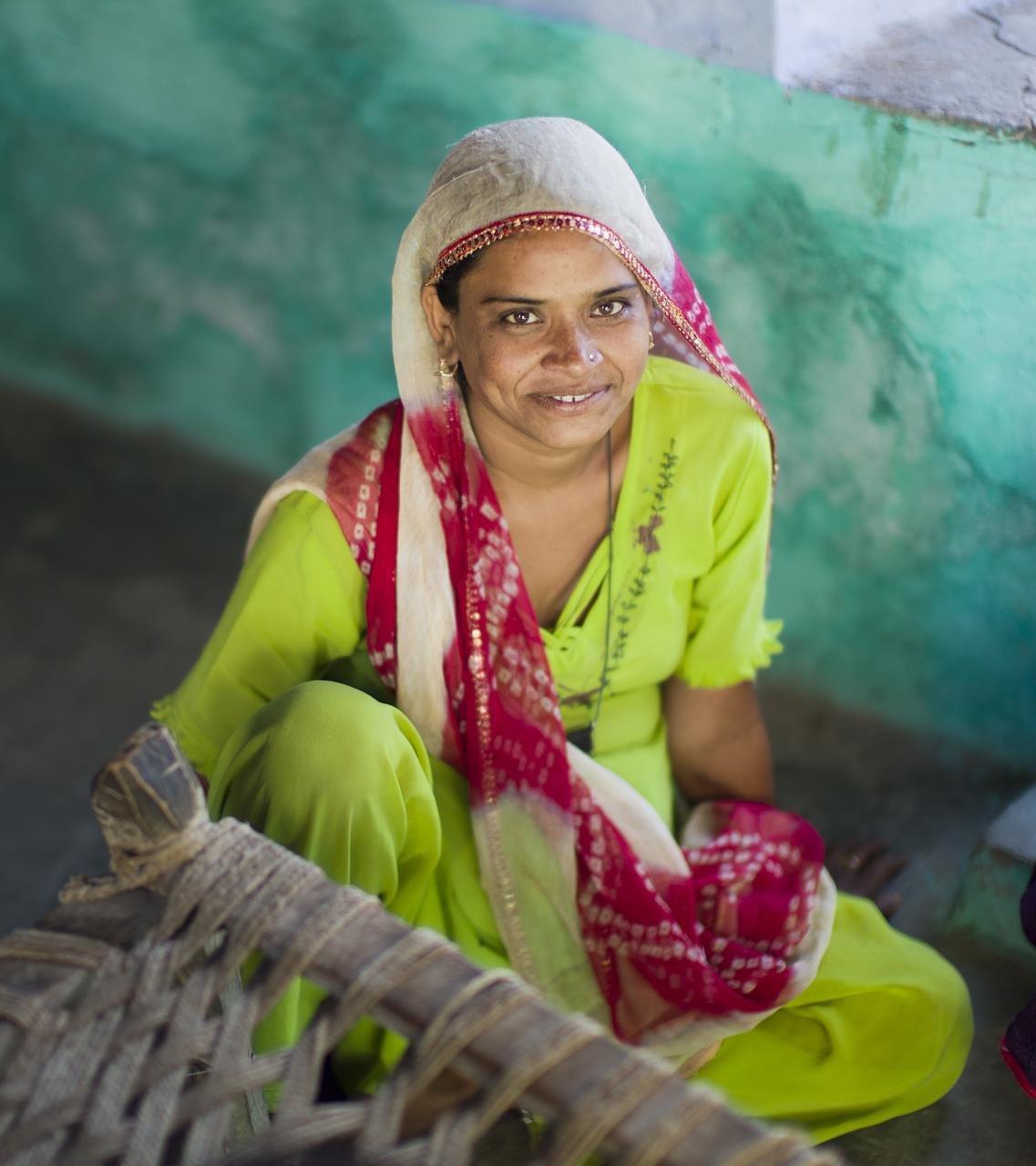
Photo credit: Christopher Michel via Wikimedia Commons (CC BY 2.0)
Festive dressing is not always about the evening; the daytime celebrations need their own uniform, and this is it. A bright lime-green kurta-salwar, simple and unembellished, is transformed by a red and white bandhani dupatta draped over the head — the contrast of the acid green against the traditional tie-dye is what makes the whole look sing. This is the outfit for haldi mornings, festive brunches, pooja at home and the long daytime hours of Navratri when comfort is non-negotiable. The formula is repeatable with any plain kurta you own: let the dupatta carry the festivity while the base stays easy and breathable. Silver jhumkas or a simple nose pin finish it without trying too hard. The principle: keep the base plain and put all the celebration into the dupatta, because one festive textile beats ten embellishments.
The Pista-Green Everyday Kurta
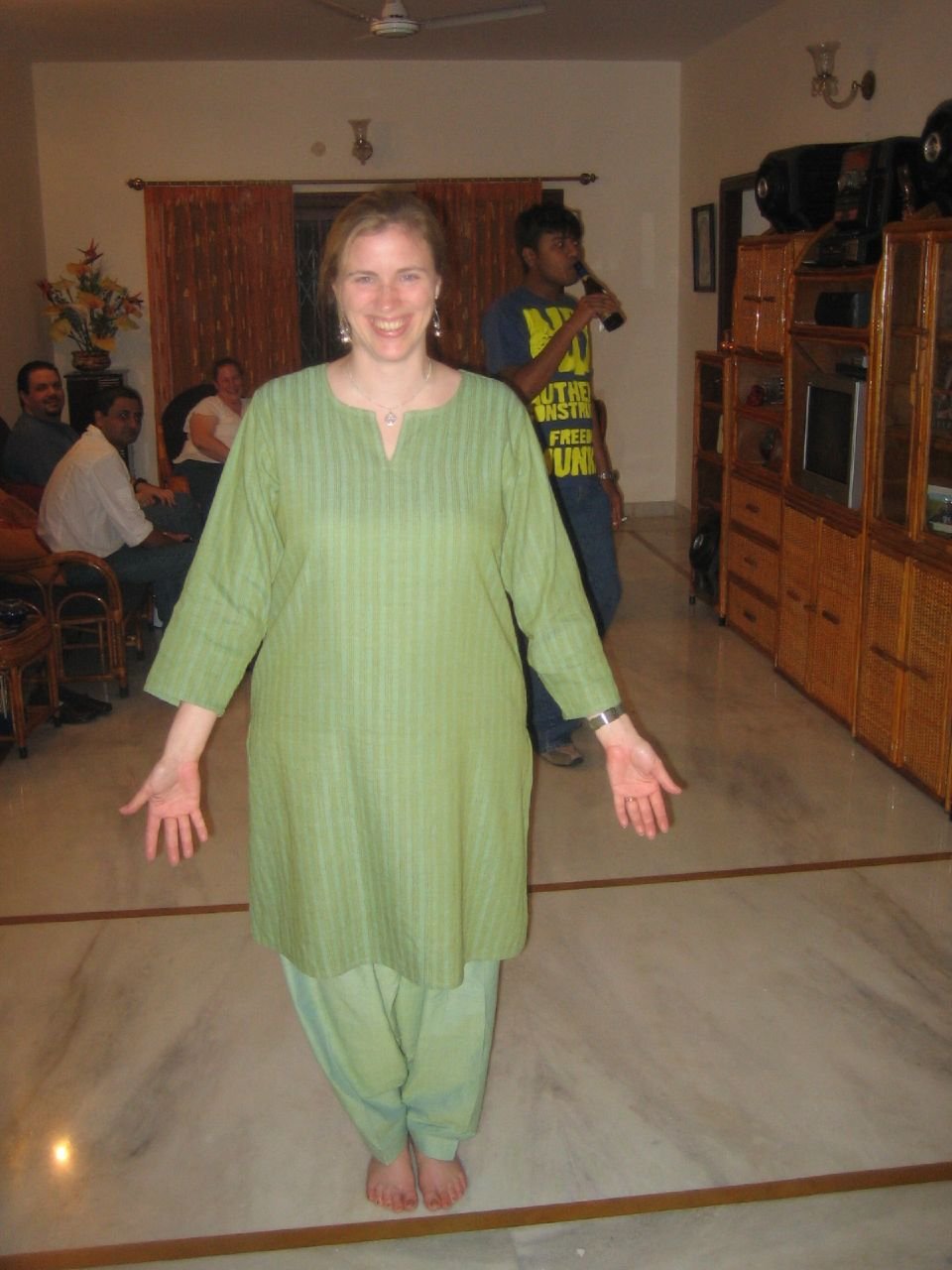
Photo credit: Linda via Wikimedia Commons (CC BY 2.0)
Some festive days are quiet ones — a small pooja at home, sweets with neighbours, an evening of diyas on the balcony — and pista green is the shade for those. This light, pistachio-toned striped cotton kurta with a matching salwar is as comfortable as festive dressing gets, and the colour still honours the green theme without any effort. The styling lesson here is restraint: a delicate pendant, simple earrings and bare feet or flat sandals, because a quiet outfit should not be shouted over. If your festive calendar has nine nights of events, you will need at least one look like this to recover in, and pista green photographs softly in daylight too. Save the brocades for the big nights and let this be your everyday festive base. The principle: on the quiet festive days, wear the softest shade in the room and let the diyas provide the sparkle.
The Mint-Green Heirloom Gown
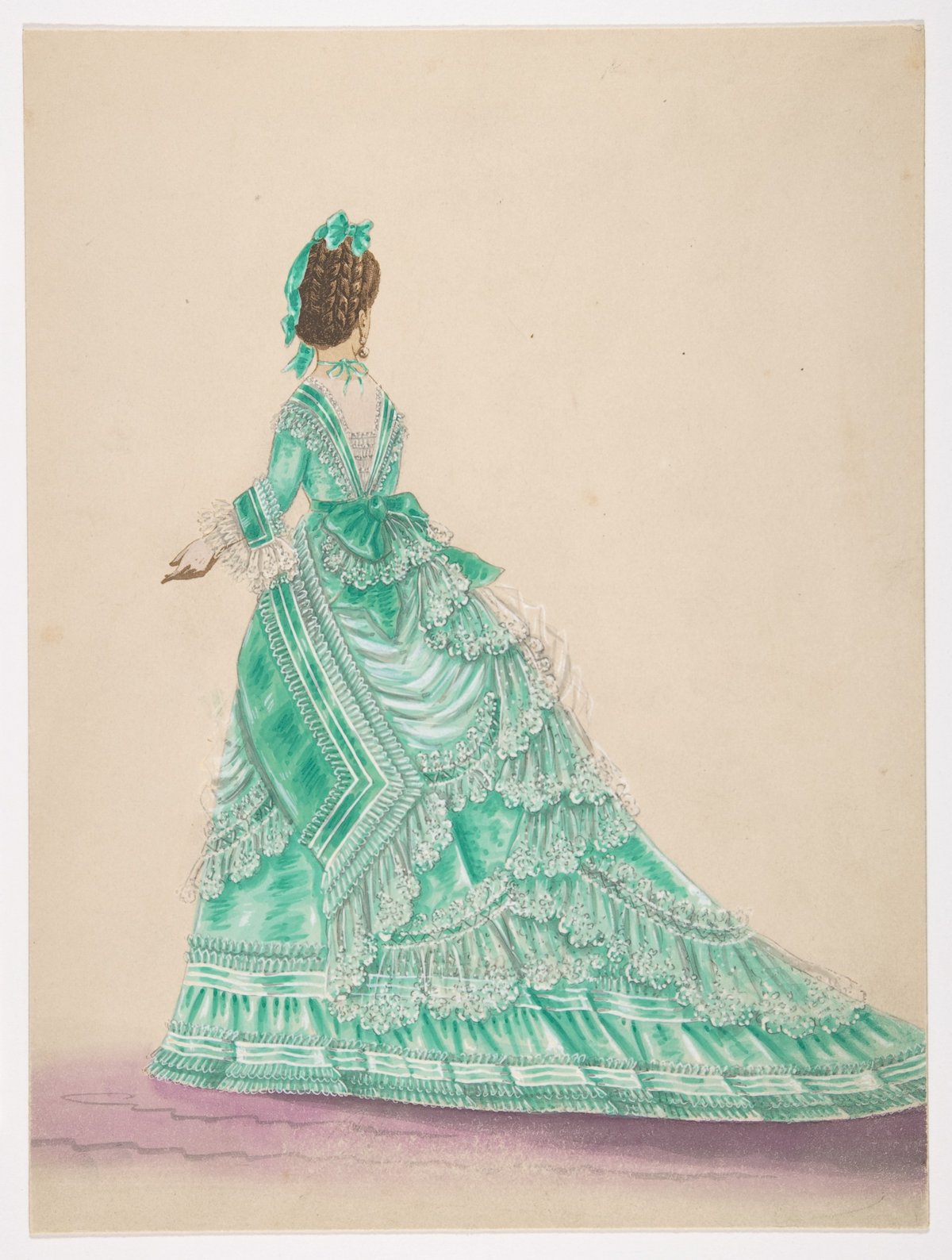
Photo credit: Anonymous via Wikimedia Commons (CC0)
Not every festive green has to be jewel-toned; mint is the pastel that belongs at daytime receptions and garden parties. This nineteenth-century fashion study shows the back of a mint-green gown trimmed with lace ruffles and bows, and the styling idea translates directly to today: a soft mint gown or lehenga with delicate lace or threadwork reads festive through texture rather than shine. If your festive wardrobe leans pastel, build the look the same way — tone-on-tone embroidery, a low embellished neckline, hair in a soft updo with a ribbon or bow. Mint pairs beautifully with pearl jewellery and rose-gold accents, and it is the green that suits every skin tone in daylight. For a modern take, choose a mint organza saree with lace edges instead of a gown. The principle: when you wear green in pastel, make texture your embellishment and keep the shine for the jewellery.
The Blue-Green Tailored Suit, Vintage Style
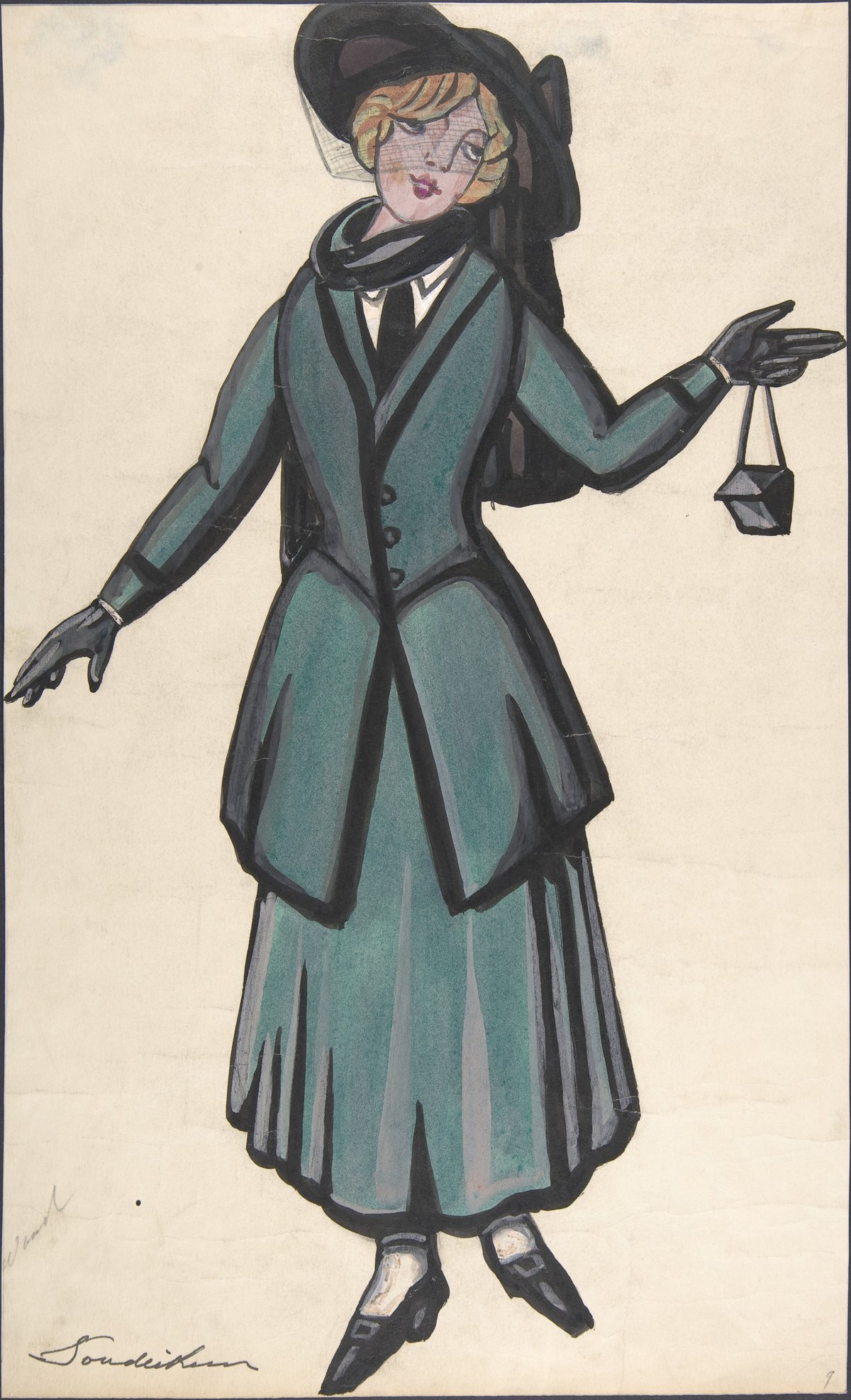
Photo credit: Serge Sudeikin via Wikimedia Commons (CC0)
Here is the wildcard: a vintage fashion illustration of a blue-green tailored skirt suit, worn with a black hat and gloves, proof that green tailoring has been festive for a century. For a formal festive lunch or an office Diwali party, a teal or peacock-green blazer with a matching pencil skirt is the modern version of this look. Keep the tailoring sharp and the accessories dark, black pumps, a structured clutch and a slicked-back bun, so the green is the only colour telling the story. Gold buttons or a brooch add just enough festivity for the season without breaking the tailored line. This is also the best festive green for women who do not wear sarees, because it honours the colour while staying completely in a western register. The principle: when the colour is festive, the silhouette can be strict, and the outfit will still read celebration.
Final Thoughts
Green rewards commitment, so once you choose your shade, wear it with confidence and keep everything around it simple. Whether it is a temple cotton saree, a bottle-green silk or a vintage-inspired suit, the festive season is the one time of year when green is not just a colour but a celebration in itself. Pick the idea that matches your calendar, add gold, and enjoy every one of the nine nights.
Frequently Asked Questions
Which shade of green is best for Navratri?
Any shade you love works, but emerald, bottle green and teal photograph best at night, while lime and pista green suit daytime events. If you are dressing for a specific Navratri colour day, match the day’s colour — green is traditionally worn on one of the nine nights.
Can I wear green to a Diwali party?
Yes, green is one of the strongest festive colours for Diwali. Emerald and bottle-green silks with gold zari are the classic choices, and a teal anarkali is a modern alternative that still reads celebratory.
What jewellery goes with a green festive outfit?
Gold is the natural partner for every shade of green, from temple jewellery with a cotton saree to delicate gold pieces with a pastel mint look. Green glass bangles or emerald-toned stones add a tone-on-tone finish.
How do I style green if I do not wear ethnic clothes?
A peacock-green blazer with a matching skirt, or a mint evening dress with lace detailing, keeps you in the festive palette in a fully western register. Keep accessories dark and let the green be the single colour statement.




One Comment