Table of Contents
I was sitting in my stylist’s chair last March, staring at my reflection under those brutally honest salon lights, when she asked me the question I’d been avoiding for weeks: “So, what are we doing for spring?”
And I just… froze.
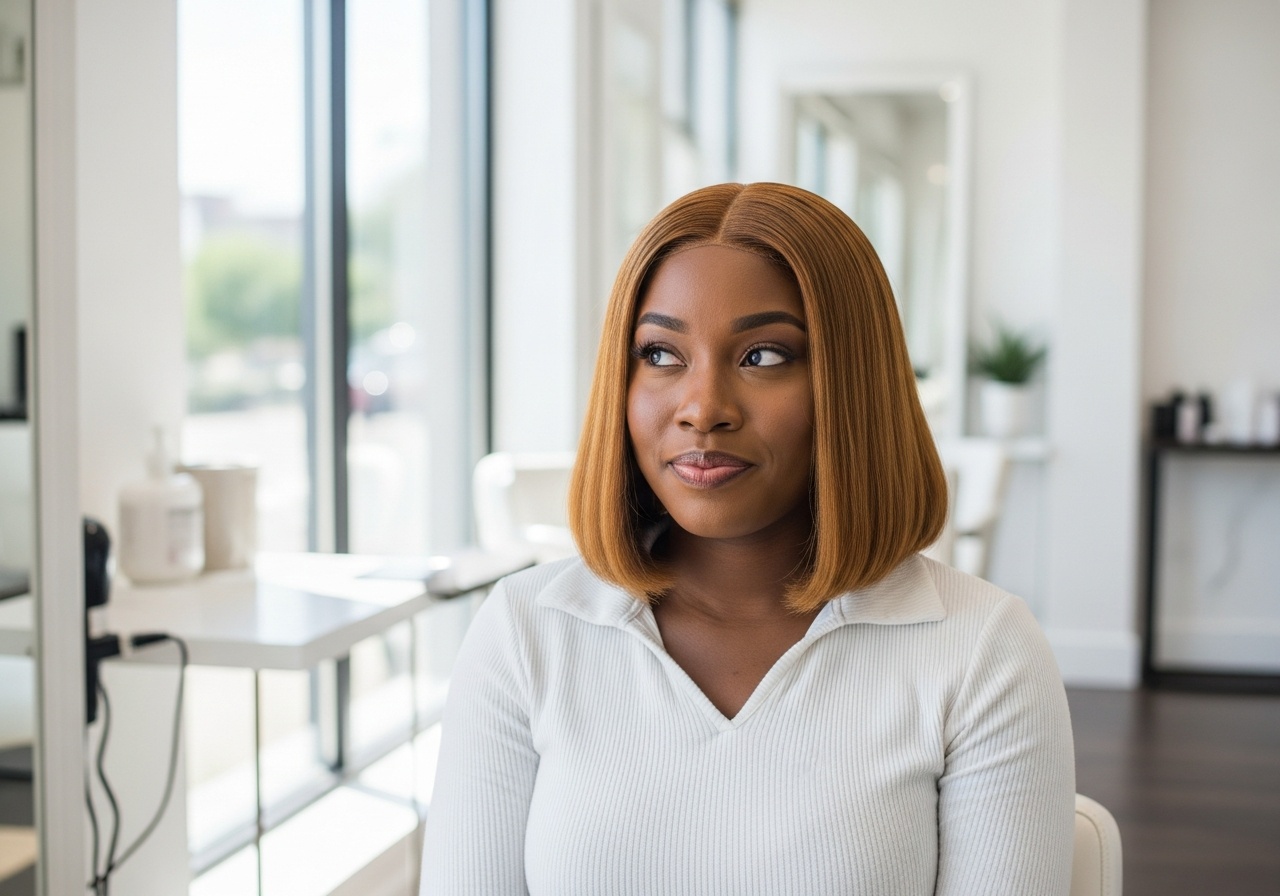
Because here’s the truth — I’d spent two full evenings scrolling through Pinterest and Instagram looking for spring hair color ideas for black women, and everything I found felt like a copy of a copy. The same caramel highlights. The same honey blonde. Beautiful on the models, sure, but none of it felt like me.
That moment in the chair was the push I needed to actually experiment, ask questions, and figure out what shades genuinely look incredible on dark skin tones — not in theory, but in real bathroom-mirror-on-a-Tuesday life.
So this is the guide I wish I’d had. Not another recycled list from a brand trying to sell you a box dye. This is what I’ve learned from trial, error, a couple of color corrections (we’ll get there), and honest conversations with colorists who actually specialize in dark skin.
If you’re ready to move beyond the predictable, you’re in the right place. Let’s talk about spring hair color for dark skin tones that actually makes your whole face come alive.
The Shade Everyone Recommends (And Why I Stopped Wearing It)
Let’s get this out of the way first.
Honey blonde is gorgeous. It’s also the single most recommended hair color for black women on every blog, every TikTok, every “best of” list since roughly 2019. And I wore it for two years.
The thing is, honey blonde started looking expected on me. When I’d show up somewhere and three other women had the same warm blonde situation going on, it stopped feeling special.
I’m not saying don’t do it. If honey blonde lights up your face, by all means. But what frustrated me was that the internet acted like it was the only flattering option for dark skin. It’s not. Not even close.
There’s a whole world of spring hair color for dark skin tones that goes way beyond the safe, obvious picks — and that’s what we’re going to talk about today.
Suggestion: [Spring Hair Colors for Brunettes You Can Show Your Stylist]
Cherry Cola Brown: The Shade That Changed My Mind About Red
Okay, here’s the thing — I never considered myself a “red hair” person.
Reds felt loud and high-maintenance, and I’d seen too many at-home burgundy dye jobs go wrong (including my own, circa 2017, which turned a patchy eggplant under fluorescent office lighting — we don’t need to revisit that).
But cherry cola brown is different.
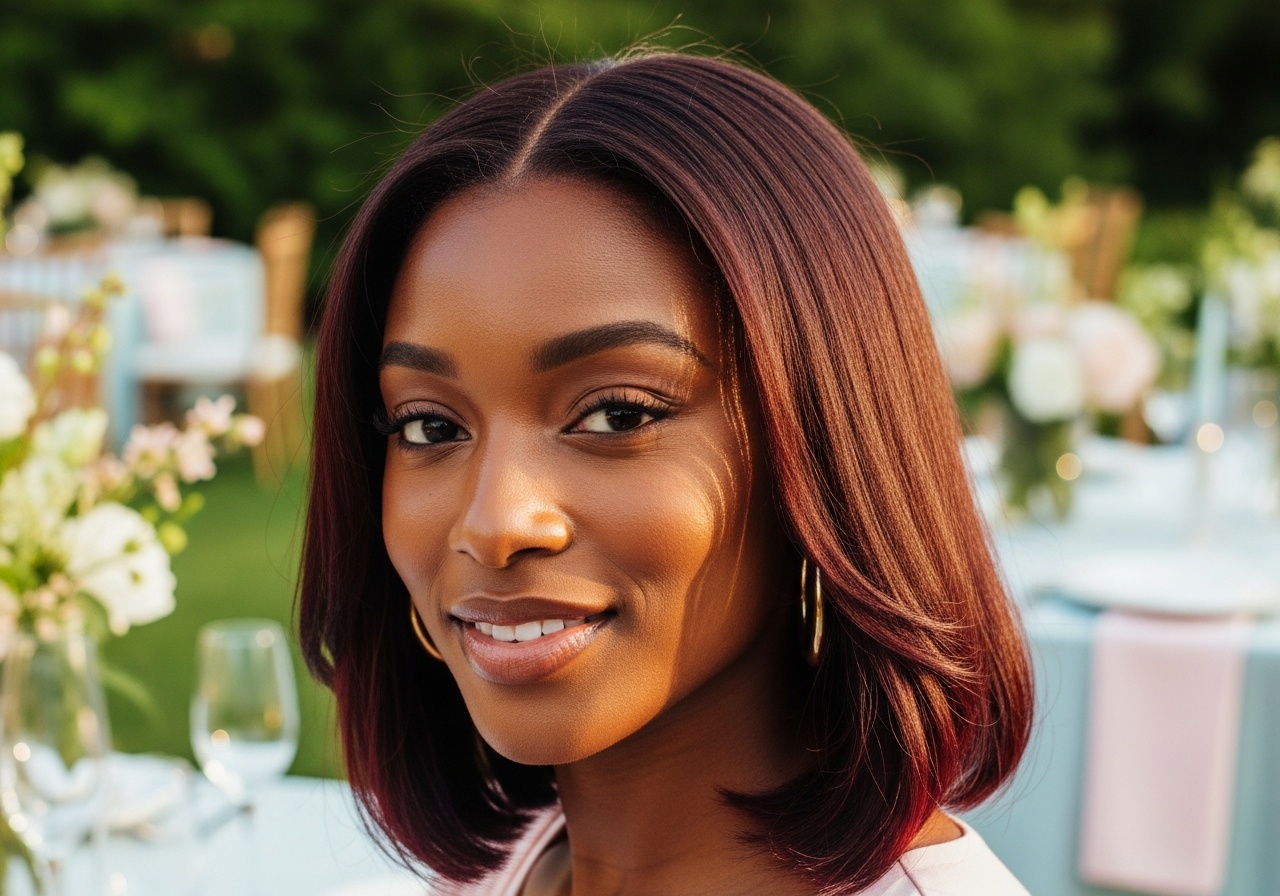
It’s a deep, dimensional brown with this subtle reddish-wine undertone that only really reveals itself when light hits it. I tried it last April on a whim after my colorist showed me a swatch, and I genuinely could not stop looking at myself in every reflective surface for a week.
At my cousin’s Easter brunch, my aunt — who has never once complimented my hair in my adult life — said, “What did you do? Your whole face looks brighter.” That’s when I knew.
Cherry cola works on virtually every dark skin undertone because the base stays deep. You’re not fighting contrast the way you would with a full copper or ginger. The warmth is just a whisper. And for spring, it feels fresh without screaming “I just colored my hair,” which is exactly the vibe some of us want.
Suggestion (Dofollow): According to Byrdie’s guide to red hair for dark skin, the key to pulling off warm red tones on deep complexions is keeping the base rich and dimensional rather than going full vibrant red.
Espresso Glaze: For When You Want a Change Nobody Can Quite Name
This one is for my subtle queens.
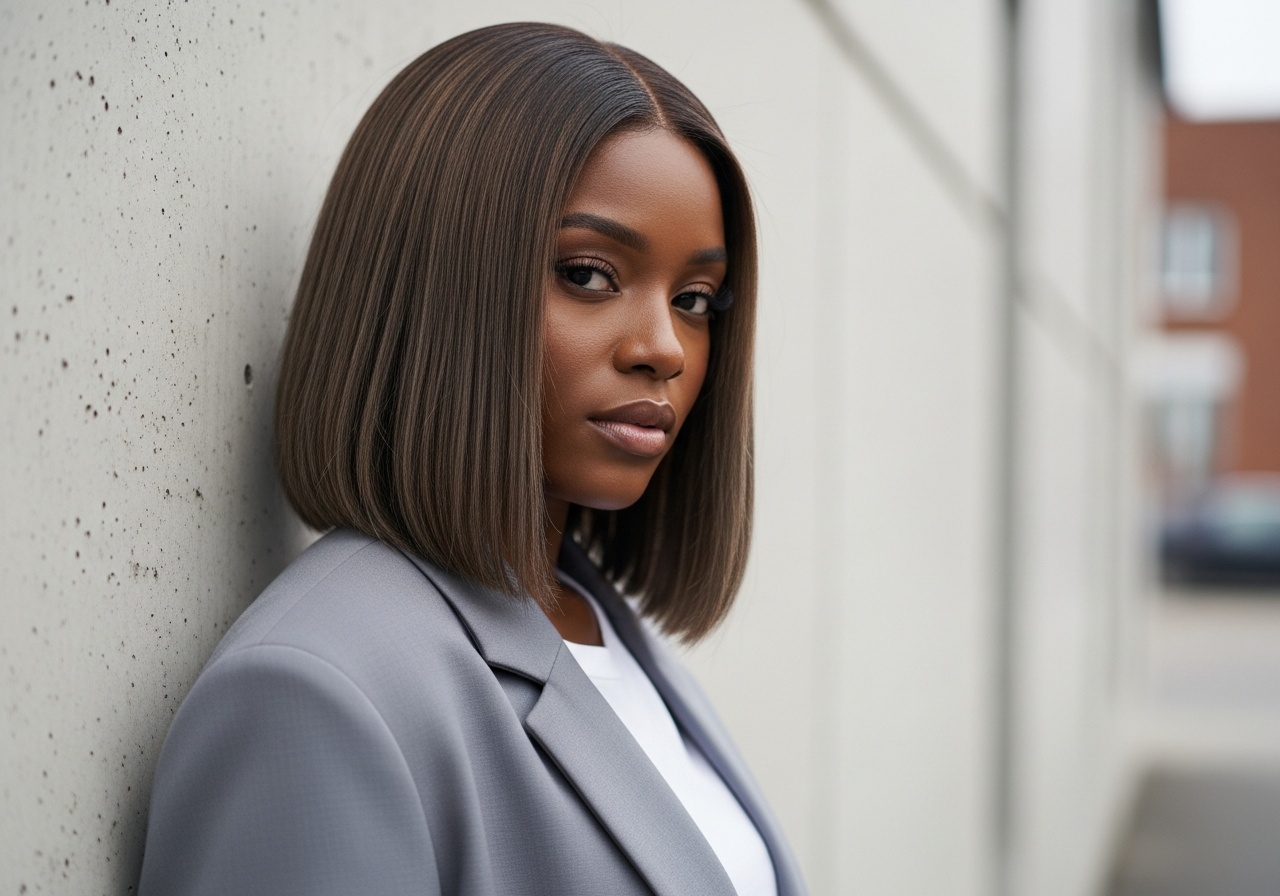
If you love your dark hair but want it to look alive for spring instead of flat, an espresso glaze is the move. It’s not really a color change — it’s more like giving your hair a fresh coat of gorgeous.
Think of it as the difference between a matte black wall and the same wall in a satin finish. Same shade, completely different energy.
I got an espresso glaze before a friend’s wedding last May and the photographer literally asked what I used on my hair because it was catching light so beautifully in the outdoor shots. It was one of those flattering hair shades for dark skin women that makes people think you just look really healthy and well-rested — which, let’s be honest, is the best compliment anyone can give you in your thirties.
The best part? This is a hair color for dark skin without bleach. No developer drama, no damage anxiety. A clear or tinted gloss treatment at the salon takes about twenty minutes and lasts three to four weeks. If you’ve been nervous about coloring, this is your gateway.
Suggestion (Dofollow): Healthline’s breakdown of hair gloss treatments explains the difference between a gloss and a glaze, and why both are considered low-commitment, damage-free options.
Cinnamon Copper on Dark Skin Hits Different in Spring
Can we talk about copper for a minute?
Because I feel like the internet went fully copper-obsessed and then immediately told Black women with deeper skin that “it might be tricky.” That phrasing always bothers me. Tricky how? Tricky because most colorists don’t know how to adapt the shade to darker skin? That’s a them problem, not a you problem.
Here’s what I’ve learned: the key is specificity.
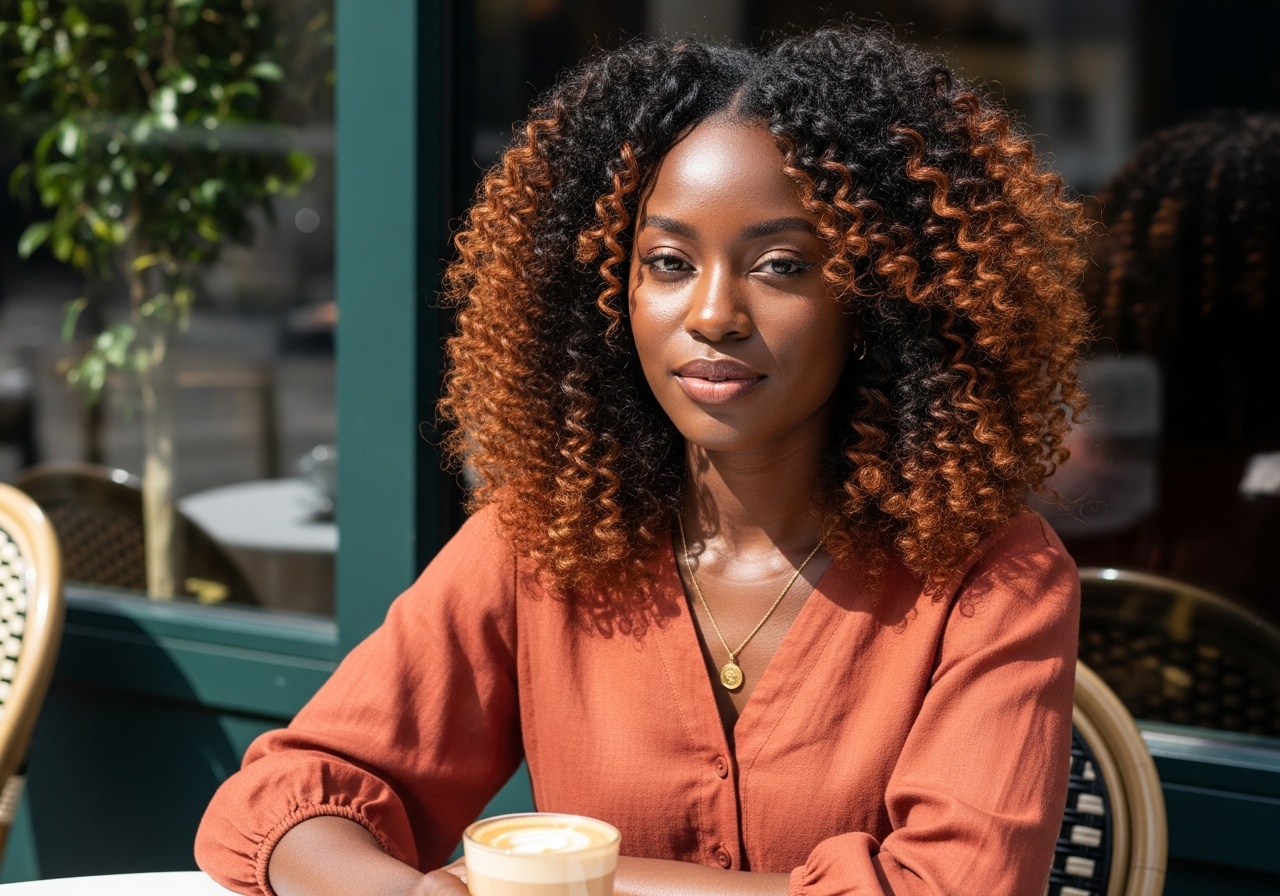
“Copper” is a whole spectrum. The bright, pennies-in-sunlight copper that looks phenomenal on fair skin? Yeah, that can look jarring on deep complexions because the contrast is too stark. But cinnamon copper — a warmer, brownish copper that leans more towards a terracotta — is absolutely stunning on dark skin.
It’s one of those spring hair color ideas for black women that feels modern and bold without feeling costume-y.
I wore cinnamon copper highlights (not all-over — just face-framing pieces and scattered through my mid-lengths) for about three months, and it was the most complimented hair I’ve ever had. My barista noticed. A stranger in Target told me it was beautiful. My mother, who thinks any hair color other than black is “doing too much,” admitted it was pretty. That’s a win across all demographics.
Suggestion: [Spring 2026 Blonde Hair Trends: What to Ask Your Colorist]
Burgundy That Doesn’t Look Like 2003
I need to make a distinction here because burgundy has a reputation problem.
When most of us hear “burgundy hair,” our brains go straight to that flat, opaque, box-dye maroon that was everywhere in the early 2000s. I rocked it in college. My mom rocked it in the ’90s. It had its moment.
But burgundy in 2026 has evolved.
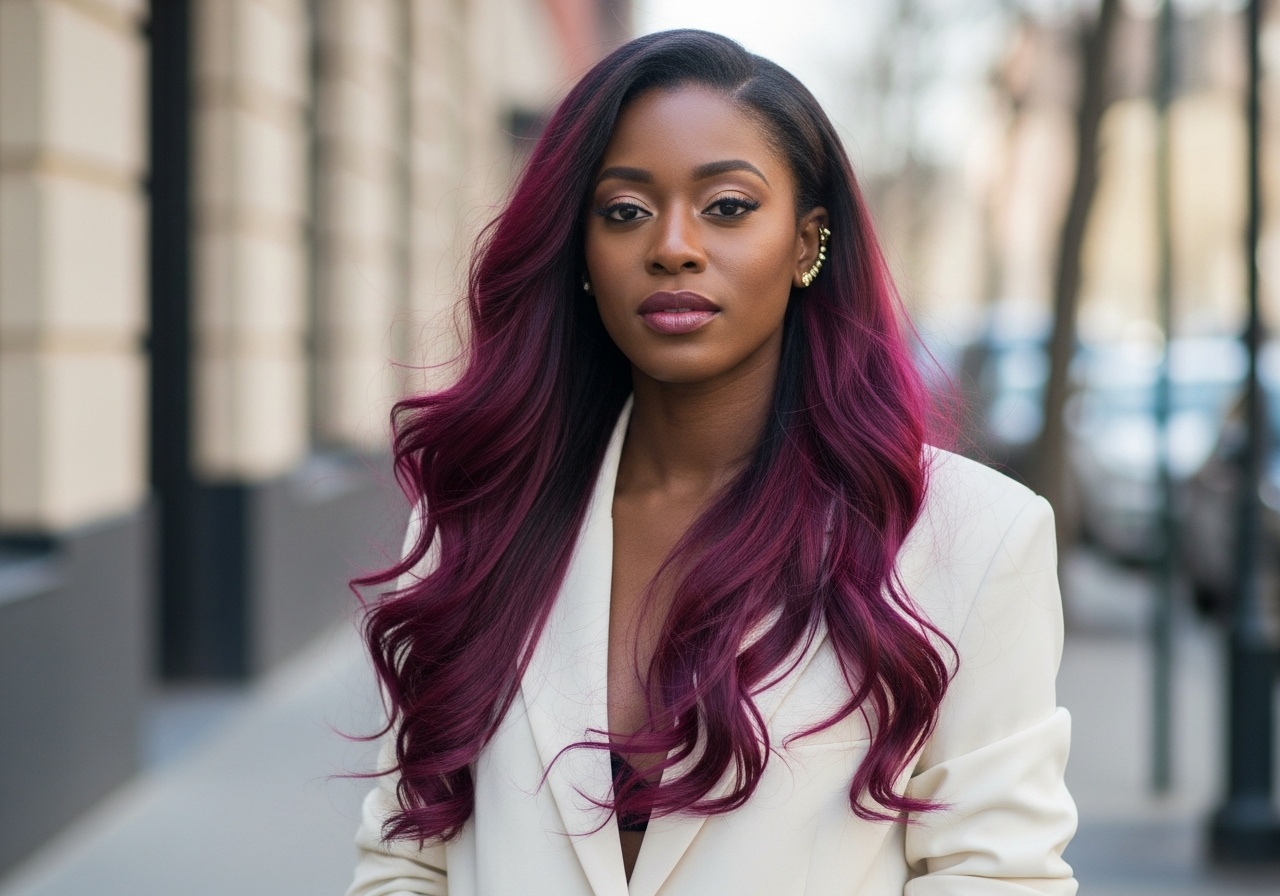
The versions I’m seeing on dark skin right now are deeper, more multidimensional — think merlot, think dark black cherry, think the color of a really good red wine when you hold the glass up to a candle. The difference is in the technique. Instead of a single, flat, all-over color, modern burgundy uses tonal layering so you get depth and movement. Dark at the root, richer and more red through the ends. It reads as sophisticated, not dated.
This shade is especially gorgeous for spring because it photographs like a dream in natural light. Every outdoor picture has this subtle warm glow. And for deeper dark skin tones, it creates this beautiful harmony where the red feels like an extension of your natural warmth rather than something placed on top of it.
Suggestion (Dofollow): Allure magazine’s guide to modern burgundy hair covers the latest tonal techniques, including how to ask your colorist specifically for a dimensional finish versus a flat one.
The Case for Jet Black (Yes, Really)
Now this one surprised me when I started putting this guide together, because I almost didn’t include it. Jet black isn’t technically a color change, right?
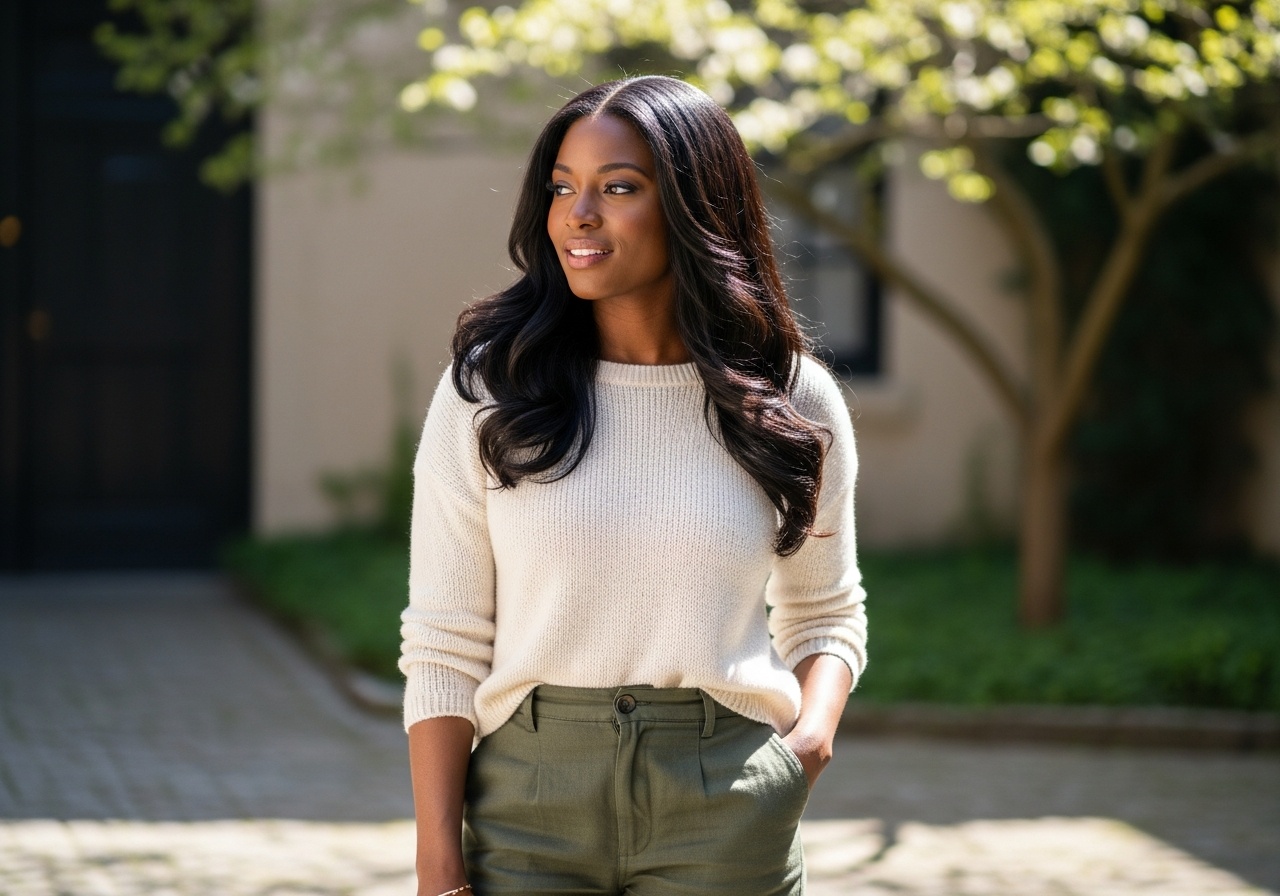
But here’s what I’ve discovered — a lot of us are walking around with hair that reads as dark brown or faded black and don’t realize how much a true, blue-black jet black transforms the look.
I went back to jet black after my cinnamon copper phase, and the impact was unexpected. Everything looked sharper. My skin looked clearer. My red lipstick hit harder. It was like going from watching a show in standard definition and then switching to 4K. Same content, different clarity.
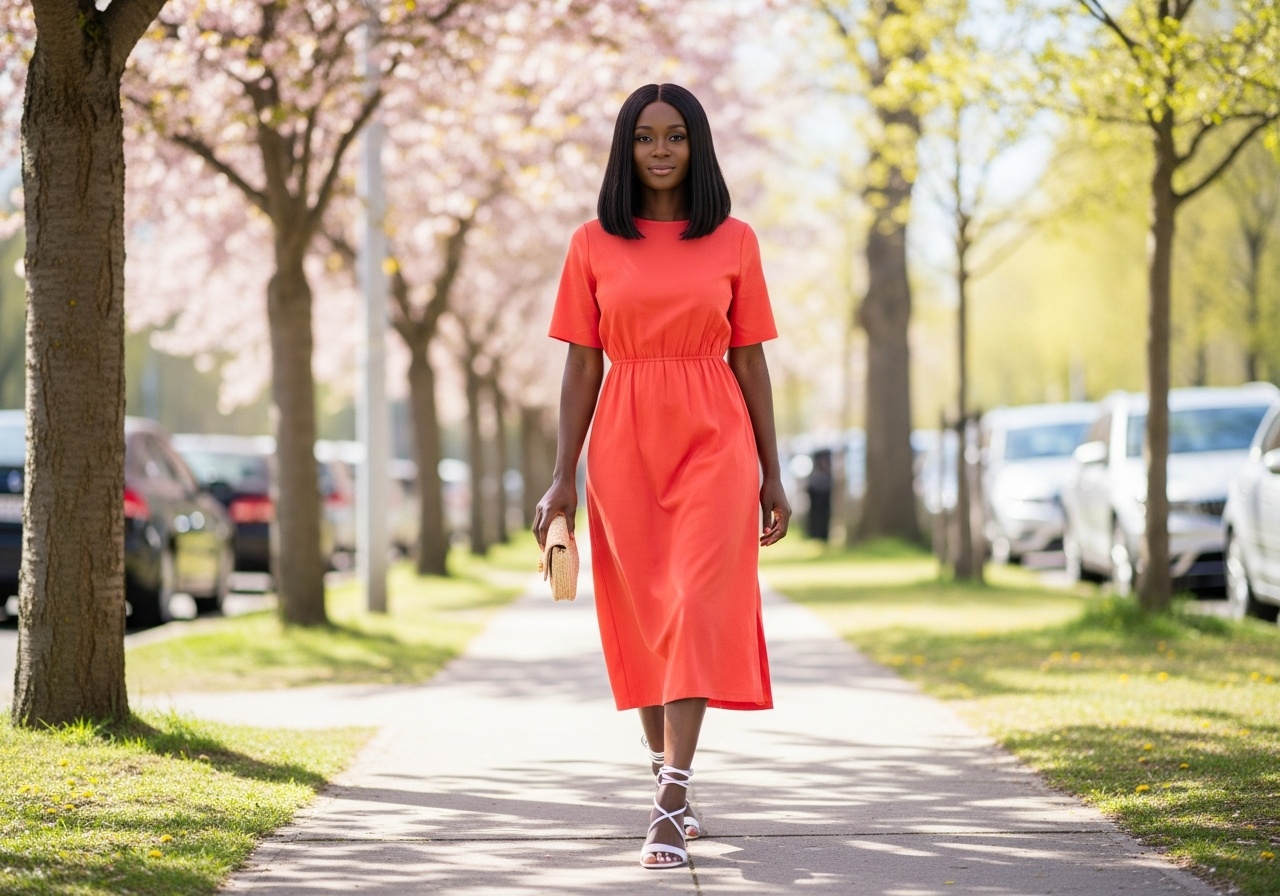
For spring hair color 2026 dark skin styling, jet black creates the most beautiful contrast against bright-colored clothing and accessories — which is kind of the whole point of the season. A white eyelet top? Electric against jet black hair. A coral dress? Stunning.
It’s the most underrated option on this list because people don’t think of it as a “spring shade,” but it absolutely functions like one when you consider how it interacts with the lighter, brighter palette you’re already reaching for as the weather warms up.
Suggestion: [Caramel Balayage on Brown Hair: What Nobody Tells You]
Strawberry Brown: The “What Color Is That?” Shade
This is the color that stops people mid-sentence.
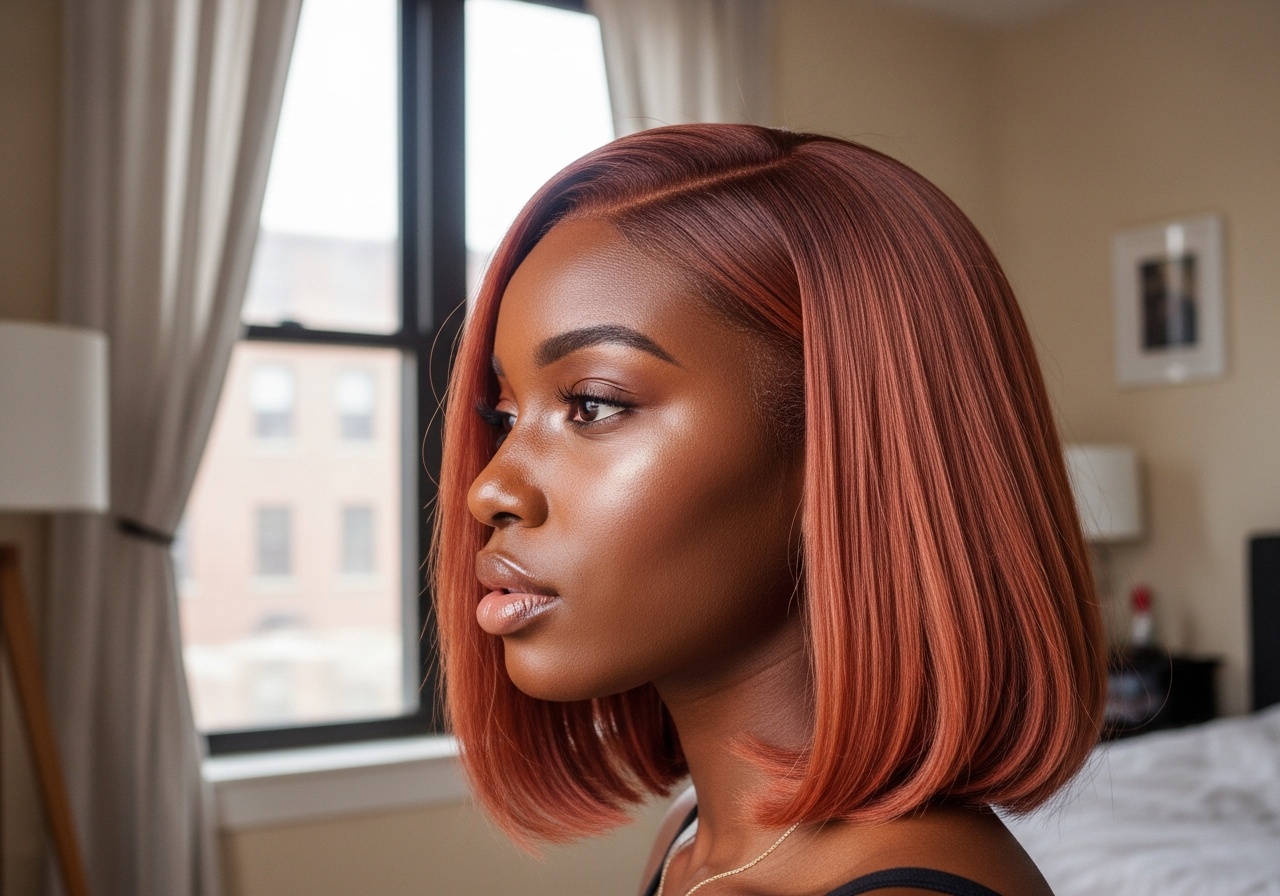
Strawberry brown lives in this fascinating space between auburn, rose gold, and warm brown, and on dark skin it looks like absolutely nothing else. It’s one of those hair color ideas for black women 2026 is finally giving the spotlight it deserves, and I think it’s going to be everywhere by summer.
I haven’t personally worn this one all-over yet — my appointment is coming up and I’m nervous-excited — but my friend Tasha got it done in February and I’ve been mildly obsessed ever since. On her deep brown complexion, it looks warm, expensive, and completely unique. Nobody can figure out exactly what shade it is, which is part of the fun.
“Is that rose gold?” “Is that auburn?” “What is that?” Every time we go out together, someone asks.
The catch is that this one does typically require some lightening, so if you’re committed to spring hair color without bleach for dark skin, this might not be your first pick unless your starting color is already lighter. But if you’re open to a little lift, the payoff is major.
Suggestion (Dofollow): NaturallyCurly’s breakdown of strawberry brown on deeper skin tones includes real client photos and advice on how much lift is actually necessary depending on your natural depth.
Ash Brown: The Cool-Girl Shade That’s Finally Working for Us
For a long time, ash tones were considered off-limits for dark skin. The logic was that cool tones would look “ashy” in the negative sense — grayish, dull, unflattering. And honestly, with the wrong formulation, that can happen.
But when ash brown is done right on dark skin? It’s giving quiet luxury. It’s giving “I just came back from a month in Paris and this is how my hair looks now.”
The trick — and I learned this the hard way after one slightly gray-looking attempt — is that your colorist needs to balance the ash with just enough warmth at the root so it doesn’t go muddy. The cool tones should live mainly in your mid-lengths and ends. When it’s balanced properly, ash brown on deep skin creates this gorgeous contrast that’s modern and unexpected.
This is a spring hair color 2026 dark skin is really embracing right now, and I think it’s because the overall aesthetic has shifted toward softer, moodier palettes. We’re seeing less neon, less stark contrast, and more tonal richness in fashion and beauty. Ash brown fits perfectly into that mood.
Suggestion (Dofollow): Vogue’s feature on cool-toned hair for deeper complexions dives into why ash shades are having a major moment and how skilled colorists are reformulating them specifically for melanin-rich hair.
Warm Chocolate With Face-Framing Caramel: The Low-Risk, High-Reward Move
If you’ve read this far and you’re thinking, “These are all gorgeous but I need something that won’t get me called into a meeting with HR about the dress code,” — this is your shade.
Warm chocolate brown as a base with soft caramel pieces framing your face is the most universally flattering, workplace-friendly, “I woke up like this” color combination I’ve ever tried.
I wore exactly this combination through most of last spring and into summer, and it was the easiest color I’ve ever maintained. Because the base stays close to natural, your grow-out is seamless. And the caramel pieces — just a few around the face, nothing heavy — catch the light in a way that literally makes you look like you have a filter on in real life. In Zoom meetings, it was practically a ring light.
This is also the combination I recommend most for anyone experimenting with hair color for dark skin tones for the first time. It’s gentle, it’s approachable, and it’s very hard to get wrong. The risk is minimal and the reward is walking around looking like a slightly more expensive version of yourself — which is genuinely all any of us want.
Suggestion: [Spring Brunette Hair Colors I’m Actually Asking For in 2026]

Before You Book: What I Wish Someone Had Told Me
A few things I’ve learned the hard way that will save you time, money, and potential tears in the salon parking lot.
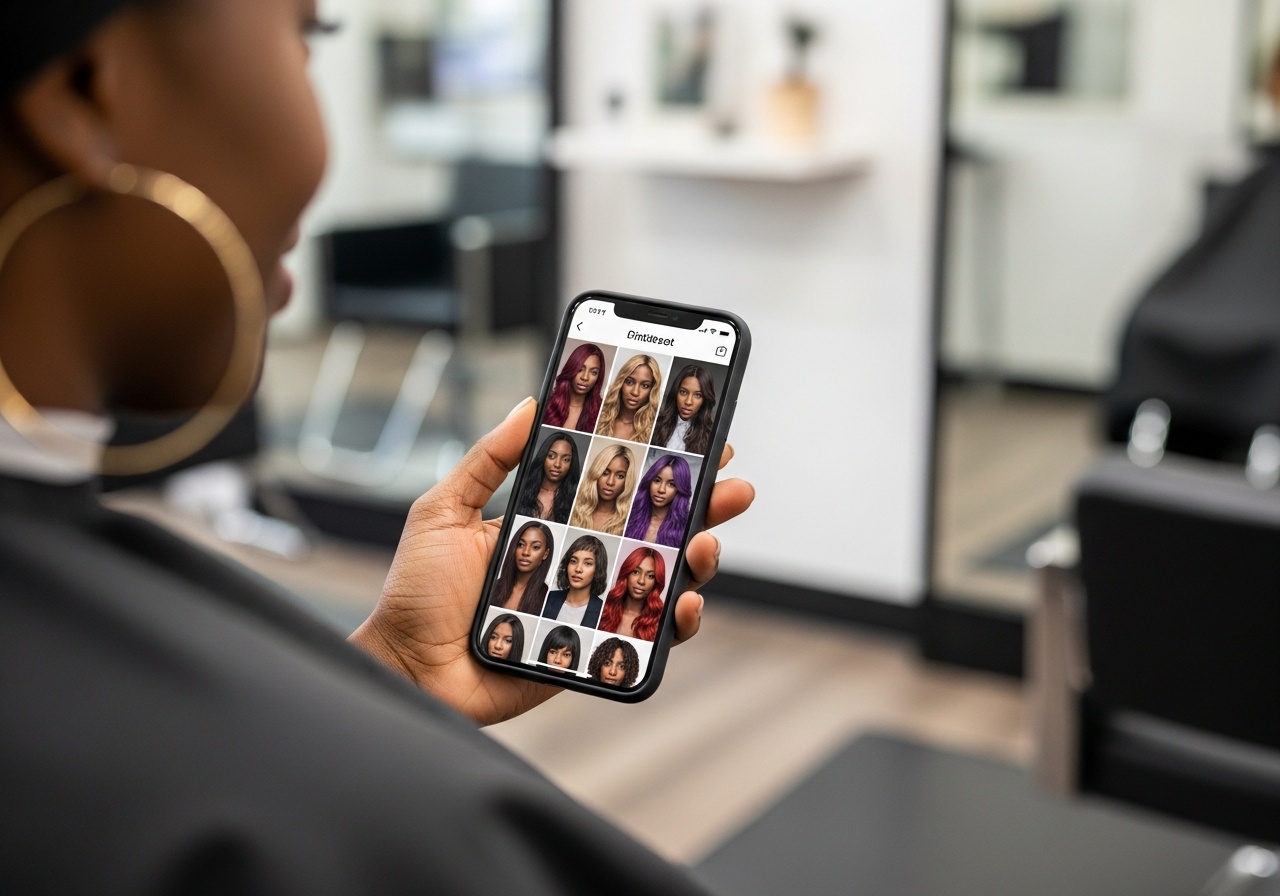
First, bring specific reference photos on dark skin. Not on fair skin, not on medium skin. On skin that looks like yours. I once showed my stylist a gorgeous auburn reference photo and didn’t realize until afterward that the model had light skin — the same dye formula looked completely different on me. Now I save a folder on my phone of color inspo exclusively on women with my depth of complexion.
Second, talk about undertones before you talk about color names. My colorist taught me this and it changed everything. Color names are basically meaningless across brands. “Burgundy” at one salon is “merlot” at another and “wine” at a third. But if you say, “I want warmth but not orange, and I want depth but not flat,” your stylist can actually work with that.
Third — and I cannot stress this enough — if you’re going lighter, budget for the maintenance. Going into spring with gorgeous highlights is incredible until six weeks later when you’ve got a visible line of demarcation and no appointment on the books. Ask your colorist about the realistic upkeep schedule before you commit, and factor that into your decision.
Suggestion (Dofollow): The American Board of Certified Haircolorists (ABCH) maintains a directory of certified colorists — a useful resource when you’re looking for someone who truly specializes in your hair type and skin tone.
Final Thoughts
Here’s what I keep coming back to: the best spring hair color ideas for black women isn’t the one that’s trending on TikTok this week. It’s the one that makes you do a double-take at your own reflection. The one that makes your skin glow a little warmer, your eyes look a little brighter, and your whole mood shift when you catch yourself in a window walking down the street.
I’ve tried enough colors now to know that there’s no single “most flattering” shade for dark skin — there’s only what’s flattering for your dark skin, your undertone, your lifestyle, your willingness to maintain it. And the internet’s obsession with narrowing our options down to three safe shades has always felt like a disservice to how diverse and gorgeous we actually are.
So go save this article. Screenshot the shades that made your stomach flutter a little. Bring them to a colorist who actually listens. And when you’re sitting in that chair, looking at your reflection under those unforgiving salon lights, trust yourself. You already know what looks good on you. You just needed someone to confirm that it was worth trying.
I’ll be in my own chair in two weeks getting that strawberry brown. Wish me luck.
— Stella xo