When Zendaya stepped out at the 2026 Met Gala with a razor-cut textured lob — all movement, zero stiffness — it confirmed what salon chairs across the country had been whispering for months. The shullet revival, the ghost-layered air-dry bob, and the collarbone-grazing curve cut are dominating booking requests, and TikTok’s “undone medium” aesthetic has racked up over 900 million views since March. The shift is real: people are done with blunt, overworked precision cuts that require a blowout to look intentional. They want cuts that move, breathe, and look like they belong on day-two hair. If you’ve been tracking the broader summer haircut trends for 2026, you already know medium lengths are leading the charge.
The medium haircuts for summer 2026 span a range that’s wider than most people expect. We’re talking razor-feathered shags, disconnected layered lobs, internal-textured bobs, and sculpted butterfly cuts — all landing between the chin and the mid-back. These cuts work across thick, fine, wavy, curly, and coarse textures, and they flatter oval, round, and heart-shaped faces with the right layer placement. Whether you’ve been exploring collarbone-length cuts or considering something from the best mid-length haircuts for spring, this list picks up where those leave off. The common thread? They all prioritize texture over polish, and they’re built for heat, humidity, and minimal styling time.
I spent three years growing out a choppy pixie that I got on impulse after a breakup — classic move, I know — and somewhere around month eighteen, I nearly gave up and cut it all off again. But I stuck it out, landed on a shoulder-length shag with curtain bangs, and suddenly my hair had more personality than it ever did at any length. That’s when I realized medium cuts aren’t a compromise between short and long — they’re the sweet spot where technique actually matters most.
1. The Crimson Razor Shullet
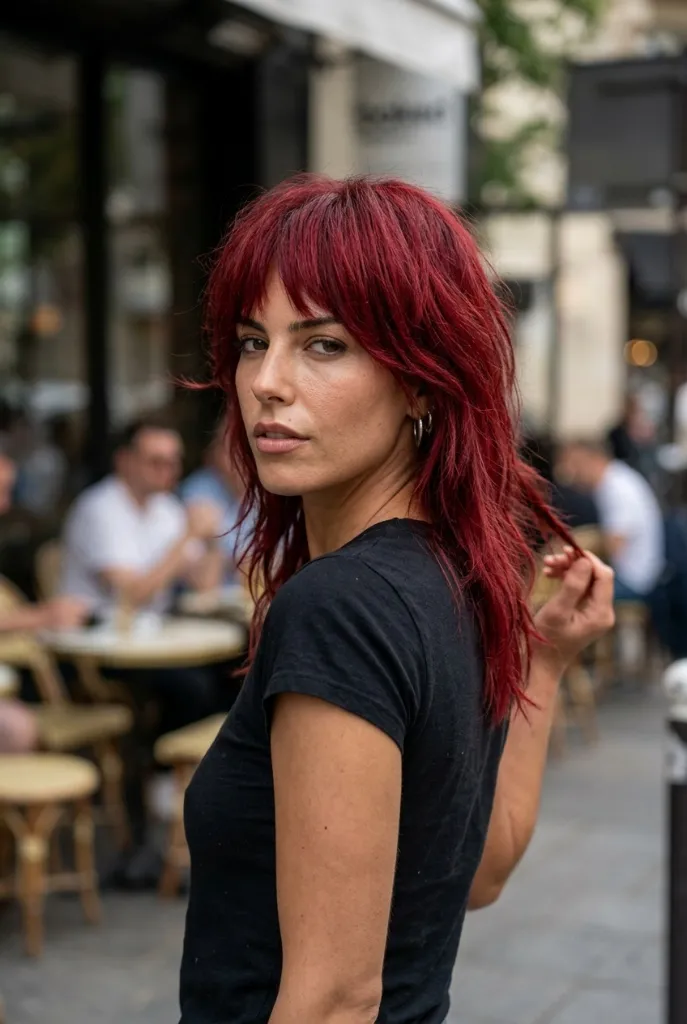
This cut lives at the intersection of a shag and a mullet — hence “shullet” — and the razored layers are what give it that deliberate messiness. The stylist uses a razor blade rather than shears to create soft, feathered ends that taper unevenly, removing weight from the interior while leaving the perimeter slightly longer in the back. It’s built for medium-to-thick hair with natural wave or texture, and the razored graduation maintained its shape for a solid 7 weeks before the layers started blending together. The crimson red here reads like a deep cherry cola with warm copper undertones catching light at the tips — not a flat, single-process red.
Styling is dead simple: scrunch a texturizing paste through damp hair, air-dry, and forget about it. You’ll need trims every 6–8 weeks because the razor-cut ends can start splitting faster than shear-cut ones — that’s the trade-off for all that movement. Razoring removes internal bulk from thick, wavy hair and creates that piecey, separated texture without thinning shears, which tend to cause frizz. Skip if your hair is fine and straight — razoring will make it look stringy and limp instead of lived-in. Controlled chaos, perfected.
2. The Icy Platinum Textured Shag
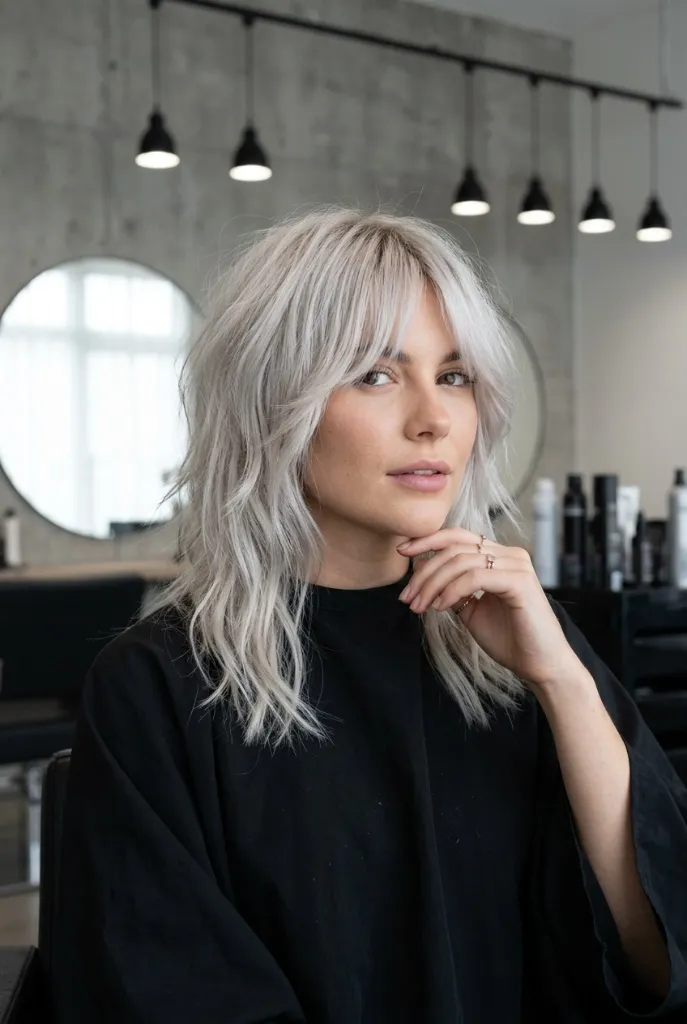
The defining move here is point-cutting through the mid-lengths and ends, which creates that soft, deconstructed silhouette without harsh weight lines. Point-cutting — angling the shears vertically into the hair rather than cutting straight across — removes weight gradually and produces feathered, tapered tips that fall naturally into each other. This works exceptionally well on medium-density, straight-to-wavy hair (1C through 2B), and the wispy curtain bangs framing the face held their shape for about 3 weeks before needing a quick snip. The color is a true linen blonde with icy, almost silver undertones — the kind that requires purple shampoo twice a week to keep from going brassy.
Blow-dry with a large round brush at the roots for lift, then let the ends air-dry for that undone finish. Maintenance is honest-to-god every 5–6 weeks for the bangs, 8 weeks for the overall shape. Point-cutting creates that effortless fall because each strand ends at a slightly different length, preventing blunt weight buildup that makes medium cuts look helmet-like. Not for anyone with very coarse or highly textured curly hair — the wispy effect won’t translate, and you’ll fight frizz constantly. The air-dry dream.
3. The Polished Brunette Blunt Lob
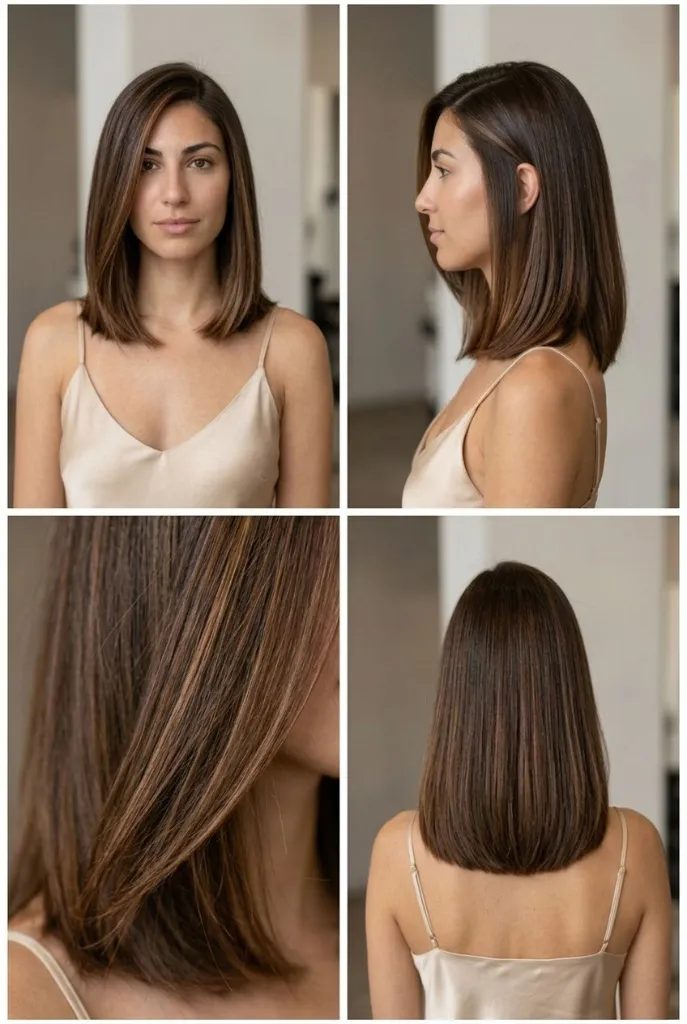
This is the opposite of everything shaggy on this list, and that’s exactly the point. The cut relies on a blunt perimeter — shears cutting a perfectly straight line at collarbone length — with invisible internal layers added through a technique called channel cutting, where thin vertical sections are removed from inside the hair to reduce bulk without touching the outline. It’s ideal for medium-to-thick, straight hair that tends to look heavy and shapeless at this length, and the clean lines stayed sharp for a full 10 weeks with zero awkward grow-out. The color is a rich syrup brunette — deep warm brown with honeyed caramel ribbons woven through the mid-lengths.
A smoothing serum and a paddle brush blowout are non-negotiable here — this cut is designed to look sleek, so if you’re after a wash-and-go situation, keep scrolling. Trims every 8–10 weeks keep the perimeter crisp. Channel cutting is what allows the hair to sit flat and swing freely rather than puffing out at the sides, because it removes density from the interior without creating visible layering. Avoid if you have wavy or curly hair and don’t want to flat-iron regularly — the blunt line will fight your natural texture. Sharp. So sharp.
4. The Mushroom Bronde Glass Lob
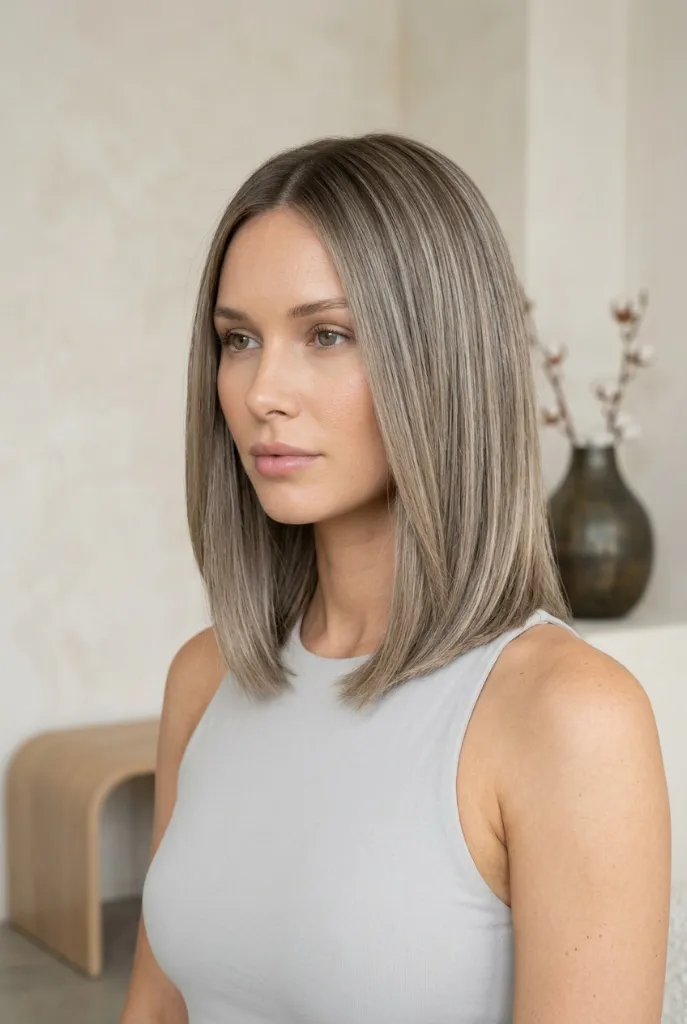
The “glass” descriptor isn’t just aesthetic — it’s structural. This cut uses dry-cutting to remove weight precisely where the stylist sees it falling naturally, creating a surface so uniform it reflects light in a single, glossy plane. Dry-cutting is done on — you guessed it — dry hair, allowing the stylist to see exactly how each section behaves rather than guessing through wet hair’s elasticity. This is precision work for fine-to-medium, straight hair, and the seamless fall it produces lasted 8 weeks before any unevenness appeared. The mushroom bronde sits in that cool-toned no-man’s-land between brunette and blonde — ashy, muted, almost smoky, with no warmth whatsoever.
You’ll want a smoothing serum applied to damp hair before blow-drying with a flat paddle brush in downward strokes, and a pass with a flat iron only if your hair has any wave. This cut is low-effort once styled but demands consistency — trims every 7–8 weeks, because any uneven growth shows immediately on a blunt line. Dry-cutting removes exactly the right amount of weight from fine hair without over-thinning, which is why the surface stays so uniform. Not for thick or coarse hair — you’d need so much internal removal that you’d lose the density that makes this cut work. Minimalism, materialized.
5. The Warm Blonde Tousled Midi
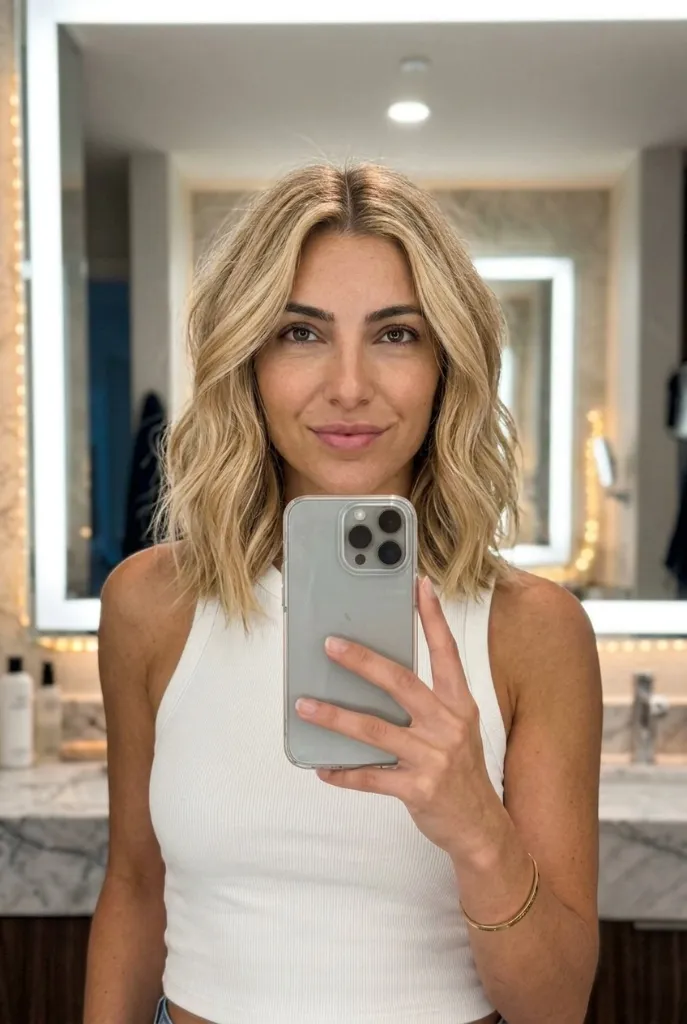
This is the cut that looks like you just came from the beach and your hair happened to fall perfectly — which is all my fine hair can handle, honestly. The technique here is slide-cutting, where the shears glide down the hair shaft at an angle rather than cutting across, creating soft, graduated ends with zero hard lines. It’s built for fine-to-medium, naturally wavy hair (2A–2C), and the tousled wave pattern held for 2 full days after scrunching without a single retouch. The color is a buttercream blonde — warm, golden, not brassy — with slightly darker roots providing dimension and that “I don’t try too hard” shadow.
Scrunch a salt spray into damp hair, diffuse on low heat for five minutes at the roots, and air-dry the rest. Trims every 8 weeks keep the slide-cut ends from splitting and losing their taper. Slide-cutting creates that gradual, almost invisible transition from thick to thin at the ends, which is why the waves look so relaxed rather than chunky or blocky. Skip if your hair is very thick or coarse — the slide-cut taper will make your ends look see-through rather than effortlessly thin. If you’re also looking at low-maintenance cuts that grow out gracefully, this is one of the best options. Effortless, truly.
6. The Jet Black Soft-Angle Bob
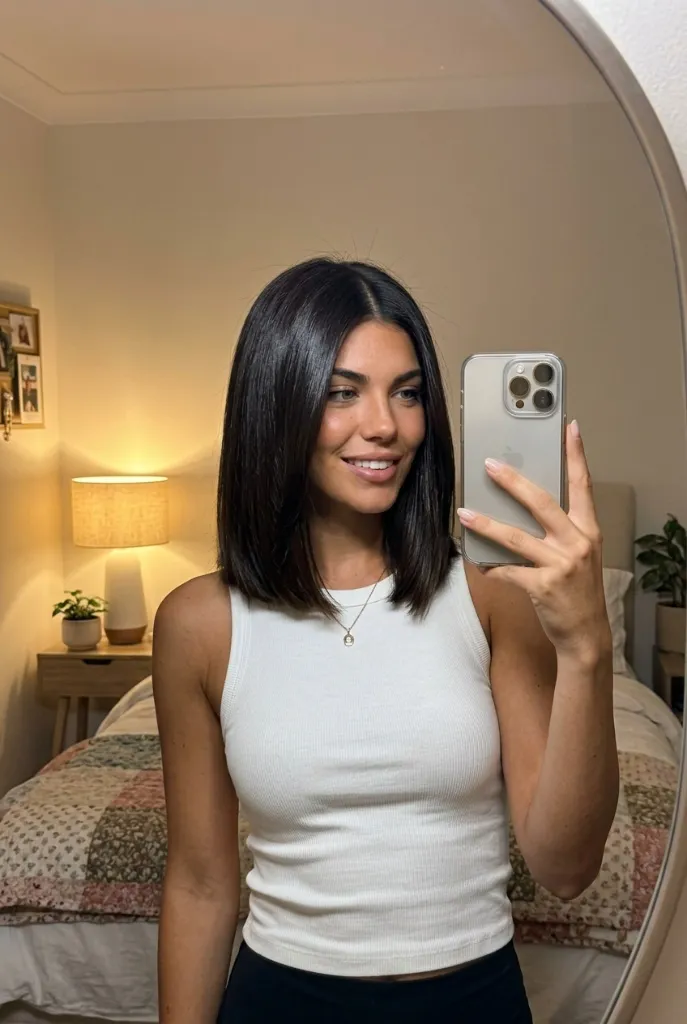
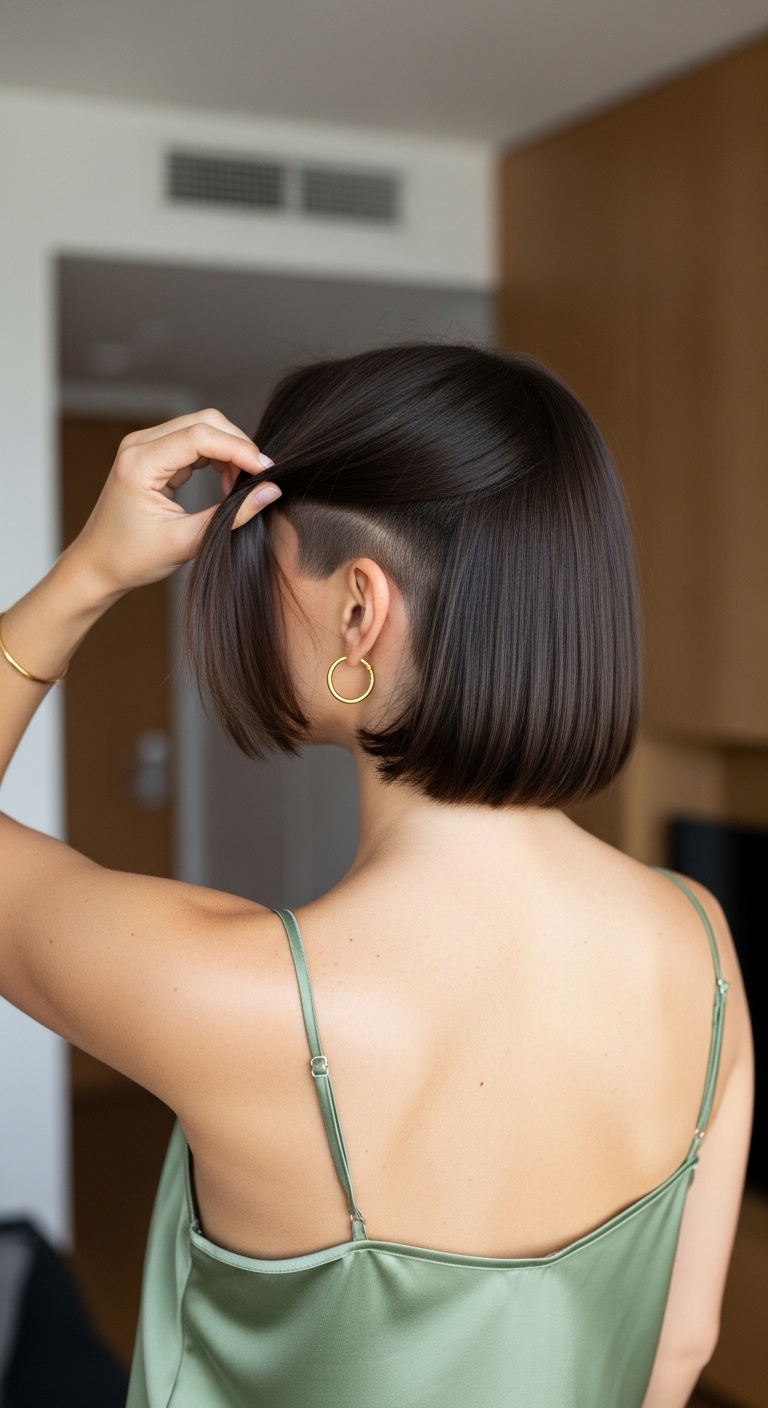
The soft-angle bob is a subtle A-line — slightly longer in the front, gradually shorter in the back — but without the dramatic swing of a traditional inverted bob. The key technique is scissor-over-comb at the nape, creating a clean, graduated back that transitions smoothly into the longer front pieces. This cut suits medium-density, straight-to-slightly-wavy hair and frames round and heart-shaped faces particularly well, with the front pieces maintaining their angled shape for 8 weeks without looking grown-out. The jet black here is a true midnight espresso — opaque, glossy, with cool blue-black undertones that make the clean lines even more graphic.
A round brush blowout with a smoothing serum gives you the editorial finish, but this also air-dries surprisingly well if your hair is naturally straight — just apply a light serum and go. Maintenance runs every 8–10 weeks for the perimeter and 6 weeks for the back graduation if you want it sharp. Scissor-over-comb graduation creates that seamless transition from the shorter back to the longer front without visible weight lines or steps. Avoid if you have thick, wavy hair — the angle will fight your natural volume pattern and flip outward instead of curving inward. Clean and deliberate.
7. The Champagne Blonde Layered Lob

This lob gets its body from long internal layers — not face-framing pieces, not curtain bangs, but layers that start well below the chin and run through the interior, creating movement you feel rather than see. The technique is called ghost layering, where sections are cut at such a gradual angle that no visible layer lines appear, but the weight reduction makes the hair behave completely differently when it moves. This is ideal for medium-to-thick, straight hair that tends to look flat and lifeless at lob length without some internal architecture. The color is champagne blonde — warm but not golden, with honeyed lowlights adding depth and preventing that “flat” single-tone look.
Style with a round brush blowout for polish, or — probably worth the consultation at least — ask your stylist to teach you a quick blowout technique for the face-framing sections only, then air-dry the rest. Trims every 8–10 weeks. Ghost layering is what separates this from a basic one-length lob: it removes enough interior weight that the hair swings and bends without looking layered, maintaining that sophisticated single-length illusion. Not for fine hair — ghost layers need density to work with, and fine hair will just look thinner. Volume, meet movement.
8. The Peach Coral Blunt Bob
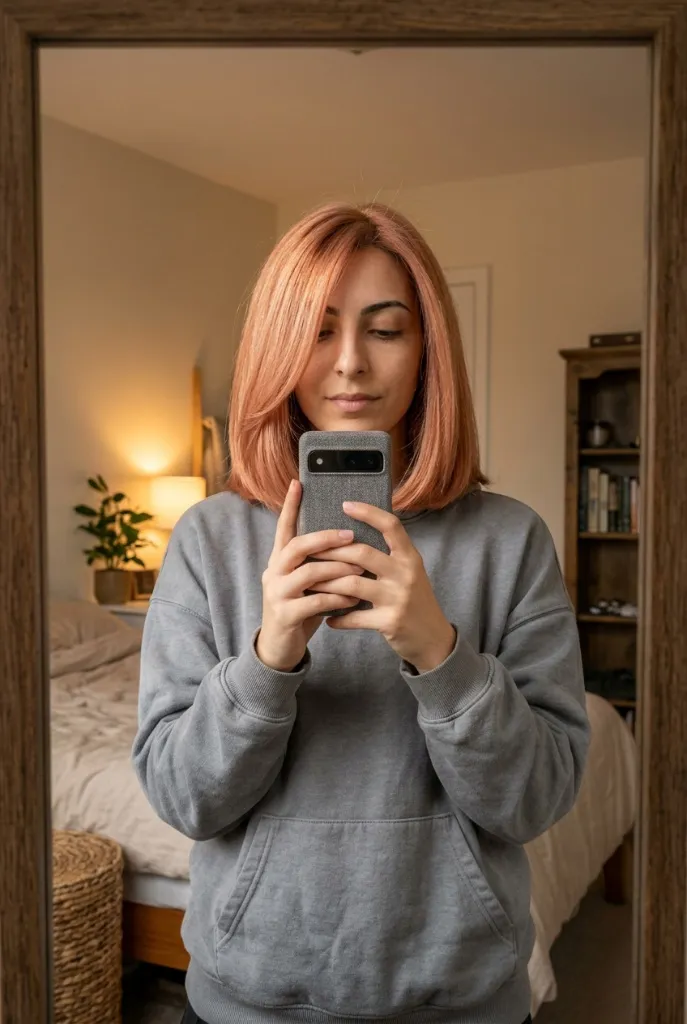
The blunt bob is the cut that refuses to be complicated, and this one commits fully to that ethos. A straight-across, zero-graduation perimeter cut at jaw-to-chin length — no layers, no texturing, no internal removal. The precision here is everything: the stylist uses shear-over-comb on wet hair to achieve a line so clean it looks machine-cut, and that precision is what makes this particular style among the most striking medium haircuts for summer 2026. It works best on fine-to-medium, straight hair, and the blunt line held its sharpness for a solid 10 weeks. The peach coral color — apricot crush with warm pink undertones — is the kind of fashion shade that softens blunt geometry and keeps it from reading too corporate.
Air-dry and done. Seriously. A smoothing serum is all you need. The entire point of a blunt bob is that gravity does the styling for you, and adding product beyond a light serum actually undermines the clean-line effect. Trims every 8–10 weeks — though with fine hair, you may go longer since the growth is less noticeable. The blunt perimeter works because it preserves every millimeter of thickness at the ends, which is why this is the go-to for anyone whose fine hair looks wispy with layers. Avoid if your hair is thick and wavy — a blunt line without internal removal will create a boxy, triangular shape. The simplest flex.
9. The Honey Wheat Curtain-Bang Shag

The shag is having its third consecutive year of dominance, and this version earns its place through disconnected layering — the shortest layers around the crown are cut independently from the longer perimeter layers, creating visible separation and volume at the top that cascades into longer, thinner ends. Disconnected layers are cut by isolating sections at different elevations and cutting them without blending, which is what produces that “big on top, soft on bottom” silhouette. This is the sweet spot for medium-density, wavy hair (2A–2C), and the curtain bangs framed an oval face for a full 4 weeks before they started poking into the eyes. The honey wheat color is warm, golden-toned, with natural dimension — no highlights needed, just a single-process tone that catches light differently depending on the wave pattern.
Scrunch a curl cream through damp hair, diffuse the roots upside down for three minutes, and let the rest air-dry. Trims every 6–7 weeks for the bangs, 8–9 for the rest — the disconnected layers actually grow out better than blended ones because they don’t collapse into each other. The disconnection between crown and perimeter layers is what creates that volume-to-movement ratio, and it’s why the shag silhouette holds even without styling. Skip if you have very fine, thin hair — the disconnected crown layers need some natural density to stand up, and without it, you’ll just look like you have a bad grow-out. Shag perfection.
10. The Auburn Copper Blowout Lob

The warmth here is intentional and structural — face-framing layers cut with a technique called C-curving, where the stylist uses curved shears to create sections that naturally turn inward at the ends, producing that blowout-flip effect without heat. C-curved layers are shaped in an arc during the cut, so the hair’s natural tension pulls the ends toward the face rather than straight down. This works on medium-to-thick, straight-to-slightly-wavy hair, and the face-framing flip held for 3 days between washes without restyling. The color is a deep auburn copper with warm chestnut undertones — not orange, not red, but that burnished, almost metallic warmth that suits deeper skin tones and looks incredible in natural light.
A round brush blowout with medium heat gives you the full effect, but even air-dried, the C-curved layers create a gentle inward bend. Maintenance is every 7–8 weeks, and this is one of those cuts where the grow-out actually looks intentional because the curve softens as it lengthens. The C-curve technique creates natural movement without relying on a curling iron, which is why the style looks “done” even on second-day hair. Not for very curly hair (3A and above) — the C-curve shaping will be completely overridden by your natural curl pattern. Warmth with intention.
11. The Sandy Blonde Beach-Wave Midi
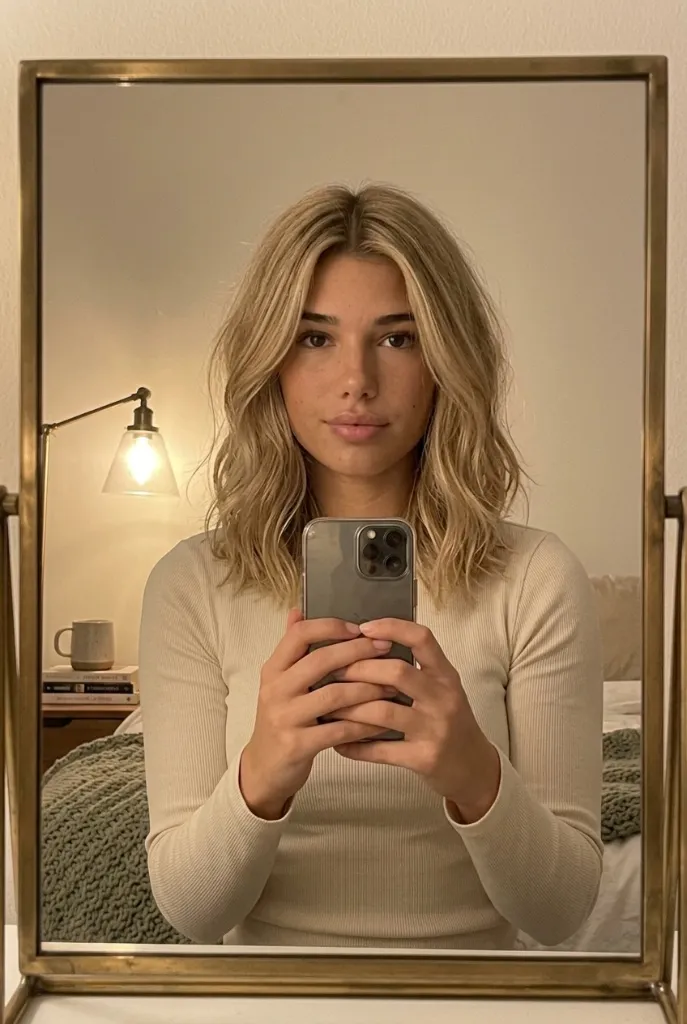
This is the haircut that launched a thousand “how do I get my hair to look like that” searches. The technique is internal thinning — using thinning shears about two inches from the roots on the interior sections only, reducing bulk from underneath while keeping the surface smooth and full. Internal thinning is invisible from the outside, but it completely changes how the hair moves and how waves form, because less weight means more bounce and definition. Ideal for thick, wavy hair that poofs up in humidity rather than forming defined waves, and the wave definition lasted a solid 2 days after diffusing. The sandy blonde is a warm, dimensional tone (my favorite kind of effortless) — not highlighted, just a lived-in base with natural sun-bleached variation.
Apply a salt spray to damp hair, scrunch upward, and either diffuse or air-dry — both work because the internal thinning has done the heavy lifting. Trims every 8–10 weeks, and this is one of the most forgiving medium cuts for summer 2026 when it comes to grow-out. Internal thinning removes the bulk that causes thick, wavy hair to expand outward instead of falling downward, redirecting the natural wave into a tighter, more defined pattern. Avoid if your hair is fine — thinning shears will make already-thin hair look sparse and see-through. Embrace the wave.
12. The Ash Brunette Layered Midi
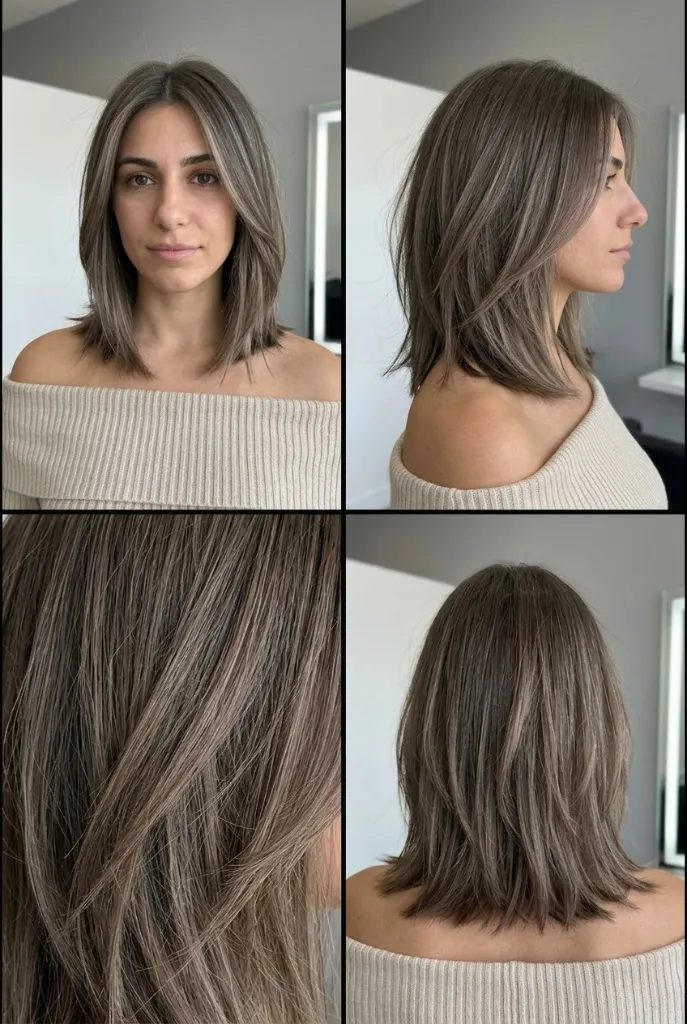
Four angles. That’s what a good layered midi should look like from every direction, and this one delivers. The layering technique is classic elevation cutting — sections are held out from the head at 90 degrees and cut to create graduated length, producing visible layers that start at the jawline and cascade to the collarbone. It’s a time-tested approach, and the reason it shows up so consistently among summer haircuts for round faces is that the jaw-length layers create vertical lines that elongate. This suits medium-density, straight-to-wavy hair, and the layered shape held beautifully for 8 weeks with minimal reshaping needed. The ash brunette color is cool-toned, with smoky undertones and the barest whisper of sandy blonde at the tips — think mushroom bronde’s quieter sister.
Blow-dry with a round brush for a polished look, or scrunch in a light mousse and air-dry for a more relaxed finish — this cut is genuinely versatile. Trims every 7–8 weeks keep the layers from losing their distinction and blending into a single length. Elevation cutting creates visible, stacked layers that provide movement at every length, which is why this midi looks good from the front, side, and back instead of only one angle. Not for very thick, coarse hair without significant internal thinning first — the visible layers can create a “Christmas tree” effect where each layer puffs outward. Versatility, earned.
13. The Apricot Crush Spiral Midi
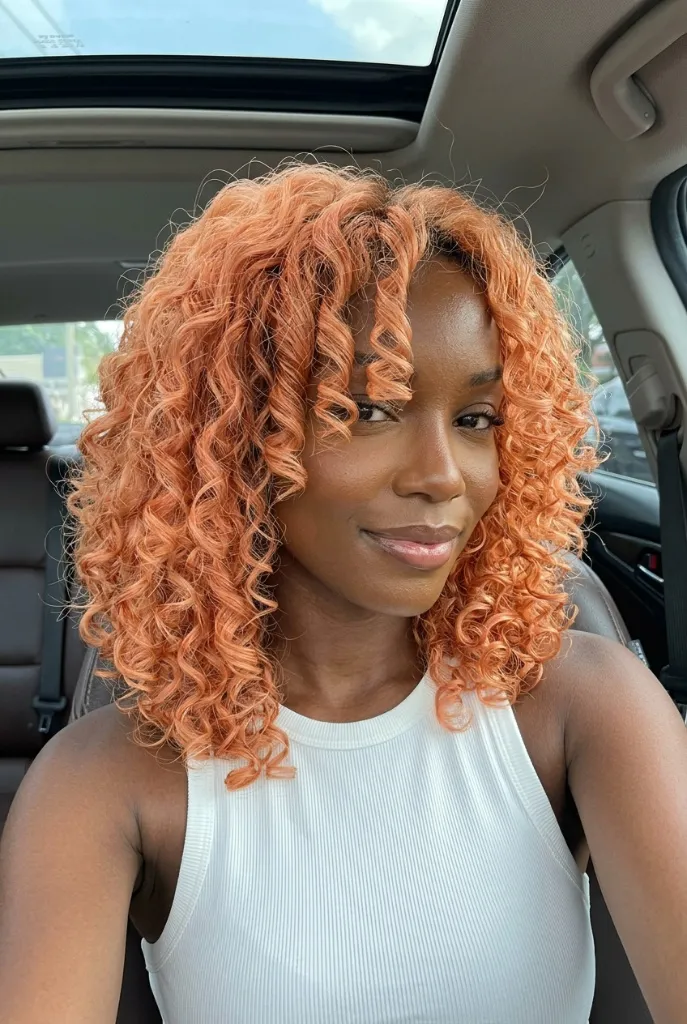
This cut celebrates curl structure rather than fighting it, and the technique — Rezo cutting, performed on dry, styled curls — is what makes the difference. Each curl is cut individually in its natural resting position, so the shape accounts for how the hair actually behaves rather than how it sits when wet and stretched. This is designed for type 3A–3C curls with medium-to-high density, and the defined spiral pattern held for 4 days with a pineapple refresh. The apricot crush color is a warm, coral-leaning orange with golden copper undertones — bold, yes, but the kind of bold that works because it harmonizes with the curl’s natural light-catching dimension.
Apply a generous amount of curl cream to soaking wet hair, scrunch gently, and diffuse on low heat with a cupped attachment — no touching the curls while drying. Trims every 10–12 weeks, and only from a stylist experienced in curly cutting, because the margin for error with visible curl shrinkage is razor-thin. Rezo cutting preserves curl integrity by never disrupting the natural curl clump, which is why the spirals look so uniform and defined rather than frizzy or triangular. Skip entirely if your hair is straight or wavy — this technique is meaningless on non-curly textures. Embrace the curl.
14. The Chocolate Caramel Butterfly Cut
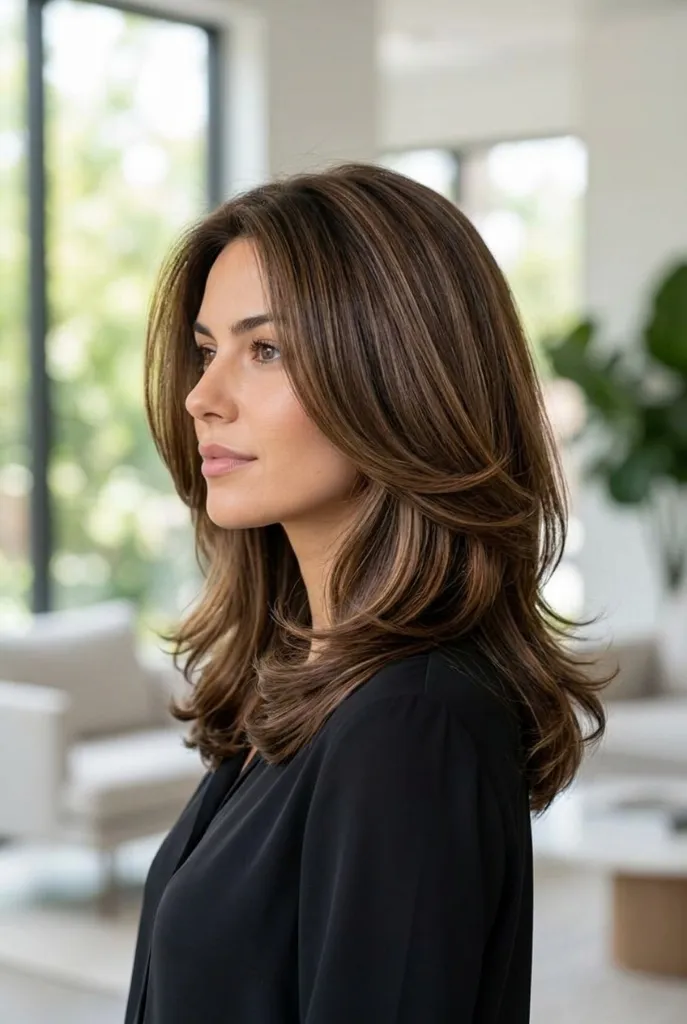
The butterfly cut is the most requested layered style of the last two years, and the reason isn’t hype — it’s engineering. The technique involves two distinct layer sets: very short, curtain-like layers around the face (starting at cheekbone length) and much longer layers through the back and sides, with virtually nothing in between. This “skip layering” creates dramatic volume at the crown and face while the length stays full and heavy. It’s the ideal medium haircut for summer 2026 for anyone with medium-to-thick, straight-to-wavy hair who wants volume without sacrificing length, and the face-framing layers held their flip for nearly 5 days between washes. The chocolate caramel color is a warm brunette — deep at the roots, with caramel and toffee ribbons emerging mid-shaft and catching light at the layered sections.
Style with a round brush blowout on the face-framing layers only — the rest can air-dry since the heavy bottom length doesn’t need direction. Trims every 8–10 weeks, focusing on the short face-framing pieces that grow out fastest. The “skip” between the two layer sets is what creates that butterfly wing silhouette — the short layers lift and frame, the long layers ground and anchor, and the gap between them creates the distinctive movement. Avoid if you have fine, thin hair — the extreme contrast between short and long layers will expose your density (or lack of it) rather than creating the illusion of fullness. The definition is everything.
15. The Midnight Espresso Glass Bob
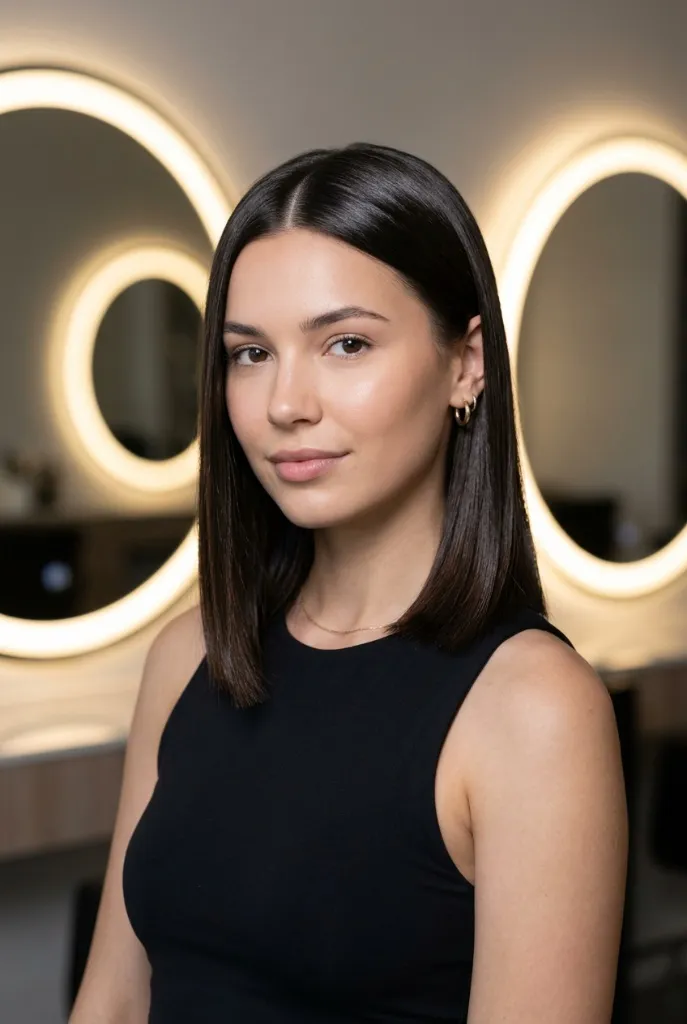
The glass bob is the precision lover’s endgame. This is a one-length, zero-layer, blunt-perimeter bob cut with wet-cutting shears on meticulously sectioned hair — each section checked against the previous one multiple times to ensure absolute uniformity. The result is a surface so flat and reflective that it genuinely looks like polished glass, and the technique demands straight, fine-to-medium hair to achieve that mirror effect. The blunt line hit just below the jawline and stayed geometric for 9 weeks — the best $30 I’ve spent on hair was a trim to maintain one of these, because the upkeep is minimal but the payoff is enormous. The midnight espresso is a cool-toned, near-black brown with the faintest blue undertone — deep, sophisticated, and intentionally monochromatic.
A flat iron on low heat and a smoothing serum are the only styling tools this cut requires — or, if your hair is naturally poker-straight, skip the iron entirely. Trims every 8–10 weeks to keep that perimeter line sharp. The one-length construction means every strand contributes to the reflective surface, which is why even one rogue layer would ruin the effect. Not for wavy, curly, or thick hair — the glass effect requires natural straightness and cooperativeness that textured hair simply won’t provide without daily heat styling. Precision, personified.
16. The Ashy Caramel Flippy Layers
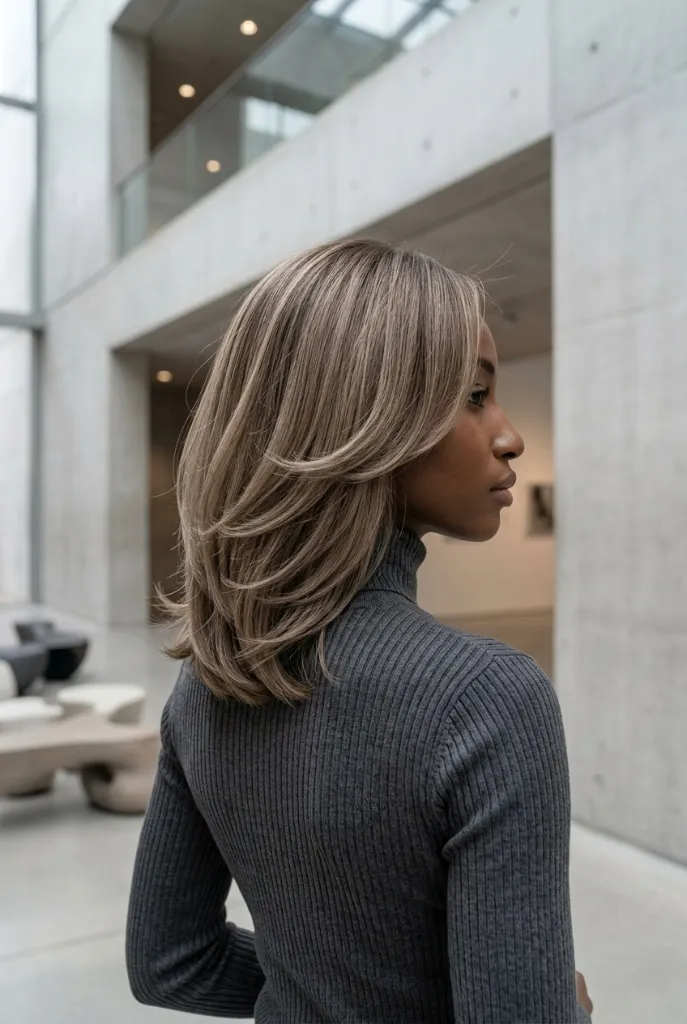
This style showcases what proper face-framing layers look like from the back — which is where most people see your hair most of the time, and where most medium cuts fall apart. The layering uses beveled cutting, where the shears angle slightly under each section as they cut, creating a natural inward-curving tendency at the ends. It’s that mechanical curl that produces the “flip” without a curling iron. This is tailored for medium-to-thick, straight hair, and the beveled flip maintained its direction for 4 days post-blowout. The color is an ashy caramel — cool-toned with sandy, almost gray-ish blonde ribbons through a warm brown base, sitting somewhere between bronde and dirty blonde. This kind of layered, shoulder-grazing cut is also a great option if you’ve been exploring summer hairstyles for plus-size women — the movement flatters universally.
Round brush blowout, large barrel, directing sections away from the head and under at the ends. A light-hold mousse before drying keeps the flip locked in. Trims every 7–8 weeks, because as beveled ends grow, they lose their angle and start to straighten out. The bevel angle is what gives the ends their natural inward tendency — it’s cut into the hair, not styled in, which is why the flip reappears even after air-drying. Skip if your hair is very fine or very curly — the bevel needs medium-to-thick, cooperative hair to hold its shape. Finally, a lob that moves.
17. The Blonde Balayage Cascading Layers
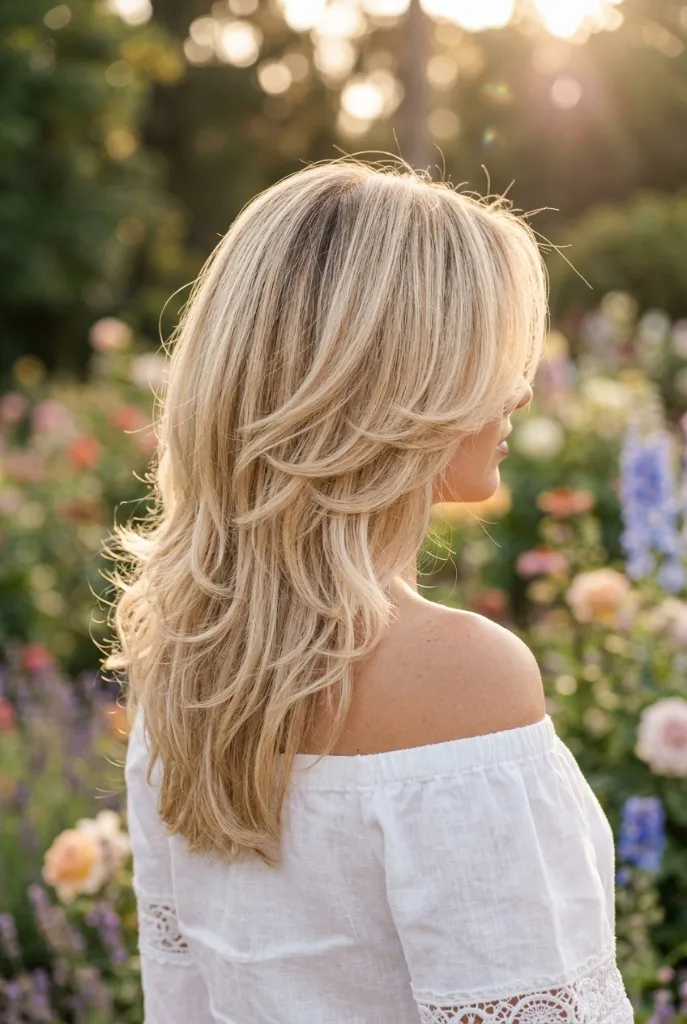
This is where medium starts pushing toward long — the longest cut on this list — and the cascading layers are what keep it from looking like shapeless long hair. The technique is traveling guide cutting, where the stylist establishes a guide at the first layer and carries it through each subsequent section, creating a continuous, waterfall-like graduation rather than stepped layers. This is designed for medium-density, straight-to-wavy hair, and the cascade created beautiful natural wave formation that lasted 3 days when scrunched with a salt spray. The blonde balayage here is a warm, buttery gradient — dark honey at the roots melting into champagne and linen blonde at the ends — with the kind of natural-looking transition that says “sun-kissed” rather than “salon-highlighted.”
Scrunch with a salt spray for a beachy finish, or blow dry with a round brush for a polished cascade. Trims every 10–12 weeks — the traveling guide creates such a gradual graduation that grow-out looks intentional for much longer than stepped layers would. The continuous graduation is what prevents the “stringy ends” problem that plagues long, layered hair, because each layer blends seamlessly into the next with no hard demarcation. Not for thick, coarse hair without significant thinning — the cascade needs a lighter density to fall gracefully rather than stacking outward. Or maybe just book the consultation and let a stylist feel your hair before committing. Romantic without trying.
18. The Brunette Balayage Textured Midi
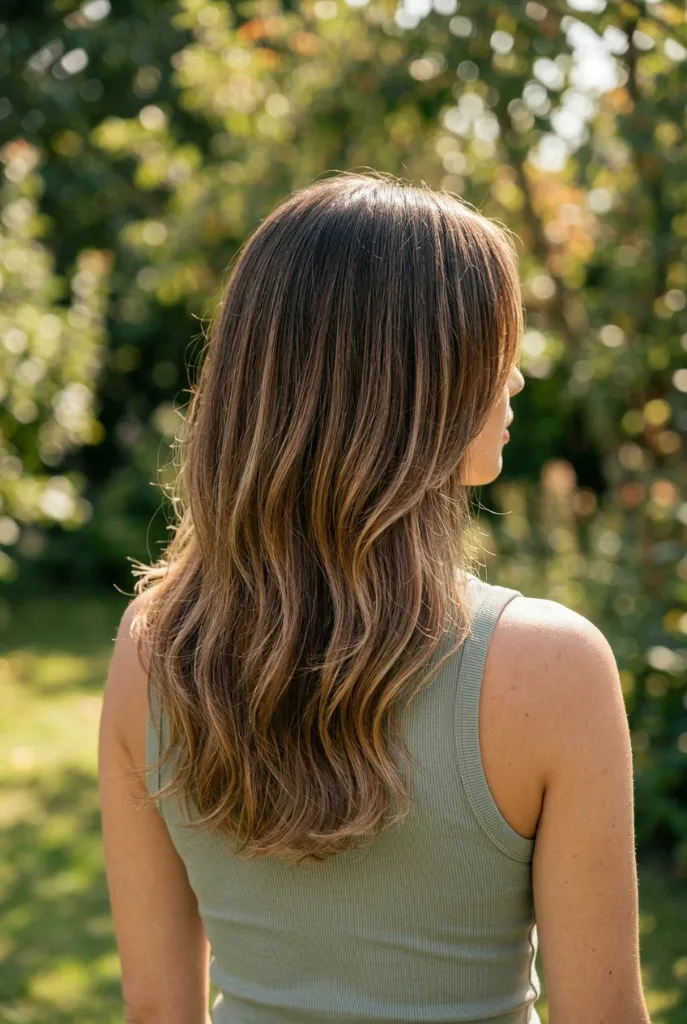
This is the workhorse of the group — the cut that doesn’t photograph as dramatically as some others but outperforms most of them in real daily life. The technique is texturizing through notching, where the stylist cuts small V-shaped notches into the ends of each section, creating irregular, piece-y tips that prevent blunt weight lines without visible layering. Notching is more subtle than point-cutting and produces a slightly chunkier, more organic texture. It works across nearly all hair types — fine, medium, thick, straight, wavy — making it one of the most adaptable medium haircuts for summer 2026. The brunette balayage features a warm base with honeyed highlights concentrated at the mid-lengths and ends, creating depth at the crown and lightness at the perimeter.
Apply a texturizing paste through dry hair for second-day definition, or scrunch a light cream through damp hair and air-dry. Trims every 8–10 weeks, and the notched ends actually grow out more gracefully than most techniques because the irregular lengths blend together rather than creating an obvious line. Notching creates texture without removing bulk, which is why it works on fine hair as well as thick — it changes the surface quality without changing the density. This cut is also worth considering alongside short summer cuts if you’re debating how much to take off. Avoid if you want a very sleek, polished look — the notched ends always read slightly undone. The everyday champion.
19. The Dark Chocolate Balayage Wave
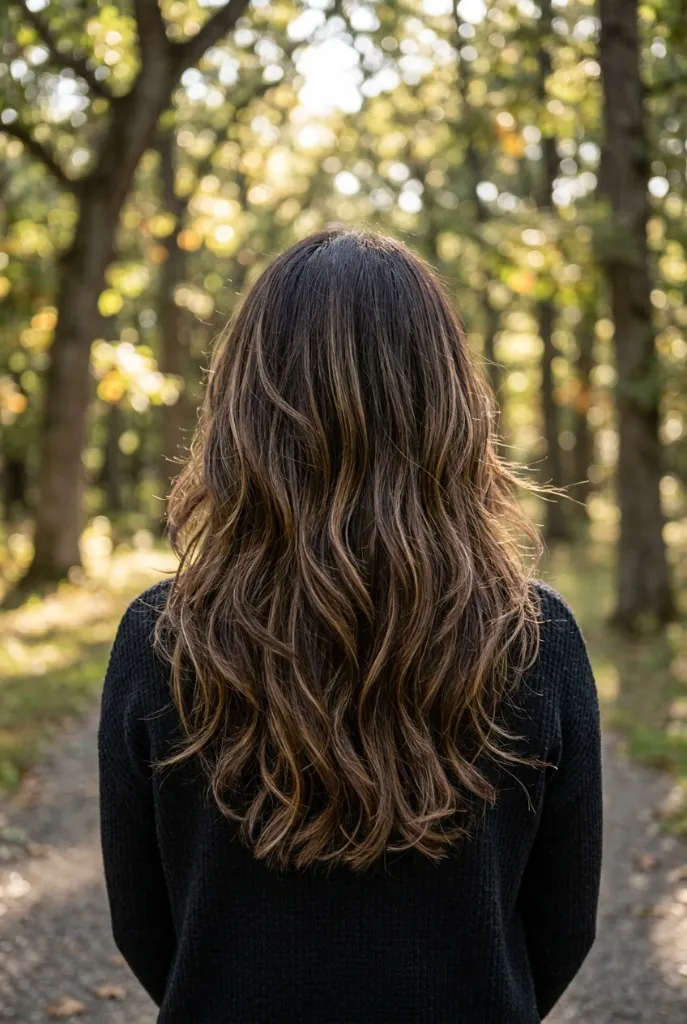
The weight of this cut sits deliberately low — long layers beginning below the shoulders — which creates that full, heavy swing at the bottom while the top stays sleek and flat. The technique is weight-line layering, where layers are concentrated at one specific length rather than distributed evenly from crown to ends, creating a pronounced “swing point” where the hair has maximum movement. This is built for medium-to-thick, wavy hair (2A–2C), and the concentrated weight held a beautiful S-wave pattern for 2 days after diffusing. The dark chocolate base has warm caramel and toffee balayage starting at the ears and intensifying at the ends — like light hitting the underside of each wave.
Diffuse on medium heat after applying a curl cream, or air-dry with a scrunching technique. Trims every 9–10 weeks — and because the layers are concentrated at one length, grow-out simply shifts the swing point lower rather than making the cut look messy. Weight-line layering creates that swinging, bouncy movement at a specific point because the hair is heaviest and fullest right at the layer line, giving gravity something to work with. Skip if your hair is fine and straight — without natural wave, the weight-line concentration just looks like an unfinished layered cut. Swing and substance.
20. The Honey Blonde Sculpted Butterfly
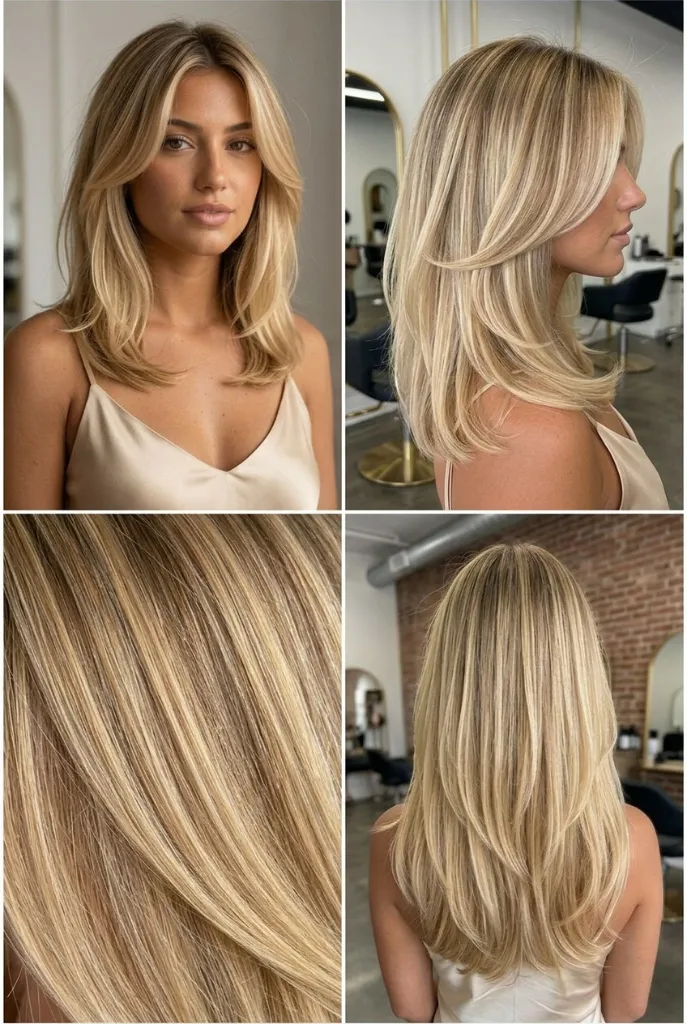
This is the butterfly cut at its most refined — where cut thirteen on this list embraced the chocolate-toned warmth, this version goes full sun-drenched and sculpted. The face-framing layers here are razor-cut rather than shear-cut, producing softer, more feathered ends that blend into the curtain bang seamlessly, while the longer back layers maintain a blunt perimeter for weight and swing. The combination of razored short layers and blunt long layers — a technique sometimes called hybrid layering — creates that signature butterfly silhouette with slightly more polish and less bohemian energy. This suits medium-density, straight-to-wavy hair and is particularly flattering on oval and heart-shaped faces, with the face-framing pieces holding their shape for a solid 5 weeks. The honey blonde is warm, golden, and deeply dimensional — with buttercream highlights and toffee lowlights creating a multi-tonal effect that changes with every head turn. If you’re tracking the latest short haircut options alongside medium lengths, comparing the two might help clarify your ideal length.
Blow-dry the face-framing layers with a medium round brush for lift and flip, then let the back air-dry or hit it with a flat brush for smoothness. Trims every 7–8 weeks, with the razored front pieces needing attention first. Hybrid layering — razored short layers combined with a blunt long perimeter — creates maximum contrast between the voluminous top and the weighty bottom, which is mechanically why the butterfly cut produces more drama than a standard layered cut. Not for coarse, curly hair — the razored face-framing layers will frizz, and the blunt back will fight your curl pattern. Even if you’re figuring out what to ask for at the salon — regardless of who the cut is for — knowing these technical terms gives you a head start. Summer’s best silhouette.