
Table of Contents
Low tension braids are the standard I’m carrying into spring 2026, and honestly, I wish I had gotten serious about them sooner.
Last April, I sat in my stylist’s chair with a knot in my stomach. I had started noticing that my edges looked thinner than they did six months earlier, and deep down I already knew why. I had spent most of winter in gorgeous, tight, photo-perfect braids that looked amazing on camera and felt awful in real life. My stylist looked at me through the mirror and said, “Pretty shouldn’t have to hurt.” That line stayed with me.
Since then, I’ve changed the way I think about protective styling completely. I still want braids that are beautiful, polished, and worth booking. But I also want low tension braids that let me sleep comfortably on night one, move my eyebrows without pain, and take my style down without seeing my edges on the bathroom sink.
That’s exactly what this guide is about: the low tension braids that actually work in spring 2026, the styles I personally think are worth the appointment, and the ones I’m skipping because the damage-to-beauty ratio just isn’t worth it.
If you’re also planning the rest of your seasonal hair lineup, this pairs naturally with my guide to easy spring hairstyles 2026 and my roundup of spring hairstyles for Black women 2026.
Why Low Tension Braids Matter More in 2026
The conversation around traction alopecia has changed in a big way, and that change is overdue. For a long time, a lot of us were told that pain was normal, soreness would pass, and a tight install just meant the braids would “last longer.” But repeated tension on the scalp and hairline can lead to traction alopecia, and both dermatology guidance and medical reviews keep pointing to tight hairstyles as a major risk factor. A detailed review published in PubMed Central notes that traction alopecia affects about one-third of women of African descent who wear traumatic hairstyles over time, especially styles with chronic pulling and added weight PubMed Central.
That number stuck with me because it turns edge loss into something more than a beauty complaint. It becomes a real hair-health issue. The good news is that low tension braids in 2026 are not boring compromise styles. They are lighter, prettier, more versatile, and much easier to wear than the “safe” braid options many of us were offered a few years ago.
The Cleveland Clinic also notes that traction alopecia happens when hair is repeatedly worn in tight hairstyles for long periods, damaging the follicles over time Cleveland Clinic. In other words, protective styling only counts as protective when it protects.
The Best Low Tension Braids for Spring 2026
Knotless Box Braids
Knotless box braids are still the queen of low tension braids, but only when the actual installation matches the label.
That distinction matters more than people admit. I learned the hard way that “knotless” on the booking page does not automatically mean “gentle” on your hairline. If a stylist uses too much feed-in hair too early, braids too tightly at the root, or overloads the length, the result can still be scalp pain and unnecessary tension.
For spring 2026, the sweet spot is medium-to-large knotless braids in a lightweight braiding hair. I especially like lengths from shoulder to waist, but I personally think mid-back is the most practical if you’re trying to stay truly edge-friendly. Low tension braids should feel wearable, not like you’re carrying your hairstyle around your neck.
If you’re comparing lengths, my post on medium-length hairstyles that actually work is a helpful companion because mid-length braid styles tend to hit the sweet spot for both movement and comfort.

Alt text suggestion: Low tension braids in warm caramel brown knotless box braids at a spring brunch table
What I’d personally book tomorrow is a warm caramel brown set of medium knotless braids with a soft, flexible base and no pulling along the perimeter. If your scalp hurts on day one, they are too tight. I don’t care how pretty they look in the mirror. We are done pretending pain is part of the process.
Boho Knotless Braids
Boho knotless braids are the spring 2026 mood, and if I had to pick one low tension braids style that feels romantic, photogenic, and actually wearable, this would be it.
The loose curly ends soften everything. The finish looks lighter. The whole style reads effortless in a way that classic box braids sometimes don’t. I wore a set to a spring engagement party recently and got more compliments than I’ve had with almost any other braid style.
One reason boho knotless braids work so well as low tension braids is that the loose texture makes the style feel airy instead of dense. You still need a good stylist and good hair, though. Cheap curly hair gets rough fast, tangles at the ends, and can turn a beautiful install into a frustrating maintenance project.
My favorite color direction for spring is black-to-auburn ombré or a rich chocolate brown. If you’re dressing for events, showers, or garden weddings, this style also pairs beautifully with my roundup of spring wedding hairstyles 2026.

Alt text suggestion: Low tension braids in black to auburn boho knotless braids with loose curly ends on a spring sidewalk
For me, boho knotless braids are proof that low tension braids do not have to look plain. They can be soft, glamorous, feminine, and still kind to your edges.
Goddess Locs
Goddess locs deserve much more credit in the low tension braids conversation.
When they are installed with the right base, especially a crochet or wrap method instead of a tightly braided three-strand base, they can feel incredibly light. That featherlight effect matters if you already know your temples, nape, or hairline are sensitive.
For spring 2026, I love goddess locs in shorter lengths. Shoulder or collarbone length feels fresh, stylish, and so much easier on the scalp than extra-long locs. The shorter silhouette also gives them a clean seasonal feel that works beautifully with jackets, open necklines, and lighter spring outfits.
If you like braid and loc styles that transition well into warmer weather, this also connects nicely with my post on hairstyles that work in both spring and summer.
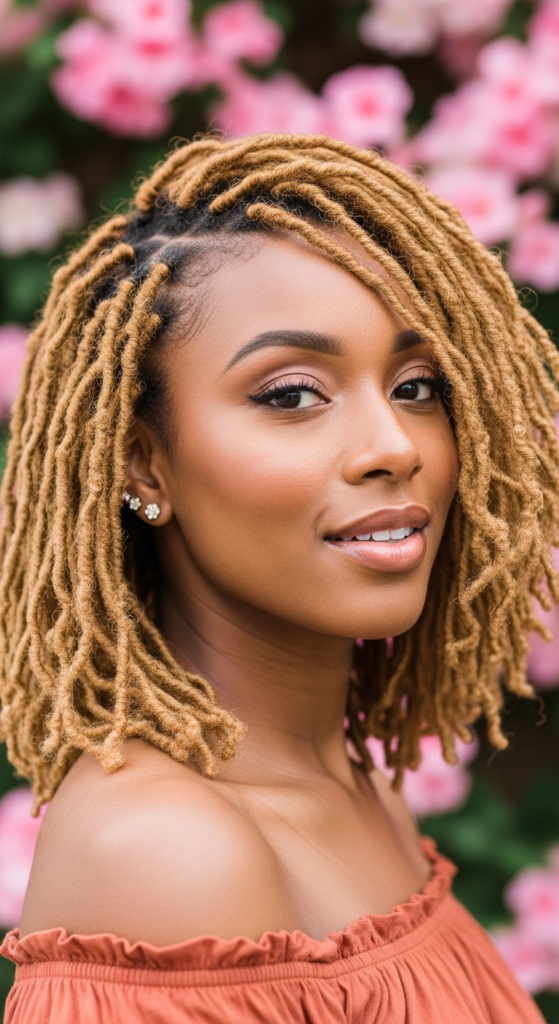
Alt text suggestion: Low tension braids in honey blonde shoulder-length goddess locs with soft curly tendrils
One tip I always give now: ask your stylist about the base before you sit down. If they are still planning to grip the root tightly and build the whole style from a firm braid, I’d reconsider. Low tension braids start at the foundation, not just the finished look.
Jumbo Knotless Braids
Here’s my slightly controversial spring opinion: jumbo knotless braids are wildly underrated.
A lot of people overlook them because they seem too simple compared to smaller braids or more intricate feed-in work. But from a comfort standpoint, jumbo knotless braids are some of the most practical low tension braids you can get. Fewer braids usually means less pulling, shorter install time, and less overall strain on the scalp.
They are also ideal if you’re newer to protective styling or you’re actively trying to let your edges recover. You can get the style done quickly, style it in easy updos, and avoid sitting under tension for six to eight hours just to end up sore.
I especially love jumbo knotless braids in a sleek half-up, half-down look with a blazer, gold cuffs, or a silk scarf detail. They look polished without looking overworked. For more braid inspiration in that same easy-but-put-together lane, you can also link this section to spring braided hairstyles 2026: neutral, cute, easy braid ideas.
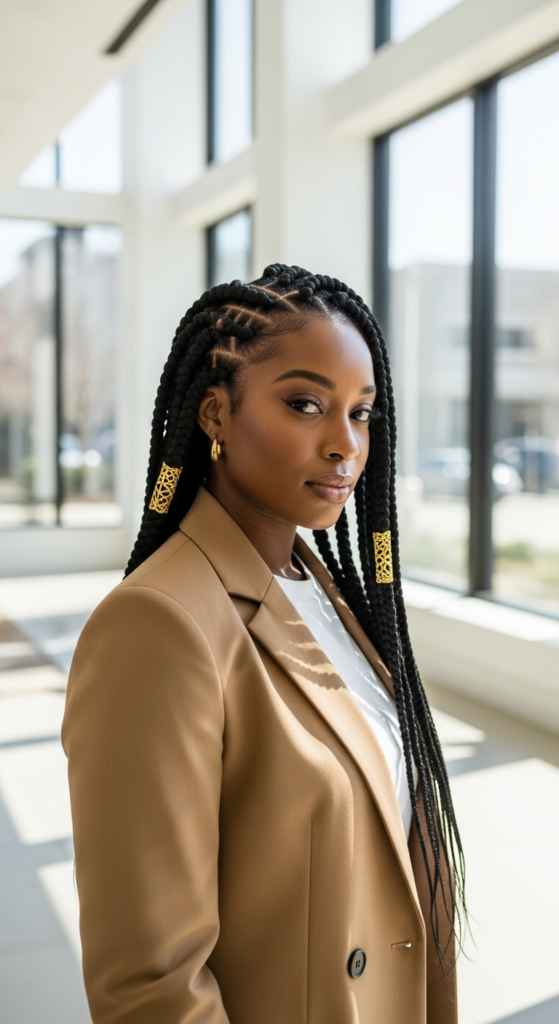
Alt text suggestion: Low tension braids in jet black jumbo knotless braids styled half up half down in a modern office lobby
If you want low tension braids that look elevated but feel forgiving, this is one of the best places to start.
Flat Twists and Twist-Outs
Not every protective spring style needs extensions, and I think that reminder matters.
Sometimes the healthiest low tension braids choice is the one that does not add any extra hair at all. Flat twists across the crown with loose twist-out ends are one of my favorite no-extension options because they deliver shape, texture, and definition without the extra weight that often causes trouble.
They are also perfect when your scalp needs a real break. No added extension hair. No heavy length. No constant swing pulling at your nape. Just your own hair, twisted neatly, moisturized properly, and styled in a way that still feels pretty.
This is also a great area to naturally link to effortless spring hairstyles 2026 because flat twists sit right at that intersection of low-maintenance and polished.

Alt text suggestion: Low tension braids inspired flat twists with curly ends at a spring farmers market
I love doing six larger flat twists from front to back, keeping the ends moisturized, and then unraveling the style a few days later for a soft twist-out. It feels like getting two looks out of one low tension braids routine, and that kind of versatility is exactly what I want from spring hair.
Spring 2026 Braid Colors That Actually Work
Color can completely change the feel of low tension braids, and spring 2026 has some beautiful options that feel modern without being high maintenance.
The standout shade for me is muted copper. Not bright orange. Not overly red. Think warm penny, softly burnished in sunlight. It catches natural light beautifully and gives braid styles dimension without overwhelming the face.
I’m also loving dark cherry cola, soft ash brown with brighter face-framing pieces, and mostly black braids with a few burgundy accents scattered throughout. That last option is especially good if you want a little personality without committing to a full color shift.
What I would personally skip again this season is platinum blonde all-over braids. They can be stunning in photos, but in real life they often feel drier, tangle faster, and photograph harsher than expected.
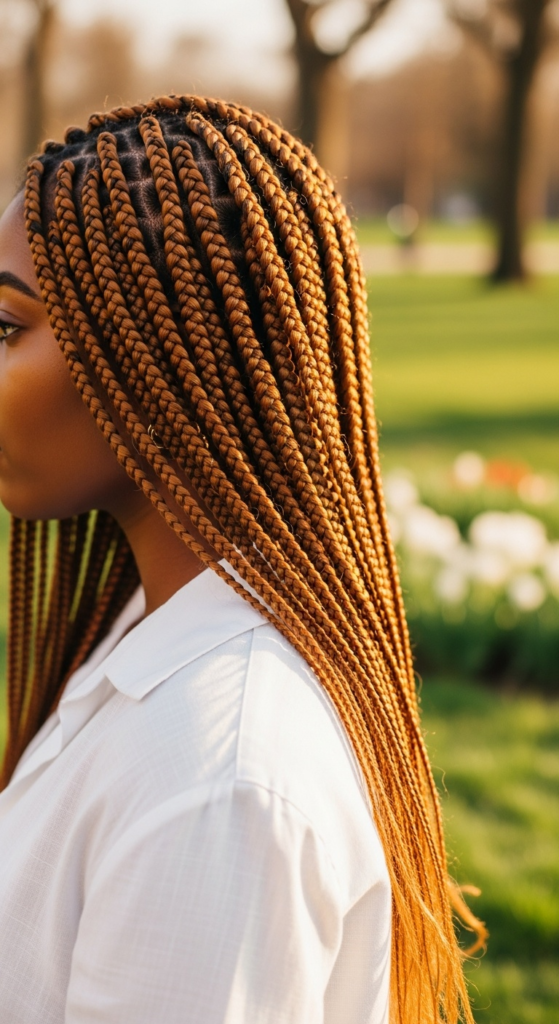
Alt text suggestion: Low tension braids in muted copper knotless braids glowing in spring golden hour light
If you want a color refresh without extra drama, low tension braids in muted copper or deep brown-red tones are easily the prettiest bet for spring.
How to Protect Your Edges During Any Braid Install
The style matters, but the routine matters just as much. Even the best low tension braids can become a problem if your install habits and aftercare are careless.
Keep the Hairline Loosest
Your edges should be the loosest part of any braid install. Always.
That is now my non-negotiable. I say it before the appointment starts, I repeat it during the install, and I check it again once the front is finished. If I raise my eyebrows and feel pulling, something is too tight. That “eyebrow test” has saved me more than once.
The American Academy of Dermatology warns that hairstyles that pull can lead to hair loss, which is exactly why the perimeter should never be the most stressed part of the style American Academy of Dermatology.
Oil Your Edges Nightly
I keep a small bottle of oil by my bed because if it isn’t visible, it’s easy to forget.
A light nightly oiling routine helps me stay consistent and keeps my edges from feeling dry or brittle while I’m in braids. It is not a magic fix for overly tight installs, but it does help support healthier, less fragile hair around the hairline.
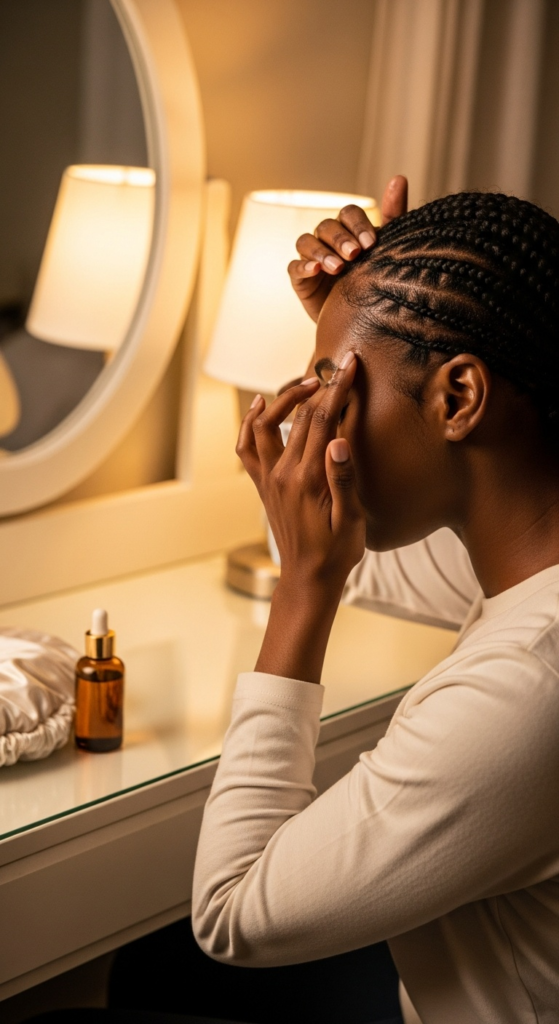
Alt text suggestion: Low tension braids self-care routine with oil being applied along the hairline and edges
For me, this is less about fancy products and more about habit. A simple nightly routine goes a long way when you’re wearing low tension braids regularly.
Don’t Leave Braids in Too Long
This one is hard because I know how tempting it is to stretch a style.
You paid for the install. It still looks decent at week five. Maybe even week six. But once the new growth starts matting at the root, takedown gets rough, and that is when breakage tends to show up.
The medical review on traction alopecia emphasizes that early intervention and stopping traumatic styling matters because prolonged tension can shift from reversible damage to more permanent loss over time PubMed Central. That is why I think four weeks is often the low tension braids sweet spot, with five only if your scalp is genuinely thriving.
The Braid Styles I’m Skipping This Spring
I promised honesty, so here it is.
I’m skipping micro braids this spring. I understand the nostalgia. I understand the beauty. I also understand the install time, the tiny sections, the weight distribution, and the marathon takedown. For me, they simply do not belong on a list of recommended low tension braids.
I’m also cooling off on ultra-long styles. Hip-length and longer braids are gorgeous, but constant weight pulling downward can be rough on the nape and hairline over time. I’d rather keep things between shoulder and mid-back this season and protect my scalp than chase a dramatic length I know I’ll pay for later.
Cornrow styles with heavy feed-in extensions are another pass for me personally. I respect the artistry. Some of those looks are incredible. But if your scalp is sore, your body is giving you information, and I’m done ignoring that information.

Alt text suggestion: Low tension braids alternative in medium dark chocolate knotless braids at a spring botanical garden
If you need a style that also works with seasonal events like ceremonies and celebrations, it may help to cross-link here to what hairstyle works best under a graduation cap, especially if you want lower-profile styles that won’t press awkwardly under a cap.
How to Talk to Your Stylist About Tension
This part matters more than any Pinterest photo.
A lot of us have sat in a salon chair feeling that a braid was too tight and said absolutely nothing because we didn’t want to be awkward, difficult, or disruptive halfway through a service. I’ve done that too. But good stylists would rather hear your concern in real time than have you go home uncomfortable and come back with thinning edges later.
A simple sentence is enough. “Could you go softer at the front?” works. “This one feels a little snug, can we redo it?” works. “I need low tension braids because I’m protecting my edges” definitely works.
The best stylists are not offended by clarity. They appreciate it.
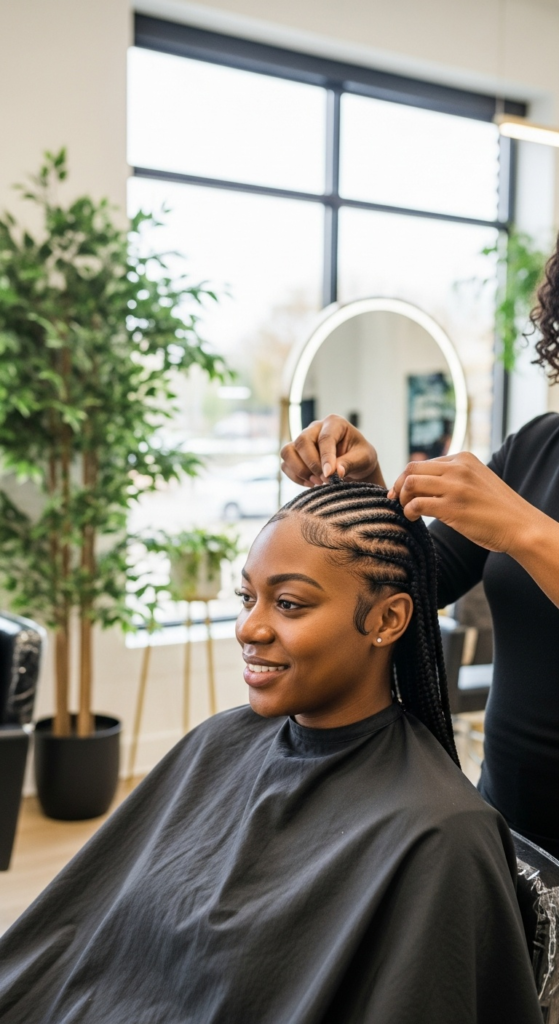
Alt text suggestion: Low tension braids salon moment with a stylist gently braiding near the hairline
If a stylist advertises gentle tension, scalp-friendly installs, or edge-conscious braiding, that’s a green flag worth paying attention to. Low tension braids begin with the hands that install them.
My Actual Spring 2026 Braid Rotation Plan
Because yes, someone always asks.
My spring rotation is built around variety because that’s what finally helped my edges start recovering. I’m not wearing the same size, same parting, same weight, and same install method back to back for months anymore. Rotation matters.
Late March into mid-April, I’d start with medium boho knotless braids in a deep brown with auburn ends. That gives me something soft and pretty for the first real stretch of spring. After takedown, I’d take a rest week and then move into jumbo knotless braids in natural black for May. They’re easy, practical, and still polished enough for work, brunch, and weekend plans. For early summer, I’d finish with either shoulder-length goddess locs or a flat-twist set depending on how my hair feels.
That rotation keeps me from stressing the exact same points on my scalp over and over. It also keeps low tension braids feeling intentional instead of automatic. Switching the part, the size, the density, and the extension load makes a real difference over time.
Final Thoughts
If there is one thing I want this whole piece to communicate, it’s this: low tension braids are not a niche preference anymore. They are the standard.
You should not have to choose between a hairstyle you love and the edges you want to keep. You should not have to accept pain as proof that a style will last. You should not have to wince on the first night and call it beauty.
That’s why I care so much about this now. I ignored the signs for too long: the soreness, the bumps, the breakage, the baby hairs that stopped growing back the way they used to. I’m listening now. And the low tension braids I choose in 2026 are all filtered through one question: will this style still feel kind to my scalp after the photos are taken?
That question has changed everything.
If you’re going into spring wanting fresh hair, soft edges, and styles that actually support your hair goals, there are more than enough beautiful options available right now. Low tension braids can absolutely be elegant, current, versatile, and worth the booking. They can also let you sleep, smile, and touch your temples without regret.
And honestly, that’s the new luxury.
Alt text suggestion: Low tension braids final spring portrait with fresh medium knotless braids and a warm balcony glow
Go get braided. Just be gentle with yourself.
— Stella x