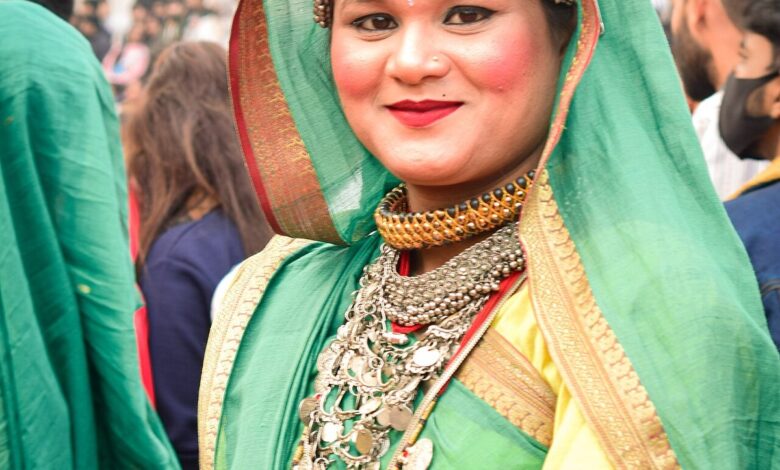
The ninth and final day of Navratri falls on Monday, October 19 this year, and its colour is peacock green, worn in honour of Maa Siddhidatri. Peacock green is the richest colour of the nine nights: a blue-green that sits between teal, turquoise and emerald, shifting with the light the way a peacock feather does. It flatters gold and silver jewellery equally, photographs beautifully after dark, and gives the festival a jewel-toned closing note after the calm grey of day seven. If you have saved your most striking outfit for the last night, this is the colour to spend it on.
The ten looks below run from a traditional emerald set with layered silver jewellery to teal tailoring, satin and sequins, so you can match day nine to your own plans, whether that is a morning puja, a full evening of garba or a closing celebration with friends. If you are dressing the complete festival, these Navratri outfit ideas for nine nights of dandiya set the wider plan, the colour before this one is covered in these grey outfit ideas for Navratri day seven, and the deeper green register appears in these festive green outfit ideas for Navratri.
1. The Emerald Traditional Set with Layered Silver Jewellery
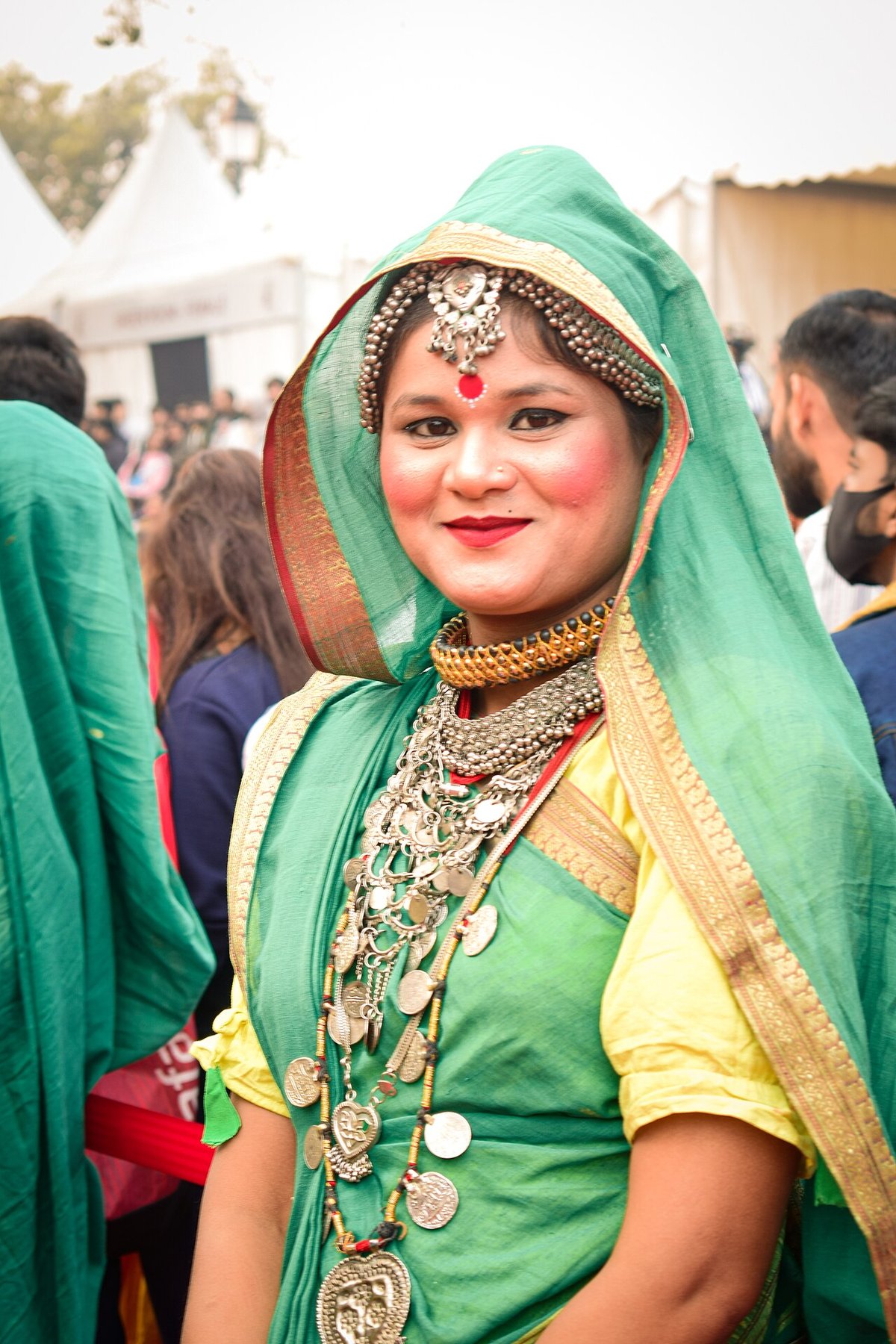
Photo credit: Mahi zahidi via Wikimedia Commons (https://commons.wikimedia.org/wiki/File:Silver_whispers_and_emerald_folds_she_carries_the_elegance_of_the_hills,_like_a_living_heirloom_of_heritage.jpg) (CC BY-SA 4.0)
Begin day nine in the register the festival itself suggests: an emerald traditional set worn with a soft mint dupatta and silver jewellery layered with intent. The deep green base carries the peacock tone, the paler dupatta lifts it the way the pale eye of a feather lifts the dark plume, and the stacked silver necklaces, maang tikka and bindi supply the ceremony. This is the look for the morning puja and the family photographs, formal without a single sequin. Keep your blouse in the same green family rather than a contrast colour, so the jewellery stays the brightest element. Choose silver with an oxidised finish for depth against the green. The principle: anchor peacock green in tradition first, and let layered silver do the shining.
2. The Deep Teal Tailored Suit for a Polished Day Nine
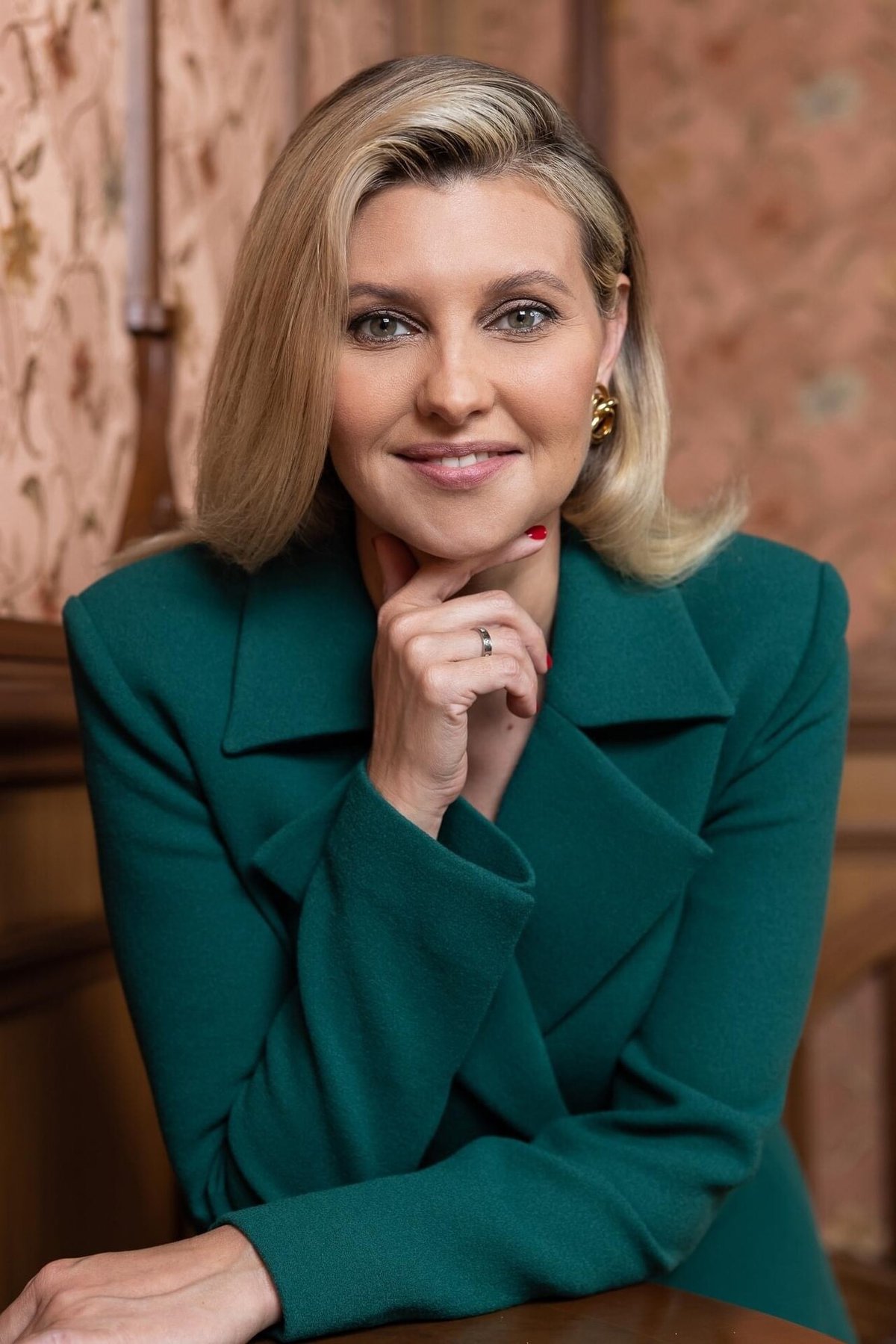
Photo credit: Office of the President of Ukraine via Wikimedia Commons (https://commons.wikimedia.org/wiki/File:Olena_Zelenska_2021.jpg) (CC BY 4.0)
If day nine begins at a desk, a deep teal suit is the most polished way to wear peacock green. This tailored jacket, with its wide lapels and clean single-breasted line, holds the darkest, bluest end of the peacock family, so it reads formal in daylight and jewel-like under evening light. Wear it as a full suit for a composed silhouette, or split it: the jacket over a plain kurta or a simple dress takes you from office to pandal without a costume change. Gold studs or small jhumkas warm the teal, and a dark bindi marks the occasion. Choose tailoring with enough structure to keep the lapels crisp all day. The principle: take peacock green to its darkest teal end, and tailoring turns festive.
3. The Emerald Satin Cape Gown for the Closing Night
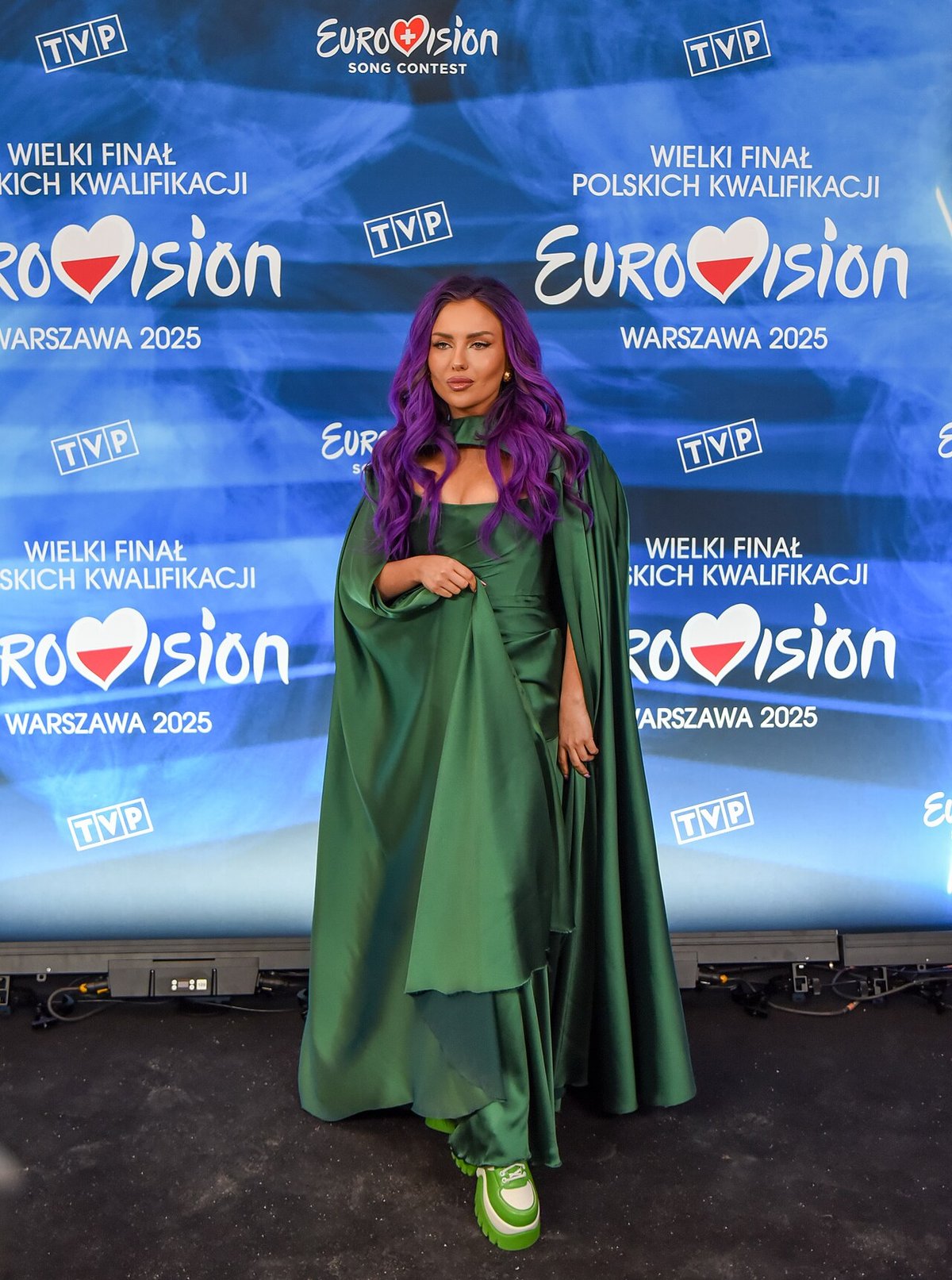
Photo credit: Wojciech Pędzich via Wikimedia Commons (https://commons.wikimedia.org/wiki/File:Daria_Marx,_ESC_2025_PL_preselections_08.jpg) (CC BY 4.0)
For the final aarti and the closing celebration, an emerald satin gown with cape sleeves gives peacock green its most dramatic form. The fluid satin falls to the floor in one unbroken column, while the cape panels move behind your arms as you walk, so the outfit has motion even when you are standing still. Satin is the right fabric for this colour because its sheen recreates the feather effect, green in shadow and brighter blue-green where the light lands. Keep jewellery gold and minimal, a pair of drops and nothing at the neck, so the neckline and the cape stay clean. Wear your hair down to soften the formality. The principle: when the night is the finale, let satin and a cape carry peacock green.
4. The Turquoise Empire-Waist Dress for Garba Movement
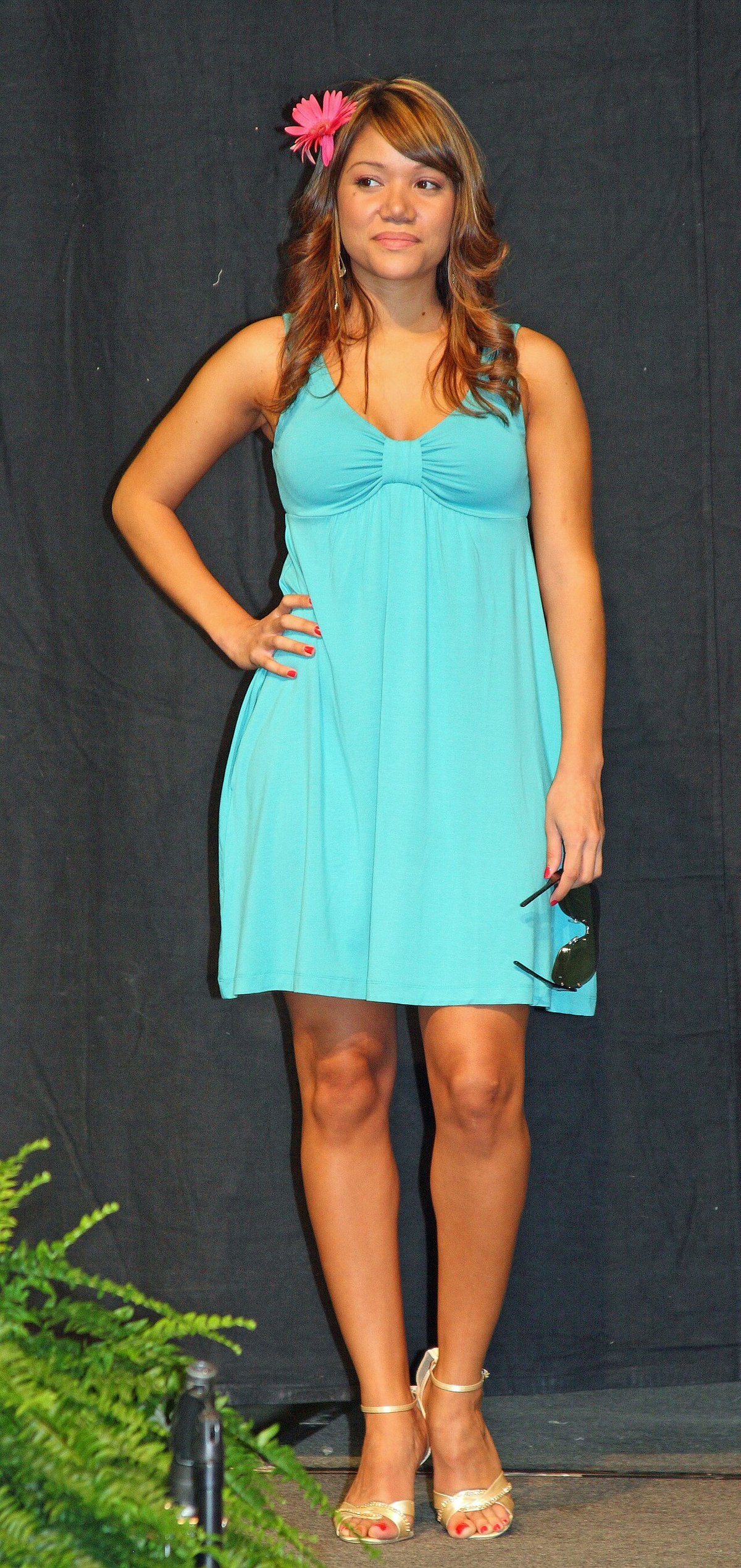
Photo credit: Frank Kovalchek via Wikimedia Commons (https://commons.wikimedia.org/wiki/File:2010_Run_to_the_Sun_Fashion_Show_in_Anchorage_Alaska_10.jpg) (CC BY 2.0)
Turquoise is the brightest note in the peacock family, and an empire-waist dress is its most danceable shape. The gathered bodice sits high, the skirt falls free from just below the bust, and nothing at the waist restricts your breathing or your turning through a long garba set. This runway version keeps the skirt at knee length, which is practical for crowded floors and quick footwork. Add flat juttis or low block heels, a stack of green and gold bangles, and your hair tied back with one loose strand for softness. If the evening turns cool, a short gold-bordered shrug keeps the colour story intact. The principle: raise the waist, free the skirt, and turquoise becomes a dancing colour.
5. The Teal Sequin Skater Dress for Festival Sparkle
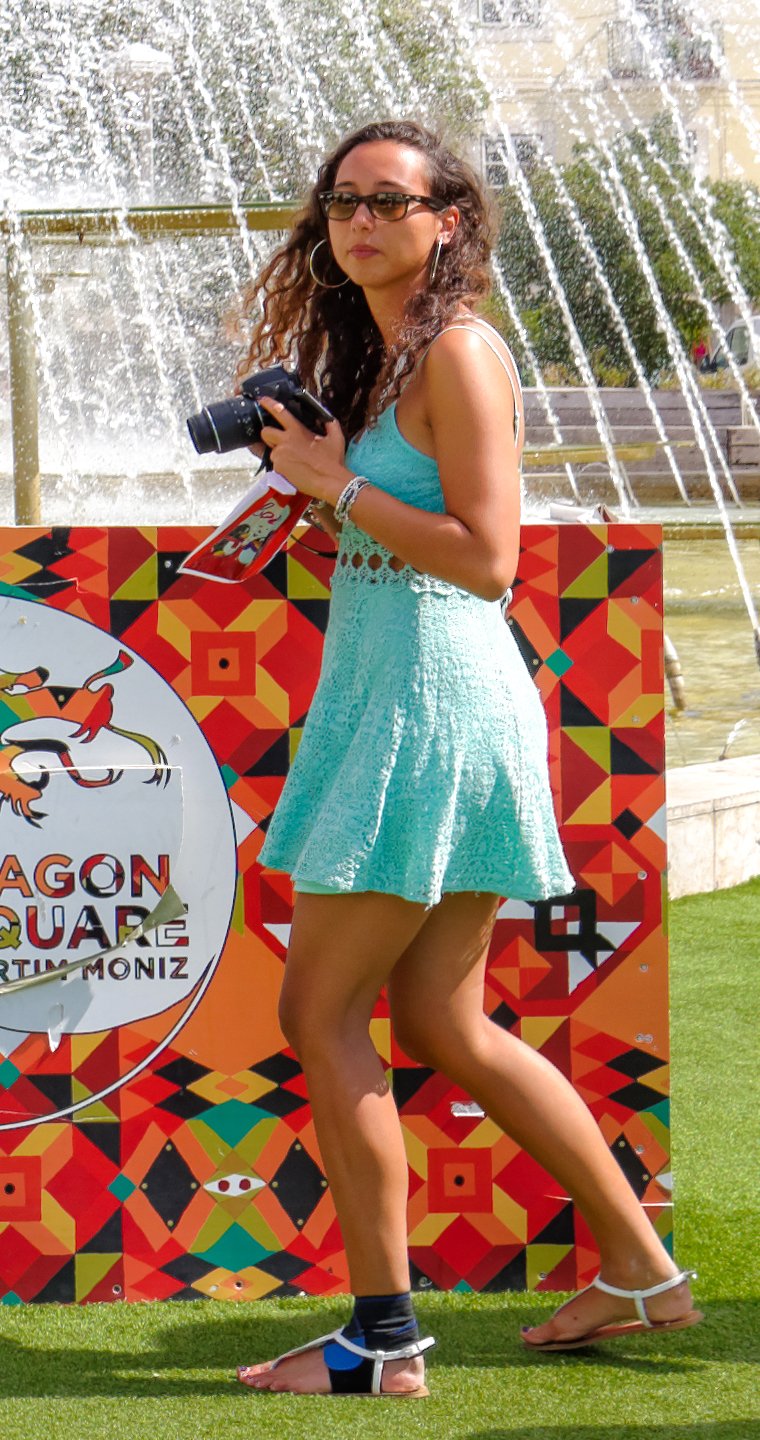
Photo credit: Ludovic via Wikimedia Commons (https://commons.wikimedia.org/wiki/File:TealDress2014.jpg) (CC BY-SA 2.0)
Sequins turn peacock green into light itself, and a skater dress is the friendliest way to wear them. This aqua-teal version pairs a fitted bodice with a short flared skirt, so the sparkle concentrates where it catches the eye and the skirt still swings when you dance. Because the surface does all the work, the styling stays plain: bare arms, simple sandals and small earrings, with your hair loose or in a single braid. A skater shape suits a festival day that mixes rituals, food stalls and photographs better than a floor-length gown would. Choose sequins in one even tone rather than a pattern, so the colour stays unmistakably peacock. The principle: one all-over sequin surface in teal is decoration enough.
6. The Mint-Teal Tulle Mini Dress for a Party Finish
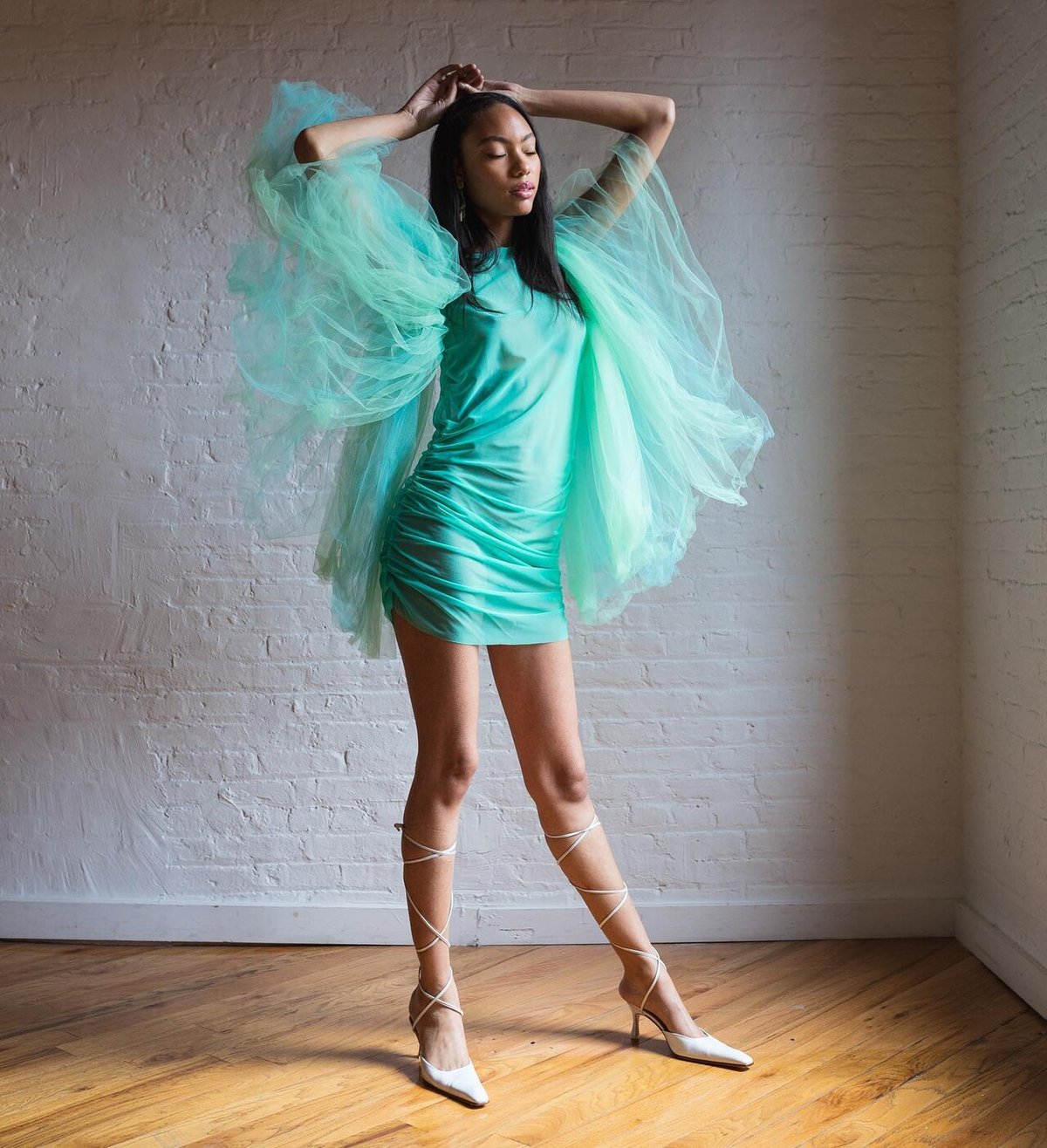
Photo credit: Alondra.0415 via Wikimedia Commons (https://commons.wikimedia.org/wiki/File:Short_Teal_Dress.jpg) (CC BY-SA 4.0)
At the palest end of the family, mint-teal is peacock green softened towards spring, and a tulle-sleeved mini dress is its party register. The ruched body keeps the silhouette close, while the sheer, voluminous sleeves supply the drama and echo the soft fan shape of a feather in a gentler tone. This is the look for a closing-night dinner or a celebration that continues after the aarti ends. Pair it with strappy heels and a small metallic clutch, and keep your jewellery silver rather than gold, because cool metal suits the paler shade. If you prefer more coverage, the same colour in a midi length with tulle sleeves keeps the idea intact. The principle: soften peacock green to mint-teal, and let sheer sleeves provide the theatre.
7. The Turquoise Strapless Mini Dress, Styled Down
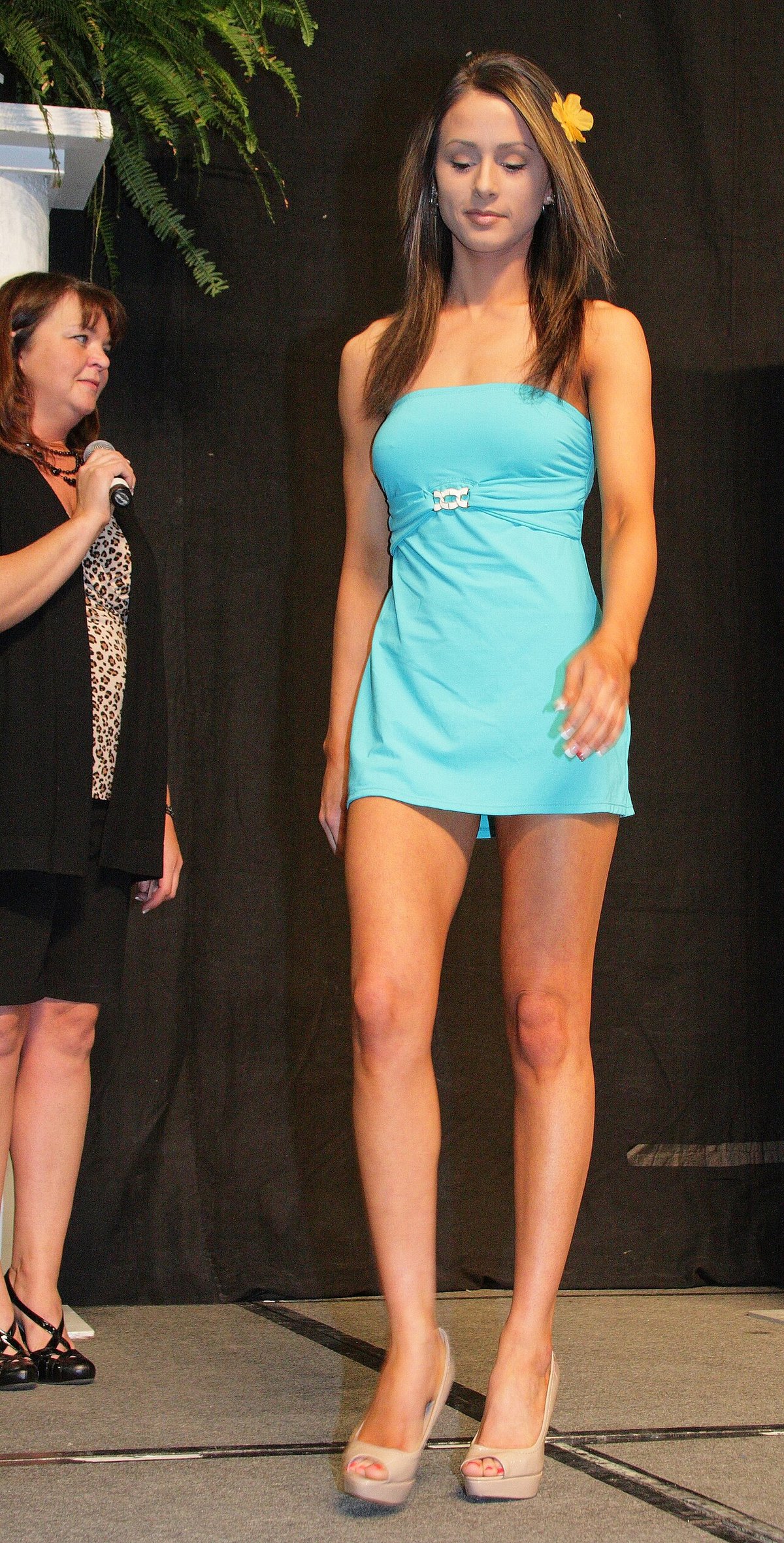
Photo credit: Frank Kovalchek via Wikimedia Commons (https://commons.wikimedia.org/wiki/File:Brie_looks_like_all_legs_(IMG_7734a)_(5461702472).jpg) (CC BY 2.0)
A strapless turquoise mini is the boldest small dress in the peacock family, and its lesson is restraint everywhere else. The clean bandeau top and the small bow at the waist are the only details, the hem is short and straight, and nude platform heels lengthen the leg without adding a second colour. For day nine, this shape works best at an evening celebration rather than a religious venue, styled with a neat bun, a dark bindi and oxidised silver earrings to tie it back to the festival. Carry a light shrug or dupatta for the journey, and let the dress itself stay simple. Confidence is the accessory this cut depends on. The principle: the shorter and brighter the dress, the quieter everything around it should be.
8. The Vivid Green Flowing Gown for Maximum Swirl
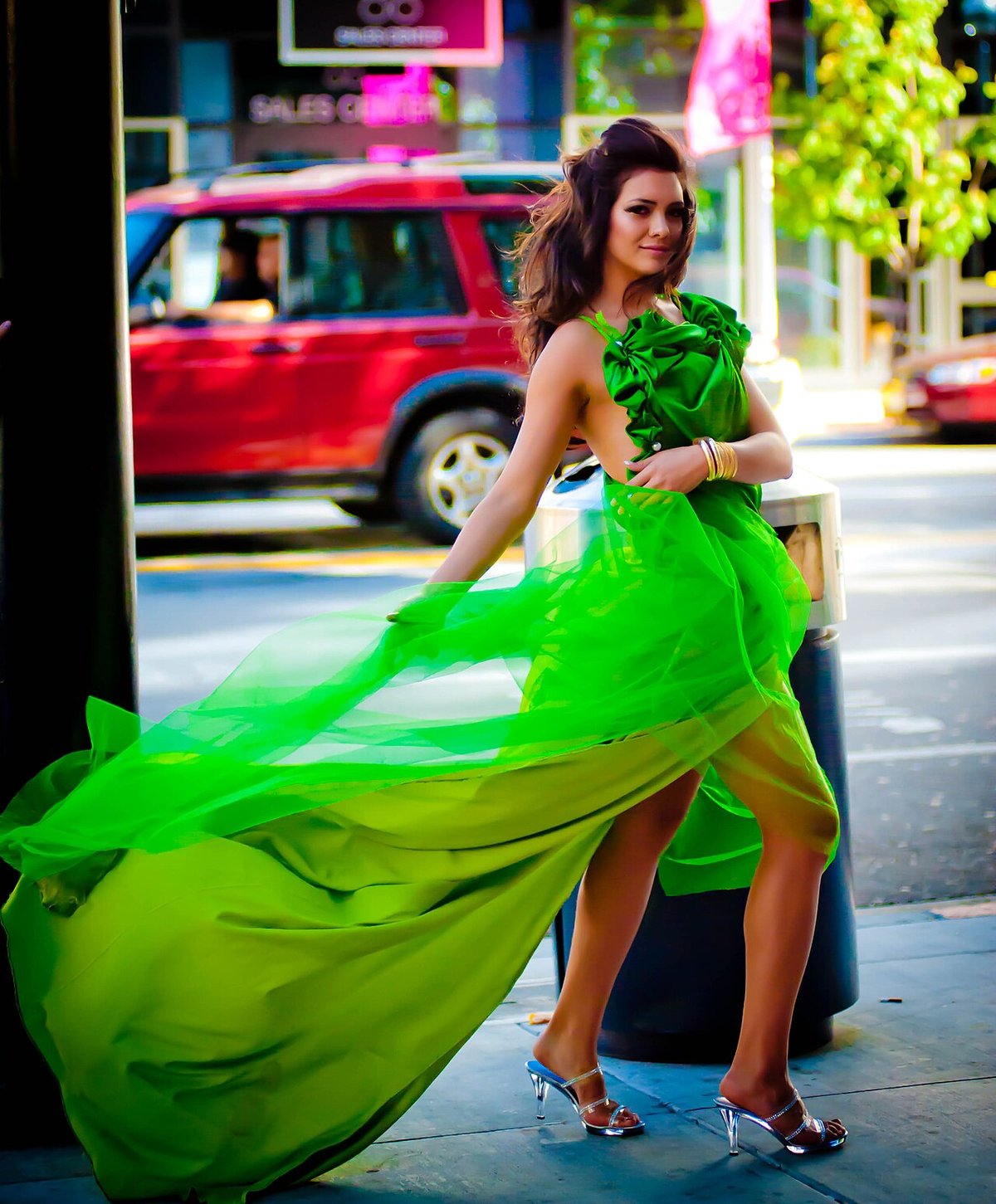
Photo credit: Tibchris via Wikimedia Commons (https://commons.wikimedia.org/wiki/File:Model_Kim_Kilgrove%27s_stunning_green_dress_blows_in_the_wind.jpg) (CC BY 2.0)
Some outfits are built for one moment, and a vivid green gown with a full flowing skirt is built for the turn in the middle of the garba circle. Held out at arm’s length, the skirt shows its volume honestly: layers of light fabric that lift, spread and settle slowly, in the brightest green of the peacock family. The ruffled bodice adds texture at the top so the eye travels the whole length of the dress. Wear it with flat or low-heeled shoes you trust on a dance floor, and pin one side of your hair back so it does not tangle as you turn. This is a joyful, unapologetic register for the last night. The principle: choose skirt volume over embellishment, and let movement be the decoration.
9. The Teal Embellished Dress as a Design Study
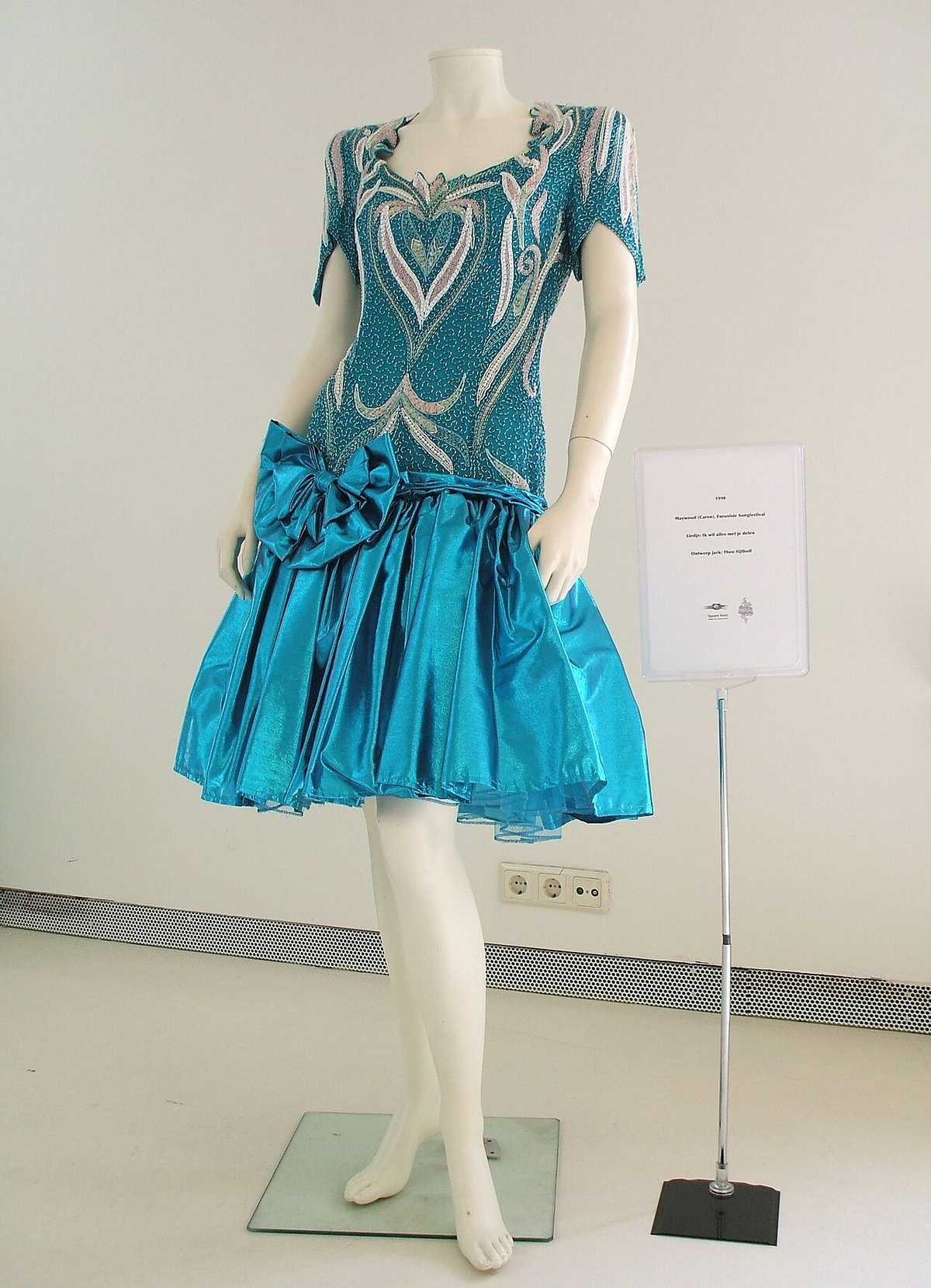
Photo credit: M.N.A. van den Bogaart via Wikimedia Commons (https://commons.wikimedia.org/wiki/File:Karen_Wood_1990_Eurovision_dress.jpg) (CC BY-SA 3.0)
This teal stage dress, preserved on a museum mannequin, is worth studying even if you never wear its exact shape. The silver beading traces the sweetheart neckline and bodice in swirling lines, concentrating all the craft where the eye lands first, while the skirt stays comparatively plain under one large bow. That distribution is the transferable lesson for day nine: if your outfit carries heavy embroidery or beadwork, place it on the bodice and keep the skirt, sleeves and jewellery quiet, or the look fragments. A teal blouse with silver work worn over a plain lehenga skirt applies the same rule in a traditional frame. Study the balance first, then borrow it. The principle: put the embellishment on the bodice only, and let the rest of the outfit rest.
10. The Peacock Feather Headdress as an Accessory-First Look
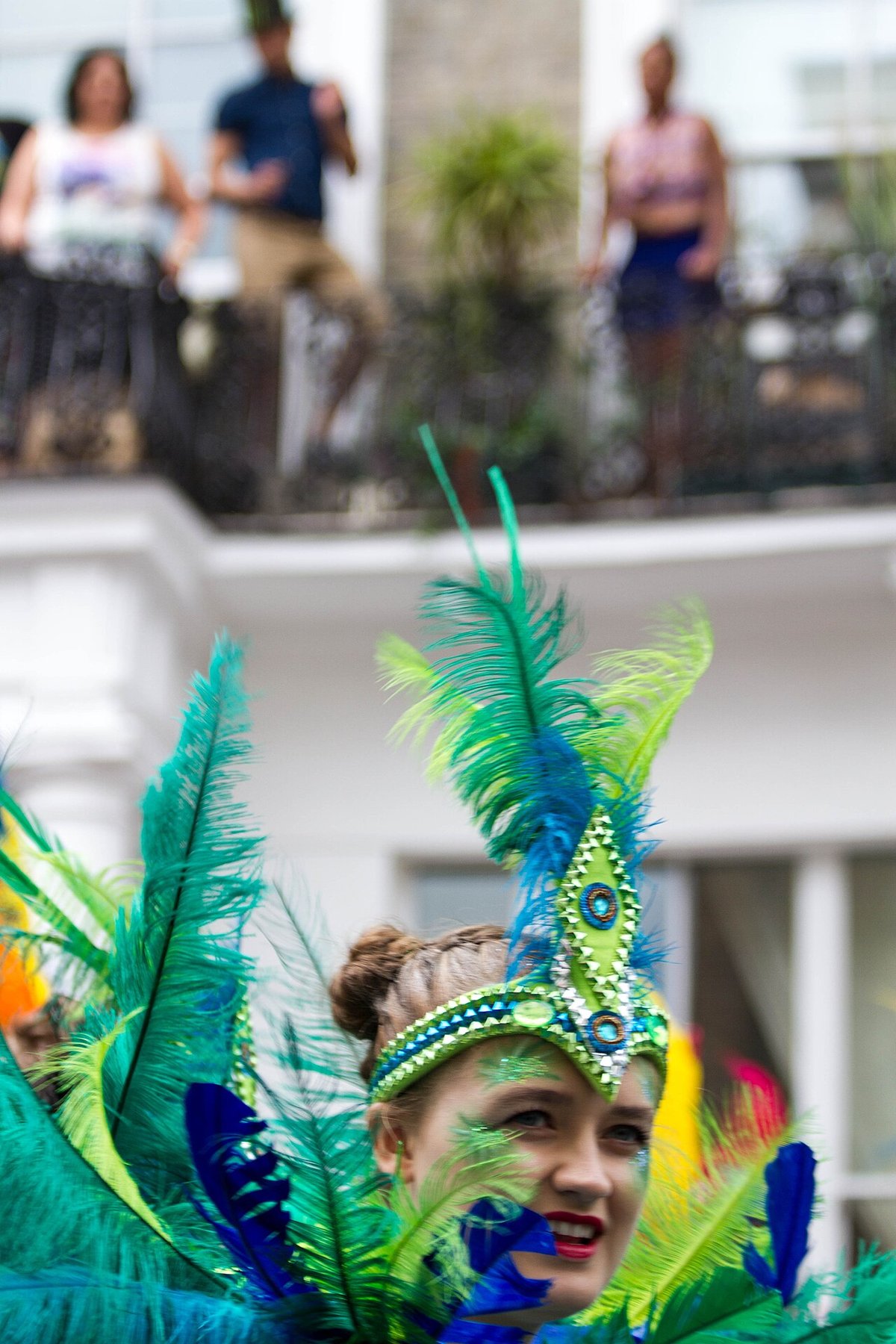
Photo credit: Kalexander2010 via Wikimedia Commons (https://commons.wikimedia.org/wiki/File:Notting_Hill_Carnival_(29213731751).jpg) (CC BY-SA 2.0)
The boldest way to honour day nine is to wear the feather itself. This carnival headdress fans real peacock feathers, with their teal, green and blue eyes, into a crown above the wearer’s head, matched with face paint in the same colours. Translated to a Navratri register, the idea becomes a single peacock-feather accessory: a feather hair pin, a feather-motif clutch, or peacock earrings worn with a plain teal or emerald outfit. One motif piece is enough, because the feather’s eye pattern is already a complete design. Keep the base outfit solid and unpatterned so the accessory reads clearly, and repeat one of its colours in your bindi or bangles. The principle: wear the motif once, on a plain peacock-green base, and let the feather speak.
Final Thoughts
Peacock green rewards the same thinking the feather itself suggests: one rich base colour, shifting between teal, turquoise and emerald, with shine placed deliberately and sparingly. An emerald traditional set with layered silver, a deep teal suit, a satin cape gown and a sequinned skater dress are four very different answers to the same colour, and each one closes the nine nights in its own register. Choose the version that matches your plans for Monday, October 19, add gold or oxidised silver with a steady hand, and let day nine end Navratri at full colour.
Frequently Asked Questions
Why is peacock green the colour for Navratri day nine?
Day nine of Navratri, which falls on Monday, October 19 in 2026, is dedicated to Maa Siddhidatri, and peacock green is her day’s colour. The blue-green shade is associated with nature, renewal and the fulfilment that closes the nine nights, which is why it is worn as the festival’s richest and most celebratory colour.
What is the difference between peacock green, teal and turquoise?
They are points on one blue-green scale. Turquoise is the brightest and bluest-green of the three, teal is deeper and more muted, and peacock green sits between them with a jewel-like intensity drawn from the peacock feather. Outfits in any of the three sit honestly within the day nine colour family.
Which jewellery suits a peacock green outfit?
Both gold and silver work, in different registers. Gold warms peacock green and suits satin, silk and traditional sets, while oxidised silver sharpens teal and turquoise and suits sequins, tulle and modern cuts. Choose one metal per outfit and repeat it in your earrings, bangles and clutch hardware.
Can you wear peacock green tailoring for Navratri?
Yes, especially on a day that begins with work. A deep teal suit or blazer worn with a bindi and festive earrings moves from office to pandal without a change, and splitting the suit, jacket over a kurta or dress, softens it further for family gatherings.