Getting dressed feels easier when you have a clear formula that balances comfort, proportion, and personality. 40 Vintage Summer Outfits gives you a practical starting point for building outfits that look considered without requiring a completely new wardrobe. Current style leans into tactile fabrics, thoughtful layering, useful accessories, and relaxed tailoring, so you can make each look feel current while still wearing it in real life. This guide brings together 40 original outfit ideas with specific ways to coordinate color, texture, footwear, and finishing details. You can also explore more wearable outfit ideas when you want another dependable styling reference. Use the ideas below as a flexible wardrobe map and adapt each one to your day, your climate, and your personal proportions.
40. 1970s crochet matching set with wedges outfit formula
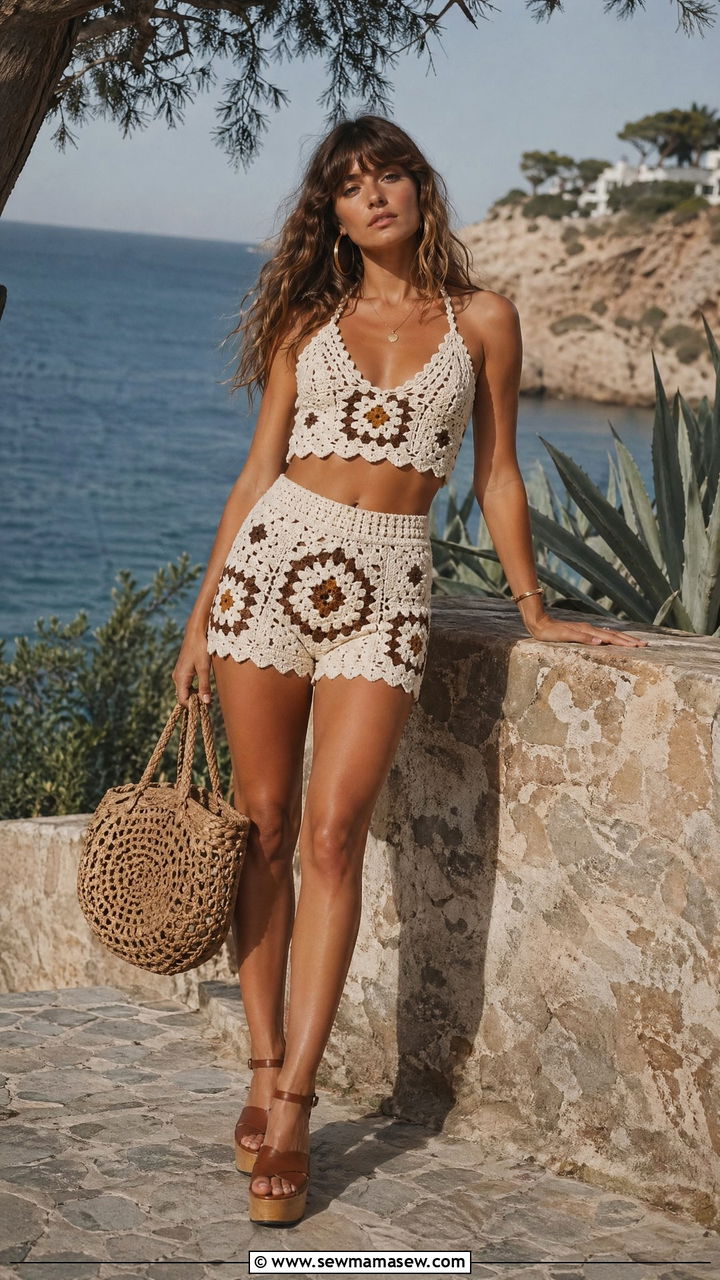
Build this look around 1970s Crochet Matching Set With Wedges. Choose pieces that sit cleanly at the natural waist and keep the strongest line of the outfit visible, then use black and ivory to create depth without making the look feel busy. A smooth base layer lets the featured garment hold its shape, while a contrasting texture such as ribbed knit, brushed wool, satin, or washed denim keeps the styling from looking flat. Match the visual weight of your shoes to the outfit—sleek pointed toes sharpen tailoring, substantial loafers ground relaxed proportions, and low-profile sneakers make dressier pieces feel approachable. Add one deliberate accessory, such as a leather belt, compact shoulder bag, silk scarf, or sculptural earring, and repeat one color so the whole outfit reads as cohesive. Adjust the hem, sleeve, and rise before leaving home; small tailoring choices make the formula look custom. Wear it for a weekday office, a coffee date, a travel day, or an evening gathering.
The image shows 1970s Crochet Matching Set With Wedges styled as a complete, wearable look in a bright city sidewalk. The main garment is easy to identify, with its shape balanced by carefully chosen bottoms and coordinated footwear. You can picture the fabric movement, the relationship between the waistline and the hem, and the small finishing touches that make the outfit feel deliberate. The palette stays focused while the accessories add just enough contrast to give the styling personality.
39. 1930s high-waisted wide-leg trousers with striped top outfit formula
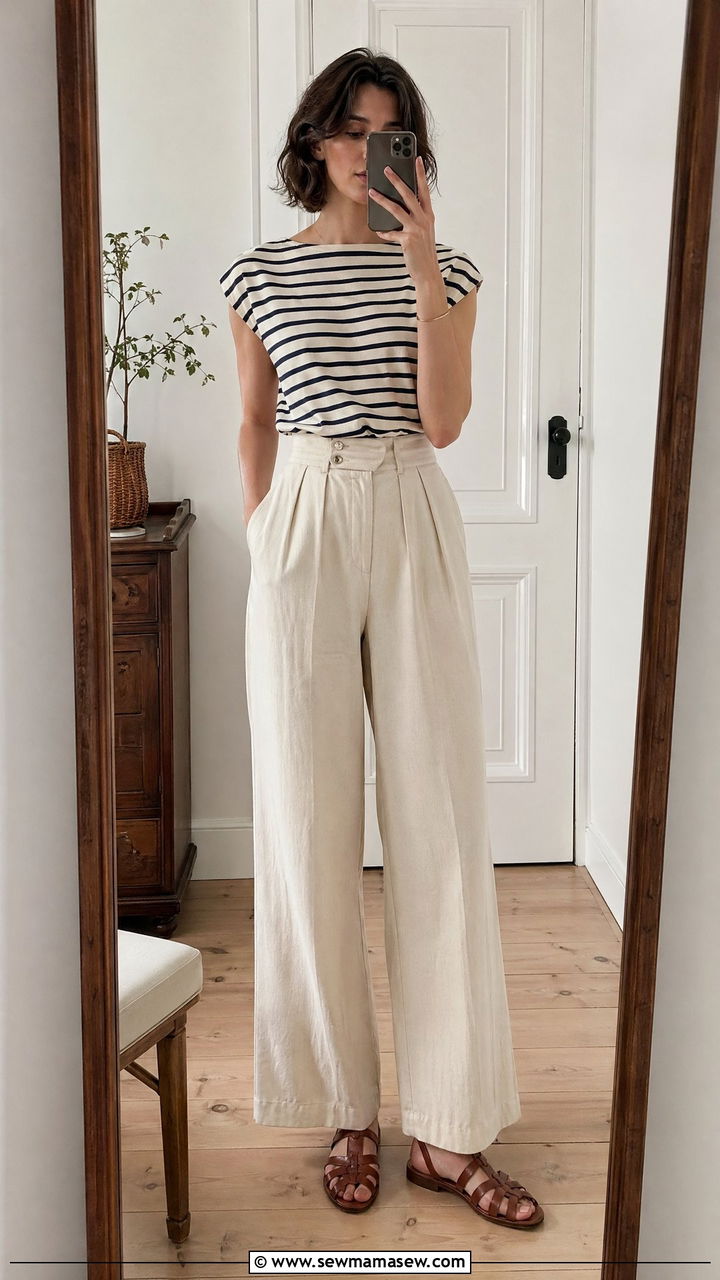
Start with 1930s High-Waisted Wide-Leg Trousers With Striped Top. Choose pieces that sit cleanly at the natural waist and keep the strongest line of the outfit visible, then use soft camel and cream to create depth without making the look feel busy. A smooth base layer lets the featured garment hold its shape, while a contrasting texture such as ribbed knit, brushed wool, satin, or washed denim keeps the styling from looking flat. Match the visual weight of your shoes to the outfit—sleek pointed toes sharpen tailoring, substantial loafers ground relaxed proportions, and low-profile sneakers make dressier pieces feel approachable. Add one deliberate accessory, such as a leather belt, compact shoulder bag, silk scarf, or sculptural earring, and repeat one color so the whole outfit reads as cohesive. Adjust the hem, sleeve, and rise before leaving home; small tailoring choices make the formula look custom. Wear it for a weekday office, a coffee date, a travel day, or an evening gathering.
The image shows 1930s High-Waisted Wide-Leg Trousers With Striped Top styled as a complete, wearable look in a softly lit studio. The main garment is easy to identify, with its shape balanced by carefully chosen bottoms and coordinated footwear. You can picture the fabric movement, the relationship between the waistline and the hem, and the small finishing touches that make the outfit feel deliberate. The palette stays focused while the accessories add just enough contrast to give the styling personality.
38. 1940s utility jumpsuit with headscarf and sandals outfit formula
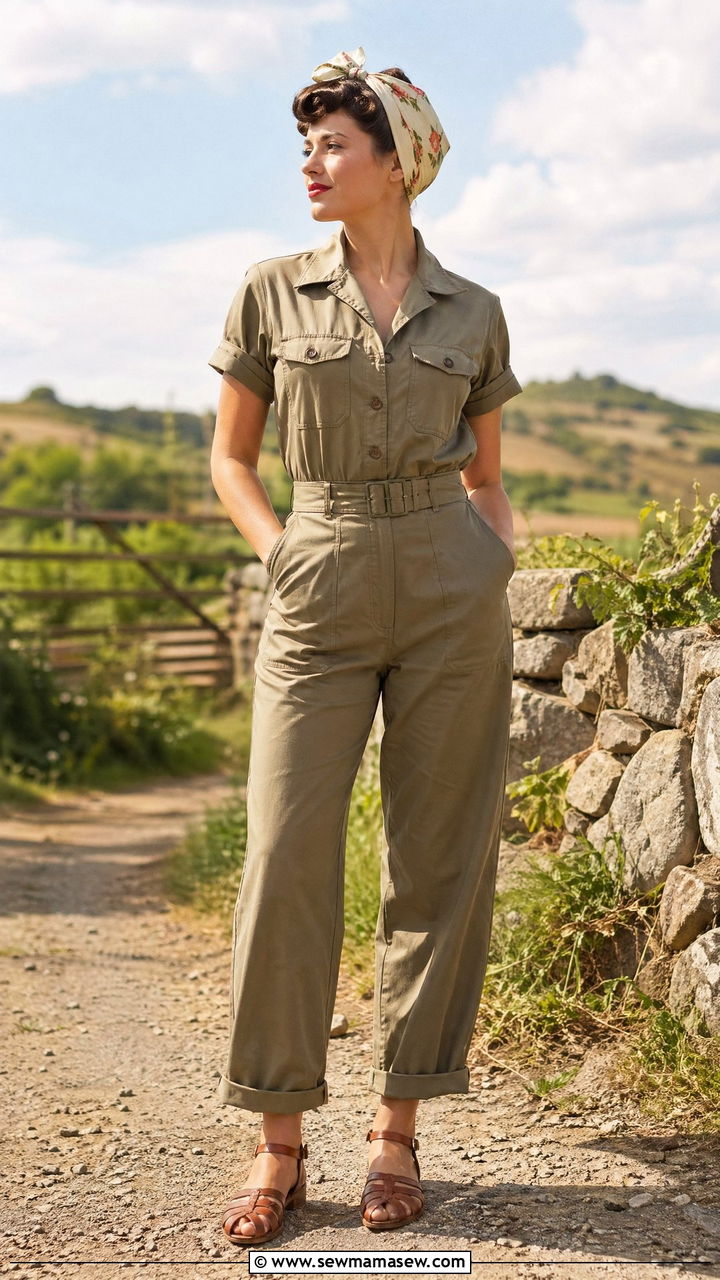
Make this combination feel intentional by choosing 1940s Utility Jumpsuit With Headscarf And Sandals. Choose pieces that sit cleanly at the natural waist and keep the strongest line of the outfit visible, then use navy with crisp white to create depth without making the look feel busy. A smooth base layer lets the featured garment hold its shape, while a contrasting texture such as ribbed knit, brushed wool, satin, or washed denim keeps the styling from looking flat. Match the visual weight of your shoes to the outfit—sleek pointed toes sharpen tailoring, substantial loafers ground relaxed proportions, and low-profile sneakers make dressier pieces feel approachable. Add one deliberate accessory, such as a leather belt, compact shoulder bag, silk scarf, or sculptural earring, and repeat one color so the whole outfit reads as cohesive. Adjust the hem, sleeve, and rise before leaving home; small tailoring choices make the formula look custom. Wear it for a weekday office, a coffee date, a travel day, or an evening gathering.
The image shows 1940s Utility Jumpsuit With Headscarf And Sandals styled as a complete, wearable look in a café-lined street. The main garment is easy to identify, with its shape balanced by carefully chosen bottoms and coordinated footwear. You can picture the fabric movement, the relationship between the waistline and the hem, and the small finishing touches that make the outfit feel deliberate. The palette stays focused while the accessories add just enough contrast to give the styling personality.
37. 1970s denim jumpsuit with platform heels outfit formula
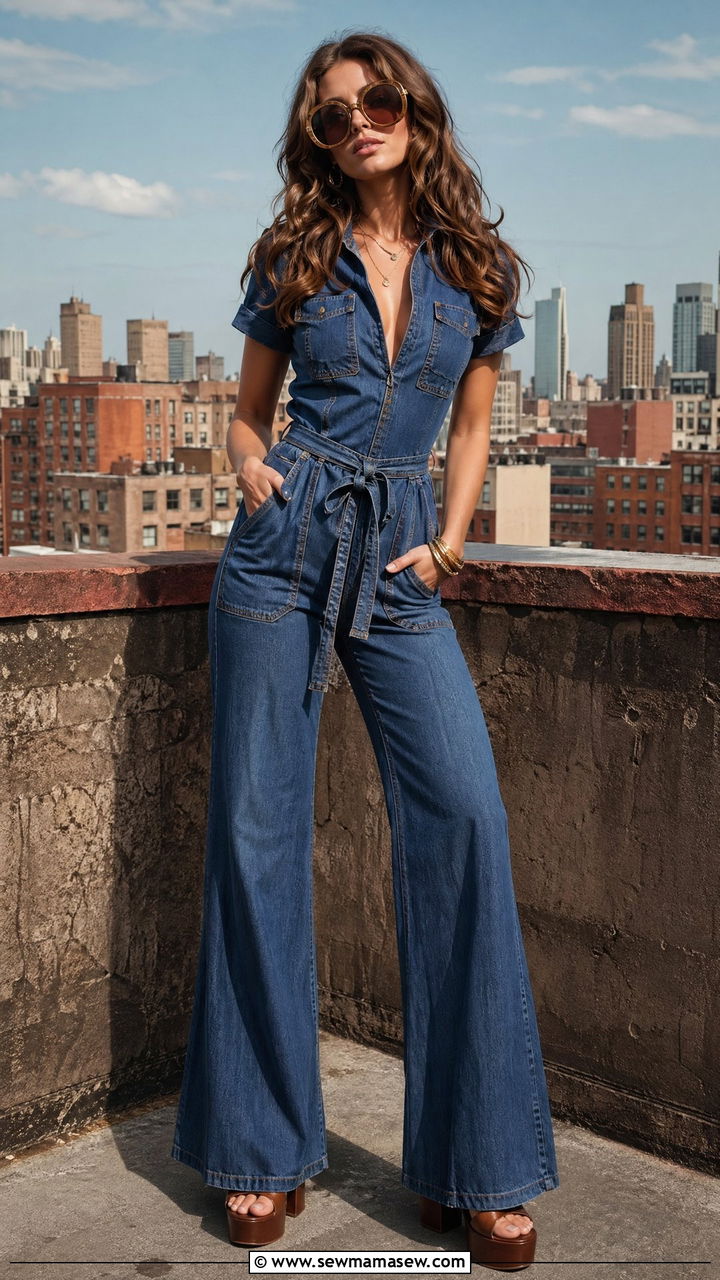
Use this outfit when you want 1970s Denim Jumpsuit With Platform Heels. Choose pieces that sit cleanly at the natural waist and keep the strongest line of the outfit visible, then use espresso and muted blush to create depth without making the look feel busy. A smooth base layer lets the featured garment hold its shape, while a contrasting texture such as ribbed knit, brushed wool, satin, or washed denim keeps the styling from looking flat. Match the visual weight of your shoes to the outfit—sleek pointed toes sharpen tailoring, substantial loafers ground relaxed proportions, and low-profile sneakers make dressier pieces feel approachable. Add one deliberate accessory, such as a leather belt, compact shoulder bag, silk scarf, or sculptural earring, and repeat one color so the whole outfit reads as cohesive. Adjust the hem, sleeve, and rise before leaving home; small tailoring choices make the formula look custom. Wear it for a weekday office, a coffee date, a travel day, or an evening gathering.
The image shows 1970s Denim Jumpsuit With Platform Heels styled as a complete, wearable look in a polished hotel lobby. The main garment is easy to identify, with its shape balanced by carefully chosen bottoms and coordinated footwear. You can picture the fabric movement, the relationship between the waistline and the hem, and the small finishing touches that make the outfit feel deliberate. The palette stays focused while the accessories add just enough contrast to give the styling personality.
36. 1940s shirtwaist dress with wedge sandals outfit formula
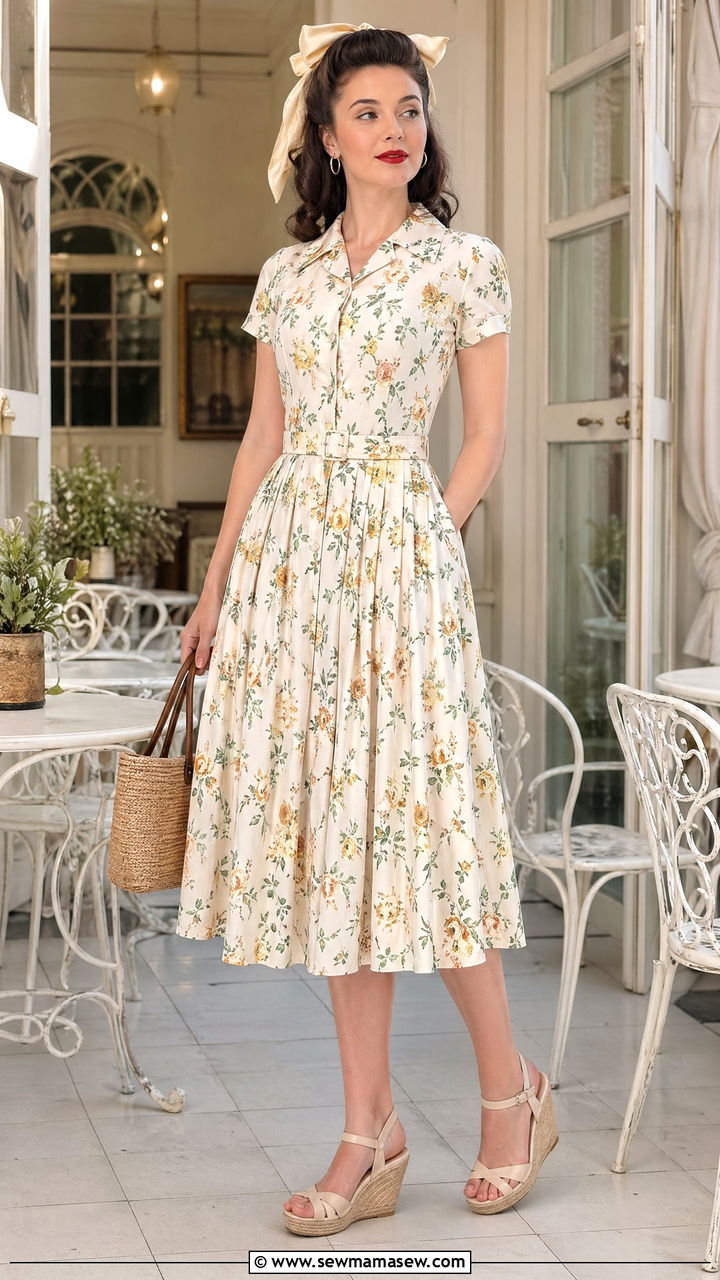
Keep the silhouette refined with 1940s Shirtwaist Dress With Wedge Sandals. Choose pieces that sit cleanly at the natural waist and keep the strongest line of the outfit visible, then use olive with warm tan to create depth without making the look feel busy. A smooth base layer lets the featured garment hold its shape, while a contrasting texture such as ribbed knit, brushed wool, satin, or washed denim keeps the styling from looking flat. Match the visual weight of your shoes to the outfit—sleek pointed toes sharpen tailoring, substantial loafers ground relaxed proportions, and low-profile sneakers make dressier pieces feel approachable. Add one deliberate accessory, such as a leather belt, compact shoulder bag, silk scarf, or sculptural earring, and repeat one color so the whole outfit reads as cohesive. Adjust the hem, sleeve, and rise before leaving home; small tailoring choices make the formula look custom. Wear it for a weekday office, a coffee date, a travel day, or an evening gathering.
The image shows 1940s Shirtwaist Dress With Wedge Sandals styled as a complete, wearable look in a leafy garden path. The main garment is easy to identify, with its shape balanced by carefully chosen bottoms and coordinated footwear. You can picture the fabric movement, the relationship between the waistline and the hem, and the small finishing touches that make the outfit feel deliberate. The palette stays focused while the accessories add just enough contrast to give the styling personality.
35. 1960s white vinyl go-go boots with mini dress outfit formula
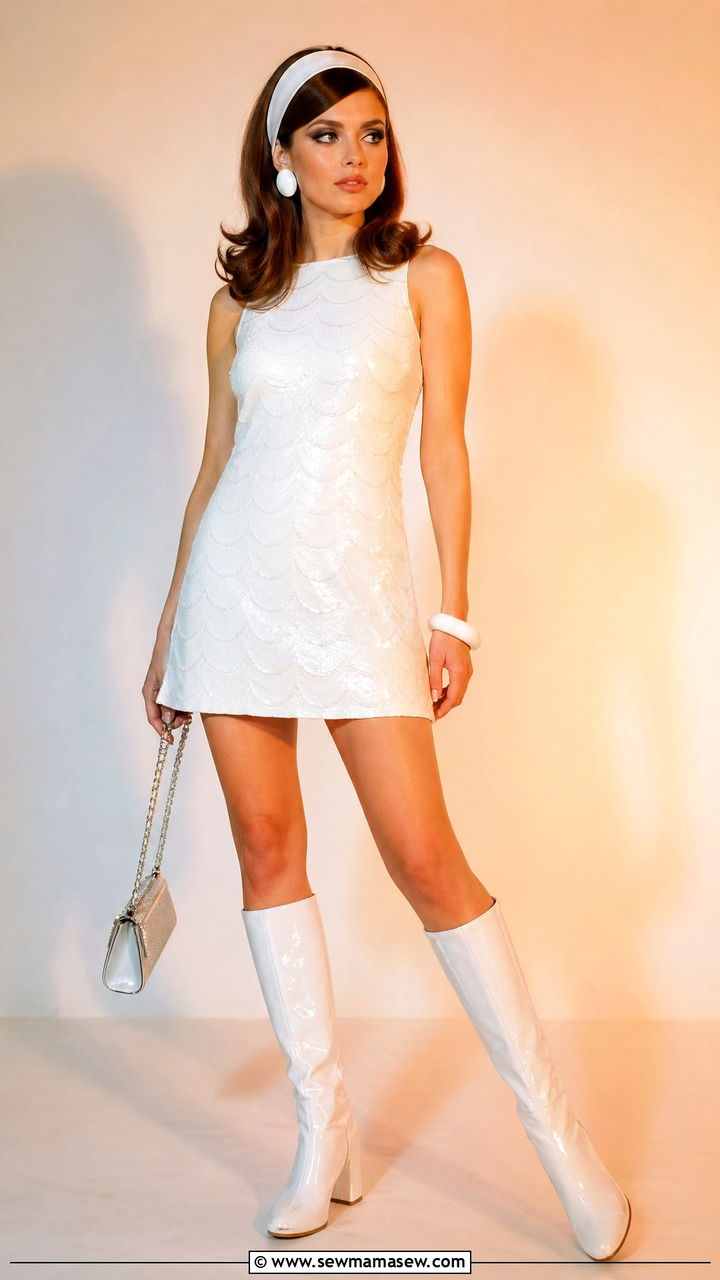
For a more finished result, pair 1960s White Vinyl Go-Go Boots With Mini Dress. Choose pieces that sit cleanly at the natural waist and keep the strongest line of the outfit visible, then use charcoal and pale blue to create depth without making the look feel busy. A smooth base layer lets the featured garment hold its shape, while a contrasting texture such as ribbed knit, brushed wool, satin, or washed denim keeps the styling from looking flat. Match the visual weight of your shoes to the outfit—sleek pointed toes sharpen tailoring, substantial loafers ground relaxed proportions, and low-profile sneakers make dressier pieces feel approachable. Add one deliberate accessory, such as a leather belt, compact shoulder bag, silk scarf, or sculptural earring, and repeat one color so the whole outfit reads as cohesive. Adjust the hem, sleeve, and rise before leaving home; small tailoring choices make the formula look custom. Wear it for a weekday office, a coffee date, a travel day, or an evening gathering.
The image shows 1960s White Vinyl Go-Go Boots With Mini Dress styled as a complete, wearable look in a warm-toned interior. The main garment is easy to identify, with its shape balanced by carefully chosen bottoms and coordinated footwear. You can picture the fabric movement, the relationship between the waistline and the hem, and the small finishing touches that make the outfit feel deliberate. The palette stays focused while the accessories add just enough contrast to give the styling personality.
34. 1950s gingham halter dress with straw tote outfit formula
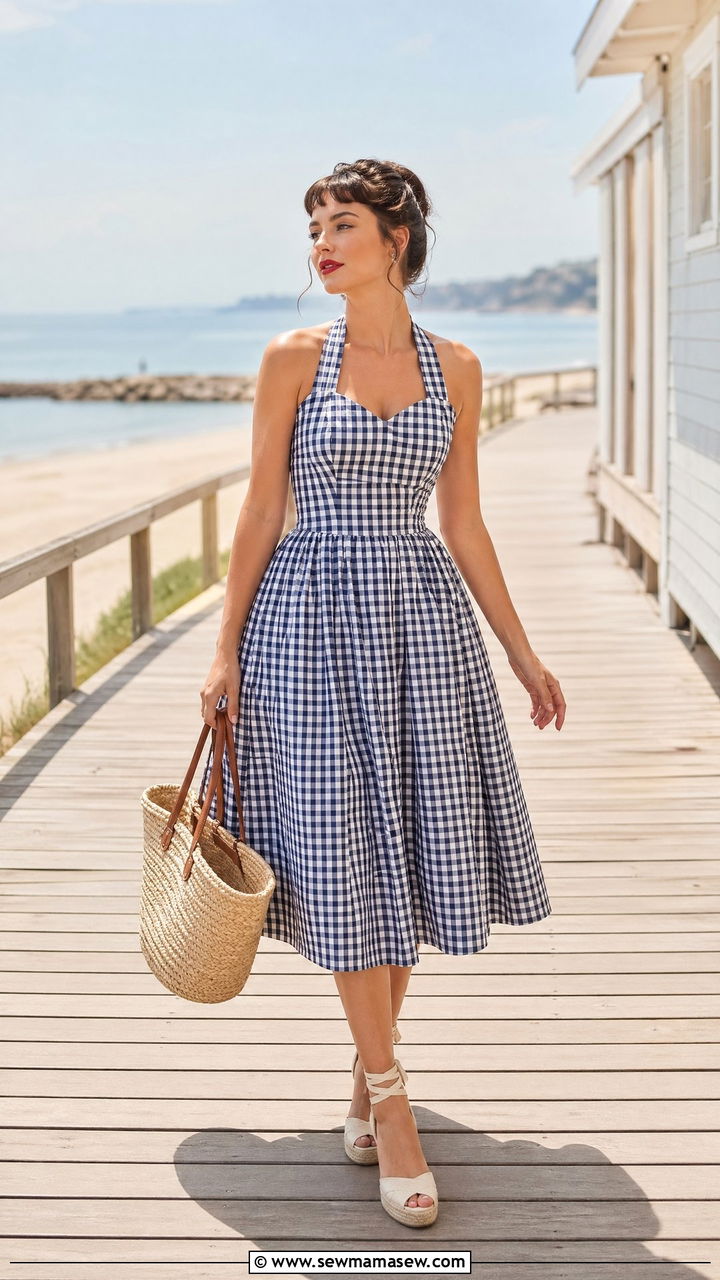
Let the main piece lead by combining 1950s Gingham Halter Dress With Straw Tote. Choose pieces that sit cleanly at the natural waist and keep the strongest line of the outfit visible, then use black and ivory to create depth without making the look feel busy. A smooth base layer lets the featured garment hold its shape, while a contrasting texture such as ribbed knit, brushed wool, satin, or washed denim keeps the styling from looking flat. Match the visual weight of your shoes to the outfit—sleek pointed toes sharpen tailoring, substantial loafers ground relaxed proportions, and low-profile sneakers make dressier pieces feel approachable. Add one deliberate accessory, such as a leather belt, compact shoulder bag, silk scarf, or sculptural earring, and repeat one color so the whole outfit reads as cohesive. Adjust the hem, sleeve, and rise before leaving home; small tailoring choices make the formula look custom. Wear it for a weekday office, a coffee date, a travel day, or an evening gathering.
The image shows 1950s Gingham Halter Dress With Straw Tote styled as a complete, wearable look in a bright city sidewalk. The main garment is easy to identify, with its shape balanced by carefully chosen bottoms and coordinated footwear. You can picture the fabric movement, the relationship between the waistline and the hem, and the small finishing touches that make the outfit feel deliberate. The palette stays focused while the accessories add just enough contrast to give the styling personality.
33. 1950s full-skirted swing dress with ballet flats outfit formula
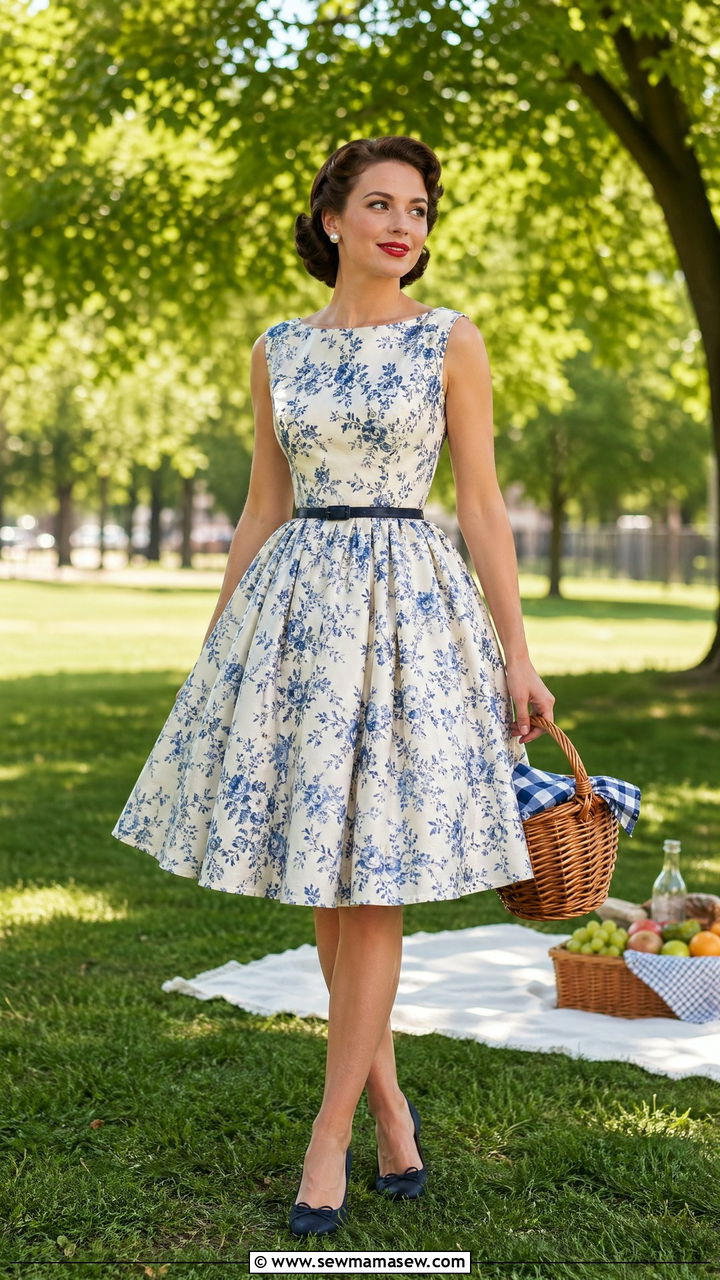
Create visual balance with 1950s Full-Skirted Swing Dress With Ballet Flats. Choose pieces that sit cleanly at the natural waist and keep the strongest line of the outfit visible, then use soft camel and cream to create depth without making the look feel busy. A smooth base layer lets the featured garment hold its shape, while a contrasting texture such as ribbed knit, brushed wool, satin, or washed denim keeps the styling from looking flat. Match the visual weight of your shoes to the outfit—sleek pointed toes sharpen tailoring, substantial loafers ground relaxed proportions, and low-profile sneakers make dressier pieces feel approachable. Add one deliberate accessory, such as a leather belt, compact shoulder bag, silk scarf, or sculptural earring, and repeat one color so the whole outfit reads as cohesive. Adjust the hem, sleeve, and rise before leaving home; small tailoring choices make the formula look custom. Wear it for a weekday office, a coffee date, a travel day, or an evening gathering.
The image shows 1950s Full-Skirted Swing Dress With Ballet Flats styled as a complete, wearable look in a softly lit studio. The main garment is easy to identify, with its shape balanced by carefully chosen bottoms and coordinated footwear. You can picture the fabric movement, the relationship between the waistline and the hem, and the small finishing touches that make the outfit feel deliberate. The palette stays focused while the accessories add just enough contrast to give the styling personality.
32. 1990s slip dress with chunky sandals outfit formula
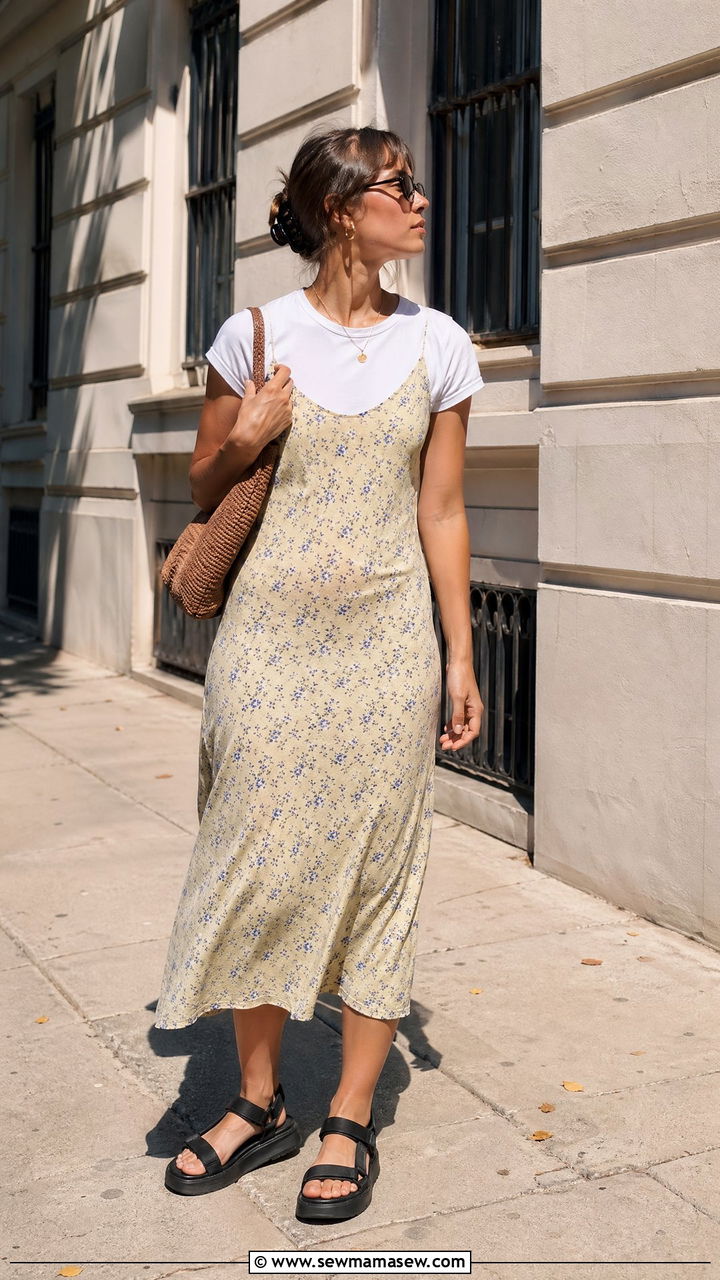
Give this formula a modern edge through 1990s Slip Dress With Chunky Sandals. Choose pieces that sit cleanly at the natural waist and keep the strongest line of the outfit visible, then use navy with crisp white to create depth without making the look feel busy. A smooth base layer lets the featured garment hold its shape, while a contrasting texture such as ribbed knit, brushed wool, satin, or washed denim keeps the styling from looking flat. Match the visual weight of your shoes to the outfit—sleek pointed toes sharpen tailoring, substantial loafers ground relaxed proportions, and low-profile sneakers make dressier pieces feel approachable. Add one deliberate accessory, such as a leather belt, compact shoulder bag, silk scarf, or sculptural earring, and repeat one color so the whole outfit reads as cohesive. Adjust the hem, sleeve, and rise before leaving home; small tailoring choices make the formula look custom. Wear it for a weekday office, a coffee date, a travel day, or an evening gathering.
The image shows 1990s Slip Dress With Chunky Sandals styled as a complete, wearable look in a café-lined street. The main garment is easy to identify, with its shape balanced by carefully chosen bottoms and coordinated footwear. You can picture the fabric movement, the relationship between the waistline and the hem, and the small finishing touches that make the outfit feel deliberate. The palette stays focused while the accessories add just enough contrast to give the styling personality.
31. 1960s tie-dye maxi dress with peace sign accessories outfit formula
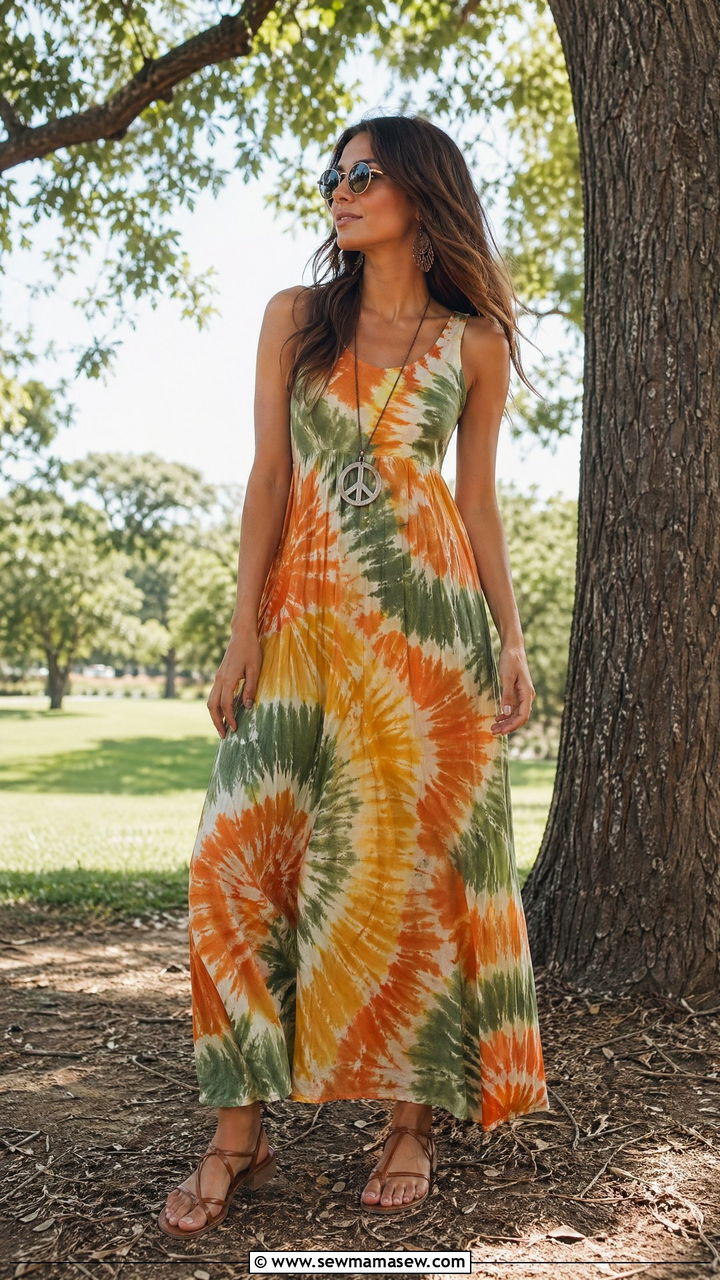
Anchor the outfit with 1960s Tie-Dye Maxi Dress With Peace Sign Accessories. Choose pieces that sit cleanly at the natural waist and keep the strongest line of the outfit visible, then use espresso and muted blush to create depth without making the look feel busy. A smooth base layer lets the featured garment hold its shape, while a contrasting texture such as ribbed knit, brushed wool, satin, or washed denim keeps the styling from looking flat. Match the visual weight of your shoes to the outfit—sleek pointed toes sharpen tailoring, substantial loafers ground relaxed proportions, and low-profile sneakers make dressier pieces feel approachable. Add one deliberate accessory, such as a leather belt, compact shoulder bag, silk scarf, or sculptural earring, and repeat one color so the whole outfit reads as cohesive. Adjust the hem, sleeve, and rise before leaving home; small tailoring choices make the formula look custom. Wear it for a weekday office, a coffee date, a travel day, or an evening gathering.
The image shows 1960s Tie-Dye Maxi Dress With Peace Sign Accessories styled as a complete, wearable look in a polished hotel lobby. The main garment is easy to identify, with its shape balanced by carefully chosen bottoms and coordinated footwear. You can picture the fabric movement, the relationship between the waistline and the hem, and the small finishing touches that make the outfit feel deliberate. The palette stays focused while the accessories add just enough contrast to give the styling personality.
30. 1950s capri pants with wrap top and cat-eye sunglasses outfit formula
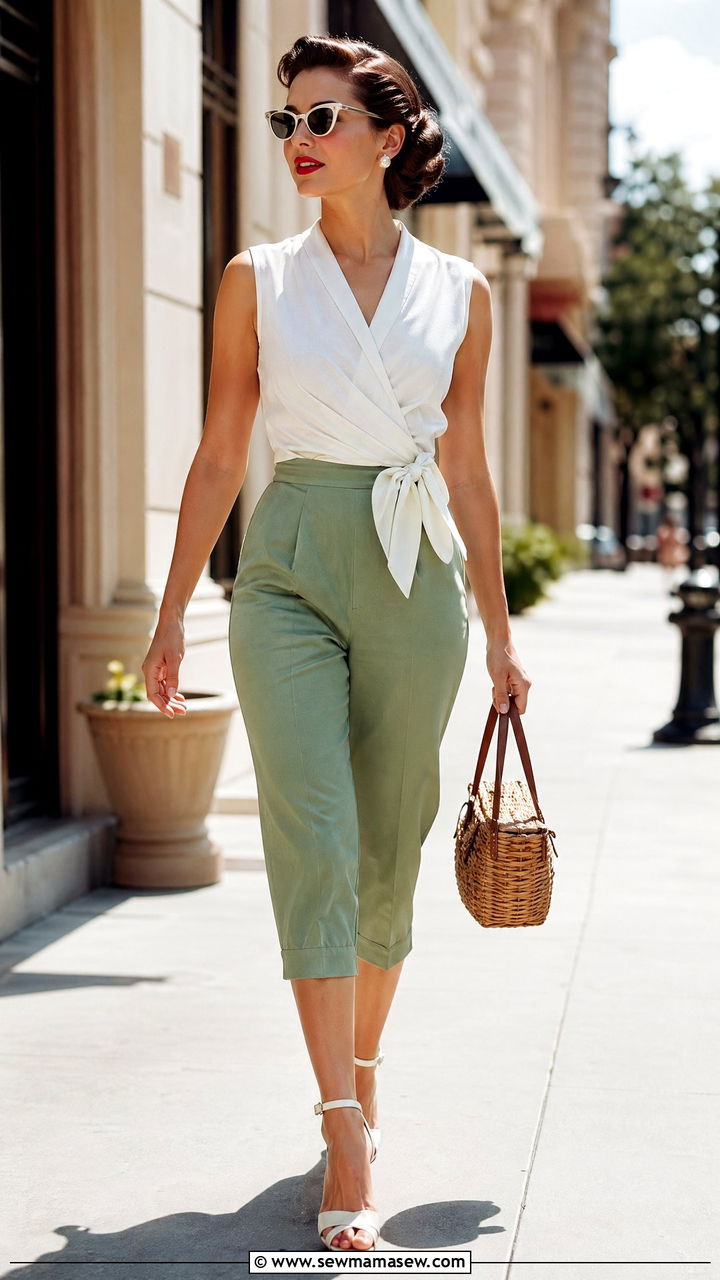
Build this look around 1950s Capri Pants With Wrap Top And Cat-Eye Sunglasses. Choose pieces that sit cleanly at the natural waist and keep the strongest line of the outfit visible, then use olive with warm tan to create depth without making the look feel busy. A smooth base layer lets the featured garment hold its shape, while a contrasting texture such as ribbed knit, brushed wool, satin, or washed denim keeps the styling from looking flat. Match the visual weight of your shoes to the outfit—sleek pointed toes sharpen tailoring, substantial loafers ground relaxed proportions, and low-profile sneakers make dressier pieces feel approachable. Add one deliberate accessory, such as a leather belt, compact shoulder bag, silk scarf, or sculptural earring, and repeat one color so the whole outfit reads as cohesive. Adjust the hem, sleeve, and rise before leaving home; small tailoring choices make the formula look custom. Wear it for a weekday office, a coffee date, a travel day, or an evening gathering.
The image shows 1950s Capri Pants With Wrap Top And Cat-Eye Sunglasses styled as a complete, wearable look in a leafy garden path. The main garment is easy to identify, with its shape balanced by carefully chosen bottoms and coordinated footwear. You can picture the fabric movement, the relationship between the waistline and the hem, and the small finishing touches that make the outfit feel deliberate. The palette stays focused while the accessories add just enough contrast to give the styling personality.
29. 1970s peasant blouse with embroidered shorts outfit formula
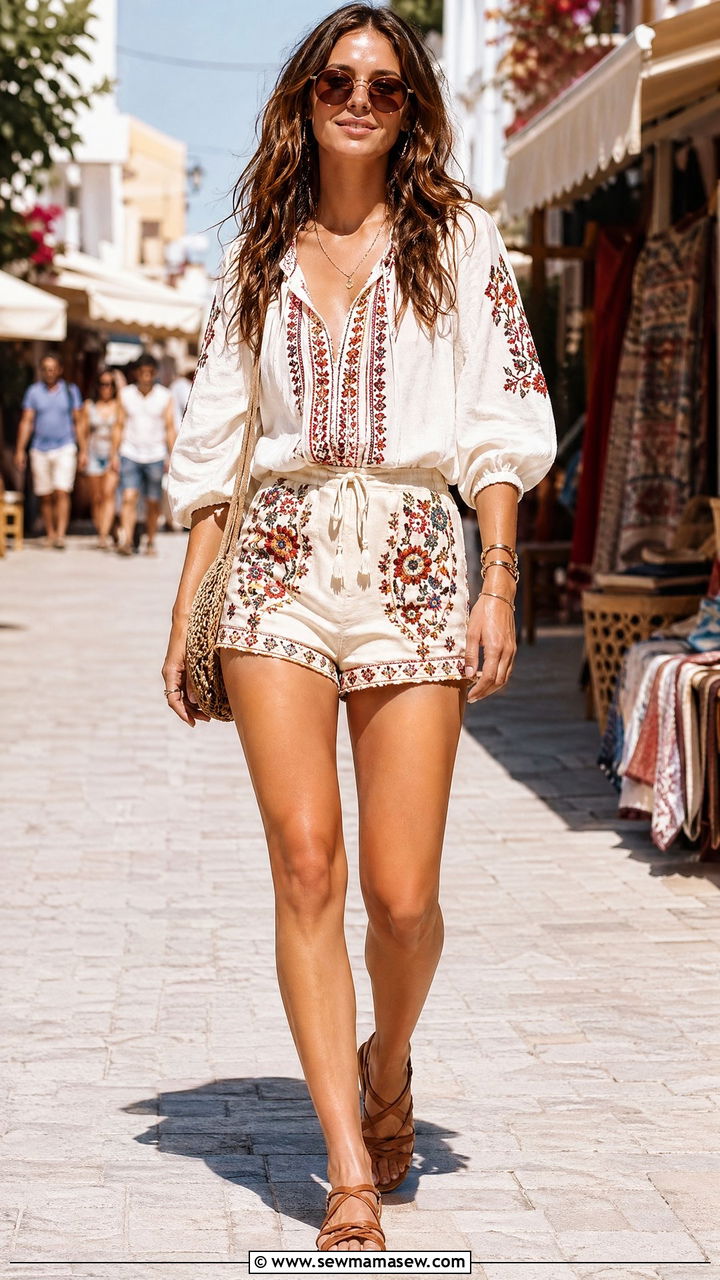
Start with 1970s Peasant Blouse With Embroidered Shorts. Choose pieces that sit cleanly at the natural waist and keep the strongest line of the outfit visible, then use charcoal and pale blue to create depth without making the look feel busy. A smooth base layer lets the featured garment hold its shape, while a contrasting texture such as ribbed knit, brushed wool, satin, or washed denim keeps the styling from looking flat. Match the visual weight of your shoes to the outfit—sleek pointed toes sharpen tailoring, substantial loafers ground relaxed proportions, and low-profile sneakers make dressier pieces feel approachable. Add one deliberate accessory, such as a leather belt, compact shoulder bag, silk scarf, or sculptural earring, and repeat one color so the whole outfit reads as cohesive. Adjust the hem, sleeve, and rise before leaving home; small tailoring choices make the formula look custom. Wear it for a weekday office, a coffee date, a travel day, or an evening gathering.
The image shows 1970s Peasant Blouse With Embroidered Shorts styled as a complete, wearable look in a warm-toned interior. The main garment is easy to identify, with its shape balanced by carefully chosen bottoms and coordinated footwear. You can picture the fabric movement, the relationship between the waistline and the hem, and the small finishing touches that make the outfit feel deliberate. The palette stays focused while the accessories add just enough contrast to give the styling personality.
28. 1960s a-line mini skirt with turtleneck outfit formula
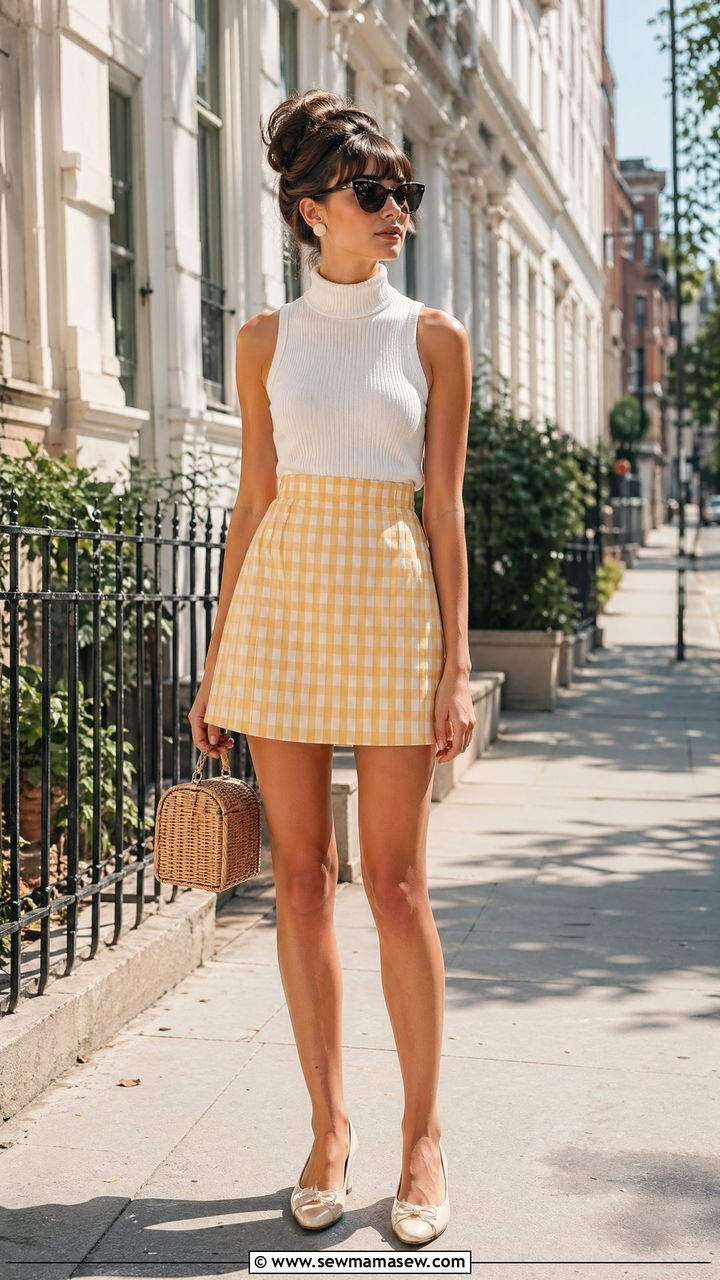
Make this combination feel intentional by choosing 1960s A-Line Mini Skirt With Turtleneck. Choose pieces that sit cleanly at the natural waist and keep the strongest line of the outfit visible, then use black and ivory to create depth without making the look feel busy. A smooth base layer lets the featured garment hold its shape, while a contrasting texture such as ribbed knit, brushed wool, satin, or washed denim keeps the styling from looking flat. Match the visual weight of your shoes to the outfit—sleek pointed toes sharpen tailoring, substantial loafers ground relaxed proportions, and low-profile sneakers make dressier pieces feel approachable. Add one deliberate accessory, such as a leather belt, compact shoulder bag, silk scarf, or sculptural earring, and repeat one color so the whole outfit reads as cohesive. Adjust the hem, sleeve, and rise before leaving home; small tailoring choices make the formula look custom. Wear it for a weekday office, a coffee date, a travel day, or an evening gathering.
The image shows 1960s A-Line Mini Skirt With Turtleneck styled as a complete, wearable look in a bright city sidewalk. The main garment is easy to identify, with its shape balanced by carefully chosen bottoms and coordinated footwear. You can picture the fabric movement, the relationship between the waistline and the hem, and the small finishing touches that make the outfit feel deliberate. The palette stays focused while the accessories add just enough contrast to give the styling personality.
27. 1950s high-waisted shorts with boatneck top outfit formula
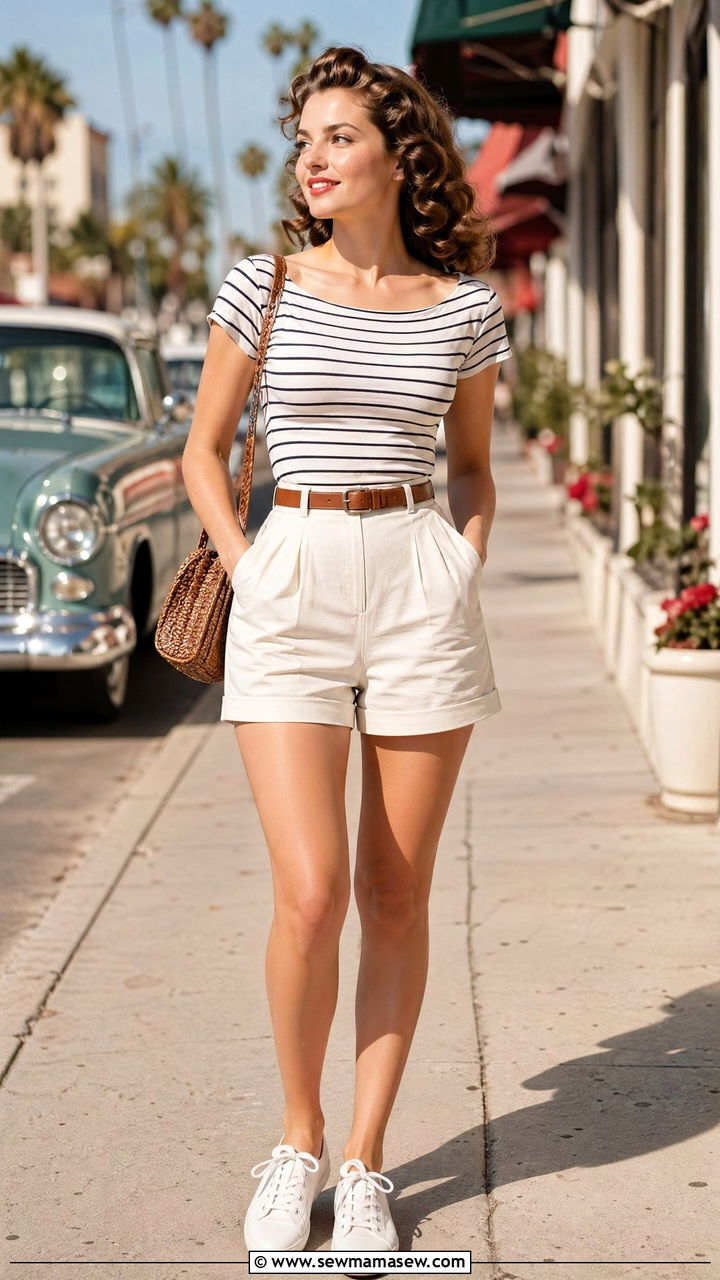
Use this outfit when you want 1950s High-Waisted Shorts With Boatneck Top. Choose pieces that sit cleanly at the natural waist and keep the strongest line of the outfit visible, then use soft camel and cream to create depth without making the look feel busy. A smooth base layer lets the featured garment hold its shape, while a contrasting texture such as ribbed knit, brushed wool, satin, or washed denim keeps the styling from looking flat. Match the visual weight of your shoes to the outfit—sleek pointed toes sharpen tailoring, substantial loafers ground relaxed proportions, and low-profile sneakers make dressier pieces feel approachable. Add one deliberate accessory, such as a leather belt, compact shoulder bag, silk scarf, or sculptural earring, and repeat one color so the whole outfit reads as cohesive. Adjust the hem, sleeve, and rise before leaving home; small tailoring choices make the formula look custom. Wear it for a weekday office, a coffee date, a travel day, or an evening gathering.
The image shows 1950s High-Waisted Shorts With Boatneck Top styled as a complete, wearable look in a softly lit studio. The main garment is easy to identify, with its shape balanced by carefully chosen bottoms and coordinated footwear. You can picture the fabric movement, the relationship between the waistline and the hem, and the small finishing touches that make the outfit feel deliberate. The palette stays focused while the accessories add just enough contrast to give the styling personality.
26. 1940s peplum jacket and skirt suit with heels outfit formula
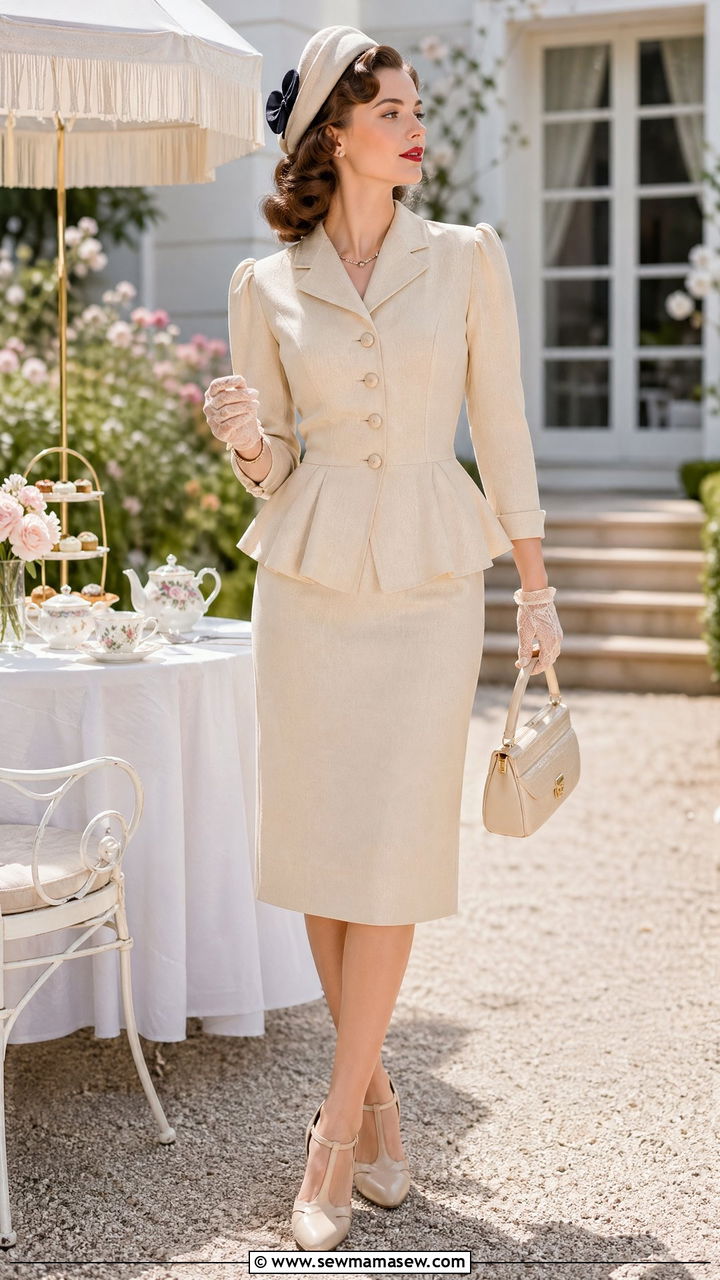
Keep the silhouette refined with 1940s Peplum Jacket And Skirt Suit With Heels. Choose pieces that sit cleanly at the natural waist and keep the strongest line of the outfit visible, then use navy with crisp white to create depth without making the look feel busy. A smooth base layer lets the featured garment hold its shape, while a contrasting texture such as ribbed knit, brushed wool, satin, or washed denim keeps the styling from looking flat. Match the visual weight of your shoes to the outfit—sleek pointed toes sharpen tailoring, substantial loafers ground relaxed proportions, and low-profile sneakers make dressier pieces feel approachable. Add one deliberate accessory, such as a leather belt, compact shoulder bag, silk scarf, or sculptural earring, and repeat one color so the whole outfit reads as cohesive. Adjust the hem, sleeve, and rise before leaving home; small tailoring choices make the formula look custom. Wear it for a weekday office, a coffee date, a travel day, or an evening gathering.
The image shows 1940s Peplum Jacket And Skirt Suit With Heels styled as a complete, wearable look in a café-lined street. The main garment is easy to identify, with its shape balanced by carefully chosen bottoms and coordinated footwear. You can picture the fabric movement, the relationship between the waistline and the hem, and the small finishing touches that make the outfit feel deliberate. The palette stays focused while the accessories add just enough contrast to give the styling personality.
25. 1960s crochet mini dress with platform sandals outfit formula
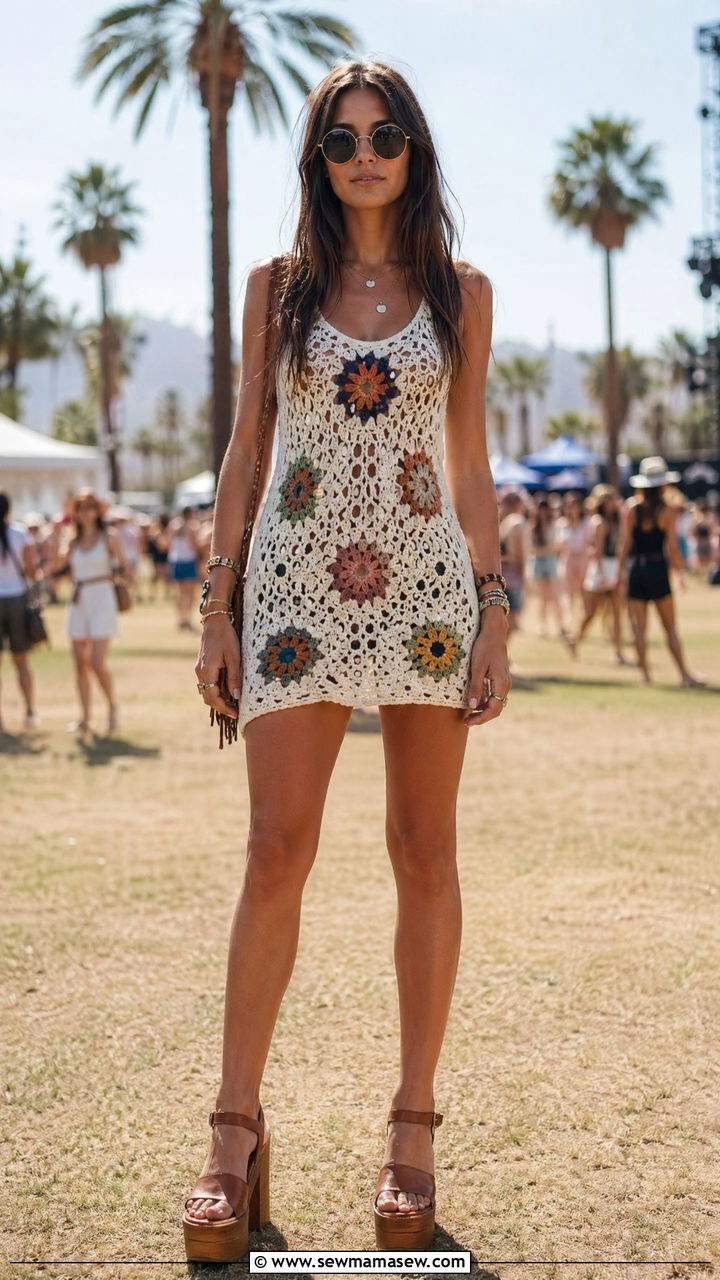
For a more finished result, pair 1960s Crochet Mini Dress With Platform Sandals. Choose pieces that sit cleanly at the natural waist and keep the strongest line of the outfit visible, then use espresso and muted blush to create depth without making the look feel busy. A smooth base layer lets the featured garment hold its shape, while a contrasting texture such as ribbed knit, brushed wool, satin, or washed denim keeps the styling from looking flat. Match the visual weight of your shoes to the outfit—sleek pointed toes sharpen tailoring, substantial loafers ground relaxed proportions, and low-profile sneakers make dressier pieces feel approachable. Add one deliberate accessory, such as a leather belt, compact shoulder bag, silk scarf, or sculptural earring, and repeat one color so the whole outfit reads as cohesive. Adjust the hem, sleeve, and rise before leaving home; small tailoring choices make the formula look custom. Wear it for a weekday office, a coffee date, a travel day, or an evening gathering.
The image shows 1960s Crochet Mini Dress With Platform Sandals styled as a complete, wearable look in a polished hotel lobby. The main garment is easy to identify, with its shape balanced by carefully chosen bottoms and coordinated footwear. You can picture the fabric movement, the relationship between the waistline and the hem, and the small finishing touches that make the outfit feel deliberate. The palette stays focused while the accessories add just enough contrast to give the styling personality.
24. 1950s polka dot bikini with high-waist bottom outfit formula
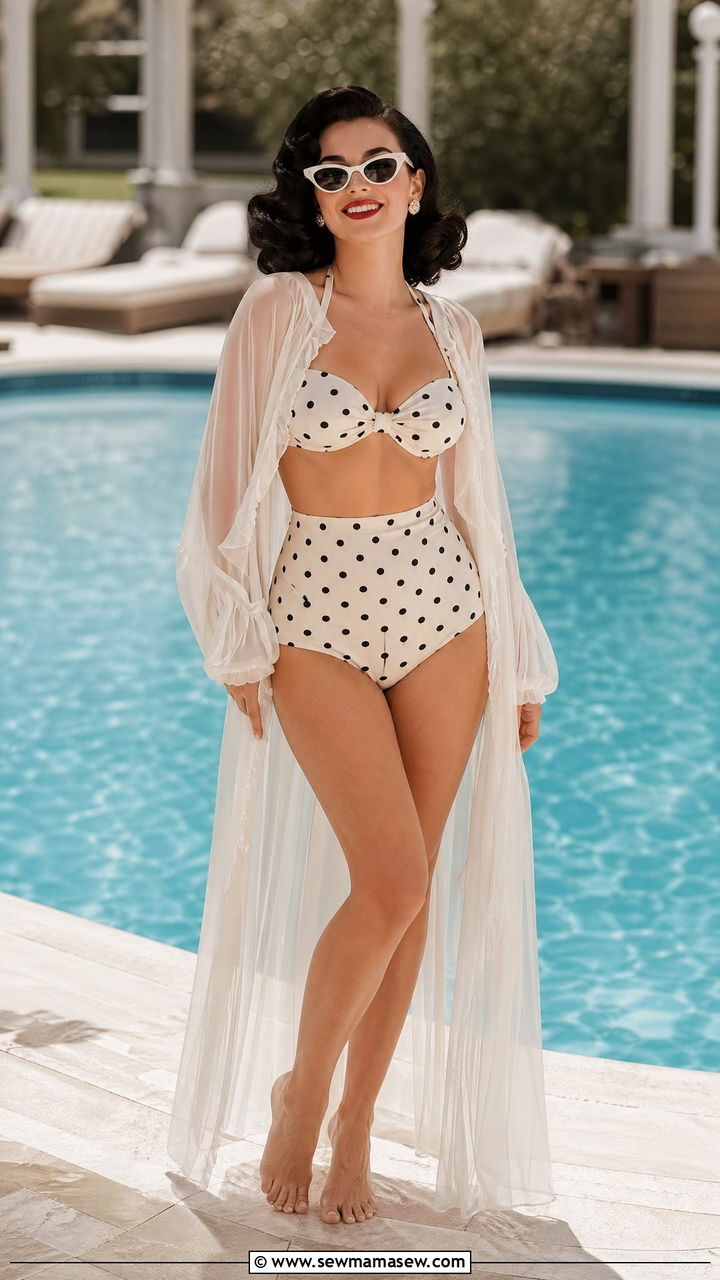
Let the main piece lead by combining 1950s Polka Dot Bikini With High-Waist Bottom. Choose pieces that sit cleanly at the natural waist and keep the strongest line of the outfit visible, then use olive with warm tan to create depth without making the look feel busy. A smooth base layer lets the featured garment hold its shape, while a contrasting texture such as ribbed knit, brushed wool, satin, or washed denim keeps the styling from looking flat. Match the visual weight of your shoes to the outfit—sleek pointed toes sharpen tailoring, substantial loafers ground relaxed proportions, and low-profile sneakers make dressier pieces feel approachable. Add one deliberate accessory, such as a leather belt, compact shoulder bag, silk scarf, or sculptural earring, and repeat one color so the whole outfit reads as cohesive. Adjust the hem, sleeve, and rise before leaving home; small tailoring choices make the formula look custom. Wear it for a weekday office, a coffee date, a travel day, or an evening gathering.
The image shows 1950s Polka Dot Bikini With High-Waist Bottom styled as a complete, wearable look in a leafy garden path. The main garment is easy to identify, with its shape balanced by carefully chosen bottoms and coordinated footwear. You can picture the fabric movement, the relationship between the waistline and the hem, and the small finishing touches that make the outfit feel deliberate. The palette stays focused while the accessories add just enough contrast to give the styling personality.
23. 1930s beach pajama set with turban headband outfit formula
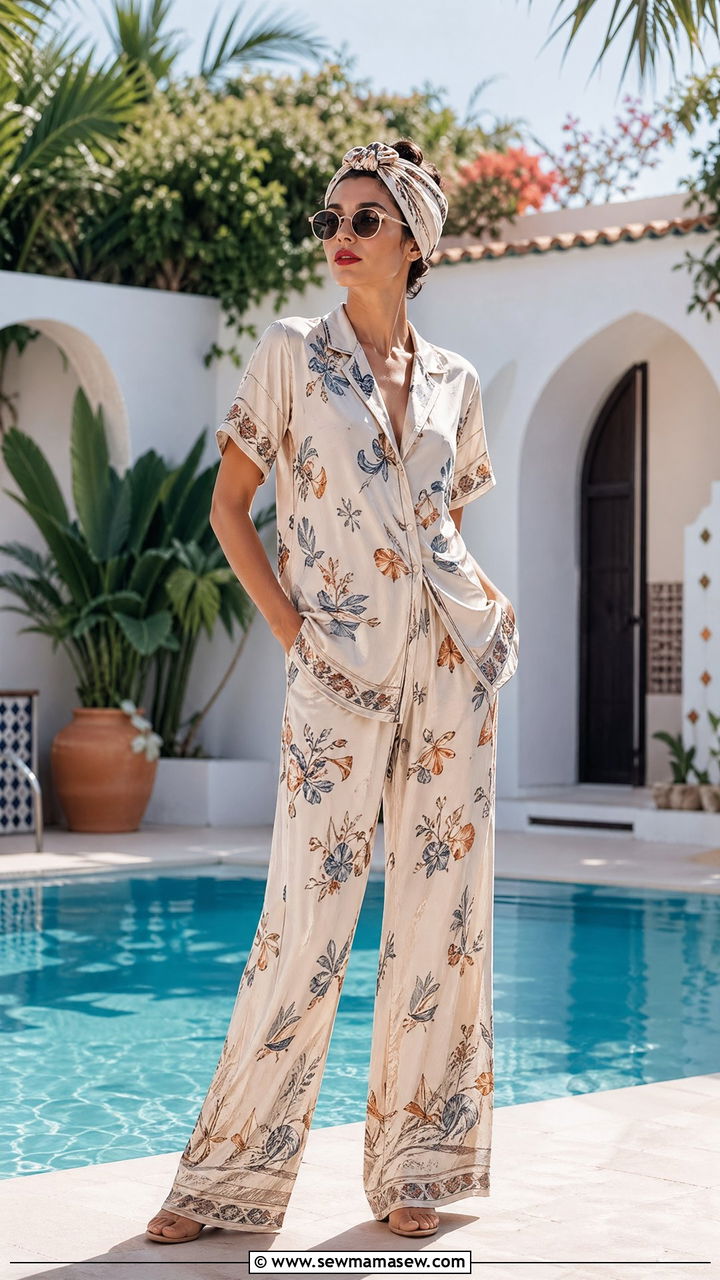
Create visual balance with 1930s Beach Pajama Set With Turban Headband. Choose pieces that sit cleanly at the natural waist and keep the strongest line of the outfit visible, then use charcoal and pale blue to create depth without making the look feel busy. A smooth base layer lets the featured garment hold its shape, while a contrasting texture such as ribbed knit, brushed wool, satin, or washed denim keeps the styling from looking flat. Match the visual weight of your shoes to the outfit—sleek pointed toes sharpen tailoring, substantial loafers ground relaxed proportions, and low-profile sneakers make dressier pieces feel approachable. Add one deliberate accessory, such as a leather belt, compact shoulder bag, silk scarf, or sculptural earring, and repeat one color so the whole outfit reads as cohesive. Adjust the hem, sleeve, and rise before leaving home; small tailoring choices make the formula look custom. Wear it for a weekday office, a coffee date, a travel day, or an evening gathering.
The image shows 1930s Beach Pajama Set With Turban Headband styled as a complete, wearable look in a warm-toned interior. The main garment is easy to identify, with its shape balanced by carefully chosen bottoms and coordinated footwear. You can picture the fabric movement, the relationship between the waistline and the hem, and the small finishing touches that make the outfit feel deliberate. The palette stays focused while the accessories add just enough contrast to give the styling personality.
22. 1930s shirtdress with leather sandals and sun hat outfit formula
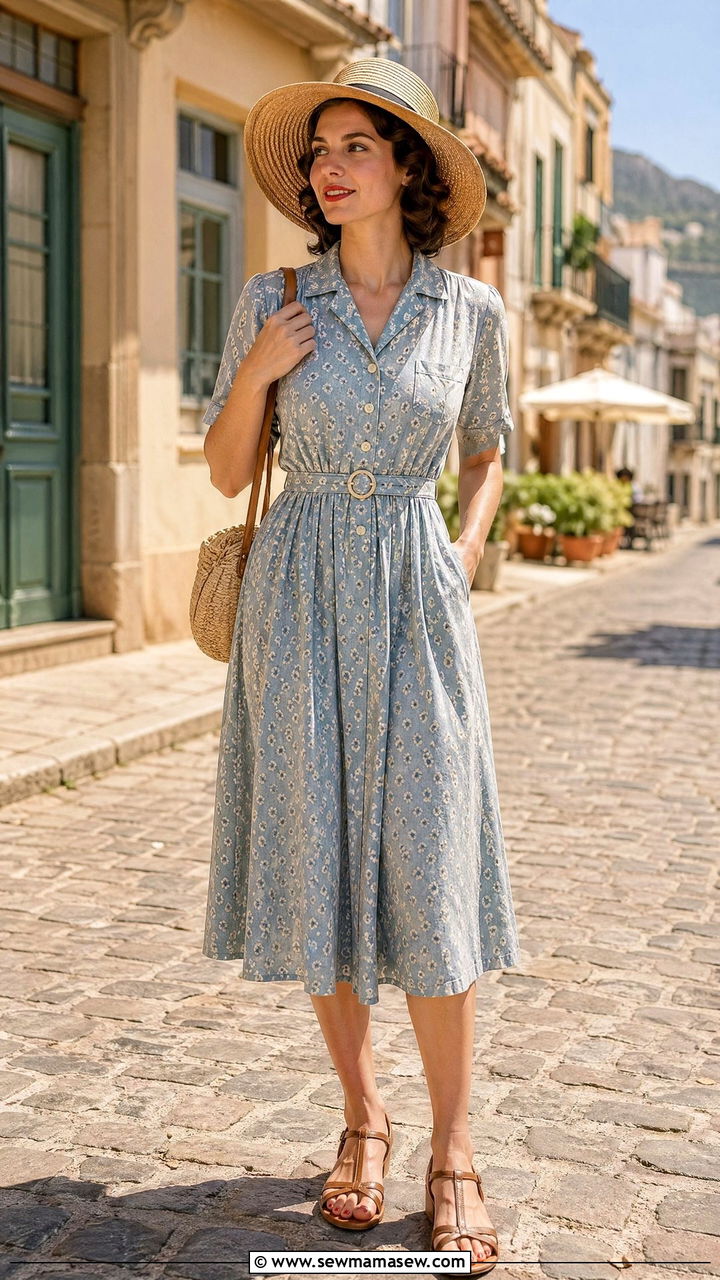
Give this formula a modern edge through 1930s Shirtdress With Leather Sandals And Sun Hat. Choose pieces that sit cleanly at the natural waist and keep the strongest line of the outfit visible, then use black and ivory to create depth without making the look feel busy. A smooth base layer lets the featured garment hold its shape, while a contrasting texture such as ribbed knit, brushed wool, satin, or washed denim keeps the styling from looking flat. Match the visual weight of your shoes to the outfit—sleek pointed toes sharpen tailoring, substantial loafers ground relaxed proportions, and low-profile sneakers make dressier pieces feel approachable. Add one deliberate accessory, such as a leather belt, compact shoulder bag, silk scarf, or sculptural earring, and repeat one color so the whole outfit reads as cohesive. Adjust the hem, sleeve, and rise before leaving home; small tailoring choices make the formula look custom. Wear it for a weekday office, a coffee date, a travel day, or an evening gathering.
The image shows 1930s Shirtdress With Leather Sandals And Sun Hat styled as a complete, wearable look in a bright city sidewalk. The main garment is easy to identify, with its shape balanced by carefully chosen bottoms and coordinated footwear. You can picture the fabric movement, the relationship between the waistline and the hem, and the small finishing touches that make the outfit feel deliberate. The palette stays focused while the accessories add just enough contrast to give the styling personality.
21. 1980s oversized graphic tee with bike shorts outfit formula
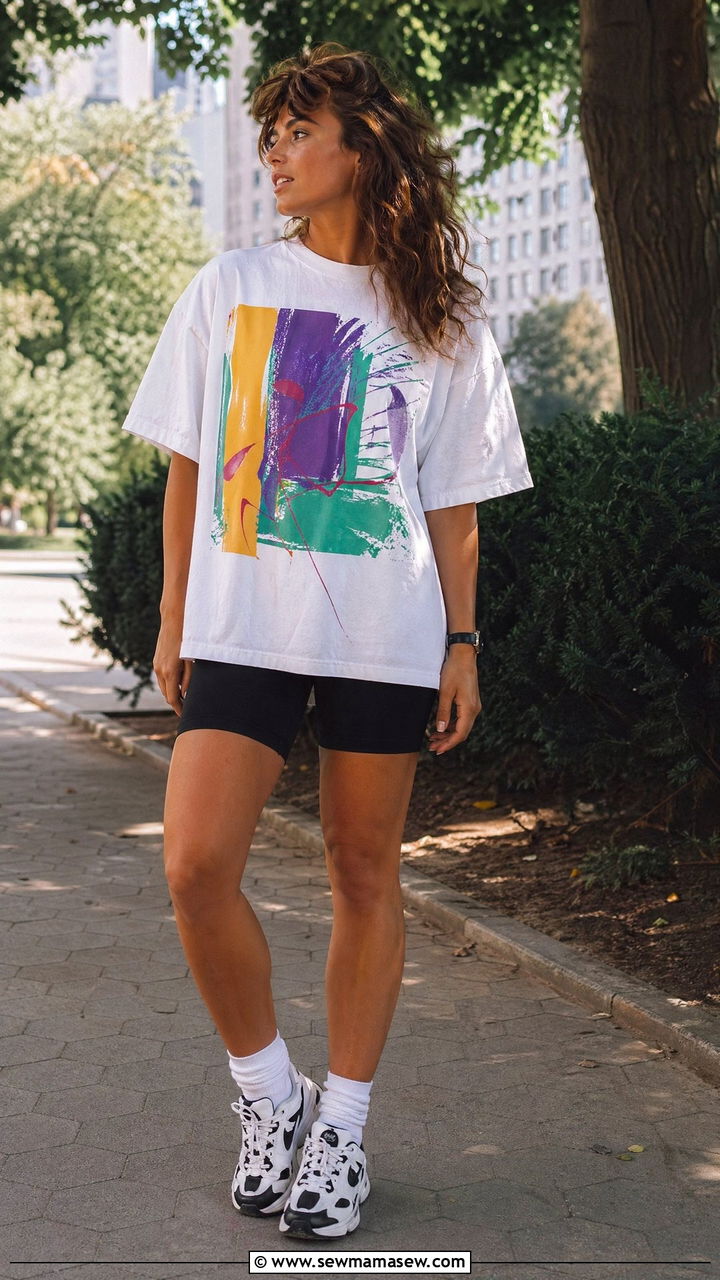
Anchor the outfit with 1980s Oversized Graphic Tee With Bike Shorts. Choose pieces that sit cleanly at the natural waist and keep the strongest line of the outfit visible, then use soft camel and cream to create depth without making the look feel busy. A smooth base layer lets the featured garment hold its shape, while a contrasting texture such as ribbed knit, brushed wool, satin, or washed denim keeps the styling from looking flat. Match the visual weight of your shoes to the outfit—sleek pointed toes sharpen tailoring, substantial loafers ground relaxed proportions, and low-profile sneakers make dressier pieces feel approachable. Add one deliberate accessory, such as a leather belt, compact shoulder bag, silk scarf, or sculptural earring, and repeat one color so the whole outfit reads as cohesive. Adjust the hem, sleeve, and rise before leaving home; small tailoring choices make the formula look custom. Wear it for a weekday office, a coffee date, a travel day, or an evening gathering.
The image shows 1980s Oversized Graphic Tee With Bike Shorts styled as a complete, wearable look in a softly lit studio. The main garment is easy to identify, with its shape balanced by carefully chosen bottoms and coordinated footwear. You can picture the fabric movement, the relationship between the waistline and the hem, and the small finishing touches that make the outfit feel deliberate. The palette stays focused while the accessories add just enough contrast to give the styling personality.
20. 1920s sailor-inspired middy blouse with wide-leg trousers outfit formula
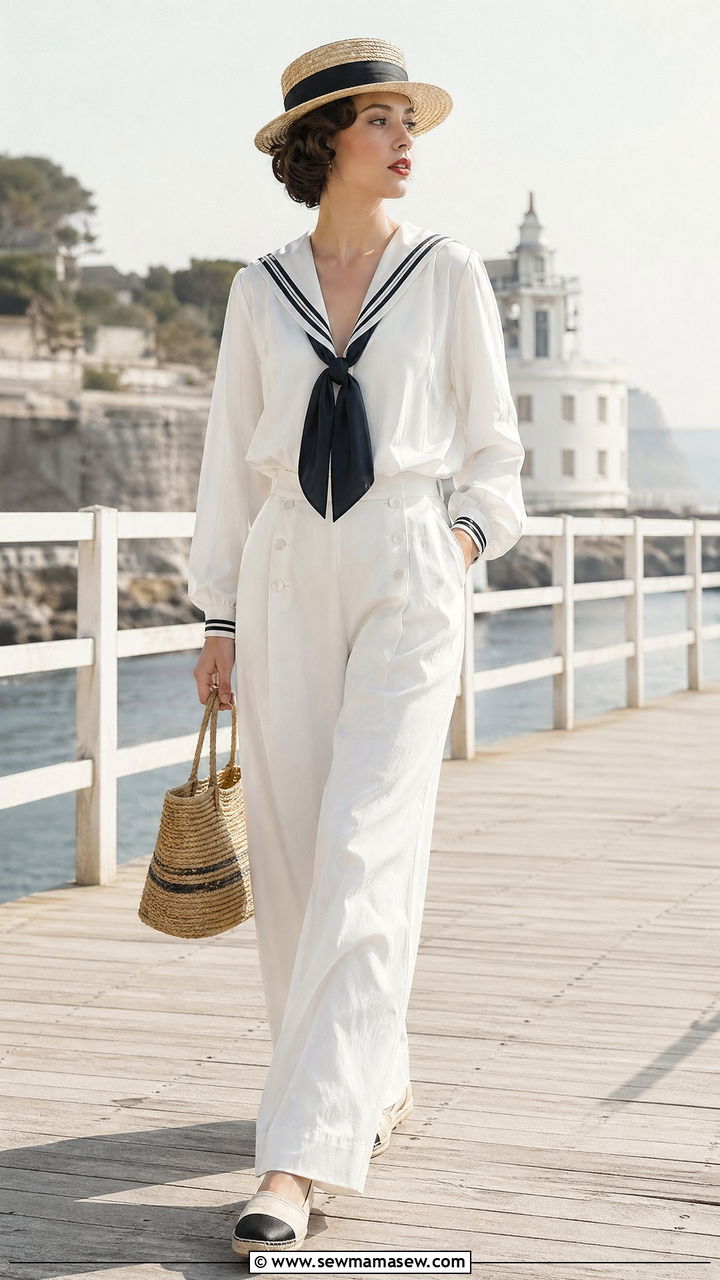
Build this look around 1920s Sailor-Inspired Middy Blouse With Wide-Leg Trousers. Choose pieces that sit cleanly at the natural waist and keep the strongest line of the outfit visible, then use navy with crisp white to create depth without making the look feel busy. A smooth base layer lets the featured garment hold its shape, while a contrasting texture such as ribbed knit, brushed wool, satin, or washed denim keeps the styling from looking flat. Match the visual weight of your shoes to the outfit—sleek pointed toes sharpen tailoring, substantial loafers ground relaxed proportions, and low-profile sneakers make dressier pieces feel approachable. Add one deliberate accessory, such as a leather belt, compact shoulder bag, silk scarf, or sculptural earring, and repeat one color so the whole outfit reads as cohesive. Adjust the hem, sleeve, and rise before leaving home; small tailoring choices make the formula look custom. Wear it for a weekday office, a coffee date, a travel day, or an evening gathering.
The image shows 1920s Sailor-Inspired Middy Blouse With Wide-Leg Trousers styled as a complete, wearable look in a café-lined street. The main garment is easy to identify, with its shape balanced by carefully chosen bottoms and coordinated footwear. You can picture the fabric movement, the relationship between the waistline and the hem, and the small finishing touches that make the outfit feel deliberate. The palette stays focused while the accessories add just enough contrast to give the styling personality.
19. 1930s bias-cut floral maxi dress with espadrilles outfit formula
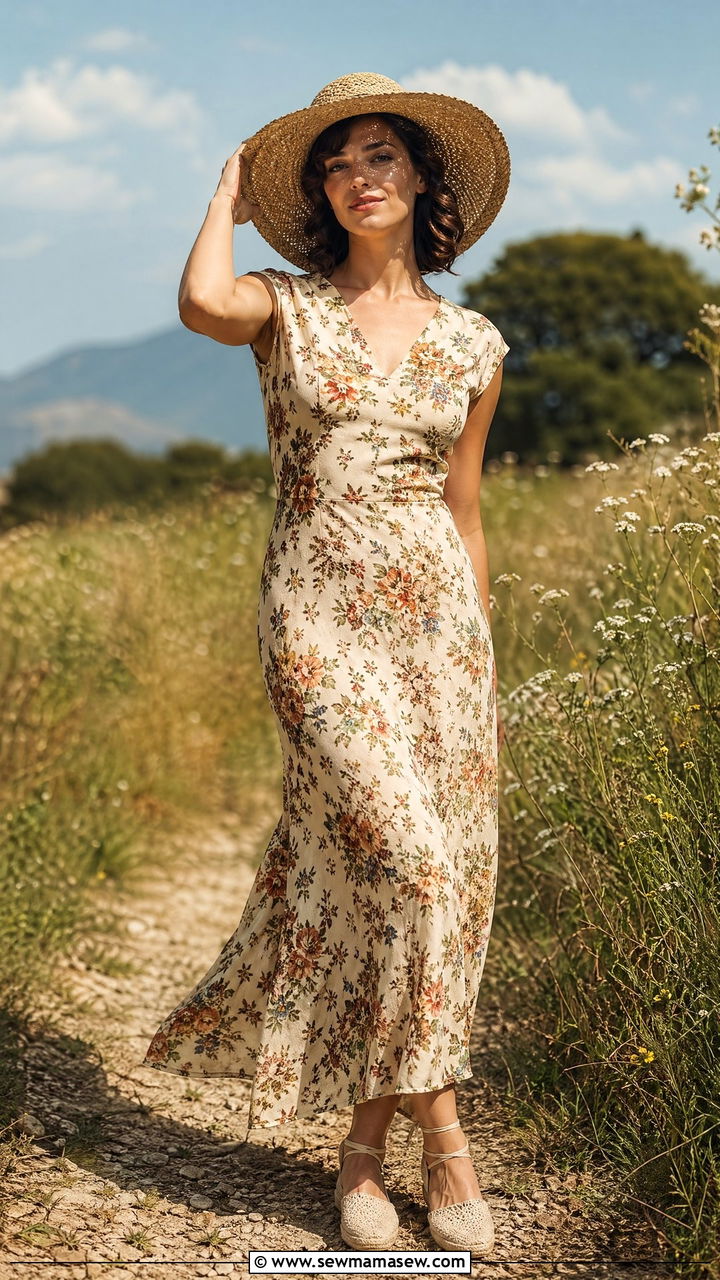
Start with 1930s Bias-Cut Floral Maxi Dress With Espadrilles. Choose pieces that sit cleanly at the natural waist and keep the strongest line of the outfit visible, then use espresso and muted blush to create depth without making the look feel busy. A smooth base layer lets the featured garment hold its shape, while a contrasting texture such as ribbed knit, brushed wool, satin, or washed denim keeps the styling from looking flat. Match the visual weight of your shoes to the outfit—sleek pointed toes sharpen tailoring, substantial loafers ground relaxed proportions, and low-profile sneakers make dressier pieces feel approachable. Add one deliberate accessory, such as a leather belt, compact shoulder bag, silk scarf, or sculptural earring, and repeat one color so the whole outfit reads as cohesive. Adjust the hem, sleeve, and rise before leaving home; small tailoring choices make the formula look custom. Wear it for a weekday office, a coffee date, a travel day, or an evening gathering.
The image shows 1930s Bias-Cut Floral Maxi Dress With Espadrilles styled as a complete, wearable look in a polished hotel lobby. The main garment is easy to identify, with its shape balanced by carefully chosen bottoms and coordinated footwear. You can picture the fabric movement, the relationship between the waistline and the hem, and the small finishing touches that make the outfit feel deliberate. The palette stays focused while the accessories add just enough contrast to give the styling personality.
18. 1940s polka dot tea dress with basket bag outfit formula
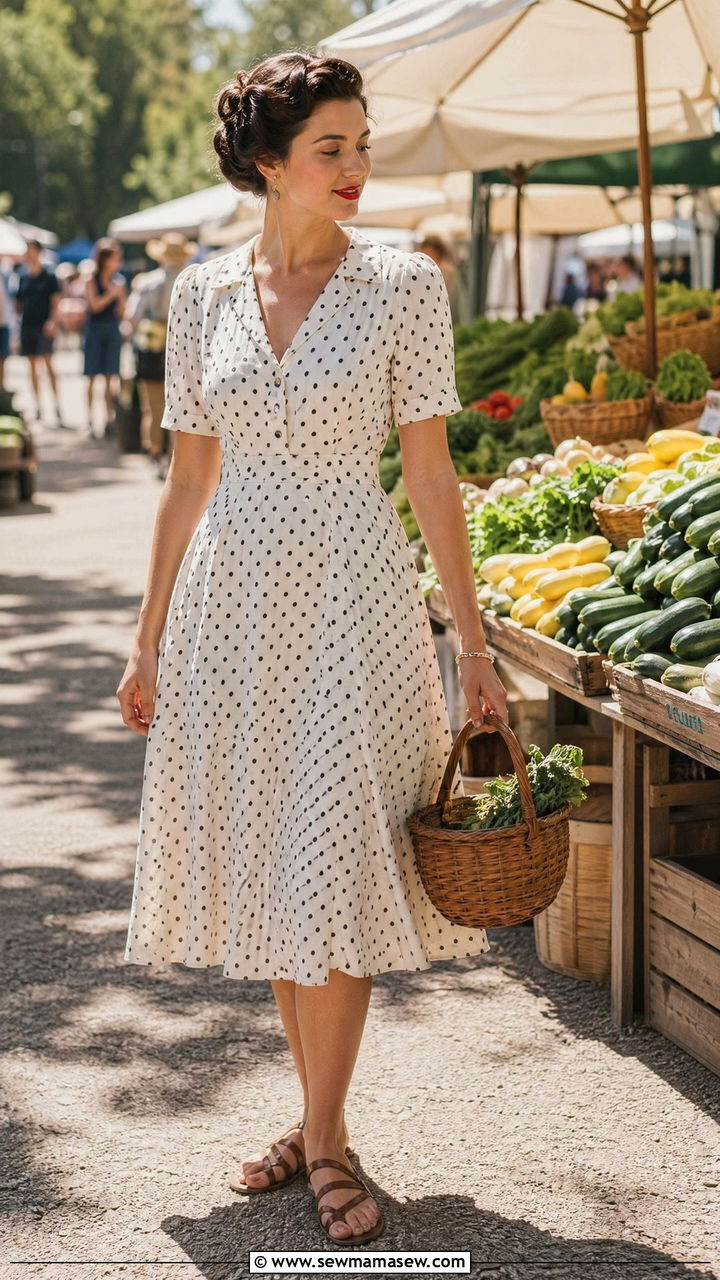
Make this combination feel intentional by choosing 1940s Polka Dot Tea Dress With Basket Bag. Choose pieces that sit cleanly at the natural waist and keep the strongest line of the outfit visible, then use olive with warm tan to create depth without making the look feel busy. A smooth base layer lets the featured garment hold its shape, while a contrasting texture such as ribbed knit, brushed wool, satin, or washed denim keeps the styling from looking flat. Match the visual weight of your shoes to the outfit—sleek pointed toes sharpen tailoring, substantial loafers ground relaxed proportions, and low-profile sneakers make dressier pieces feel approachable. Add one deliberate accessory, such as a leather belt, compact shoulder bag, silk scarf, or sculptural earring, and repeat one color so the whole outfit reads as cohesive. Adjust the hem, sleeve, and rise before leaving home; small tailoring choices make the formula look custom. Wear it for a weekday office, a coffee date, a travel day, or an evening gathering.
The image shows 1940s Polka Dot Tea Dress With Basket Bag styled as a complete, wearable look in a leafy garden path. The main garment is easy to identify, with its shape balanced by carefully chosen bottoms and coordinated footwear. You can picture the fabric movement, the relationship between the waistline and the hem, and the small finishing touches that make the outfit feel deliberate. The palette stays focused while the accessories add just enough contrast to give the styling personality.
17. 1970s high-waisted flare jeans with halter top outfit formula
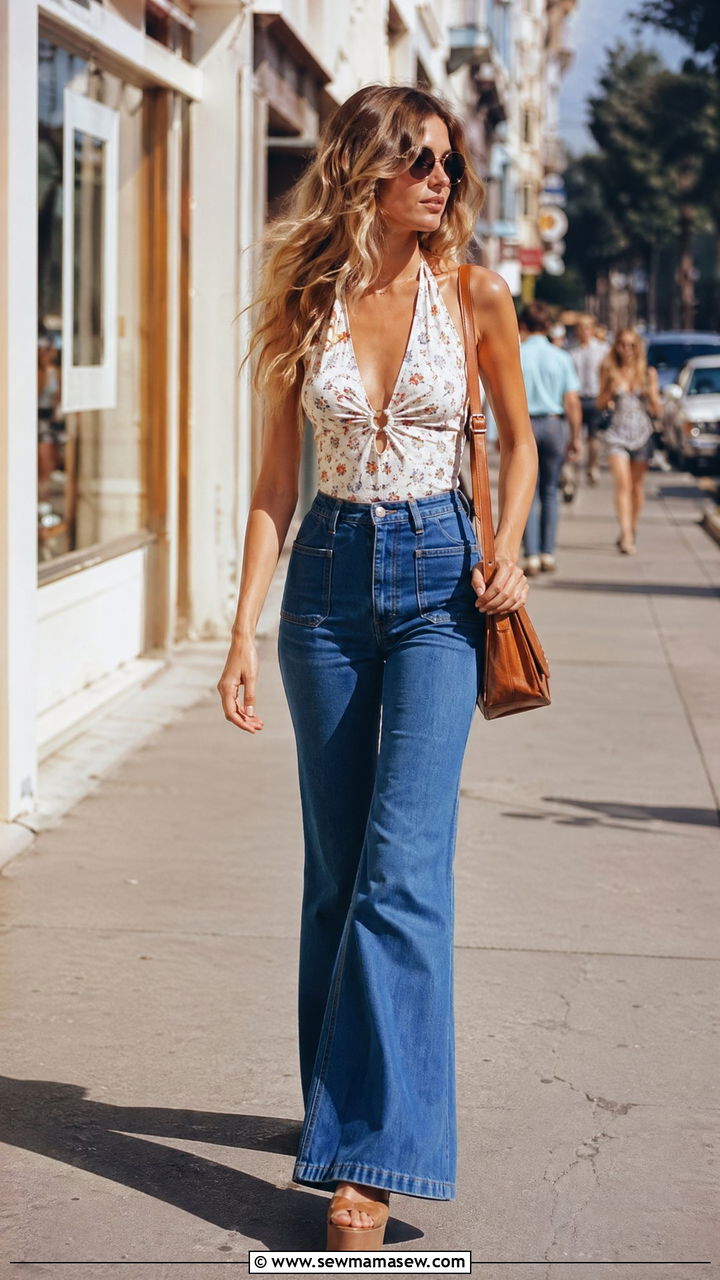
Use this outfit when you want 1970s High-Waisted Flare Jeans With Halter Top. Choose pieces that sit cleanly at the natural waist and keep the strongest line of the outfit visible, then use charcoal and pale blue to create depth without making the look feel busy. A smooth base layer lets the featured garment hold its shape, while a contrasting texture such as ribbed knit, brushed wool, satin, or washed denim keeps the styling from looking flat. Match the visual weight of your shoes to the outfit—sleek pointed toes sharpen tailoring, substantial loafers ground relaxed proportions, and low-profile sneakers make dressier pieces feel approachable. Add one deliberate accessory, such as a leather belt, compact shoulder bag, silk scarf, or sculptural earring, and repeat one color so the whole outfit reads as cohesive. Adjust the hem, sleeve, and rise before leaving home; small tailoring choices make the formula look custom. Wear it for a weekday office, a coffee date, a travel day, or an evening gathering.
The image shows 1970s High-Waisted Flare Jeans With Halter Top styled as a complete, wearable look in a warm-toned interior. The main garment is easy to identify, with its shape balanced by carefully chosen bottoms and coordinated footwear. You can picture the fabric movement, the relationship between the waistline and the hem, and the small finishing touches that make the outfit feel deliberate. The palette stays focused while the accessories add just enough contrast to give the styling personality.
16. 1950s pencil skirt with fitted cardigan and pearls outfit formula
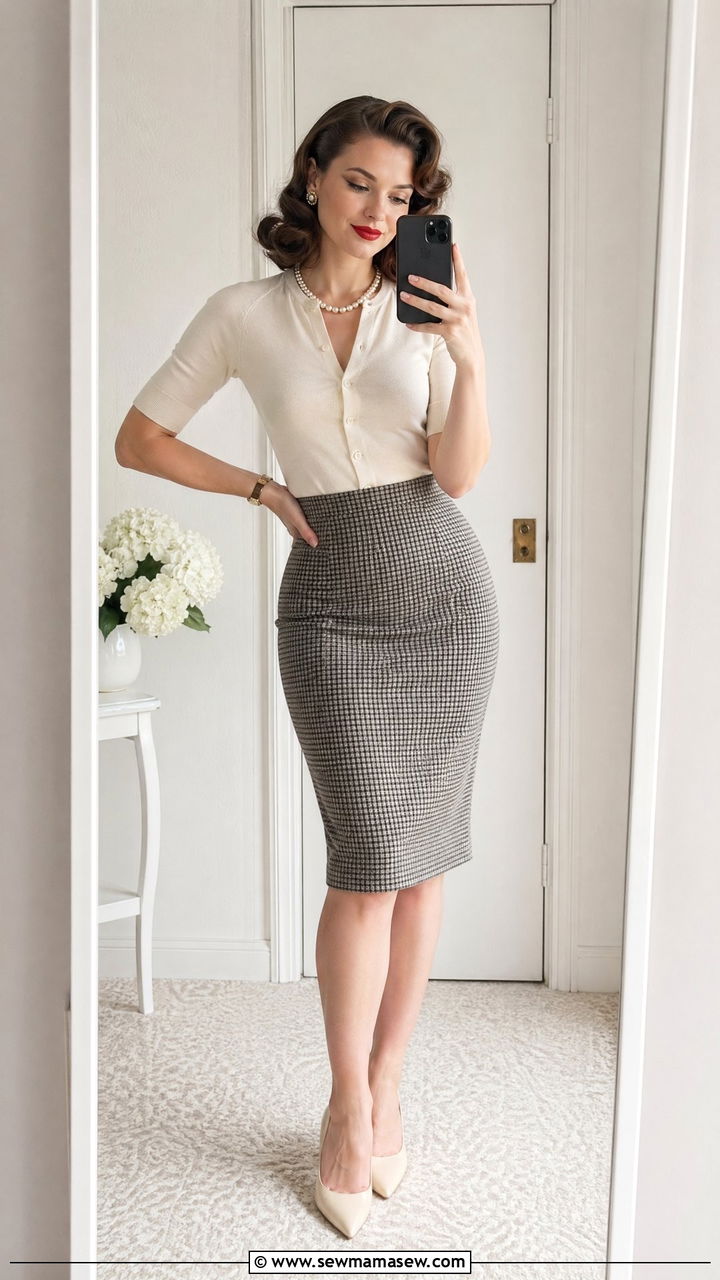
Keep the silhouette refined with 1950s Pencil Skirt With Fitted Cardigan And Pearls. Choose pieces that sit cleanly at the natural waist and keep the strongest line of the outfit visible, then use black and ivory to create depth without making the look feel busy. A smooth base layer lets the featured garment hold its shape, while a contrasting texture such as ribbed knit, brushed wool, satin, or washed denim keeps the styling from looking flat. Match the visual weight of your shoes to the outfit—sleek pointed toes sharpen tailoring, substantial loafers ground relaxed proportions, and low-profile sneakers make dressier pieces feel approachable. Add one deliberate accessory, such as a leather belt, compact shoulder bag, silk scarf, or sculptural earring, and repeat one color so the whole outfit reads as cohesive. Adjust the hem, sleeve, and rise before leaving home; small tailoring choices make the formula look custom. Wear it for a weekday office, a coffee date, a travel day, or an evening gathering.
The image shows 1950s Pencil Skirt With Fitted Cardigan And Pearls styled as a complete, wearable look in a bright city sidewalk. The main garment is easy to identify, with its shape balanced by carefully chosen bottoms and coordinated footwear. You can picture the fabric movement, the relationship between the waistline and the hem, and the small finishing touches that make the outfit feel deliberate. The palette stays focused while the accessories add just enough contrast to give the styling personality.
15. 1980s denim mini skirt with neon crop top outfit formula
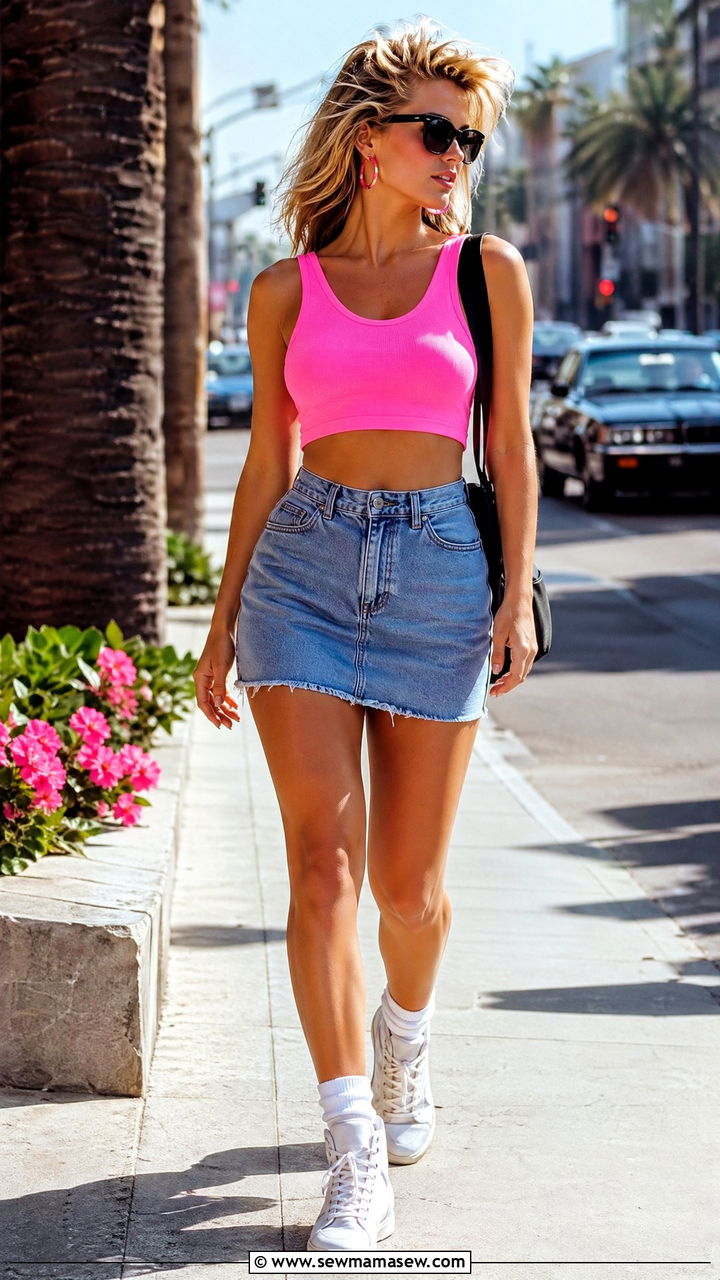
For a more finished result, pair 1980s Denim Mini Skirt With Neon Crop Top. Choose pieces that sit cleanly at the natural waist and keep the strongest line of the outfit visible, then use soft camel and cream to create depth without making the look feel busy. A smooth base layer lets the featured garment hold its shape, while a contrasting texture such as ribbed knit, brushed wool, satin, or washed denim keeps the styling from looking flat. Match the visual weight of your shoes to the outfit—sleek pointed toes sharpen tailoring, substantial loafers ground relaxed proportions, and low-profile sneakers make dressier pieces feel approachable. Add one deliberate accessory, such as a leather belt, compact shoulder bag, silk scarf, or sculptural earring, and repeat one color so the whole outfit reads as cohesive. Adjust the hem, sleeve, and rise before leaving home; small tailoring choices make the formula look custom. Wear it for a weekday office, a coffee date, a travel day, or an evening gathering.
The image shows 1980s Denim Mini Skirt With Neon Crop Top styled as a complete, wearable look in a softly lit studio. The main garment is easy to identify, with its shape balanced by carefully chosen bottoms and coordinated footwear. You can picture the fabric movement, the relationship between the waistline and the hem, and the small finishing touches that make the outfit feel deliberate. The palette stays focused while the accessories add just enough contrast to give the styling personality.
14. 1980s power blazer with tailored shorts and sneakers outfit formula
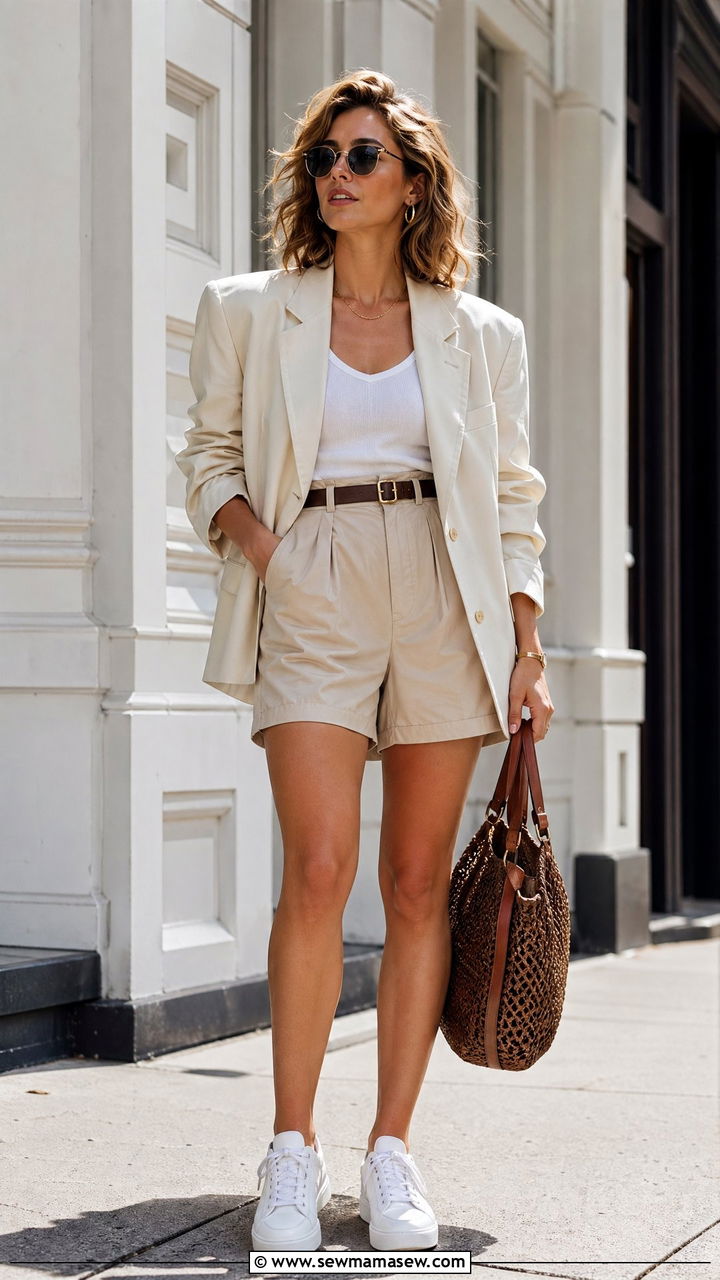
Let the main piece lead by combining 1980s Power Blazer With Tailored Shorts And Sneakers. Choose pieces that sit cleanly at the natural waist and keep the strongest line of the outfit visible, then use navy with crisp white to create depth without making the look feel busy. A smooth base layer lets the featured garment hold its shape, while a contrasting texture such as ribbed knit, brushed wool, satin, or washed denim keeps the styling from looking flat. Match the visual weight of your shoes to the outfit—sleek pointed toes sharpen tailoring, substantial loafers ground relaxed proportions, and low-profile sneakers make dressier pieces feel approachable. Add one deliberate accessory, such as a leather belt, compact shoulder bag, silk scarf, or sculptural earring, and repeat one color so the whole outfit reads as cohesive. Adjust the hem, sleeve, and rise before leaving home; small tailoring choices make the formula look custom. Wear it for a weekday office, a coffee date, a travel day, or an evening gathering.
The image shows 1980s Power Blazer With Tailored Shorts And Sneakers styled as a complete, wearable look in a café-lined street. The main garment is easy to identify, with its shape balanced by carefully chosen bottoms and coordinated footwear. You can picture the fabric movement, the relationship between the waistline and the hem, and the small finishing touches that make the outfit feel deliberate. The palette stays focused while the accessories add just enough contrast to give the styling personality.
13. 1970s bohemian maxi dress with platform sandals outfit formula
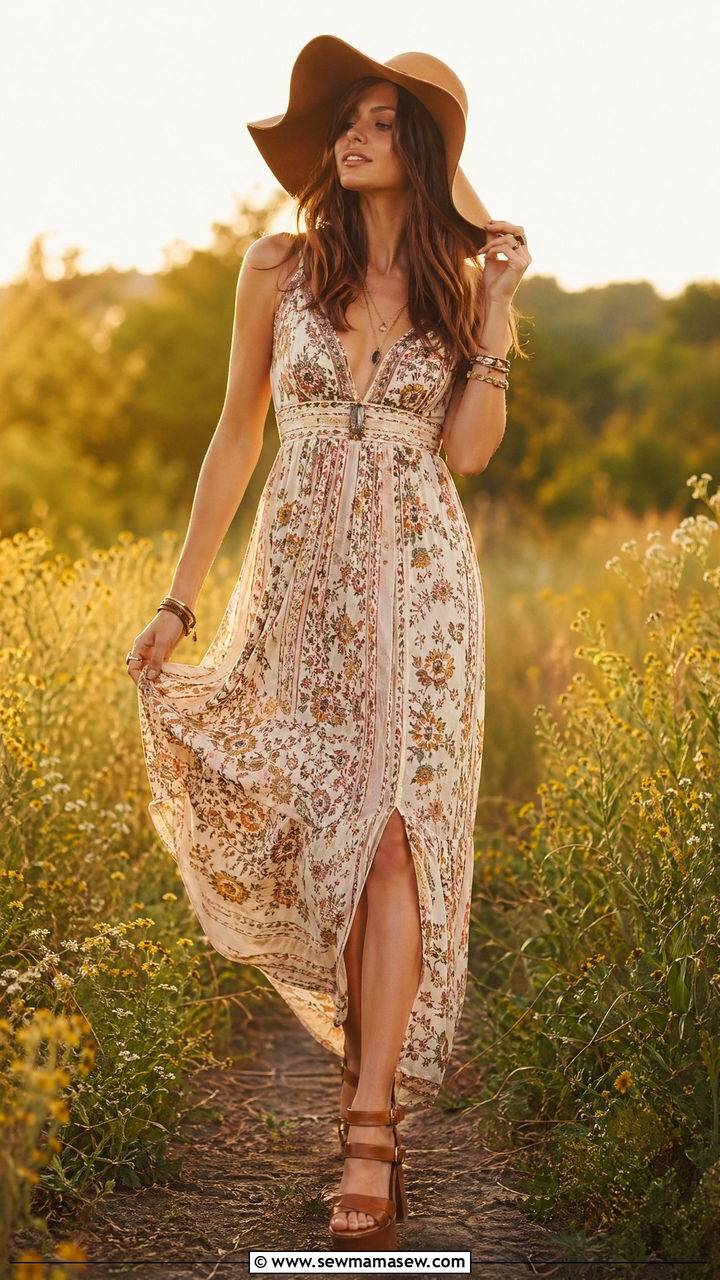
Create visual balance with 1970s Bohemian Maxi Dress With Platform Sandals. Choose pieces that sit cleanly at the natural waist and keep the strongest line of the outfit visible, then use espresso and muted blush to create depth without making the look feel busy. A smooth base layer lets the featured garment hold its shape, while a contrasting texture such as ribbed knit, brushed wool, satin, or washed denim keeps the styling from looking flat. Match the visual weight of your shoes to the outfit—sleek pointed toes sharpen tailoring, substantial loafers ground relaxed proportions, and low-profile sneakers make dressier pieces feel approachable. Add one deliberate accessory, such as a leather belt, compact shoulder bag, silk scarf, or sculptural earring, and repeat one color so the whole outfit reads as cohesive. Adjust the hem, sleeve, and rise before leaving home; small tailoring choices make the formula look custom. Wear it for a weekday office, a coffee date, a travel day, or an evening gathering.
The image shows 1970s Bohemian Maxi Dress With Platform Sandals styled as a complete, wearable look in a polished hotel lobby. The main garment is easy to identify, with its shape balanced by carefully chosen bottoms and coordinated footwear. You can picture the fabric movement, the relationship between the waistline and the hem, and the small finishing touches that make the outfit feel deliberate. The palette stays focused while the accessories add just enough contrast to give the styling personality.
12. 1920s lace-trimmed shift with cloche hat outfit formula
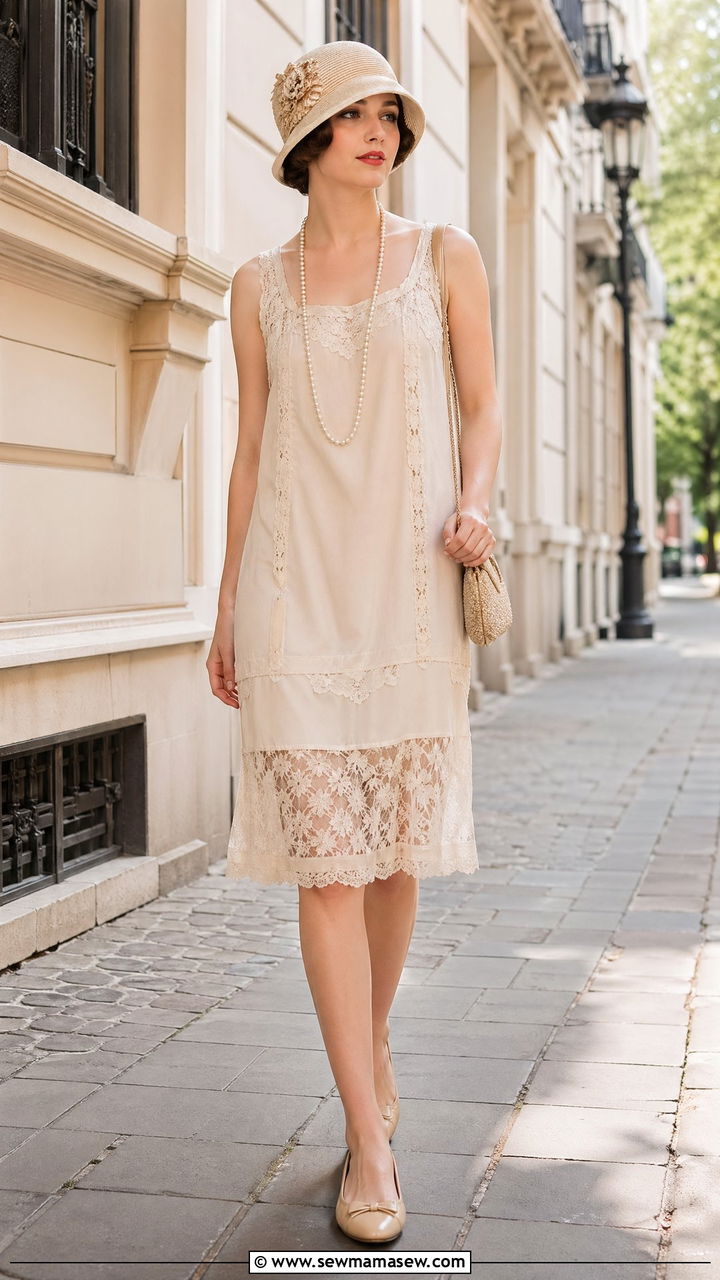
Give this formula a modern edge through 1920s Lace-Trimmed Shift With Cloche Hat. Choose pieces that sit cleanly at the natural waist and keep the strongest line of the outfit visible, then use olive with warm tan to create depth without making the look feel busy. A smooth base layer lets the featured garment hold its shape, while a contrasting texture such as ribbed knit, brushed wool, satin, or washed denim keeps the styling from looking flat. Match the visual weight of your shoes to the outfit—sleek pointed toes sharpen tailoring, substantial loafers ground relaxed proportions, and low-profile sneakers make dressier pieces feel approachable. Add one deliberate accessory, such as a leather belt, compact shoulder bag, silk scarf, or sculptural earring, and repeat one color so the whole outfit reads as cohesive. Adjust the hem, sleeve, and rise before leaving home; small tailoring choices make the formula look custom. Wear it for a weekday office, a coffee date, a travel day, or an evening gathering.
The image shows 1920s Lace-Trimmed Shift With Cloche Hat styled as a complete, wearable look in a leafy garden path. The main garment is easy to identify, with its shape balanced by carefully chosen bottoms and coordinated footwear. You can picture the fabric movement, the relationship between the waistline and the hem, and the small finishing touches that make the outfit feel deliberate. The palette stays focused while the accessories add just enough contrast to give the styling personality.
11. 1990s plaid mini skirt with baby tee outfit formula
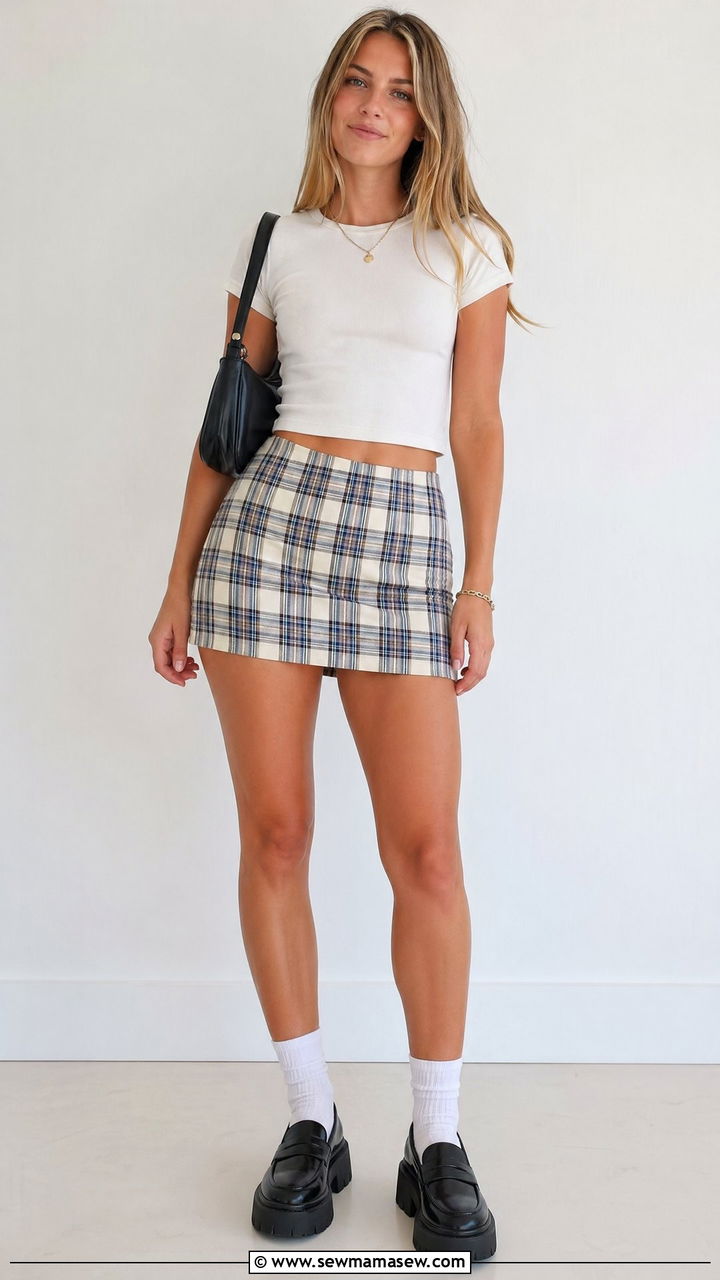
Anchor the outfit with 1990s Plaid Mini Skirt With Baby Tee. Choose pieces that sit cleanly at the natural waist and keep the strongest line of the outfit visible, then use charcoal and pale blue to create depth without making the look feel busy. A smooth base layer lets the featured garment hold its shape, while a contrasting texture such as ribbed knit, brushed wool, satin, or washed denim keeps the styling from looking flat. Match the visual weight of your shoes to the outfit—sleek pointed toes sharpen tailoring, substantial loafers ground relaxed proportions, and low-profile sneakers make dressier pieces feel approachable. Add one deliberate accessory, such as a leather belt, compact shoulder bag, silk scarf, or sculptural earring, and repeat one color so the whole outfit reads as cohesive. Adjust the hem, sleeve, and rise before leaving home; small tailoring choices make the formula look custom. Wear it for a weekday office, a coffee date, a travel day, or an evening gathering.
The image shows 1990s Plaid Mini Skirt With Baby Tee styled as a complete, wearable look in a warm-toned interior. The main garment is easy to identify, with its shape balanced by carefully chosen bottoms and coordinated footwear. You can picture the fabric movement, the relationship between the waistline and the hem, and the small finishing touches that make the outfit feel deliberate. The palette stays focused while the accessories add just enough contrast to give the styling personality.
10. 1970s tie-dye tank with flared pants outfit formula
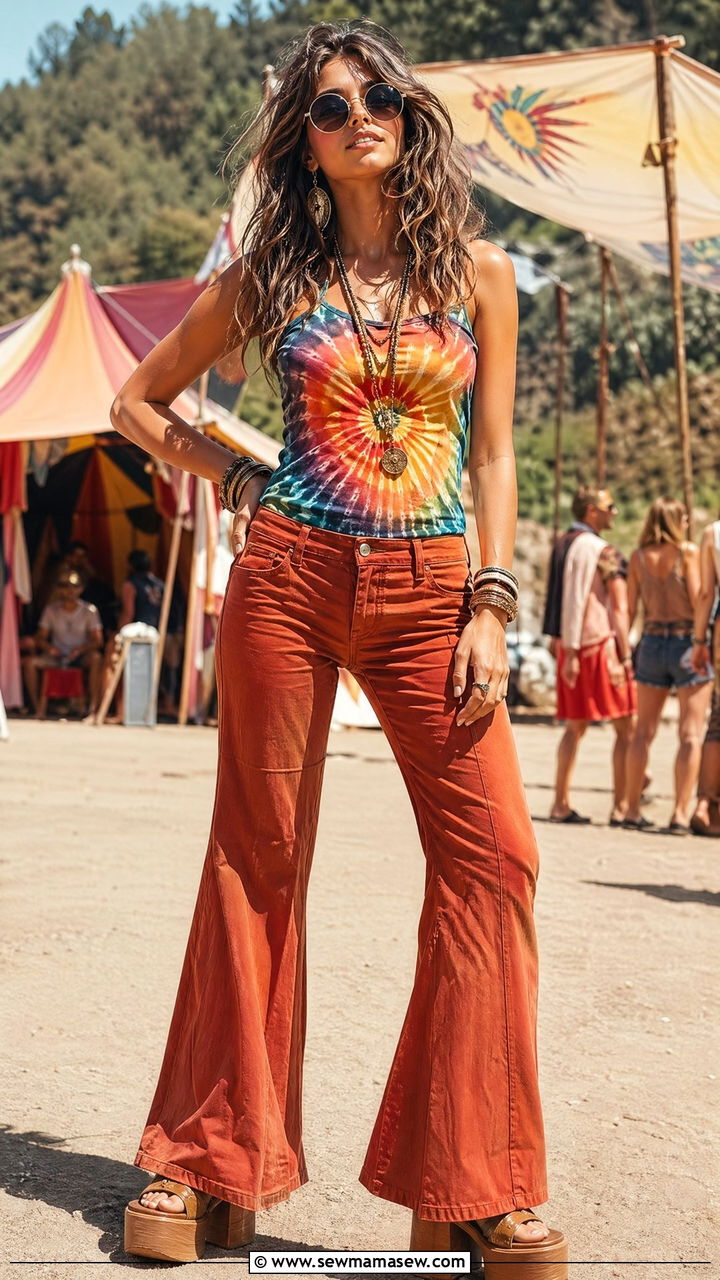
Build this look around 1970s Tie-Dye Tank With Flared Pants. Choose pieces that sit cleanly at the natural waist and keep the strongest line of the outfit visible, then use black and ivory to create depth without making the look feel busy. A smooth base layer lets the featured garment hold its shape, while a contrasting texture such as ribbed knit, brushed wool, satin, or washed denim keeps the styling from looking flat. Match the visual weight of your shoes to the outfit—sleek pointed toes sharpen tailoring, substantial loafers ground relaxed proportions, and low-profile sneakers make dressier pieces feel approachable. Add one deliberate accessory, such as a leather belt, compact shoulder bag, silk scarf, or sculptural earring, and repeat one color so the whole outfit reads as cohesive. Adjust the hem, sleeve, and rise before leaving home; small tailoring choices make the formula look custom. Wear it for a weekday office, a coffee date, a travel day, or an evening gathering.
The image shows 1970s Tie-Dye Tank With Flared Pants styled as a complete, wearable look in a bright city sidewalk. The main garment is easy to identify, with its shape balanced by carefully chosen bottoms and coordinated footwear. You can picture the fabric movement, the relationship between the waistline and the hem, and the small finishing touches that make the outfit feel deliberate. The palette stays focused while the accessories add just enough contrast to give the styling personality.
9. 1990s spaghetti strap dress with platform flip-flops outfit formula
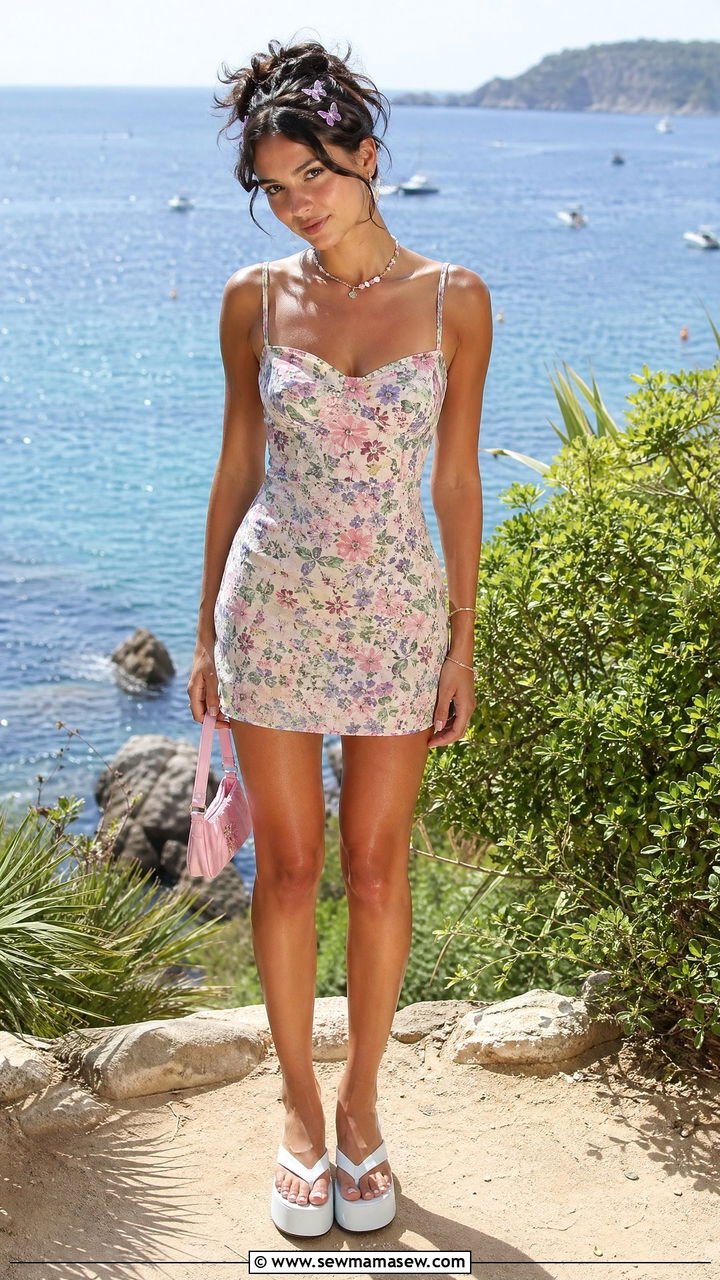
Start with 1990s Spaghetti Strap Dress With Platform Flip-Flops. Choose pieces that sit cleanly at the natural waist and keep the strongest line of the outfit visible, then use soft camel and cream to create depth without making the look feel busy. A smooth base layer lets the featured garment hold its shape, while a contrasting texture such as ribbed knit, brushed wool, satin, or washed denim keeps the styling from looking flat. Match the visual weight of your shoes to the outfit—sleek pointed toes sharpen tailoring, substantial loafers ground relaxed proportions, and low-profile sneakers make dressier pieces feel approachable. Add one deliberate accessory, such as a leather belt, compact shoulder bag, silk scarf, or sculptural earring, and repeat one color so the whole outfit reads as cohesive. Adjust the hem, sleeve, and rise before leaving home; small tailoring choices make the formula look custom. Wear it for a weekday office, a coffee date, a travel day, or an evening gathering.
The image shows 1990s Spaghetti Strap Dress With Platform Flip-Flops styled as a complete, wearable look in a softly lit studio. The main garment is easy to identify, with its shape balanced by carefully chosen bottoms and coordinated footwear. You can picture the fabric movement, the relationship between the waistline and the hem, and the small finishing touches that make the outfit feel deliberate. The palette stays focused while the accessories add just enough contrast to give the styling personality.
8. 1980s shoulder-pad dress with statement belt outfit formula
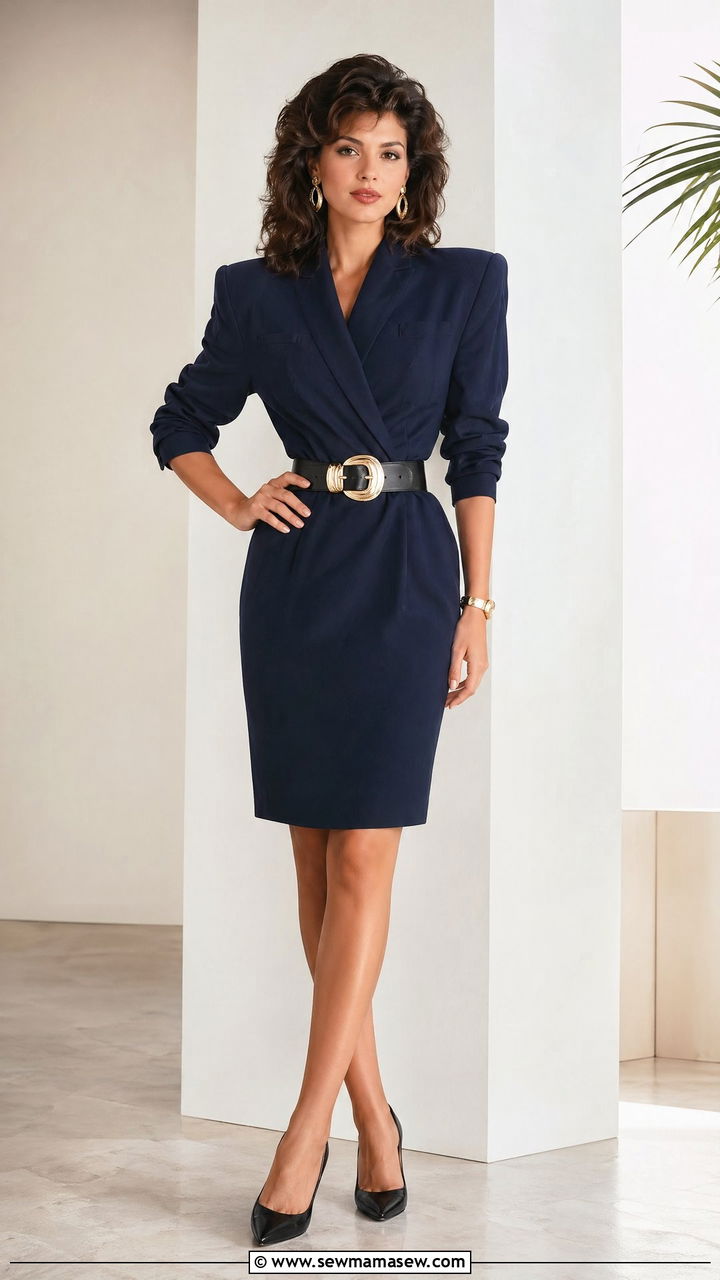
Make this combination feel intentional by choosing 1980s Shoulder-Pad Dress With Statement Belt. Choose pieces that sit cleanly at the natural waist and keep the strongest line of the outfit visible, then use navy with crisp white to create depth without making the look feel busy. A smooth base layer lets the featured garment hold its shape, while a contrasting texture such as ribbed knit, brushed wool, satin, or washed denim keeps the styling from looking flat. Match the visual weight of your shoes to the outfit—sleek pointed toes sharpen tailoring, substantial loafers ground relaxed proportions, and low-profile sneakers make dressier pieces feel approachable. Add one deliberate accessory, such as a leather belt, compact shoulder bag, silk scarf, or sculptural earring, and repeat one color so the whole outfit reads as cohesive. Adjust the hem, sleeve, and rise before leaving home; small tailoring choices make the formula look custom. Wear it for a weekday office, a coffee date, a travel day, or an evening gathering.
The image shows 1980s Shoulder-Pad Dress With Statement Belt styled as a complete, wearable look in a café-lined street. The main garment is easy to identify, with its shape balanced by carefully chosen bottoms and coordinated footwear. You can picture the fabric movement, the relationship between the waistline and the hem, and the small finishing touches that make the outfit feel deliberate. The palette stays focused while the accessories add just enough contrast to give the styling personality.
7. 1960s wide-leg sailor pants with striped tee outfit formula
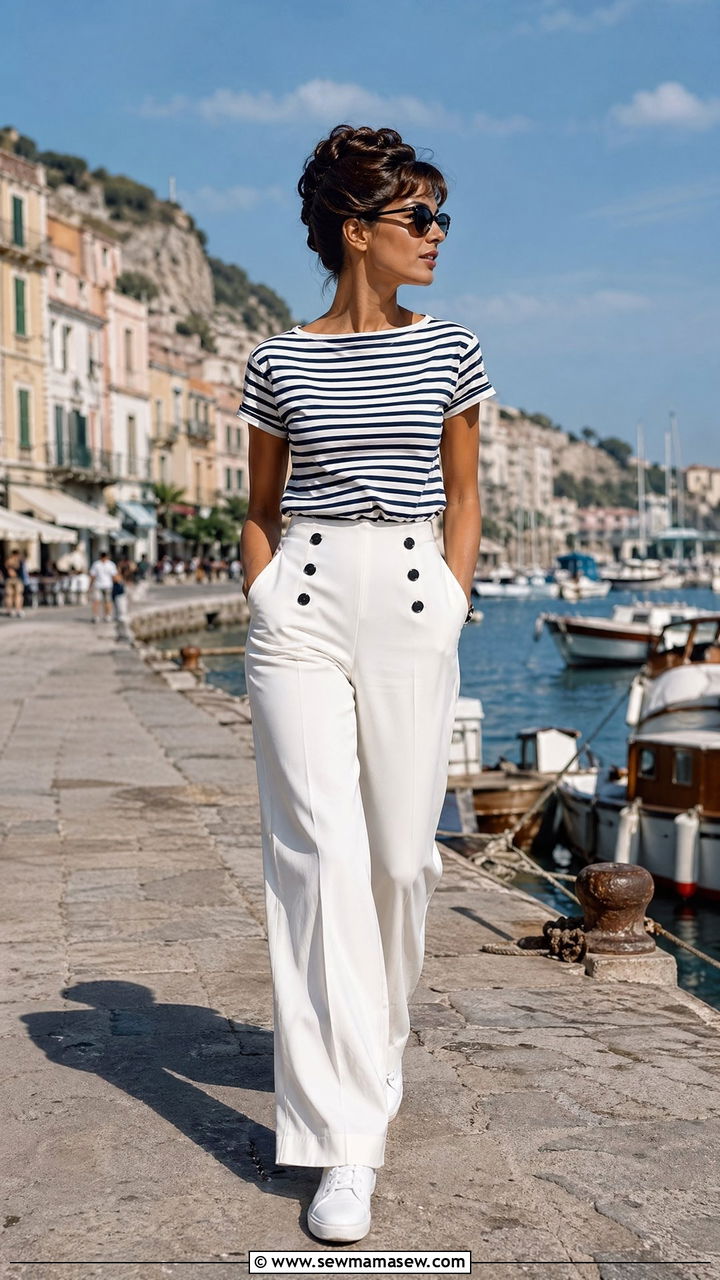
Use this outfit when you want 1960s Wide-Leg Sailor Pants With Striped Tee. Choose pieces that sit cleanly at the natural waist and keep the strongest line of the outfit visible, then use espresso and muted blush to create depth without making the look feel busy. A smooth base layer lets the featured garment hold its shape, while a contrasting texture such as ribbed knit, brushed wool, satin, or washed denim keeps the styling from looking flat. Match the visual weight of your shoes to the outfit—sleek pointed toes sharpen tailoring, substantial loafers ground relaxed proportions, and low-profile sneakers make dressier pieces feel approachable. Add one deliberate accessory, such as a leather belt, compact shoulder bag, silk scarf, or sculptural earring, and repeat one color so the whole outfit reads as cohesive. Adjust the hem, sleeve, and rise before leaving home; small tailoring choices make the formula look custom. Wear it for a weekday office, a coffee date, a travel day, or an evening gathering.
The image shows 1960s Wide-Leg Sailor Pants With Striped Tee styled as a complete, wearable look in a polished hotel lobby. The main garment is easy to identify, with its shape balanced by carefully chosen bottoms and coordinated footwear. You can picture the fabric movement, the relationship between the waistline and the hem, and the small finishing touches that make the outfit feel deliberate. The palette stays focused while the accessories add just enough contrast to give the styling personality.
6. 1920s beaded chiffon dress with art deco accessories outfit formula
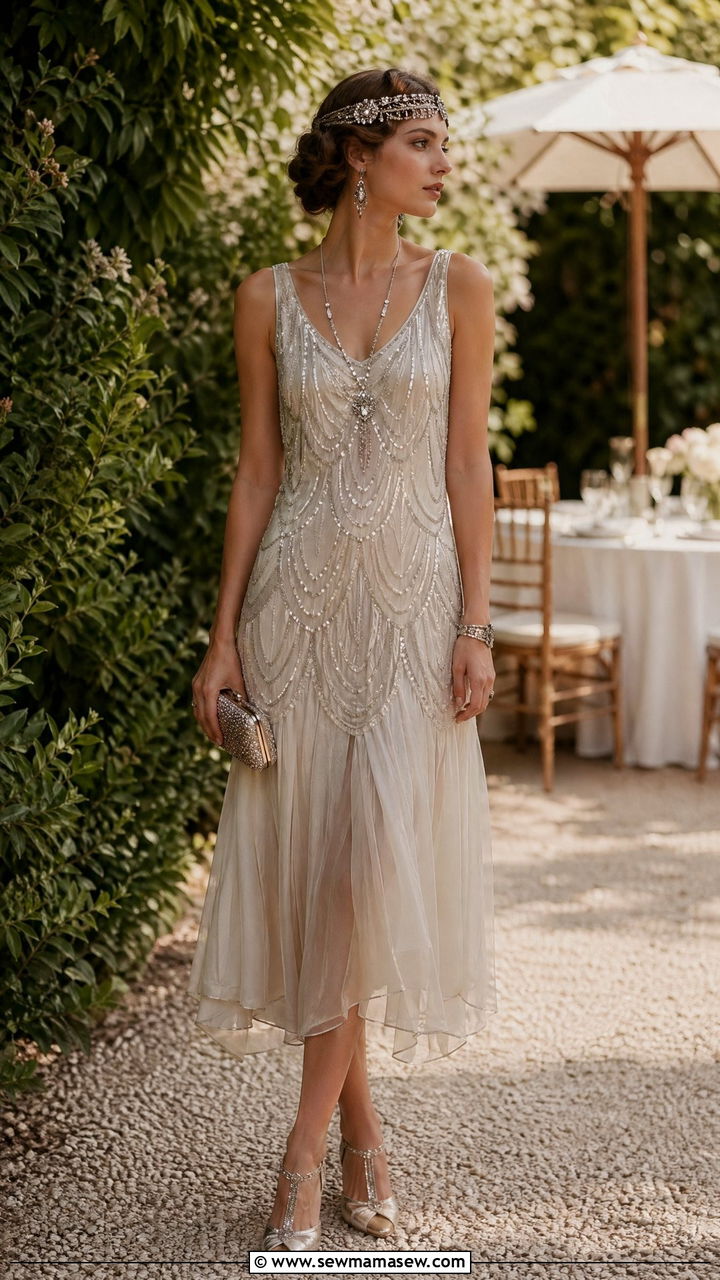
Keep the silhouette refined with 1920s Beaded Chiffon Dress With Art Deco Accessories. Choose pieces that sit cleanly at the natural waist and keep the strongest line of the outfit visible, then use olive with warm tan to create depth without making the look feel busy. A smooth base layer lets the featured garment hold its shape, while a contrasting texture such as ribbed knit, brushed wool, satin, or washed denim keeps the styling from looking flat. Match the visual weight of your shoes to the outfit—sleek pointed toes sharpen tailoring, substantial loafers ground relaxed proportions, and low-profile sneakers make dressier pieces feel approachable. Add one deliberate accessory, such as a leather belt, compact shoulder bag, silk scarf, or sculptural earring, and repeat one color so the whole outfit reads as cohesive. Adjust the hem, sleeve, and rise before leaving home; small tailoring choices make the formula look custom. Wear it for a weekday office, a coffee date, a travel day, or an evening gathering.
The image shows 1920s Beaded Chiffon Dress With Art Deco Accessories styled as a complete, wearable look in a leafy garden path. The main garment is easy to identify, with its shape balanced by carefully chosen bottoms and coordinated footwear. You can picture the fabric movement, the relationship between the waistline and the hem, and the small finishing touches that make the outfit feel deliberate. The palette stays focused while the accessories add just enough contrast to give the styling personality.
5. 1960s mod shift dress with go-go boots outfit formula
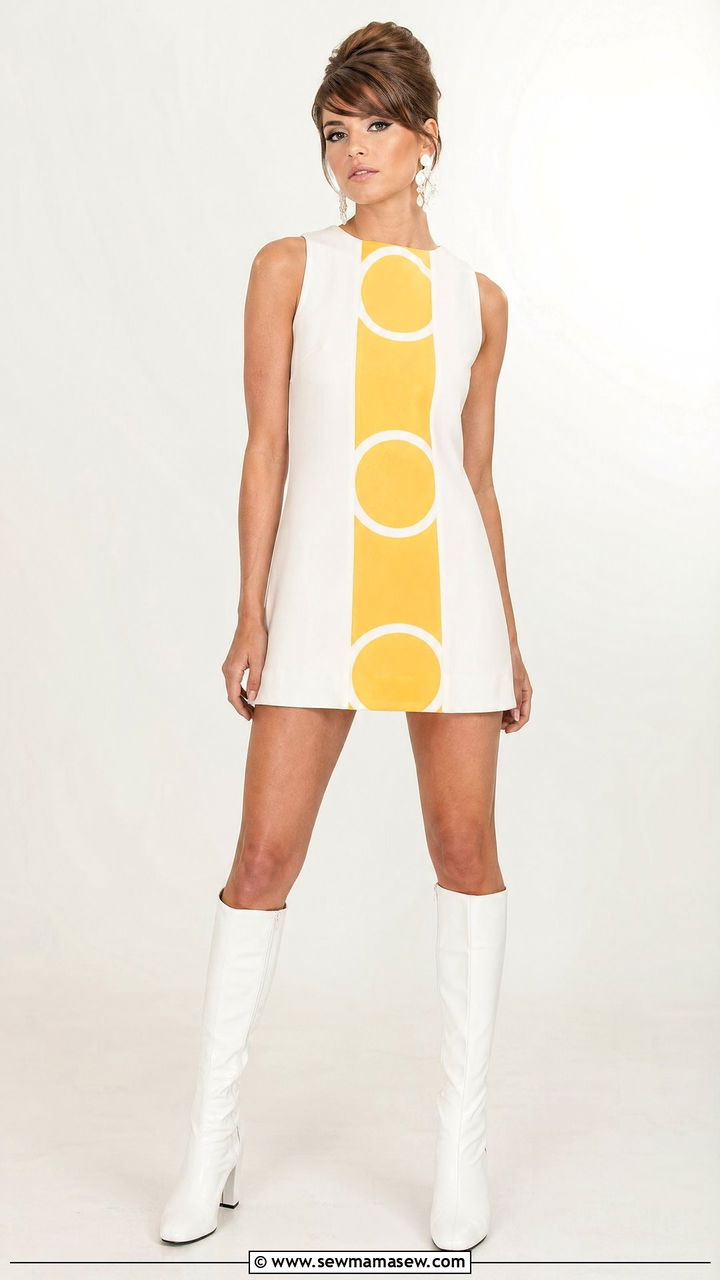
For a more finished result, pair 1960s Mod Shift Dress With Go-Go Boots. Choose pieces that sit cleanly at the natural waist and keep the strongest line of the outfit visible, then use charcoal and pale blue to create depth without making the look feel busy. A smooth base layer lets the featured garment hold its shape, while a contrasting texture such as ribbed knit, brushed wool, satin, or washed denim keeps the styling from looking flat. Match the visual weight of your shoes to the outfit—sleek pointed toes sharpen tailoring, substantial loafers ground relaxed proportions, and low-profile sneakers make dressier pieces feel approachable. Add one deliberate accessory, such as a leather belt, compact shoulder bag, silk scarf, or sculptural earring, and repeat one color so the whole outfit reads as cohesive. Adjust the hem, sleeve, and rise before leaving home; small tailoring choices make the formula look custom. Wear it for a weekday office, a coffee date, a travel day, or an evening gathering.
The image shows 1960s Mod Shift Dress With Go-Go Boots styled as a complete, wearable look in a warm-toned interior. The main garment is easy to identify, with its shape balanced by carefully chosen bottoms and coordinated footwear. You can picture the fabric movement, the relationship between the waistline and the hem, and the small finishing touches that make the outfit feel deliberate. The palette stays focused while the accessories add just enough contrast to give the styling personality.
4. 1940s high-waisted shorts with tied button-up shirt outfit formula
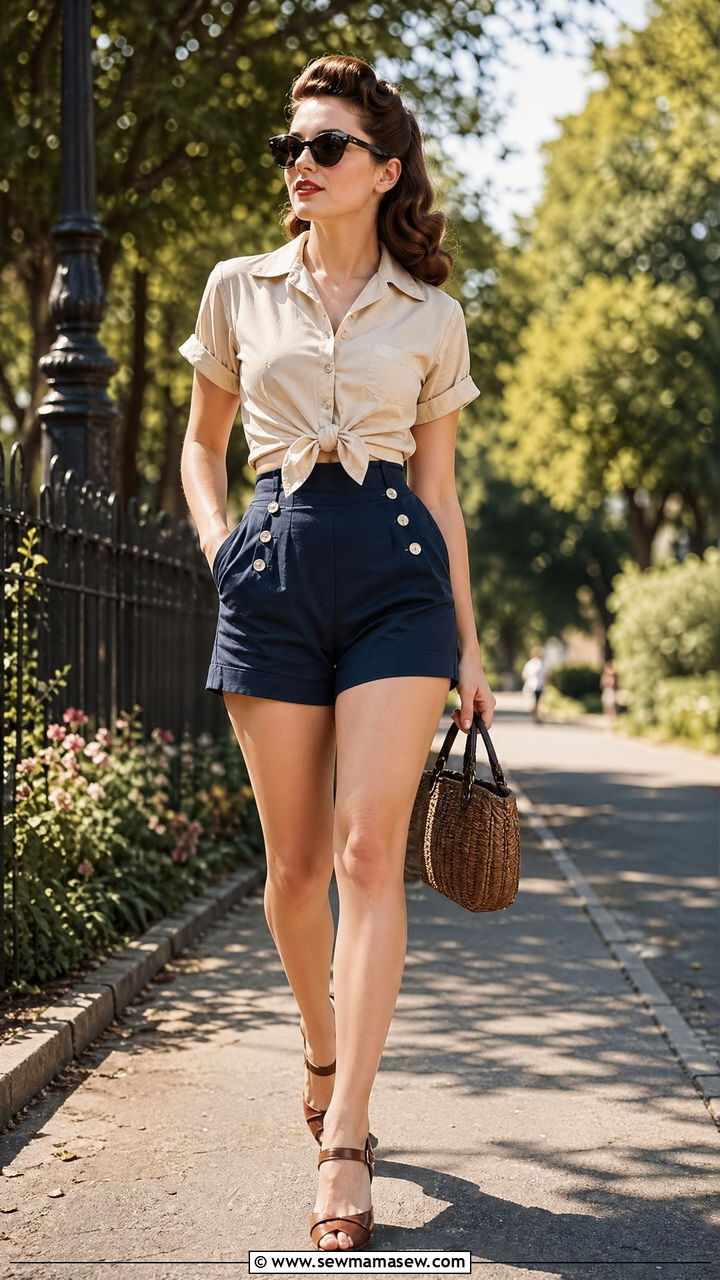
Let the main piece lead by combining 1940s High-Waisted Shorts With Tied Button-Up Shirt. Choose pieces that sit cleanly at the natural waist and keep the strongest line of the outfit visible, then use black and ivory to create depth without making the look feel busy. A smooth base layer lets the featured garment hold its shape, while a contrasting texture such as ribbed knit, brushed wool, satin, or washed denim keeps the styling from looking flat. Match the visual weight of your shoes to the outfit—sleek pointed toes sharpen tailoring, substantial loafers ground relaxed proportions, and low-profile sneakers make dressier pieces feel approachable. Add one deliberate accessory, such as a leather belt, compact shoulder bag, silk scarf, or sculptural earring, and repeat one color so the whole outfit reads as cohesive. Adjust the hem, sleeve, and rise before leaving home; small tailoring choices make the formula look custom. Wear it for a weekday office, a coffee date, a travel day, or an evening gathering.
The image shows 1940s High-Waisted Shorts With Tied Button-Up Shirt styled as a complete, wearable look in a bright city sidewalk. The main garment is easy to identify, with its shape balanced by carefully chosen bottoms and coordinated footwear. You can picture the fabric movement, the relationship between the waistline and the hem, and the small finishing touches that make the outfit feel deliberate. The palette stays focused while the accessories add just enough contrast to give the styling personality.
3. 1990s overalls with crop top outfit formula
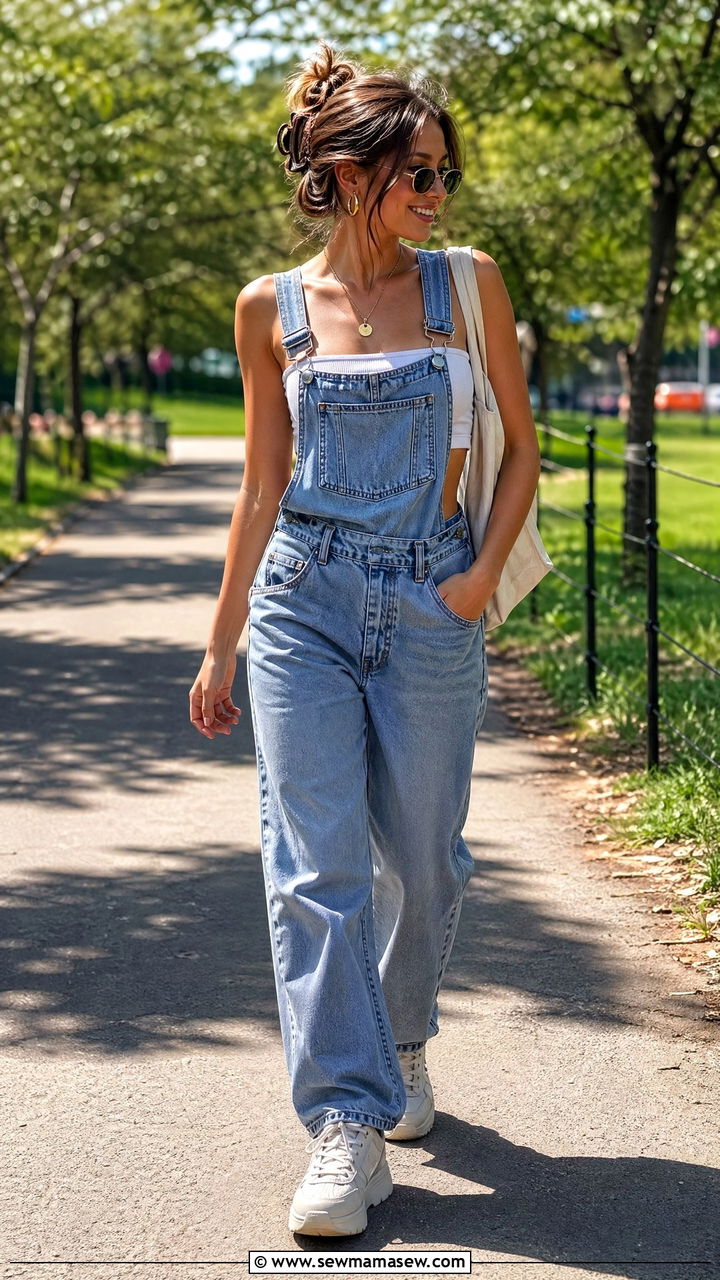
Create visual balance with 1990s Overalls With Crop Top. Choose pieces that sit cleanly at the natural waist and keep the strongest line of the outfit visible, then use soft camel and cream to create depth without making the look feel busy. A smooth base layer lets the featured garment hold its shape, while a contrasting texture such as ribbed knit, brushed wool, satin, or washed denim keeps the styling from looking flat. Match the visual weight of your shoes to the outfit—sleek pointed toes sharpen tailoring, substantial loafers ground relaxed proportions, and low-profile sneakers make dressier pieces feel approachable. Add one deliberate accessory, such as a leather belt, compact shoulder bag, silk scarf, or sculptural earring, and repeat one color so the whole outfit reads as cohesive. Adjust the hem, sleeve, and rise before leaving home; small tailoring choices make the formula look custom. Wear it for a weekday office, a coffee date, a travel day, or an evening gathering.
The image shows 1990s Overalls With Crop Top styled as a complete, wearable look in a softly lit studio. The main garment is easy to identify, with its shape balanced by carefully chosen bottoms and coordinated footwear. You can picture the fabric movement, the relationship between the waistline and the hem, and the small finishing touches that make the outfit feel deliberate. The palette stays focused while the accessories add just enough contrast to give the styling personality.
2. 1920s drop-waist dress with t-strap heels outfit formula
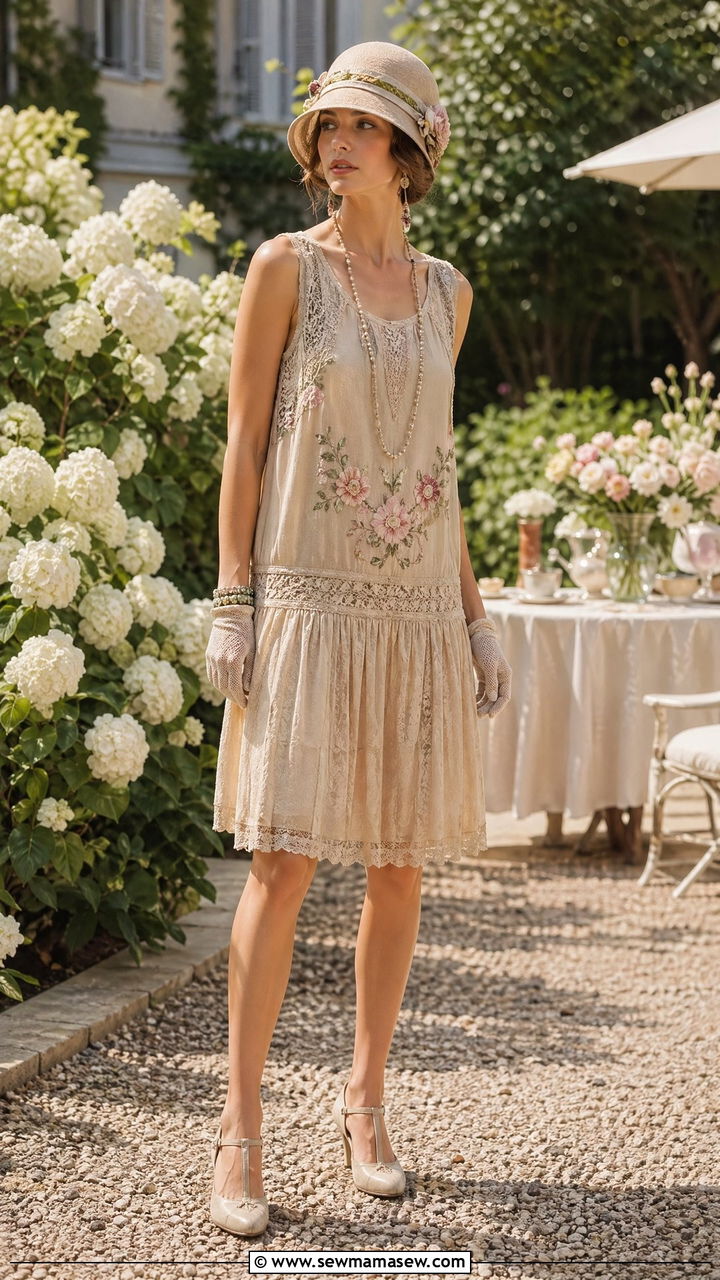
Give this formula a modern edge through 1920s Drop-Waist Dress With T-Strap Heels. Choose pieces that sit cleanly at the natural waist and keep the strongest line of the outfit visible, then use navy with crisp white to create depth without making the look feel busy. A smooth base layer lets the featured garment hold its shape, while a contrasting texture such as ribbed knit, brushed wool, satin, or washed denim keeps the styling from looking flat. Match the visual weight of your shoes to the outfit—sleek pointed toes sharpen tailoring, substantial loafers ground relaxed proportions, and low-profile sneakers make dressier pieces feel approachable. Add one deliberate accessory, such as a leather belt, compact shoulder bag, silk scarf, or sculptural earring, and repeat one color so the whole outfit reads as cohesive. Adjust the hem, sleeve, and rise before leaving home; small tailoring choices make the formula look custom. Wear it for a weekday office, a coffee date, a travel day, or an evening gathering.
The image shows 1920s Drop-Waist Dress With T-Strap Heels styled as a complete, wearable look in a café-lined street. The main garment is easy to identify, with its shape balanced by carefully chosen bottoms and coordinated footwear. You can picture the fabric movement, the relationship between the waistline and the hem, and the small finishing touches that make the outfit feel deliberate. The palette stays focused while the accessories add just enough contrast to give the styling personality.
1. 1980s high-waisted mom jeans with bodysuit outfit formula
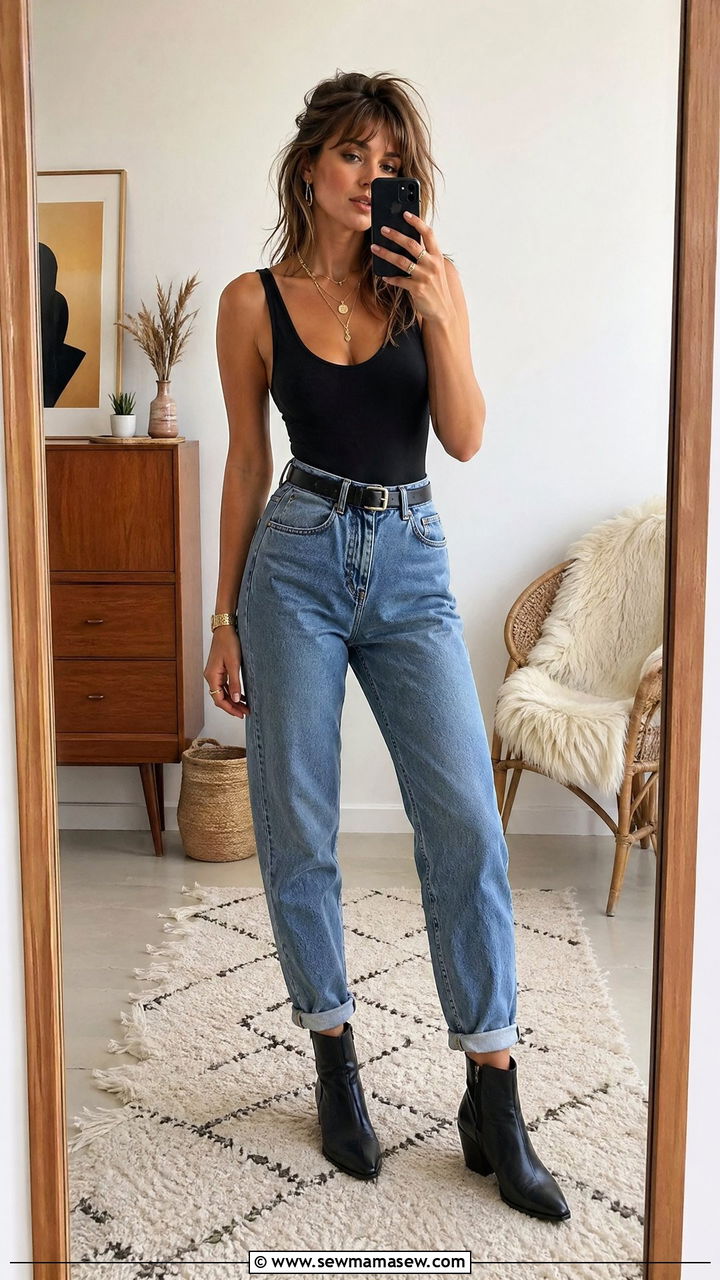
Anchor the outfit with 1980s High-Waisted Mom Jeans With Bodysuit. Choose pieces that sit cleanly at the natural waist and keep the strongest line of the outfit visible, then use espresso and muted blush to create depth without making the look feel busy. A smooth base layer lets the featured garment hold its shape, while a contrasting texture such as ribbed knit, brushed wool, satin, or washed denim keeps the styling from looking flat. Match the visual weight of your shoes to the outfit—sleek pointed toes sharpen tailoring, substantial loafers ground relaxed proportions, and low-profile sneakers make dressier pieces feel approachable. Add one deliberate accessory, such as a leather belt, compact shoulder bag, silk scarf, or sculptural earring, and repeat one color so the whole outfit reads as cohesive. Adjust the hem, sleeve, and rise before leaving home; small tailoring choices make the formula look custom. Wear it for a weekday office, a coffee date, a travel day, or an evening gathering.
The image shows 1980s High-Waisted Mom Jeans With Bodysuit styled as a complete, wearable look in a polished hotel lobby. The main garment is easy to identify, with its shape balanced by carefully chosen bottoms and coordinated footwear. You can picture the fabric movement, the relationship between the waistline and the hem, and the small finishing touches that make the outfit feel deliberate. The palette stays focused while the accessories add just enough contrast to give the styling personality.
Final Thoughts
Your wardrobe becomes more useful when you treat 40 vintage summer outfits as a set of repeatable proportions rather than a single fixed outfit. Choose the formula that suits your schedule, then change one variable—color, texture, shoe shape, or accessory—to make it feel personal.
Keep the pieces you reach for most visible and tailor them to your real routine. With these combinations as a starting point, you can get dressed with more confidence, shop with greater intention, and build polished looks that still feel like you.