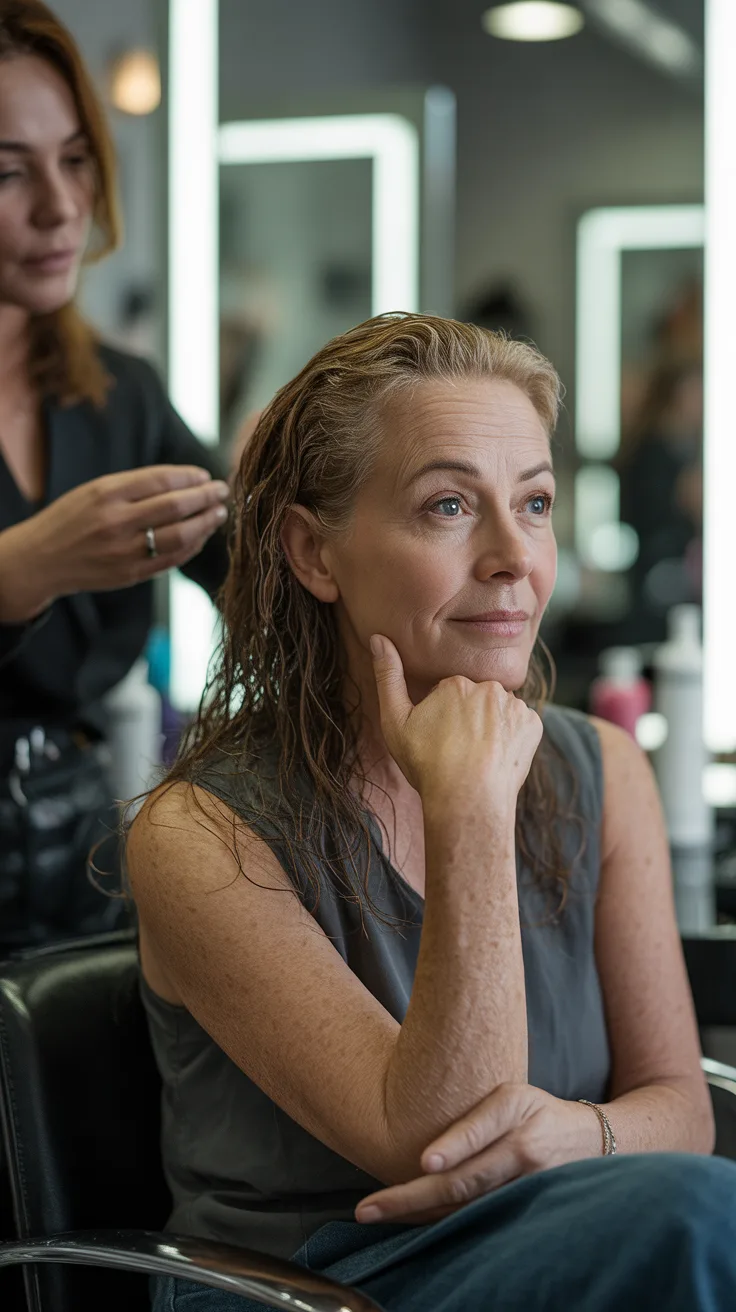
I sat in my stylist’s chair last March, staring at my reflection with that specific kind of exhaustion that has nothing to do with sleep. My hair had been doing this… thing. This flat, shapeless, “I’ve given up but I’m pretending I haven’t” thing. I’d been blow-drying it the same way for three years, using the same products, hoping for different results. Sound familiar? My stylist, Renata — who has never once sugarcoated anything for me — looked at my hair, looked at me, and said, “Emilia, we need to have a conversation.” That conversation changed how I think about low-maintenance spring haircuts for women over 50, and honestly, it changed how I feel when I catch my reflection in a window walking down the street.
Here’s what she told me, and what I’ve since learned after trying multiple cuts, talking to three different stylists, and spending an embarrassing amount of time studying women’s hair on the subway: after 50, the goal isn’t to find a haircut that fights your hair. It’s to find one that works with whatever your hair has become. Because yes — it’s changed. Mine got finer. Wavier in weird places. The texture around my temples shifted completely. And the cut that carried me through my forties? It was doing me zero favors.
So let’s talk about what actually works.
Why Your Hair Deserves a Fresh Strategy After 50
Before I get into specific cuts, I want to talk about something nobody mentions enough. Your hair at 52 or 57 or 63 is not your hair at 40. It just isn’t. And that’s not a sad thing — it’s a real thing. The density changes. The texture shifts. For me, my once reliably straight hair started developing this odd wave pattern right at the crown, and the baby hairs around my face became almost translucent.
What this means practically is that a lot of the cuts that served us beautifully before start to fall flat — literally. Long layers that once looked lush can start to look stringy. Blunt one-length cuts can emphasize thinness instead of creating the illusion of fullness. And cuts that require 30 minutes of round-brush blow-drying every morning? That’s not low-maintenance. That’s a part-time job.
The flattering haircuts for women over 50 that actually hold up in real life share a few things in common: they have built-in movement, they create the appearance of volume without requiring product overload, and they look intentional on day two and even day three between washes. That’s the bar. And it’s absolutely achievable.
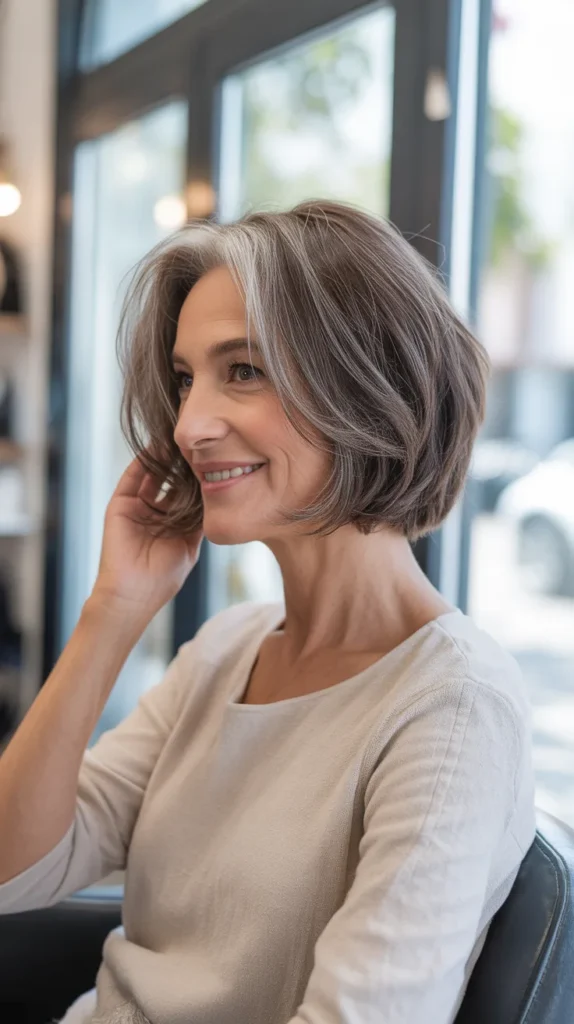
The Textured Bob: My Personal Favorite (And Here’s Why)
Okay so here’s the thing — I resisted the bob for years. Years. I thought it would make me look like I was trying too hard or that it would age me. I was wrong. Completely, stubbornly wrong.
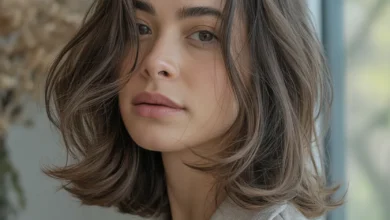
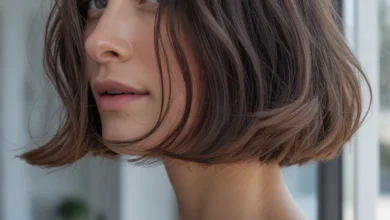
Last spring I finally let Renata take my hair to chin length with soft, choppy layers and a bit of razoring through the ends. I almost cried in the chair — and not from sadness. It was the first time in maybe five years that my hair looked like it had energy. Like it was doing something on purpose.
The textured bob is the queen of easy spring haircuts for older women because it basically styles itself. I wash it, scrunch in a tiny bit of mousse, let it air dry, and it looks good. Not “good for no effort” good — actually good. The layers create natural movement, and because the length is shorter, even fine hair looks thicker and more substantial.
A few things to know: ask your stylist for internal layers, not just layers around the face. You want dimension throughout. And if you’re nervous about going too short, start at collarbone length and work your way up over a couple of visits. That’s exactly what I did, and by the third cut, I was ready to go full chin-length.

See More: Spring Haircuts I’m Actually Asking For in 2026 (Medium Length)
The Soft Shag: Yes, It’s Back — and It’s Better This Time
Can we talk about the shag? Because I know the word alone makes some of us picture 1970s Farrah Fawcett feathering, and I get it. But the modern shag — the 2026 version — is softer, less dramatic, and honestly one of the most flattering spring haircuts for women over 50 this year.
I convinced my friend Diane to try it after she’d been wearing the same shoulder-length, no-layers cut for six years. She was nervous. She texted me from the salon parking lot saying, “If I hate this, I’m blaming you.” She did not hate it. She sent me a selfie thirty minutes later looking like a completely different person — more vibrant, more modern, more her somehow.
The soft shag works because it has face-framing layers that start high — around the cheekbone — and gradually lengthen toward the back. This creates that gorgeous curtain-like effect around the face that softens everything. Jawline, forehead, all of it. The layers through the crown add instant volume without backcombing or volumizing sprays.
Who It Works Best For
This cut is particularly beautiful on women with wavy or slightly curly hair because the natural texture gives it that effortless, lived-in look. If your hair is very straight and very fine, you might need a tiny bit of texturizing spray to get the full effect — but we’re talking one product, ten seconds. Still solidly in low-maintenance territory.

The Collarbone Lob: When You’re Not Ready to Go Short
I hear this from readers constantly: “I want something fresh, but I’m not ready to go short.” I respect that. Truly. Long hair can feel like a security blanket after 50, and there’s nothing wrong with wanting to keep some length. The key is making that length work for you instead of just… hanging there.
The collarbone lob — that’s a long bob that hits right at or just above the collarbone — is the sweet spot. It’s one of the best youthful hairstyles over 50 at medium length because it’s long enough to pull back when you need to, but short enough to maintain volume and shape.
Here’s what makes or breaks this cut: the layers. You need them. Not heavy, chunky layers — think soft, blended, internal layers that create movement when you shake your head. Without layers, a collarbone lob on fine or thinning hair can look like a curtain. With the right layers, it looks polished and intentional.
I wore my hair at this length for about eight months before going shorter, and I’ll tell you — it was the easiest my hair had been in a decade. I could air dry it, throw it in a low bun, curl the front pieces in two minutes for a date night. It just worked.
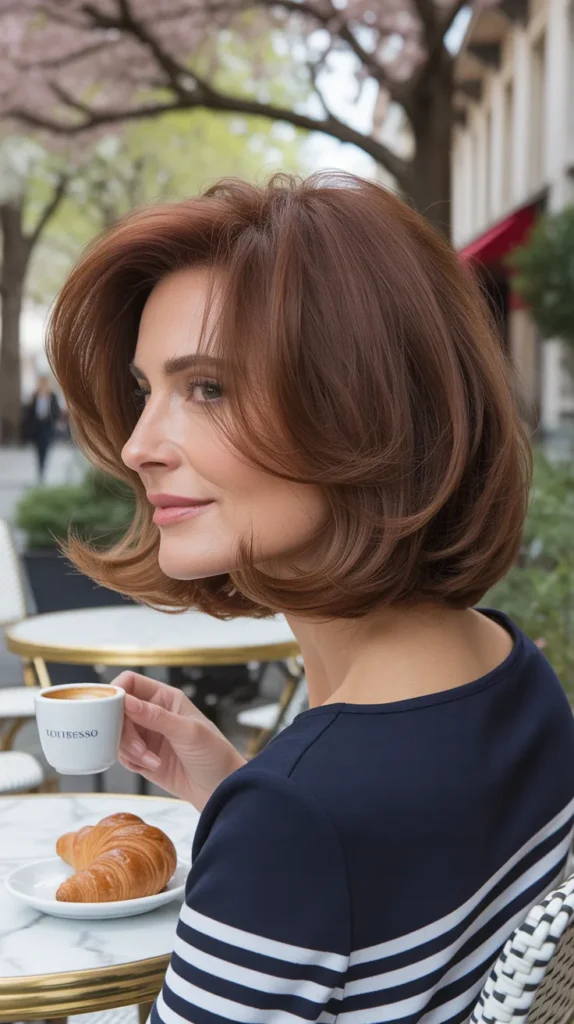
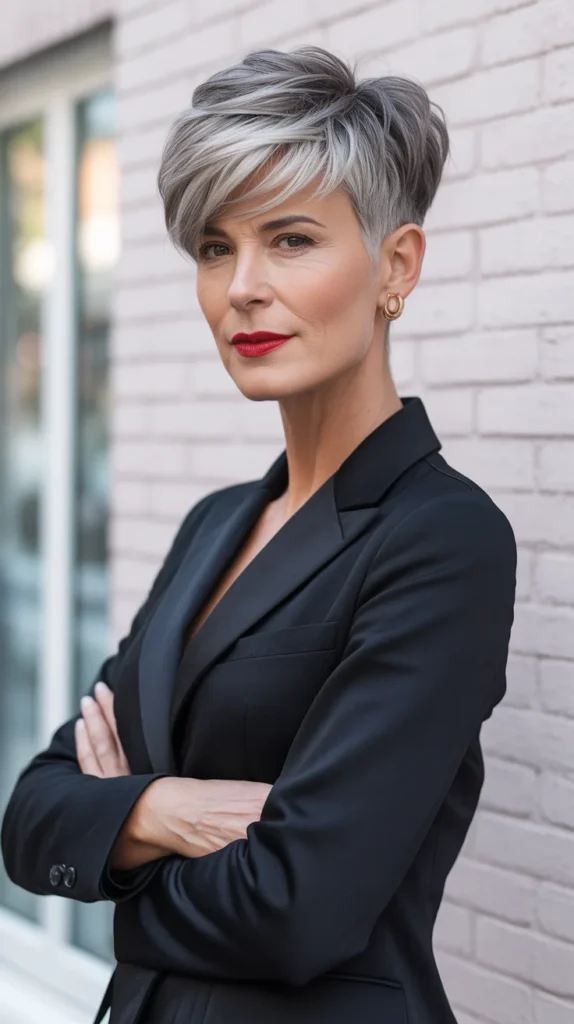
The Pixie: Not for Everyone, but Transformative for the Right Person
Now this next one surprised me. I’ve always admired pixie cuts on other women but assumed I could never pull one off. My face is round. My features are soft. Everything I’d ever read said pixies are for angular faces and sharp cheekbones. That’s an oversimplification that needs to retire.
I watched a woman at a dinner party last spring absolutely own a pixie cut. She was maybe 55, had a round face like mine, and looked incredible. I asked her about it — because apparently I have no boundaries when it comes to hair — and she told me her stylist had kept length on top and through the bangs while cutting the sides and back close. That strategic variation is what made it work for her face shape. It created the angles her bone structure didn’t naturally have.
Pixie cuts are genuinely the most low-maintenance spring haircut for women over 50 in terms of daily effort. We’re talking wake-up, run your fingers through it, go. Maybe a dab of pomade if you’re feeling fancy. The trade-off is that you’ll need trims every 4–6 weeks to keep it sharp, so factor that in.
A Honest Word About Growing It Out
I’ll be straight with you — growing out a pixie is an exercise in patience. There’s an awkward phase around month three that will test your resolve. If you’re someone who changes your mind frequently, think carefully. But if you commit? The payoff is enormous. There’s something incredibly freeing about a great short cut.
See More: I Got a Spring Bob Haircut — Here’s What to Ask Your Stylist
The Grown-Out Fringe: A Small Change That Makes a Big Difference
Sometimes you don’t need a whole new haircut. Sometimes you just need bangs. Or more specifically — a grown-out, curtain-style fringe that frames your face like it was designed specifically for you.
I added a curtain fringe to my textured bob last September, and it was like putting a filter on my face in real life. It softened my forehead (which, let’s be honest, has been gradually expanding its territory for years), drew attention to my eyes, and gave my whole look a sense of youthfulness that had nothing to do with trying to look 30.
The beauty of the curtain fringe is that it’s inherently low-effort. It’s meant to look a little undone, a little grown-out, a little “I woke up like this.” When it grows past the length you want, it just blends into your face-framing layers. No awkward grow-out phase. No weird puffing up in humidity.
If you’re looking for haircuts that make you look younger after 50 without doing anything drastic, this is my number one suggestion. It’s a small commitment with an outsized impact.
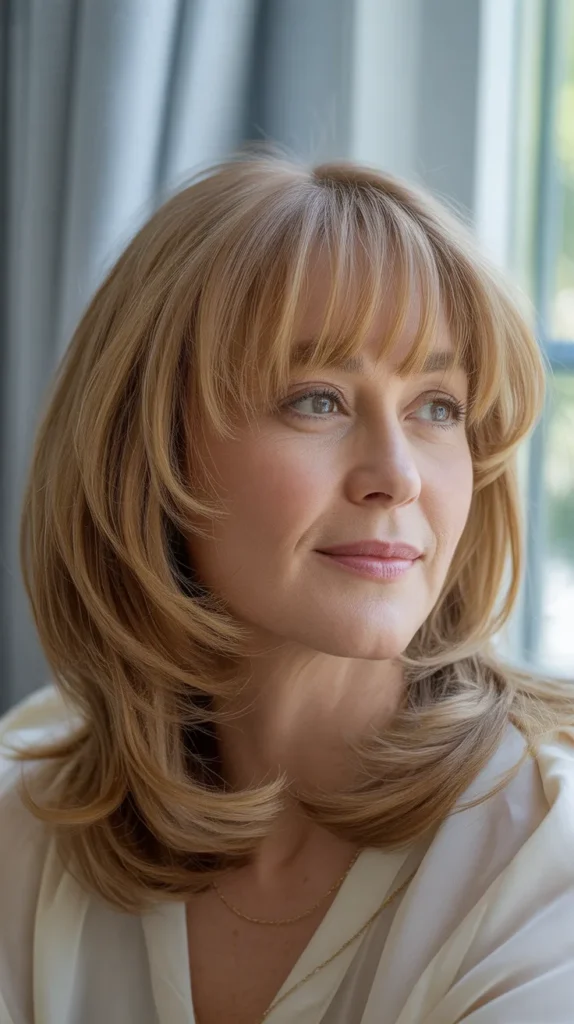
Let’s Talk About Texture and Volume (Honestly)
Here’s something I wish someone had told me earlier: volume is built into the cut, not into the product. I spent years buying every volumizing mousse, root-lifting spray, and thickening serum on the market, and you know what gave me more volume than all of them combined? Getting a haircut with actual structure.
If your hair is fine or thinning — and statistically, most of ours is after 50 — the single most effective thing you can do is cut weight out of the right places and keep it in others. That sounds counterintuitive. Cutting hair to make it look like you have more hair? But it works. When you remove bulk from the underneath layers and keep fullness at the crown and around the face, everything lifts and moves differently.
I also want to gently push back on the idea that fine-haired women can’t wear longer styles. You can. You just need a stylist who understands how to layer specifically for your texture. Not every stylist does, and that’s okay — it’s worth asking during a consultation.
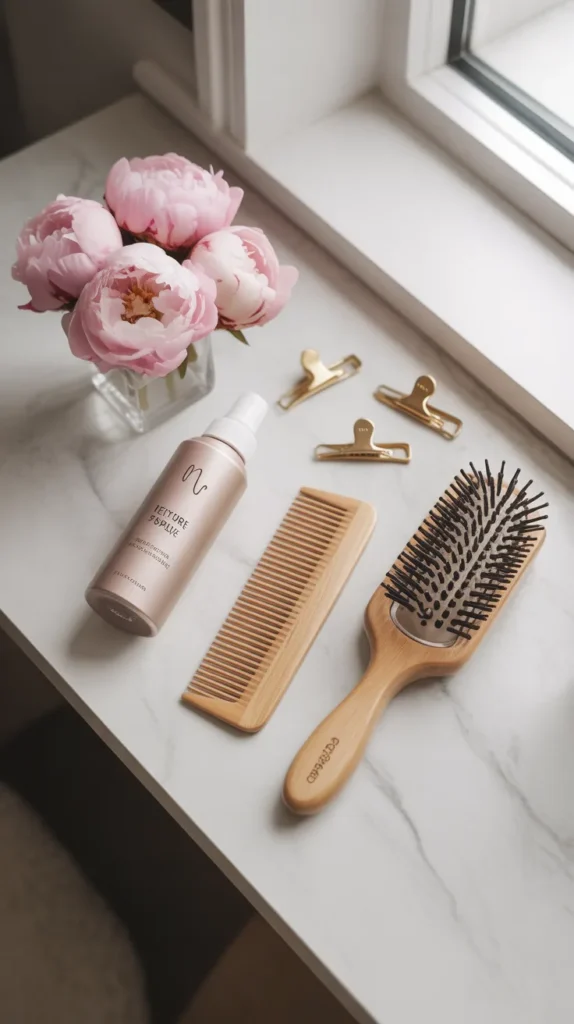
One product I will endorse wholeheartedly: a good dry texture spray. Not dry shampoo — dry texture spray. It gives fine hair grip and body without weighing it down, and it’s the only product I use consistently. I spray it at my roots on day two and suddenly my hair looks like it did leaving the salon.
Embracing Your Gray (Or Not — Both Are Fine)
Can I get a little personal here? I started going gray at 42. Not the dramatic, beautiful silver streak kind of gray — the patchy, indecisive, “is that gray or is your hair just dirty?” kind. I colored over it for years. Then last year, I decided to let it grow in, and I asked Renata to give me a cut that would make the transition look intentional rather than neglectful.
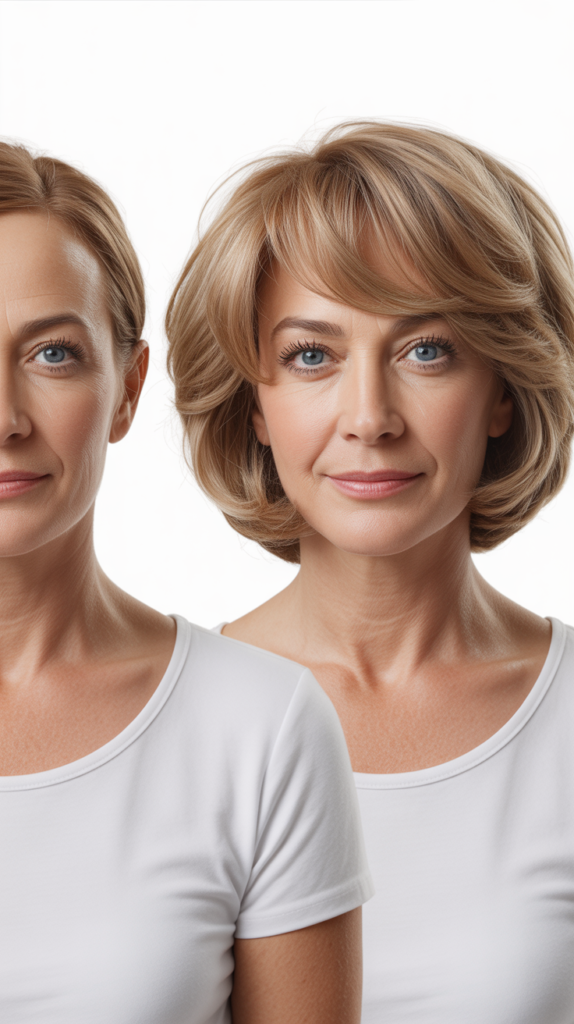
She gave me a heavily layered cut with shorter pieces on top so the gray growing in at my roots blended with highlighted and natural pieces below. It looked like I’d planned the whole thing. Genius.
Whether you’re embracing your natural silver or keeping your color, your cut should support that choice. Gray and silver hair often has a different texture — it can be coarser, wavier, or more wiry — and a cut that accounted for your old texture might not serve your new one. If you’re transitioning, talk to your stylist about adjusting your cut as your natural color grows in. This is not a “set it and forget it” process, and that’s okay.
Spring haircuts for women over 50 in 2026 are increasingly about working with the gray. I see more beautiful silver-haired women on the street now than ever, and they look incredible — not because they’re fighting aging but because they’ve found cuts that celebrate what their hair actually does.
How to Talk to Your Stylist (Because This Matters More Than the Cut)
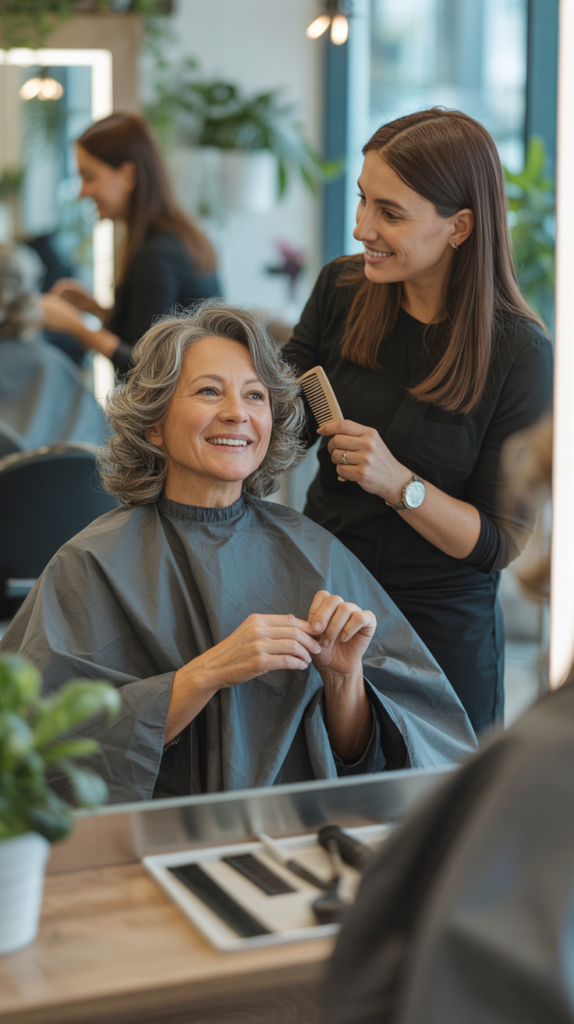
I’ve learned — through several cuts I didn’t love — that the conversation before the scissors come out matters as much as the cut itself. Maybe more.
Here’s what I tell my stylist now that I never used to: I tell her how many minutes I’m willing to spend on my hair each morning (for me, it’s five, maximum). I tell her what tools I actually own and will realistically use (a blow dryer and my fingers — that’s it). I tell her what bothers me about my current cut specifically. Not “I don’t like it” but “it goes flat by noon” or “the layers flip out and I can’t control them.”
Bring photos, but bring photos of women who look like you — similar age, similar face shape, similar hair texture. Not 25-year-old models with hair extensions and professional styling teams. That’s not a realistic reference, and a good stylist will tell you as much.
And here’s the thing that took me the longest to learn: if a stylist dismisses your concerns or makes you feel silly for having preferences, find a different stylist. Your hair, your head, your daily life. You get to have opinions.
See More: Low Maintenance Short Hair with Bangs: An Honest Guide
My Spring Haircut Cheat Sheet
After all my experimenting, talking, researching, and occasionally crying in salon chairs, here’s what I’ve landed on as my personal truth about finding the right spring haircut after 50.
Movement matters more than length. A shoulder-length cut with great layers will look more youthful and more modern than long hair with no shape — every single time. Face-framing is your best friend. Whether it’s a full curtain fringe, long side-swept bangs, or just a few shorter pieces around your cheekbones, those face-framing elements soften and flatter like nothing else. And low-maintenance should actually mean low-maintenance. If a cut requires a round brush, three products, and 20 minutes to look decent, it’s not the cut for you — no matter how good it looked on the Pinterest photo.
The best haircuts that make you look younger after 50 aren’t about looking 35. They’re about looking like the most vibrant, put-together version of who you are right now. There’s a difference, and it’s an important one.
Final Thoughts
Last week I was at the grocery store — glamorous, I know — and a woman around my age stopped me in the produce section to ask about my hair. Who cut it, what products I use, how I style it. We stood there talking for ten minutes next to the avocados. And the thing that struck me was that she said she’d been thinking about changing her hair for two years but was afraid she’d regret it.
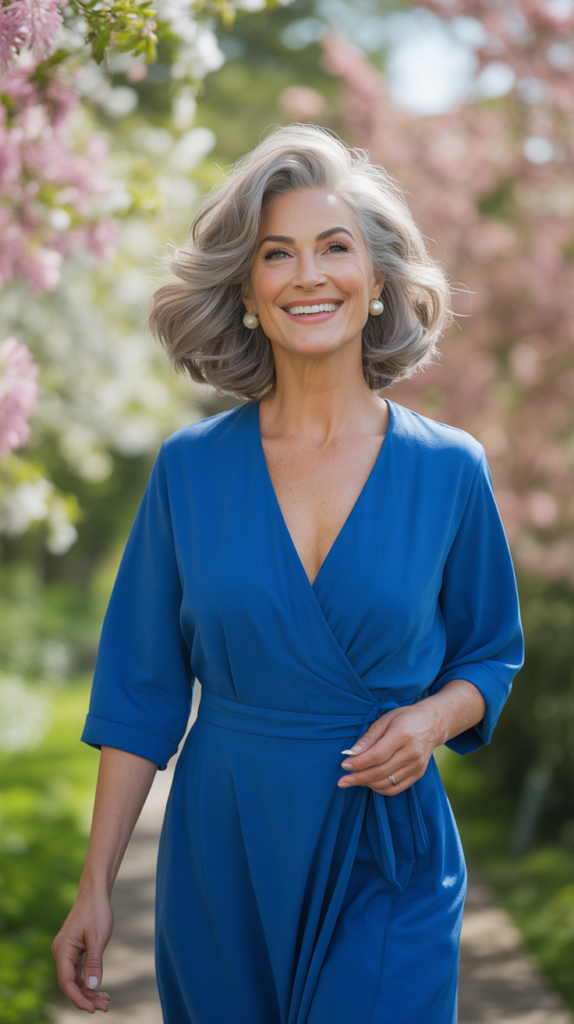
I get that fear. I really do. But here’s what I told her, and what I’ll tell you: a haircut grows back. It’s the lowest-risk change you can make that delivers the highest emotional payoff. When you find the right low-maintenance spring haircut — one that works for women over 50 living real lives, with real mornings, and real things to do — you don’t just look better. You feel like yourself again. The version of yourself that got lost somewhere between the third box of root touch-up and the five-hundredth half-hearted ponytail.
Spring is a good time for a fresh start. Not because a magazine told you so, but because the light changes, the weather shifts, and something in you wants to feel lighter too. Go have that conversation with your stylist. Bring the photos. Be honest about what you want. And trust yourself to try something new.
I’ll be right here, cheering you on from the avocado aisle.
— Emilia xo